










The Balkan pivot: Washington bets on Belgrade Article by Matanat Nasibova
Relations between Serbia and the United States—long marked by a complex mix of economic and investment cooperation alongside geopolitical and diplomatic disagreements—appear to be entering a period of significant thaw.
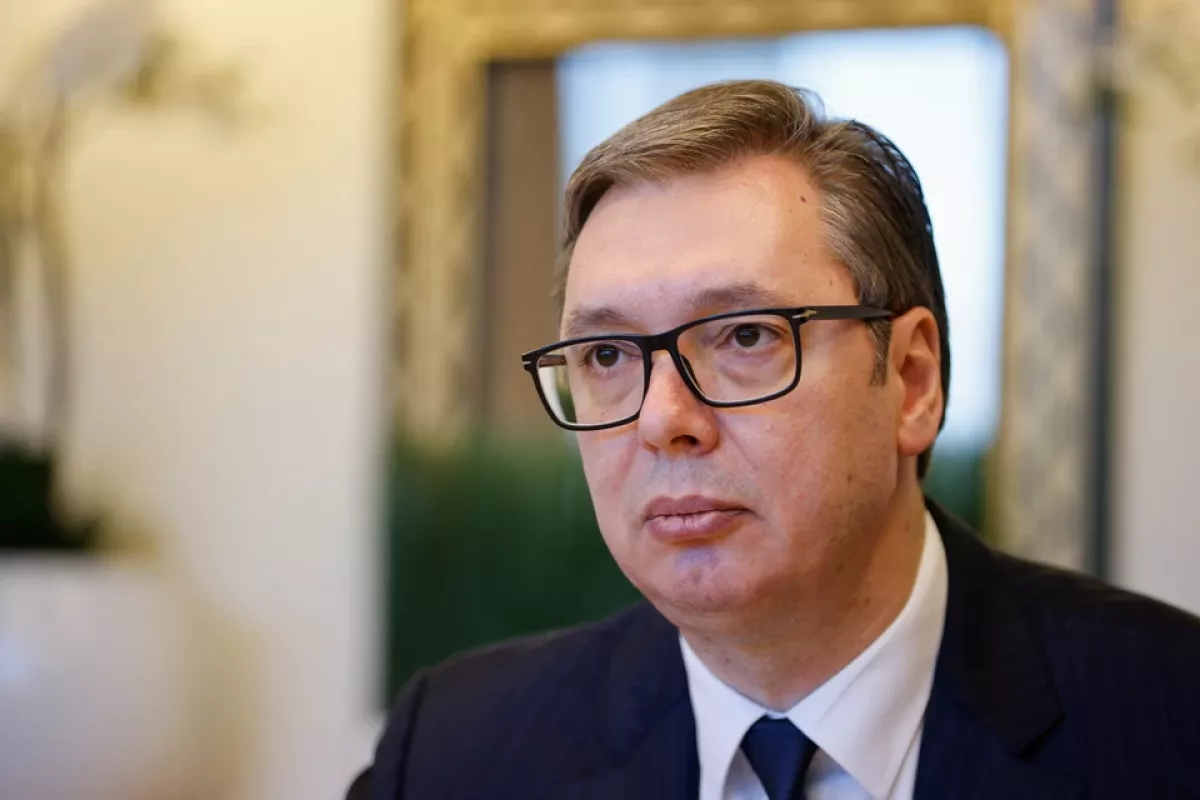
Recently, Serbian President Aleksandar Vučić stated in an interview with Pink TV that Belgrade could launch a strategic dialogue with Washington as early as this summer, while reaffirming Serbia’s continued commitment to its European integration path. It is also worth recalling that Serbian Foreign Minister Marko Đurić previously noted that, on the president’s instructions, active efforts are underway to develop comprehensive cooperation with the United States.
The stated intention of Serbian officials to reframe relations with Washington into a more durable partnership underscores Belgrade’s clear interest in building long-term, stable ties with the world’s leading power—an approach that can be seen as highly pragmatic.
Geopolitically, Serbia occupies a complex and delicate position. It balances cooperation with the European Union, China, and Russia, while also holding observer status in the Non-Aligned Movement—as the successor state to Yugoslavia, one of the founding members of the movement—and maintaining its status as a candidate country for European Union membership. Against this backdrop, upgrading Serbian–American relations could potentially help Belgrade navigate and partially reconcile a number of the strategic dilemmas it currently faces.
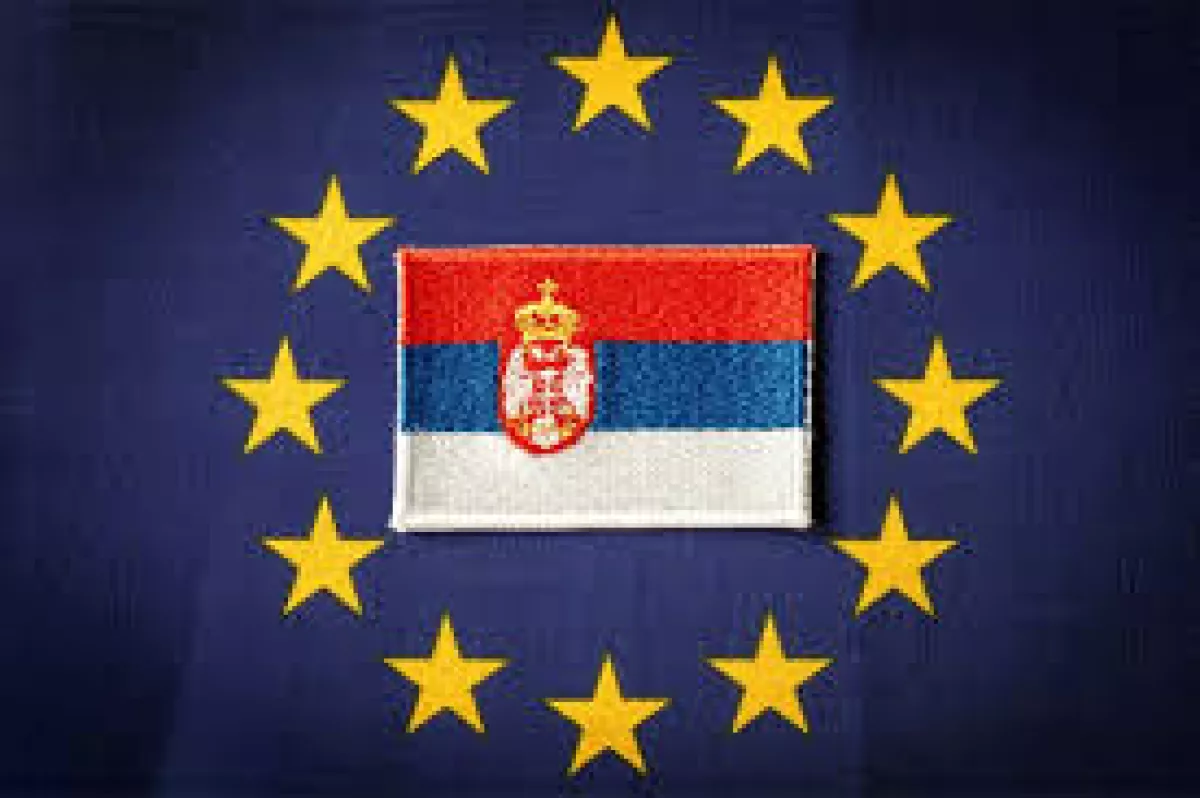
In this context, one of the most long-standing and sensitive issues facing Serbia comes to the forefront—its accession to the European Union. Serbia submitted its membership application in December 2009, was granted candidate status in March 2012, and formally opened accession negotiations in January 2014. The process has since been accompanied by a wide range of EU requirements, with the most significant stumbling block remaining the Kosovo issue.
Brussels has consistently applied pressure on Belgrade to normalise relations with Pristina, with some interpretations viewing this as implying eventual recognition of Kosovo’s independence. At the same time, the EU itself does not present a fully unified position: five member states—Romania, Spain, Slovakia, Greece, and Cyprus—continue to withhold recognition of Kosovo.
Nevertheless, Serbia’s leadership has maintained a firm and largely unchanged position. For Belgrade, Kosovo is not simply a territorial question but a historical, cultural, and spiritual heartland of the Serbian nation. President Aleksandar Vučić has repeatedly used unequivocal language on the issue, stating: “I will not sign a document on Kosovo’s independence. There will be no surrender! We do not recognise Kosovo’s independence, neither de facto nor de jure.”
This position places Serbia in a persistent strategic dilemma: any move toward recognition would clash with deeply rooted national identity and historical memory, while continued refusal complicates and constrains its path toward deeper European integration.
However, while the EU maintains a rigid and uncompromising stance, requiring Belgrade to fulfil its obligations under the Brussels and Ohrid Agreements—the latter being included as a key benchmark in negotiation Chapter 35—the United States applies what could be described as a “soft-hand” approach to the Kosovo issue. Washington has declared that its primary objective is not Serbia’s de jure recognition of Kosovo’s independence, but rather the establishment of long-term security and peaceful coexistence in the region, which falls within the United States’ economic and strategic sphere of interest.
In other words, the United States advocates full normalisation of relations, the outcome of which would be the gradual neutralisation of contentious issues. Put simply, Washington expects Belgrade not to obstruct Pristina’s integration into international institutions. It is also quite possible that, in pursuit of this goal, the American side may employ certain levers of influence within Brussels in order to encourage EU institutions to soften their prescriptive tone towards Belgrade on the Kosovo issue, which would, in turn, have a positive impact on Serbia’s European integration process.
As for the United States itself, the advantages of a strategic rapprochement with Belgrade lie primarily in the geopolitical sphere: it would allow Washington to strengthen its position in the Balkans and gain another foothold for containing Russian and Chinese influence in the region. That is the first point. Second, against the backdrop of increasingly complicated relations with European countries such as France and the United Kingdom, upgrading ties with Serbia to a strategic level would provide Washington with another partner in Europe. Moreover, Serbia possesses the strongest military force in the Western Balkans, is undertaking a broad modernisation of its armed forces through the acquisition of modern weapons systems, and is deliberately increasing defence spending, targeting around 2.5% of GDP.
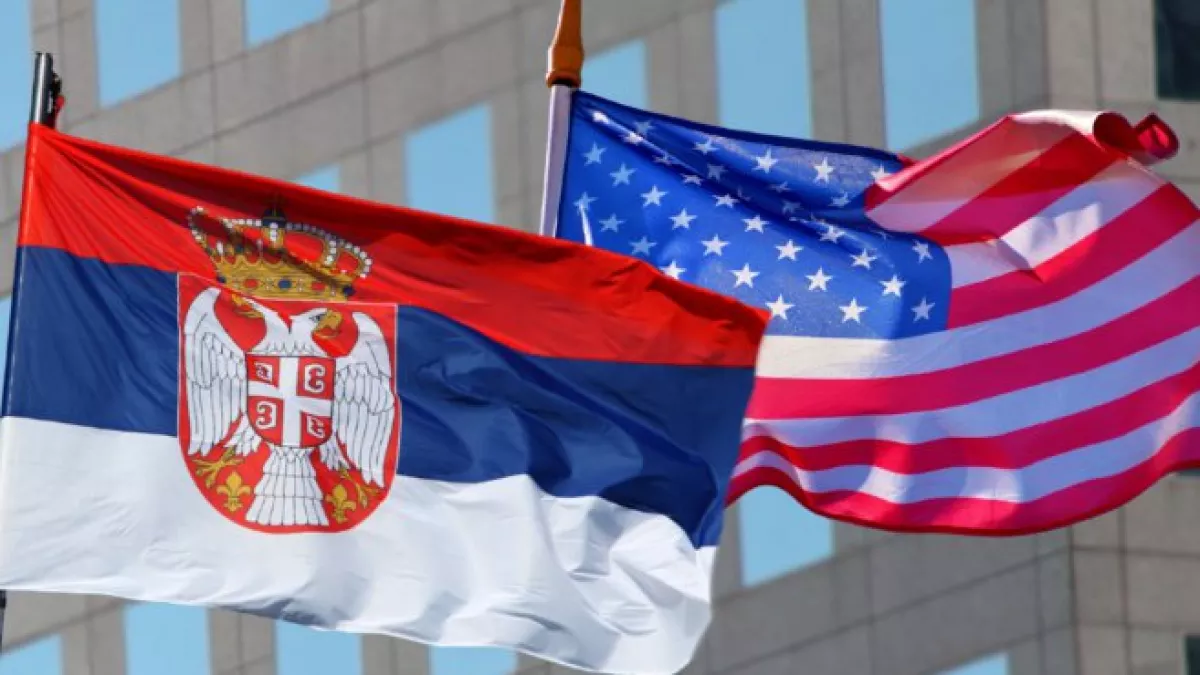
As for the foundation of all political processes—the economy—it should be noted that the United States is one of the key Western investors in Serbia’s economy. Bilateral ties in this sphere continue to expand, encompassing trade, investment in the technology sector, and a strategic partnership in energy based on the agreement signed on September 18, 2024, whose primary objective is to strengthen Serbia’s energy security.
American corporations are actively present in the Serbian market, establishing R&D centres and local offices while investing in the country’s start-up ecosystem. This interest is driven by Serbia’s position as one of Eastern Europe’s leading IT hubs. As the above illustrates, economic relations between the two countries are already substantial, diversified, and resilient. The launch of a strategic dialogue between Belgrade and Washington will undoubtedly inject additional momentum into this partnership, further deepening cooperation across a range of sectors.
In short, both the United States and Serbia stand to gain a range of geopolitical and economic benefits from strengthening their partnership and elevating it to a qualitatively new level. Yet, as is often the case in international affairs, such a development is not without its potential pitfalls. As noted above, Washington seeks to consolidate its presence in the Balkans and, more broadly, in Eastern Europe as part of its strategy to contain its principal geopolitical rivals.
At the same time, it is well known that Serbia is one of the few European states that continues to pursue an independent foreign policy—a fact that has long been a source of frustration for Brussels. This raises a logical question: what concessions, including political ones, would Belgrade be prepared to make in exchange for the long-term patronage of the world's leading power, particularly given its longstanding policy of non-alignment, which encompasses military neutrality, refusal to join sanctions regimes, continuity of established diplomatic traditions, and a multi-vector foreign policy approach?
The answer remains uncertain. However, it is reasonable to assume that developments in the near future will provide a clearer understanding of how Serbia intends to reconcile its strategic autonomy with the opportunities and obligations that closer ties with Washington may entail.







 editor@caliber.az
 +994 55 444-88-98
 Азербайджан, Баку, ул. Низами, 203, Af Business House, 5-й этаж