










Caspian crossroads: oil chooses the Azerbaijani route Overview by Khazar Akhundov
As part of previously signed contractual obligations, bp plans to complete the transfer of operator functions for the Baku–Tbilisi–Ceyhan (BTC) oil pipeline to the State Oil Company of Azerbaijan (SOCAR) by July 1 of this year. In addition, operational functions for the Baku–Supsa pipeline were recently handed over to Azerbaijani state entities, and against this backdrop, prospects for the resumption of operations of this pipeline, which has been idle in recent years, are being discussed.
During the May visit of Georgian Prime Minister Irakli Kobakhidze to Azerbaijan, agreements were signed on the terms of operation of the Georgian section of the Baku–Supsa infrastructure. At the same time, Kazakhstan has shown considerable interest in increasing crude oil shipments via Azerbaijan. This comes after Astana recently announced plans to reduce oil production in 2026 due to attacks on the infrastructure of the Caspian Pipeline Consortium (CPC) pipeline and strikes on tankers in the Black Sea.
As of June 8, 2026, the operational functions of the Western Route Export Pipeline (Baku–Supsa, WREP) were transferred to state entities of Azerbaijan and Georgia. At the same time, as noted on the sidelines of the recently held Baku Energy Week by bp’s regional president for Azerbaijan, Georgia and Türkiye, Giovanni Cristofoli, this is not an asset sale, but rather the fulfilment of previously signed contractual obligations: operational control of the pipeline is being returned to its owners in the respective countries and is being carried out in accordance with pre-agreed legal obligations between the parties.
It is expected that by early July, the process of transferring operatorship of the Baku–Tbilisi–Ceyhan (BTC) oil pipeline from bp to SOCAR will also be completed. As Cristofoli stated, this case likewise does not represent the company’s exit from the asset, but rather the fulfilment of contractual obligations.
It should be recalled that the company remains the second-largest shareholder in BTC Co. after SOCAR, holding a 30.1% stake in the pipeline system. In technical and organisational terms, extensive preparatory work has been carried out to enable SOCAR to act as operator. As the bp regional president emphasised, SOCAR today possesses all the necessary experience and capabilities for the efficient management of the pipeline.
Overall, the developments observed are a highly positive step for Azerbaijan: SOCAR is taking control over the entire export infrastructure chain, strengthening its position both in oil production and in transporting it to points of sale. At the same time, within the framework of a long-term strategy, the country will be able to more flexibly realise the potential of regional cooperation in oil transit.
It is worth recalling that the Western Route Export Pipeline (WREP) system was commissioned in April 1999 with the aim of exporting crude oil from Azerbaijan’s offshore Caspian fields. Originating at the Sangachal Terminal, the 829-kilometre pipeline extends to the Supsa Terminal on the Black Sea coast of Georgia, from where oil is loaded onto tankers and then transported through the Turkish Straits to European markets.
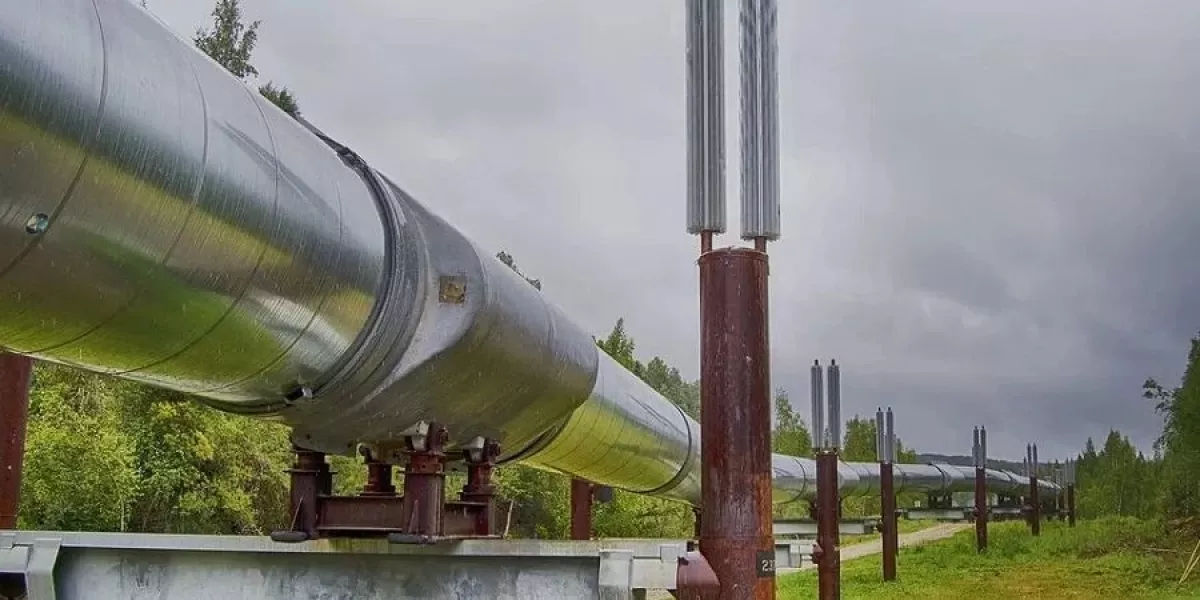
However, due to a policy of optimising export routes, the bulk of Azerbaijani oil and all transit flows from Central Asian countries have in recent years been redirected to the Baku–Tbilisi–Ceyhan pipeline, while only occasional batches of oil have been transported via the WREP system.
According to the annual report of Azerbaijan’s Ministry of Energy, 90,000 tonnes of oil were pumped through the Baku–Supsa pipeline in 2024, compared to 150,000 tonnes in 2023. Overall, according to SOCAR, since the start of commercial operation and up to April 1 of this year, a total of 738 million barrels of oil have been transported through this pipeline.
The current throughput capacity of the Baku–Supsa pipeline is estimated at 5.2 million tonnes per year (with a design capacity of 7 million tonnes). However, despite the fact that this pipeline has largely remained in reserve, bp-Azerbaijan notes that it has not been mothballed and remains in a fully technically operational condition.
The first steps toward the revival of this route were taken last May: during the visit of Irakli Kobakhidze to Azerbaijan, SOCAR, SOCAR Midstream Operations LLC, and the Georgian Oil and Gas Corporation (GOGC) signed Heads of Terms for an operating agreement defining the parameters for the management of the Georgian section of the WREP, including the Supsa oil terminal and its associated infrastructure.
“The Baku–Supsa oil pipeline is of strategic importance not only for our country and the wider region, but also for Europe and international partners. On the basis of the agreements reached, the pipeline will be returned to operation in the near future through joint efforts,” Georgian Minister of Economy and Sustainable Development Mariam Kvrivishvili told journalists at the time.
This is particularly important given the potential demand for additional pipeline capacity along the western coast of the Caspian Sea.
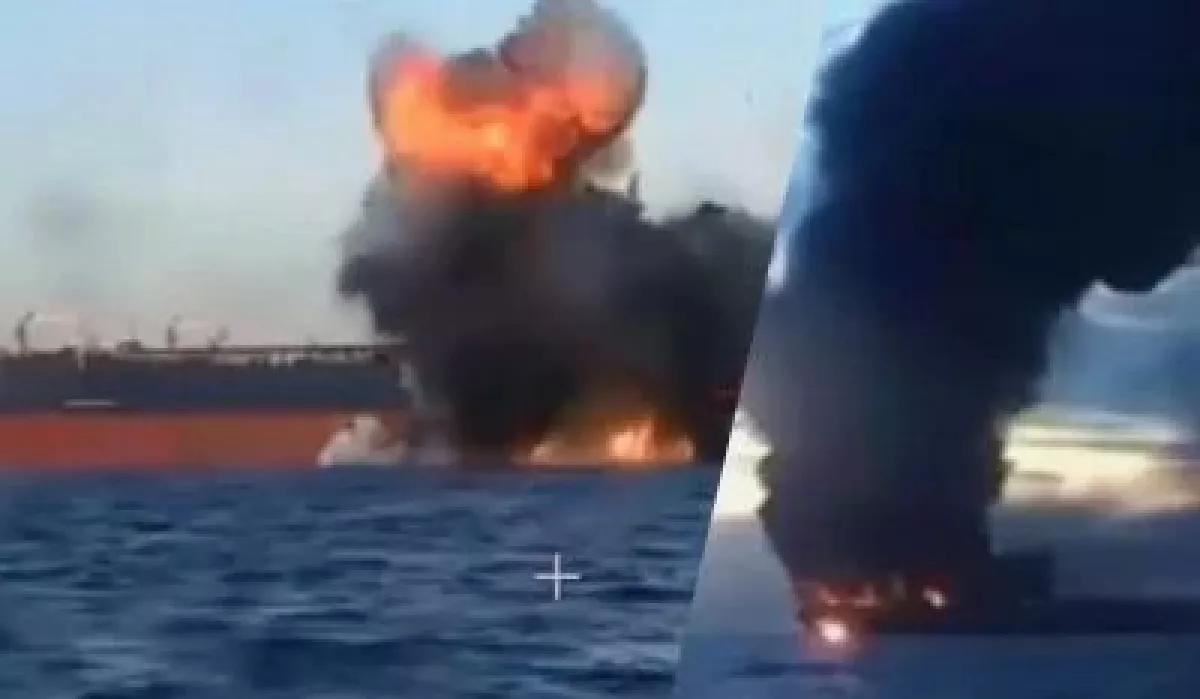
The ongoing Russian–Ukrainian war, which has lasted for more than four years, has had a significantly negative impact on transport and energy routes passing through Russia that connect Central Asian countries with Europe. In particular, Kazakhstan has for several years been facing repeated disruptions to the stable operation of the Caspian Pipeline Consortium (CPC) oil pipeline, including drone attacks on infrastructure at the Novorossiysk terminal, strikes on tankers in the Black Sea, and other incidents.
As part of Astana’s policy of diversifying energy export routes, and in accordance with an agreement between JSC NC “KazMunayGas” and SOCAR, Kazakh oil has been transported via the Baku–Tbilisi–Ceyhan pipeline since 2023. Since then, more than 3.4 million tonnes of Kazakh oil have been exported to global markets through this route, with supplies reaching 1.5 million tonnes last year.
As recently noted by Asylbek Dzhakiyev, Chairman of Kazakhstan’s Oil and Gas Association PetroCouncil, the northern route may remain constrained over the next 5–10 years, which increases the importance of alternative corridors, primarily oil transit via Azerbaijan.
Evidence of such demand is also reflected in comments made to Kazakh media by Kazakhstan’s Minister of Energy, Yerlan Akkenzhenov.
Answering journalists’ questions on the country’s oil production plans for the current year, he noted that “in 2026, oil production in the country will amount to 98 million tonnes, taking into account unscheduled shutdowns at the Tengiz field and the consequences of attacks on CPC infrastructure, which led to losses of around 5 million tonnes of oil shipments. These factors were the key reasons for adjustments to production plans for the current year, although the baseline scenario had assumed higher figures.”
At the same time, during Baku Energy Week, the Kazakh minister stated that his country is ready to increase oil supplies via Azerbaijan, recalling that last year transit through the BTC pipeline amounted to 1.5 million tonnes per year and could be increased to 2.2 million tonnes, as envisaged in the protocol, and potentially grow further in the future.
In this context, it is worth recalling that during the 21st meeting of the Joint Azerbaijan–Kazakhstan Intergovernmental Commission on Trade and Economic Cooperation, held in Baku in October last year, the possibility of increasing Kazakh oil transit to around 7 million tonnes per year by 2027 was discussed.
The issue of using the potential of the Baku–Supsa pipeline for these purposes remains open, and according to Akkenzhenov, no official negotiations on oil deliveries via this route have yet taken place. However, this option is being considered by the relevant agencies in Astana and Baku, which are also discussing pricing issues, including transit tariffs, as well as the costs of more expensive logistics—such as insurance and tanker freight rates, given the unstable situation in the Black Sea, and other related factors.







 editor@caliber.az
 +994 55 444-88-98
 Азербайджан, Баку, ул. Низами, 203, Af Business House, 5-й этаж