










Green colonialism Who buried the oil of French Guiana?
Off the coast of French Guiana, oil lies beneath the seabed, yet most of its population lives below the poverty line. These two facts have existed side by side for fifteen years, ever since exploratory drilling some 150 kilometres north-east of Cayenne confirmed the presence of an oil-bearing structure in the Exclusive Economic Zone. French Guiana’s neighbours on the same geological shelf — Guyana and Suriname — have, over these years, turned similar discoveries into active production and into revenues that are transforming the fate of small states. French Guiana has not produced a single barrel. Not because there are no reserves or no one capable of developing them, but because a law passed in Paris, eight thousand kilometres away from Cayenne, prohibits it from doing so. On June 11, the French National Assembly finally buried an attempt to lift this ban, and the manner in which it was buried highlights the entire structure of relations between the metropole and its overseas territories.

The law in question is named after former Environment Minister Nicolas Hulot. It was adopted on December 30, 2017 and declared a phased end to France’s exploration and production of hydrocarbons across its entire territory — onshore and offshore, in metropolitan France and overseas.
For the Fifth Republic itself, the measure was almost symbolic: the country produces virtually no hydrocarbons, so there was little to give up, and the gesture delivered political dividends without economic cost. The situation is different for overseas territories. Where real reserves exist, what is a symbolic renunciation for Paris becomes a concrete ban on development, and the burden of financing the metropole’s climate image falls on those who have had almost nothing to do with its carbon footprint.
A resident of French Guiana living on welfare in Cayenne ends up paying for Paris’s green reputation by being denied the only resource capable of lifting the territory out of poverty.
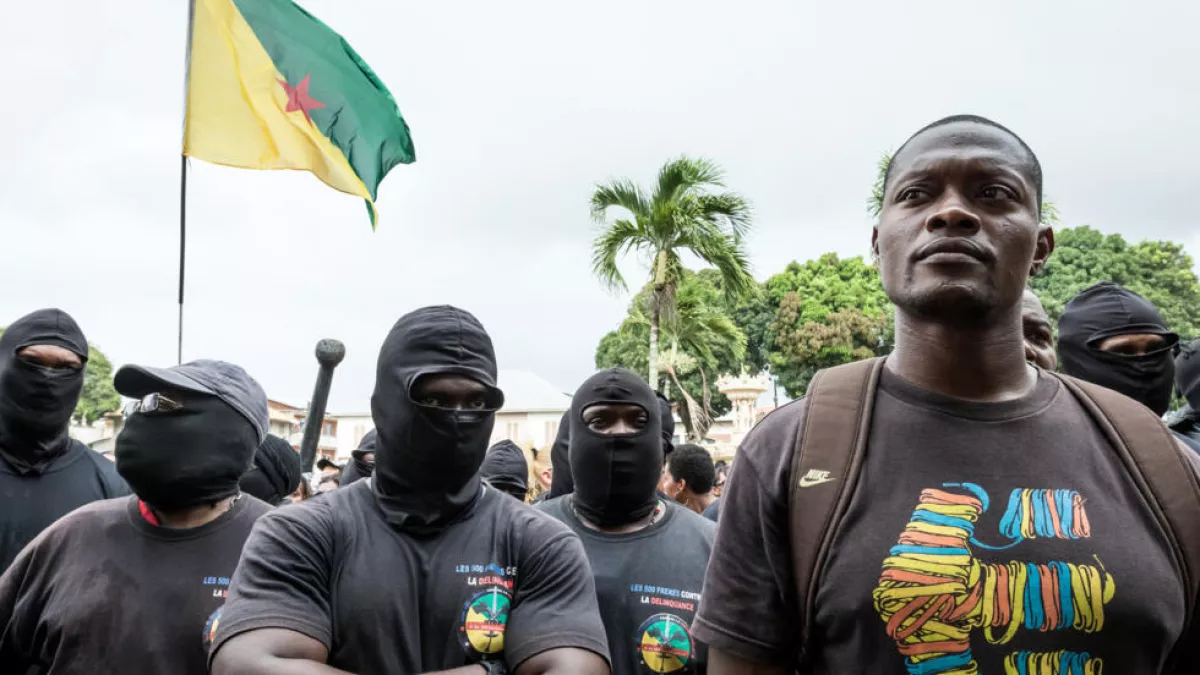
Guianese deputies Jean-Victor Castor and Davy Rimane, who led the bill seeking to exempt overseas territories from this law, described the situation by its true name — “green colonialism.”
The formulation is precise to the letter. Classical colonialism extracted resources from overseas possessions for the benefit of the metropole; green colonialism prevents an overseas territory from using its own resources for the sake of the metropole’s reputation. The mechanics differ, but the essence is the same: decisions about the fate of a territory are made not where that territory is located, but in the imperial centre, based on its own interests.
Rimane put it bluntly: the level of development in French Guiana is not comparable to that of the metropole, yet the same climate standards and targets are applied to it as if Cayenne and Paris existed within the same economic reality. According to him, the population of the territory is primarily preoccupied with basic needs, and the question of whether such a development model should be adopted must be decided by the inhabitants themselves, not by Paris.
France, he notes, has neither eliminated the region’s structural underdevelopment nor allowed it to use its own natural resources to overcome it.
The most telling aspect of this story is who, precisely, blocked the bill. It was introduced in the Senate and passed its first reading in January; in the National Assembly, the process was led by Guianese deputies from the left-wing group. The initiative was ultimately buried by the French far left.
Amendments that stripped out the bill’s key provision were put forward by Jean-Luc Mélenchon’s “La France Insoumise” and the Greens, and were supported by the Socialists and the centrist Macron bloc. In the relevant committee, the core of the law was removed by a vote of 28 to 18.
Those very political forces that, in international discourse, present themselves as champions of decolonisation, climate justice, and the rights of oppressed peoples voted, on this concrete issue, against the right of one of France’s poorest overseas territories to control its own natural resources.
The backlash was so strong that Castor and Rimane publicly announced a break with the French left, accusing it of dogmatism and moral self-satisfaction that leaves no room for real people.
The Guianese left broke with the Parisian left over the fact that the latter acted, in their view, in a colonial manner — a storyline that is difficult to ignore.
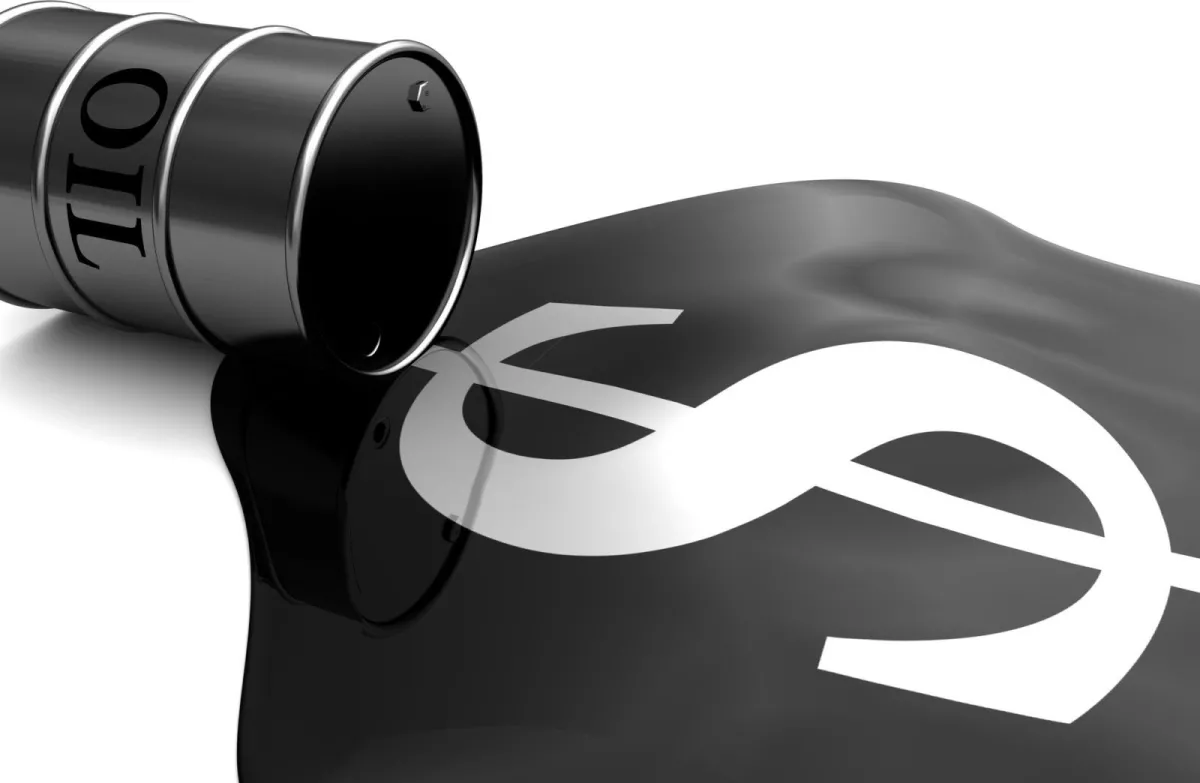
This reveals an internal contradiction in climate policy that wealthy countries prefer to ignore. In its current Western form, the climate agenda is structured in such a way that the poorest end up paying its price. The rejection of hydrocarbons is an affordable luxury for a society that has long completed its industrial phase and has become wealthy precisely thanks to those same hydrocarbons. For a society that has not gone through industrialisation and for which oil is needed not for comfort but as a means of escaping poverty, the same rejection means the preservation of underdevelopment.
When Paris prescribes Cayenne to live according to its climate standards, it is exporting not concern for the planet, but its own hierarchy of priorities, in which the interests of a poor Guianese resident rank below a line in a French environmental report.
This is green colonialism in its purest form: universal norms written by the powerful, which the weak are expected to adapt to, regardless of what those norms actually mean for them.
France is particularly recognisable in this role. For decades, Paris has acted as a global lecturer on the rights of peoples and a moral arbiter in other countries’ conflicts, readily explaining to other capitals how they should treat their minorities and territories.
In the South Caucasus, French diplomacy spent years lecturing Baku on rights and justice, presenting itself as the “conscience of the region.”
The contrast with how the same France treats its own overseas territory, where half a million of its citizens live, is all the more striking: lectures on self-determination end precisely where French economic and sovereign interests begin. Paris’s moral demands, as it turns out, have geography — they are directed outward and hardly operate inward.
French Guiana is not the only place where this is visible, but it is currently one of the most illustrative examples.
What remains for French Guiana after June 11 is a question that its politicians have already begun answering out loud, and the answers are uncomfortable for Paris.
Rimane has stated directly that the rejection of the bill will serve as clear evidence of the need for independence and of the importance of direct negotiations with neighbouring countries, without reference to Paris. This is not a rhetorical threat made in the heat of the moment, but a description of the logic into which the territory is being systematically pushed.
If the metropole neither resolves underdevelopment nor allows the territory to address it independently, it effectively creates its own demand for separation from its authority. Guyana and Suriname nearby are becoming wealthier from the same oil resources; for a Guianese resident, it is enough to look across the border to see what they are being denied by a decision made by a distant parliament.
Separatist sentiment in France’s overseas territories does not emerge from abstract nationalism, but from concrete votes like this one, in which local interests are routinely outweighed by external priorities — with a predictable outcome.
The story of Guianese oil is small in scale, but like a drop it reflects something that is rarely stated outright. Decolonisation, which the West declared complete half a century ago, in practice changed form but not substance. Direct rule gave way to governance through universal norms; imperial extraction of resources was replaced by imperial prohibition on their use. In both cases, decisions are made in the centre, while the consequences are borne by the periphery.
By calling this “green colonialism,” the Guianese deputies did everyone else a service: they coined a precise definition for a phenomenon that extends far beyond a single overseas territory and a single rejected oil proposal.
On June 12, Paris will wake up with its usual reputation as a climate leader and defender of the oppressed. In Cayenne, however, that same word will now be pronounced with a different tone.







 editor@caliber.az
 +994 55 444-88-98
 Азербайджан, Баку, ул. Низами, 203, Af Business House, 5-й этаж