










Serbia on the brink of snap elections Vučić’s calculation and the opposition crisis
The political crisis that began in Serbia in November 2024, triggered by the tragedy in Novi Sad, where 16 people were killed after a concrete canopy collapsed at the local railway station, is now forcing the country’s leadership to reconsider its domestic agenda and take radical political decisions.
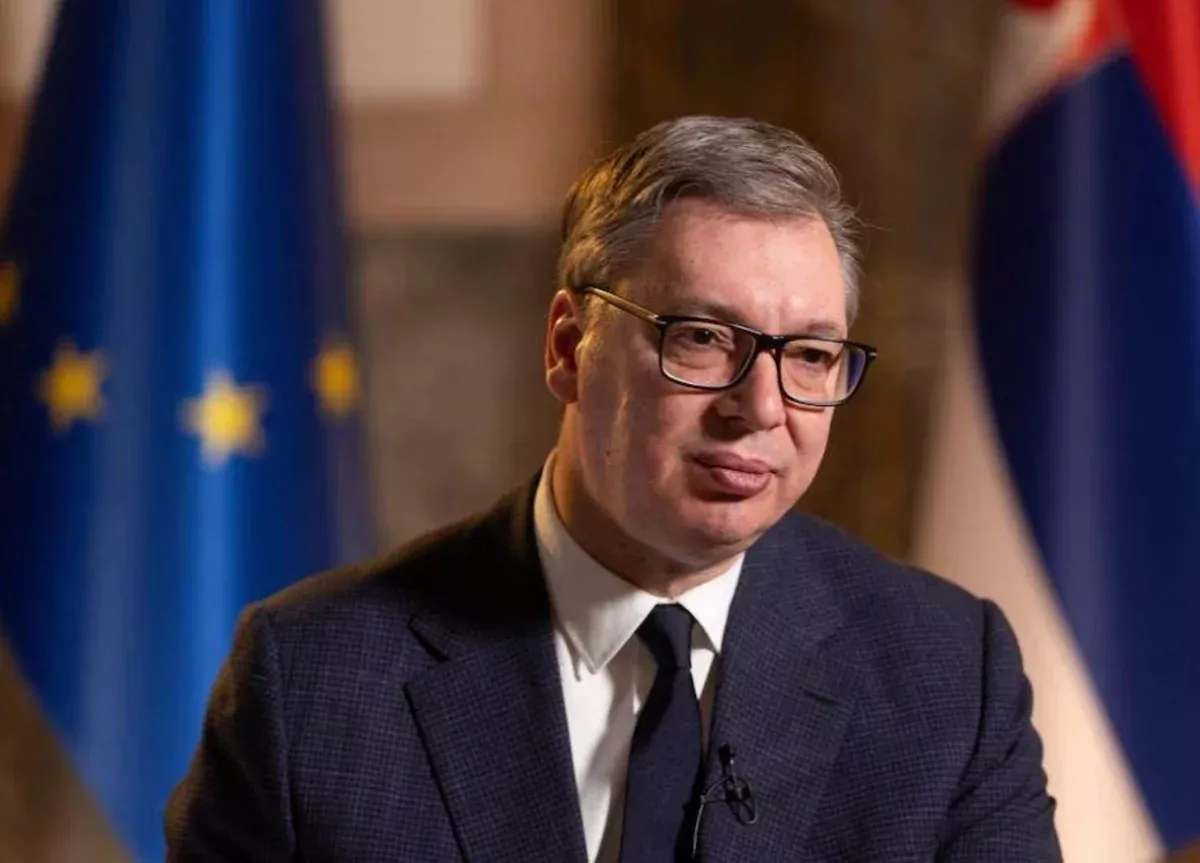
Following a wave of large-scale anti-government protests, President Aleksandar Vučić announced on Radio Television of Serbia that early parliamentary elections would be held in the autumn of this year, which, according to him, “will take place between late September and mid-November.”
It is increasingly clear that this vote will not be held due to the expiration of the parliamentary term, but rather as a calculated move by the authorities to ease rising social tensions. This is the first and most fundamental factor shaping the current political moment.
The second aspect of this decision is that the current authorities aim to consolidate public support through early elections. Under Serbian legislation, the president cannot run for a third term. At the same time, Aleksandar Vučić has signalled that his long-term presidential tenure is nearing its end, repeatedly stressing that he will not amend the Constitution in order to remain in office.
Meanwhile, as recently stated by Speaker of the National Assembly Ana Brnabić, the ruling Serbian Progressive Party intends to nominate Vučić as its candidate for prime minister in the parliamentary elections. In this context, it is in the incumbent president’s interest to secure a stable parliamentary majority in advance, thereby preserving political influence after the end of his presidential mandate.
It should also be noted that, despite the wave of protests, a significant portion of the Serbian population continues to support Vučić’s policies. In this regard, it is worth recalling that in the 2022 presidential elections, nearly 60 per cent of voters backed him.
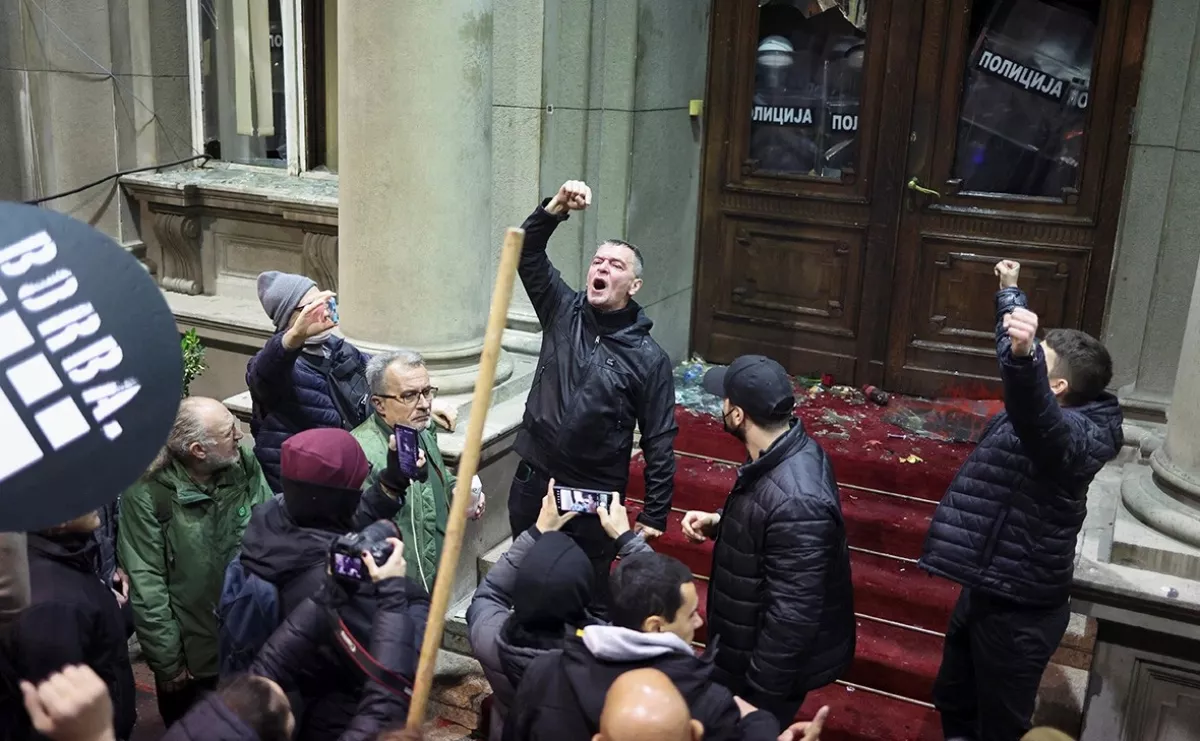
Thirdly, by calling early elections, the ruling party expects to shift the political struggle from the streets to the ballot box — meaning that the question of support for or opposition to the government’s policies would be decided not through street protests, but through a more institutional and “civilised” electoral process.
Fourthly, the Serbian government currently benefits from fragmentation within the opposition, whose representatives hold fundamentally divergent positions. For instance, centre-left and pro-Western liberal parties advocate EU integration, while right-wing nationalist movements support closer ties with Russia and firmly oppose recognising Kosovo’s independence. As a result, due to the absence of a coherent strategy, the opposition camp remains significantly weaker than the ruling authorities.
In addition, it should not be overlooked that, in advancing national interests, Vučić enjoys considerably greater leverage than his political opponents, particularly in promoting Serbia’s European integration agenda. As is well known, Serbia has held the status of official candidate for EU membership and has been engaged in accession negotiations with Brussels since 2014.
The process is being delayed due to a number of unresolved issues. Belgrade is required to normalise relations with Kosovo — a key condition explicitly embedded in the accession framework — as well as to align its judiciary, human rights standards, and economic legislation with those of the European Union. In other words, Serbia’s full membership will only become possible once Belgrade fulfils all chapters of the negotiation process and secures unanimous approval from all EU member states.
At present, the Serbian leadership is making intensified efforts to meet the criteria for EU membership by 2026–2028. In March this year, in an interview with TV Una, the head of state stressed that the country “will do everything possible to accelerate its accession to the European Union, although this will not be easy.” Similar remarks were made in an interview with the German newspaper Frankfurter Allgemeine Zeitung, where he emphasised that “EU membership is acceptable for Serbia even without veto rights.”
On the other hand, the decision to call early elections carries certain risks, as even with the incumbent leadership’s significant advantages, the outcome will largely depend on whether the protest movement can consolidate with the political opposition. However, how events will unfold remains to be seen.







 editor@caliber.az
 +994 55 444-88-98
 Азербайджан, Баку, ул. Низами, 203, Af Business House, 5-й этаж