










“Rain of fire” over Kyiv Ukraine’s reality and endurance amid war
It was a true hell: on the night of May 23–24, Russian forces carried out a massive combined strike on Ukraine. The country’s Air Forces recorded 690 attack assets: 90 missiles (including the medium-range ballistic missile “Oreshnik”) and 600 UAVs of various types. Air defence forces shot down and neutralised 55 missiles and 549 drones. The main targets were Kyiv and the Kyiv region.
Chronicle and consequences of the night attack
Hits were confirmed at around 50 locations; two people were killed, and at least 83 were injured, 69 of them in Kyiv. The strikes hit residential buildings and schools. Among the sites destroyed in fires were one of the oldest food markets in the Ukrainian capital — the Lukianivskyi market — and the “Kvadrat” shopping and entertainment centre.
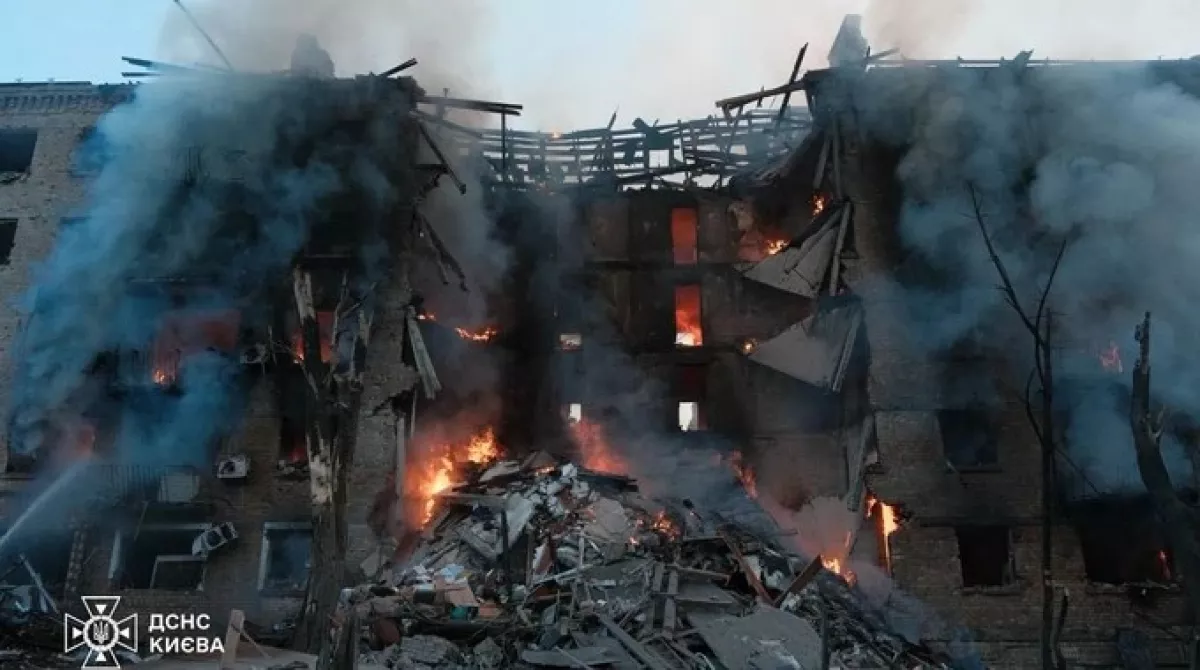
In addition, as a result of the Russian attack, the National Museum “Chernobyl” was effectively destroyed. The art museum and the building housing the office of the German broadcaster ARD were also damaged. For the first time since the Second World War, the Ministry of Foreign Affairs of Ukraine's building was damaged. Some of the missiles launched into the Shevchenkivskyi district, where the Azerbaijani Embassy is located, fell near the diplomatic mission, and the blast wave shattered its windows. According to Ukrainska Pravda, the building on Hrushevsky Street in Kyiv, where President Volodymyr Zelenskyy’s apartment is located, was also damaged during the night attack.
The above-ground vestibule of the Lukianivska metro station (with a depth of about 69 meters) was also affected: the force of the explosion was so strong that the shockwave passed through the deep escalator shaft. On the platform itself, where hundreds of civilians were sheltering, a thick cloud of dust rose, and plaster fell from the ceiling.
Hatred and contempt — the main emotions of Ukrainians
This was a classic act of intimidation, aimed not at achieving any battlefield results, but at terrorising the civilian population of Ukraine. In Russia, there is still a belief that Ukrainians can be broken and frightened by such actions.
However, Moscow is deeply naive in this assumption, as the following fact — witnessed by the author — demonstrates: under brutal Russian shelling, a huge number of Ukrainians were watching the boxing match for the title of absolute world heavyweight champion between Oleksandr Usyk and the Dutch “kickboxing king” Rico Verhoeven.
Oleksandr Usyk won by knockout in the 11th round. After the fight, he admitted that he was constantly thinking about his country and his family, who were under shelling at that moment: “I know right now, Ukrainian, my people, in my country fight bombing. My people now sit in bomb shelters. My family. My daughter too - bomb shelter. [She] sent me a message. ‘Papa, I love you. You win.’ I [was] afraid. I say, ‘Oh my god,’” the boxer shared.
This is a clear example of the tragedy of what is happening and the resilience of Ukrainians. To complete the picture, here are a few more facts. In the morning after that terrible night, the owner of the tea and coffee shop “Hogo” in Podil — which had opened just one day before the latest Russian strike on Kyiv — Yevhen, together with his mother, was giving out free coffee through shattered windows. People from Kyiv deliberately came to this place to support it and thank them for their kindness.
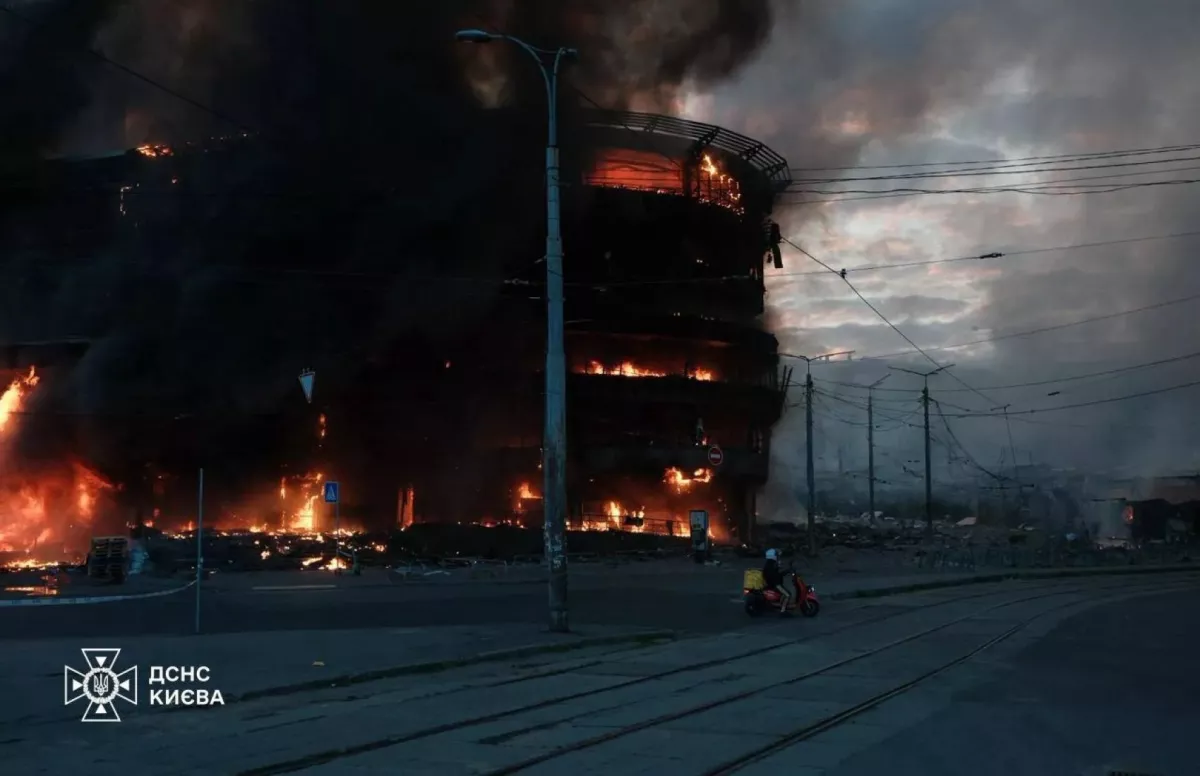
Dasha Slesarenko’s wedding dress — which she had left at the “Kvadrat” mall for tailoring — burned in the fire that broke out there on the eve of her wedding. She wrote about it on Threads: “I just realised that my wedding outfit, which I had handed in for alterations, just burned down in the Kvadrat shopping mall. The wedding is in 20 days.” The girl’s post went viral and touched many Ukrainian women so deeply that they decided to support the bride by offering their own wedding dresses free of charge, posting photos so Dasha could choose the one she liked.
It is impossible to instil fear and terror in such people. The only emotion Ukrainians are experiencing at present is hatred towards Russia, and this is what has helped them endure more than four years since the beginning of this bloodshed.
Zelenskyy’s mistakes and unfulfilled promises
Amid all the tragedy, the phrase about “using a cannon to shoot sparrows” took on new meaning, as the much-publicised Russian “Oreshnik” missile — whose production cost, according to expert estimates, ranges from $20 million to $100 million — struck directly into garages on the outskirts of Bila Tserkva in the Kyiv region.
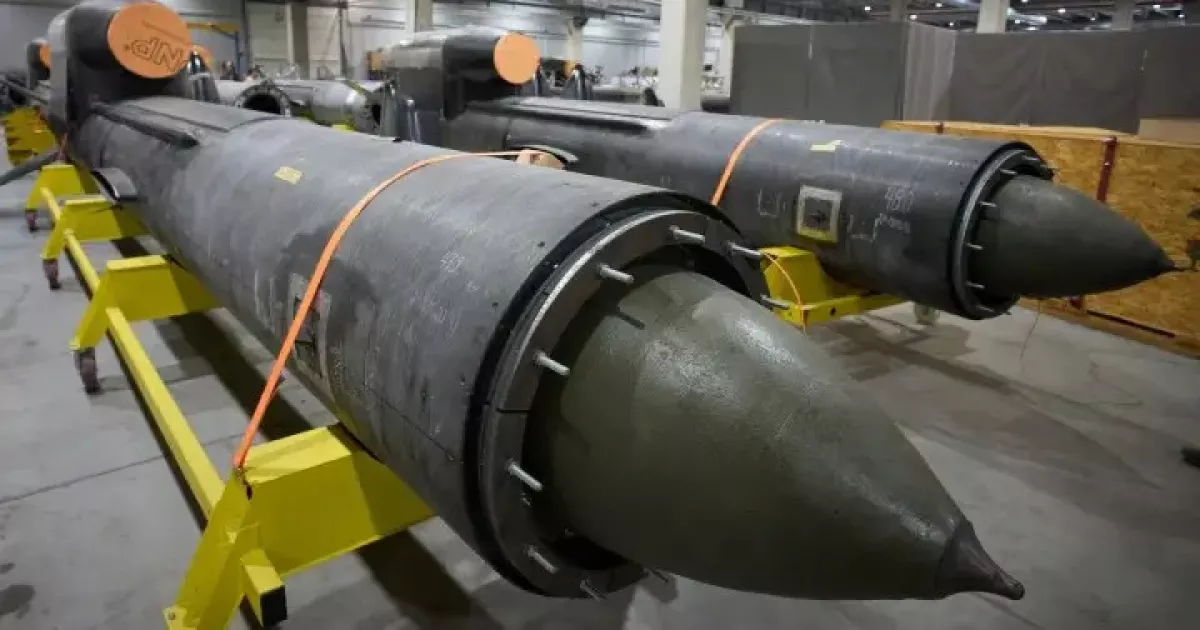
However, as Defense Express writes, nearly a year passed between the first and second use of the “Oreshnik” against Ukraine, while only about 4.5 months separated the second and third attacks. This may indicate an increase in the production rate of these intermediate-range ballistic missiles (IRBMs). Meanwhile, analysts question the effectiveness of such weapons in their non-nuclear configuration, and the current attack appears to confirm those doubts.
At the same time, Defense Express expert Ivan Kyrychevskyi points out that the “Oreshnik” remains a threat that “cannot be ignored,” since Ukraine currently has virtually no means of intercepting such intermediate-range ballistic missiles. He also believes that, in the long term, the country needs to develop its own missile defence system and analogous missiles.
And here we come to another side of the issue. As noted by popular military blogger, civic activist, and OSINT researcher Sergey Pogrebitskiy, the current shelling of Kyiv is a good example of the Ukrainian president’s mistaken decisions.
“We do not have missiles for a symmetrical response to Russian terror. When, in May 2021, Zelenskyy replaced the head of the Supervisory Board of Ukroboronprom, Academician Horbulin — the developer of strategic missile systems and the ‘Kosmos’ series of spacecraft — with Tymofiy Mylovanov, who is widely known in corruption circles, Ukraine’s missile programs could effectively be written off for good. Especially since they had already been stripped of funding earlier,” he emphasised.
Former Verkhovna Rada deputy and popular blogger Boryslav Bereza also weighed in on the issue. On his Facebook page, he wrote that Russia should not be persuaded, but forced to end the war through Ukrainian drones and missiles.
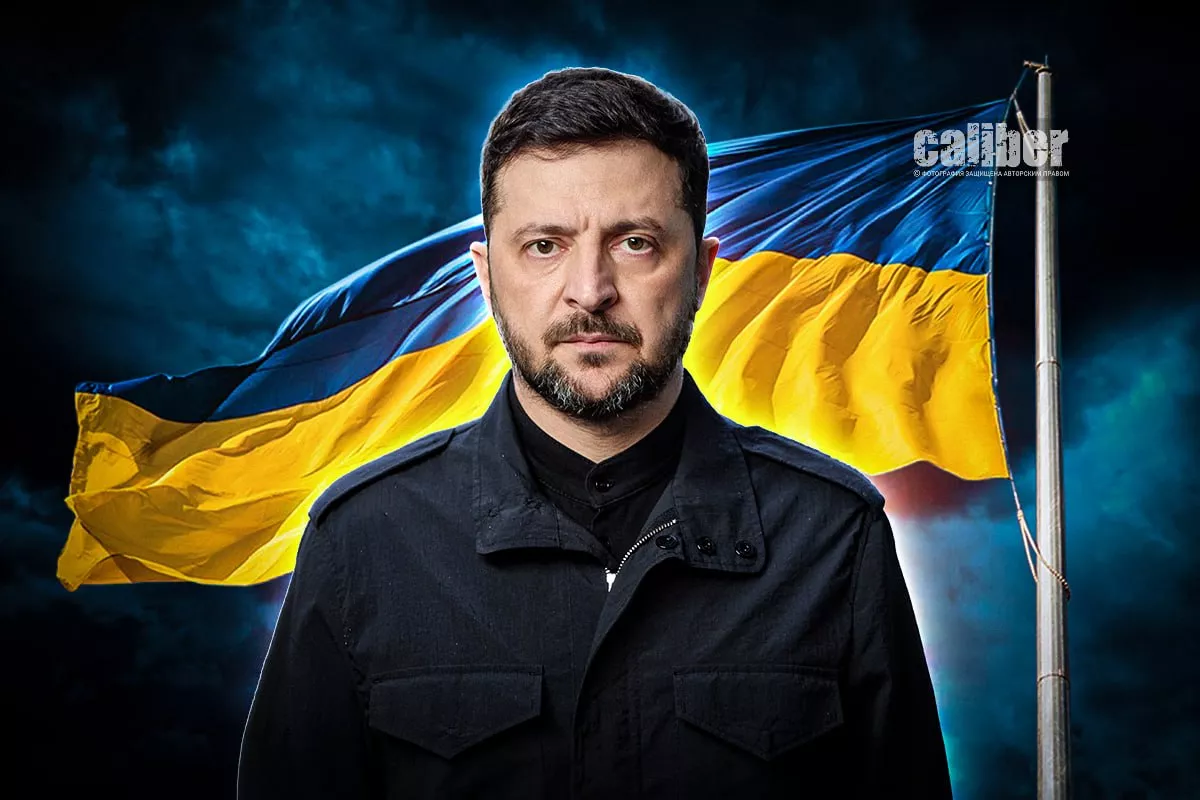
“Instead of talking about 3,000 missiles by the end of 2025, everything should be done to produce at least 500 missiles a year. Instead of promising a blackout in Moscow if there is one in Kyiv, actually make it happen. But for that, it should not be tiny drones flying toward Moscow, but missiles and drones — nonstop. And for them to exist, budget money must not be stolen, barriers must not be created in Energoatom, and luxury apartments in ‘Dynasty’ must not be built; instead, funding for production must be ensured. Conditions should not be created for one ‘preferred’ company, but for the capability to carry out systematic strikes on Moscow and other cities.
And in the fifth year of the full-scale war, it should not be ordinary Ukrainians pooling money for drones — the authorities must provide servicemen with everything they need to eliminate the enemy while carrying out orders. What is needed is not promises, but action. And if you cannot do it yourself, you should allow those who can. But as long as PR, ratings, and one person’s desire to be re-elected clearly dominate over the needs of the state, this should not be expected. Miracles do not happen. The desired result is the consequence of systematic work, not yet another promise in evening video addresses that are never fulfilled, only announced,” Bereza wrote.
In this context, it is worth recalling that Volodymyr Zelenskyy announced the plan to produce 3,000 missiles in November 2024 during the presentation of the “Internal Resilience Plan.” At the time, the goal for 2025 was to reach production of around 3,000 cruise missiles and 30,000 long-range drones, as was later reiterated by Prime Minister Denys Shmyhal. However, these promises have remained only words, while Ukrainian cities and villages continue to live under a “rain of fire.”







 editor@caliber.az
 +994 55 444-88-98
 Азербайджан, Баку, ул. Низами, 203, Af Business House, 5-й этаж