










Pre-election Armenia and the Rubio method A Budapest scenario for Yerevan?
US Secretary of State Marco Rubio is set to arrive in Yerevan on May 26. At the same time, the agenda of the high-ranking American official’s visit, announced by the Armenian Foreign Ministry, appears rather compact: a meeting with Foreign Minister Ararat Mirzoyan, joint press statements, and the signing of bilateral documents. The trip is short, routine in form, and in a sense deliberately unremarkable.
This outward modesty is part of a method that, in the practice of the current US administration, has a recognisable signature style and a first point of application — Budapest. The outcome of that first application is well known.
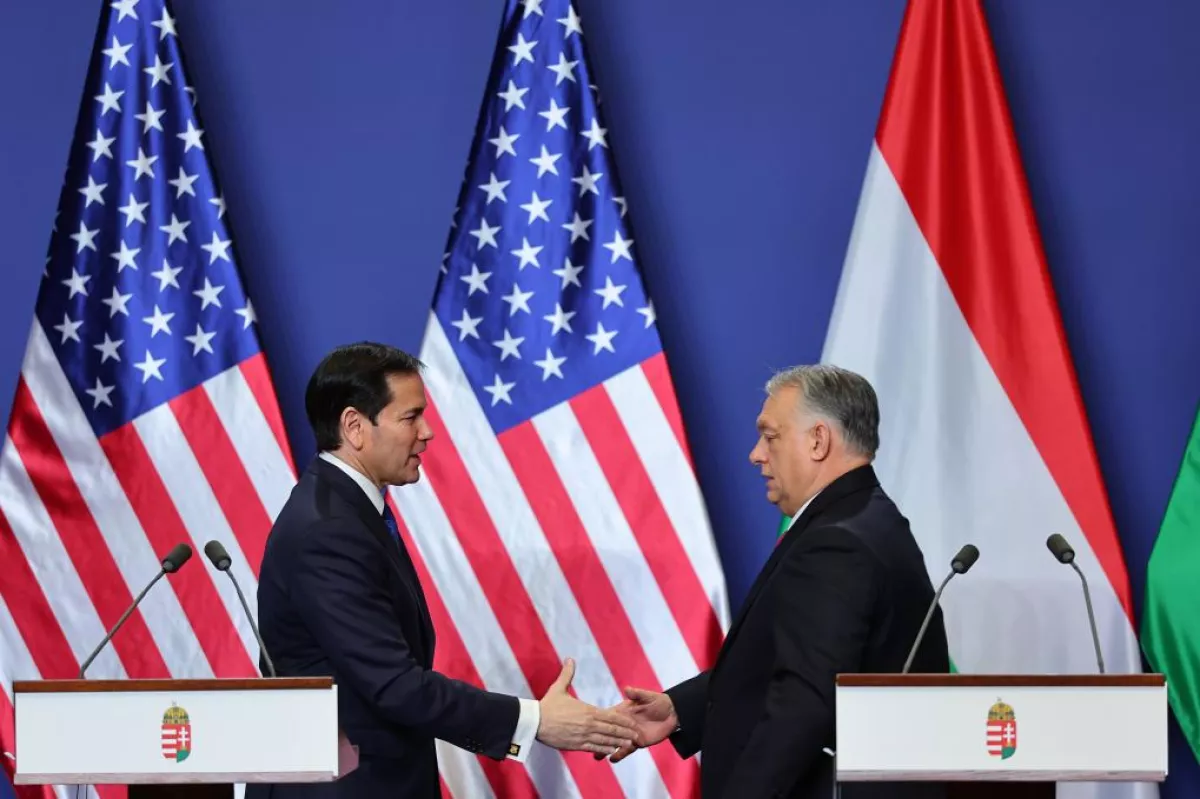
A similar scenario had been played out earlier in Hungary, involving the same team. J.D. Vance and Marco Rubio visited Budapest in an effort to support Viktor Orbán on the eve of parliamentary elections. Donald Trump, for his part, issued a video message — a public endorsement on Truth Social: “I’m with him all the way.”
However, Orbán lost: the Tisza Party of Péter Magyar secured 53.6 per cent of the vote and 138 out of 199 seats, while Fidesz received 37.8 per cent and 55 seats. After sixteen years in power, Orbán called the winner and conceded defeat.
The American campaign of external support backfired: assistance from Trump and his envoys became one of the opposition’s key arguments, turning an electoral advantage into a political liability. This outcome is now on the table for anyone considering a repetition of the method in another country.
After the failure in Budapest, a high-ranking representative of Trump is travelling to Yerevan.
The logic behind Armenia being selected as the next destination is clear without further explanation: Nikol Pashinyan’s approval ratings are unstable, while figures from the revanchist camp are emerging on the horizon, led by Robert Kocharyan and a church-aligned faction mobilised after the crisis surrounding Etchmiadzin.
The European component of support has already been deployed: in May, Yerevan hosted the EU–Armenia summit and the European Political Community meetings, attended by Ursula von der Leyen, António Costa, Emmanuel Macron, and several other leaders.
Now the U.S. Secretary of State is arriving, again on a separate visit and with the signing of bilateral documents. The scenario is the same as in Budapest: a compressed format, a neutral pretext—bilateral relations.
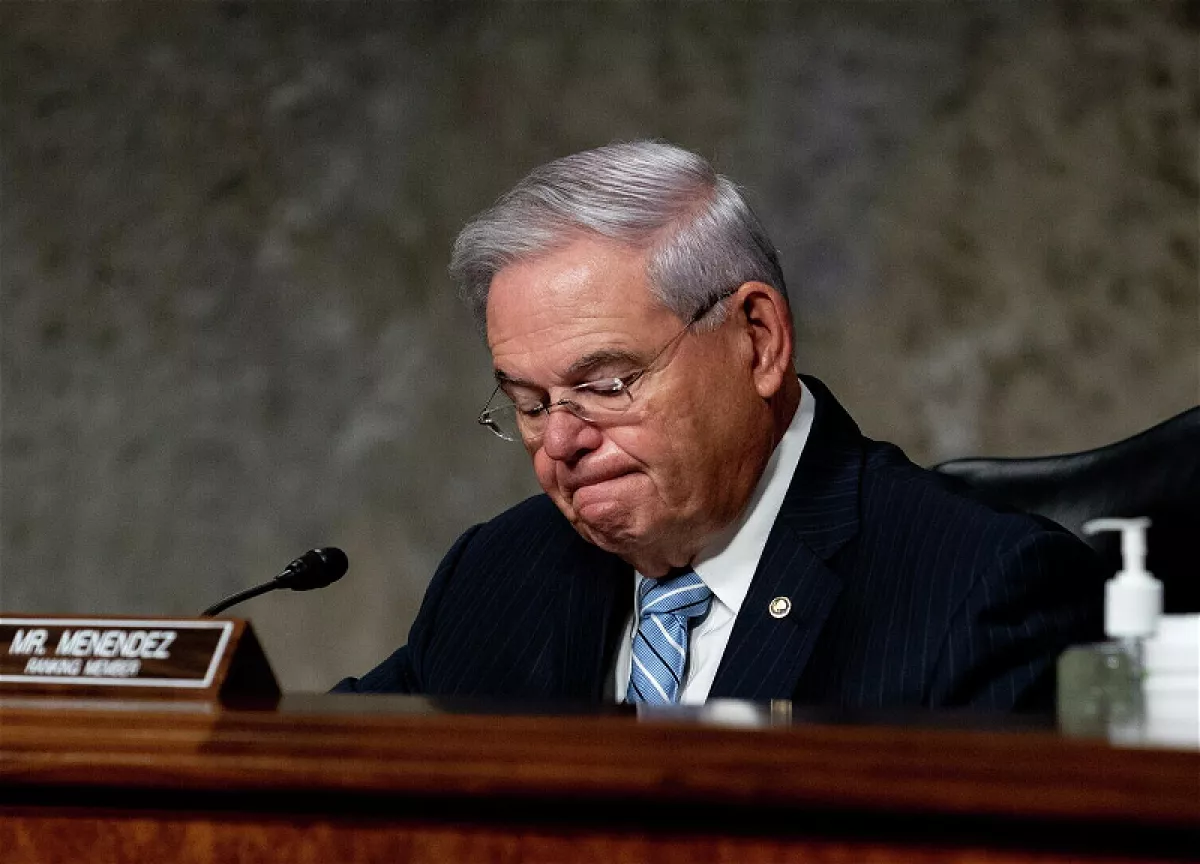
In this context, Rubio’s own biography is particularly noteworthy. On September 27, 2022, then Senator from Florida Marco Rubio, together with then Chairman of the Senate Foreign Relations Committee Bob Menendez, introduced Resolution S.Res.797 — a document urging “the Secretary of State to immediately halt all security assistance to Azerbaijan,” the consideration of sanctions under the Magnitsky Act against Azerbaijani leadership, and the classification of Baku’s actions as war crimes.
In the same year, the Armenian National Committee of America (ANCA) placed Rubio at the top of its Senate endorsement list as one of the key advocates of Armenian interests in Congress.
Rubio’s background in relations with Baku has accumulated over many years, and it reflects not the position of the administration he currently serves in, but his personal history of engagement with Armenian diaspora structures. In other words, Yerevan is not receiving a neutral official with a purely protocol-driven agenda, but a figure whom diaspora networks have long treated as a reliable interlocutor.
This is his vulnerability: everything Rubio says in Yerevan will be read through the prism of his biography — in Baku, in Brussels, and in Armenia itself, where the cost of the pro-Western tilt is already beginning to accumulate.
The cost of this becomes visible in the first serious contradiction embedded in the visit’s agenda.
On August 8, 2025, in Washington, in the presence of Ilham Aliyev, Nikol Pashinyan, and Donald Trump, the text of a peace agreement was initialled — the same document that is now presented in the White House as the main foreign policy achievement of the American president in the Eurasian direction, within which the TRIPP corridor has been incorporated.
In January 2026, Ararat Mirzoyan travelled to Washington to meet Rubio to discuss the “Trump Route.” In other words, by the time of the current visit to Yerevan, the Secretary of State holds two parallel tracks: a peace track in which the United States acts as a mediator, and an electoral track in which the American administration becomes a direct stakeholder backing a specific candidate.
A mediator who is seen as openly supporting one side in an upcoming domestic election loses legitimacy by default — both in the eyes of the opposing regional party and in the eyes of the Armenian electorate, to whom this intervention is being presented as a concern for their future.

The Budapest experience is particularly inconvenient in this context. In Hungary, the opposition used Rubio’s and Vance’s visits as evidence that the government was not acting independently, but operating within a logic of vassal dependence on an external patron. This framing proved more effective in the final phase of the campaign than Washington had anticipated.
The regional backdrop also does not help the American side. Armenia is approaching 2026 in a position where its relations with Russia are close to rupture: Pashinyan has effectively withdrawn from the CSTO, is freezing participation in Eurasian structures, and is openly negotiating with Brussels. In response, Russia has launched its own information campaign—Sergey Lavrov speaks of Armenia being drawn into an anti-Russian camp, while Dmitry Medvedev goes further, arguing that Pashinyan has chosen a path of rupture.
Against this background, American public support functions less as a tool of leverage and more as a marker of alignment—one that is already somewhat delayed. Yerevan’s westward shift has been underway for years, and Rubio’s presence does not add to that trajectory itself. What it does add is personalisation: it ties the shift to the figure of a single prime minister.
If that figure loses the election, the entire pivot risks becoming associated with a defeated leader. Hungary demonstrated precisely how this mechanism works.
The Yerevan visit also has an Azerbaijani dimension, in which it is read with particular clarity. Baku is quietly observing the arrival of a politician who, four years ago, called for sanctions against it, now travelling to the capital of a country with which peace has been de facto established with Washington’s facilitation.
This silence does not indicate the absence of a position. Azerbaijan has every reason in this configuration to calmly absorb the Secretary of State’s pre-election mission to Yerevan without public reaction: the peace agreement has been initialled, TRIPP is at the starting line, the regional balance favours Baku, and Armenia’s political class is well aware that any attempt to revise the existing understandings would cost far more than any diplomatic visit.
Visits to pre-election capitals are a distinct political genre, with its own authors and its own logic—one that presupposes outcomes. Budapest has already shown what those outcomes can be. Is Yerevan next?







 editor@caliber.az
 +994 55 444-88-98
 Азербайджан, Баку, ул. Низами, 203, Af Business House, 5-й этаж