










The Baku standard and its distinctive features From urban forum to global model
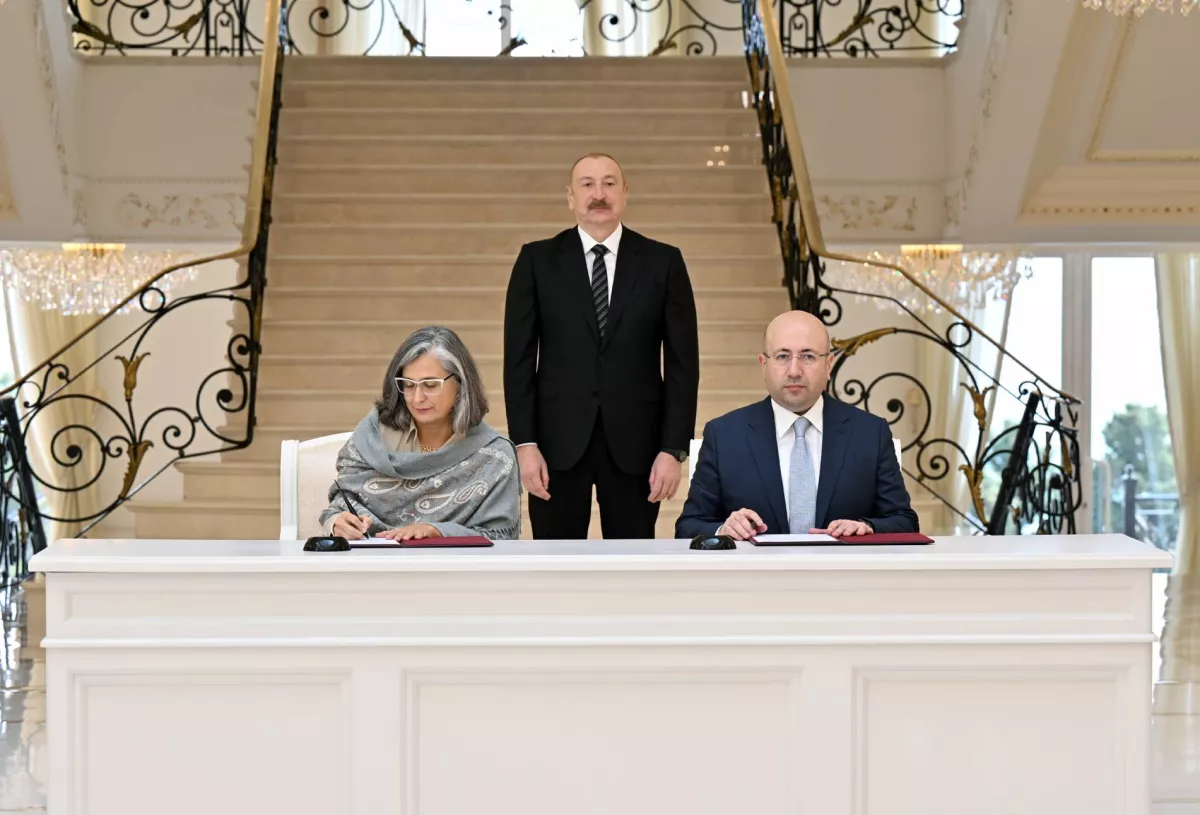
When an international organisation signs a separate document of intent with a host country specifically to record the experience of preparing a major forum as an institutional framework, it says a great deal. Such a document was signed in Baku today, on 16 May: on the eve of the opening of the 13th session of the UN World Urban Forum (WUF13), the State Committee on Urban Planning and Architecture of Azerbaijan and the United Nations Human Settlements Programme (UN-Habitat) signed a Letter of Intent on cooperation to jointly develop an operational guide for future sessions of the World Urban Forum based on the Baku standards of WUF13. In other words, this document turns the Baku model of preparing WUF into a practical roadmap for all future host countries. The signing took place after the President of Azerbaijan received the Executive Director of UN-Habitat, Anacláudia Rossbach. It was there that the formula worthy of special attention was officially voiced for the first time: “the WUF13 Baku standards.”
City-named standards in the UN system do not appear often. The Geneva Conventions, the Helsinki Final Act, the Paris Agreement, the Kyoto Protocol, the Minsk Agreements — geographical attribution becomes established when a place turns into a hub of a new normative regime. This is, of course, not about drafting a new convention, and even less about celebratory rhetoric. Rather, it is about the fact that an international organisation, working annually with dozens of countries, has, through a separate bilateral document, formalised Azerbaijan’s experience and translated it into a format that other countries will be expected to replicate.
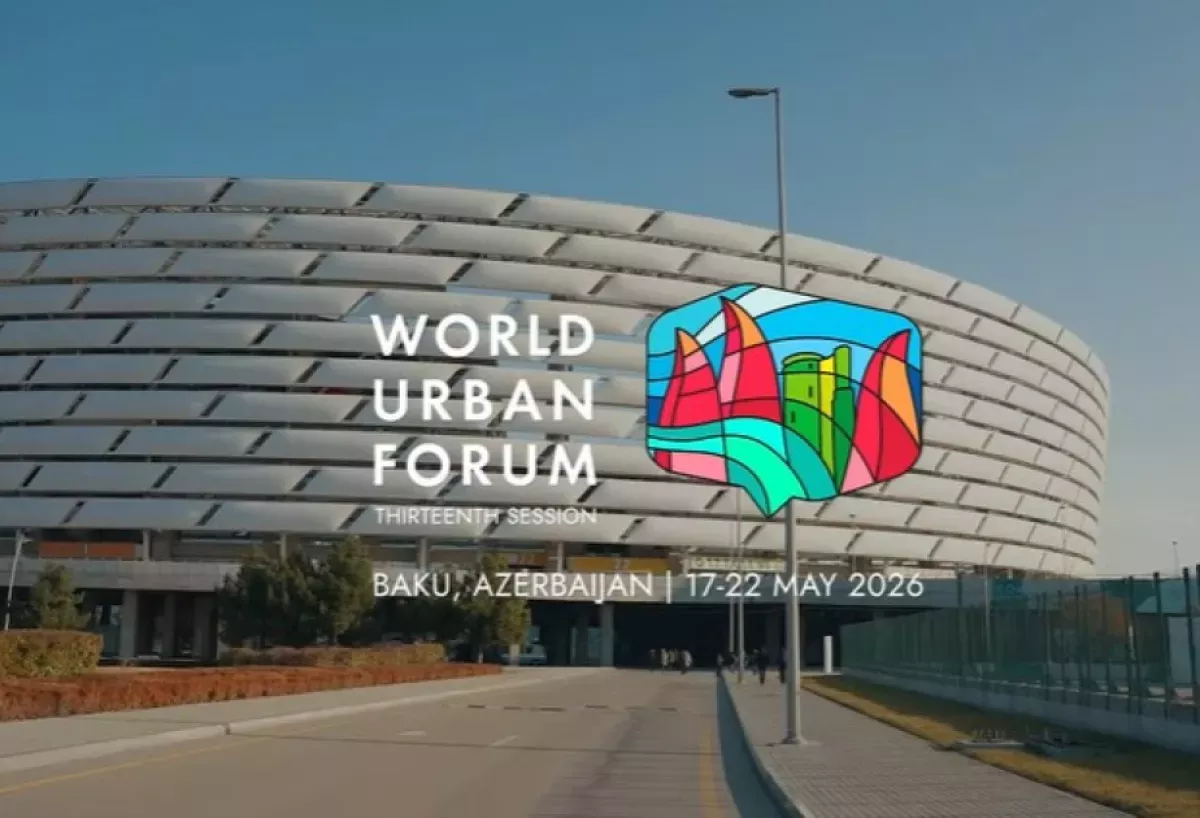
The logic by which UN-Habitat arrived at such a decision cannot be reduced to Baku’s organisational efficiency. The statement by the agency itself deserves close attention: Rossbach explicitly noted that Azerbaijan has built a substantive bridge between the two largest platforms within the UN system — the climate COP and the urban WUF. And this is true. WUF13 opens a year and a half after COP29, in the same capital, and the hosts of these major international events have deliberately used the interval to extend the logic of November 2024 into its spatial and urban dimension. For UN-Habitat, which for years has been striving to ensure that urbanisation issues are treated as a structural element of global politics rather than a peripheral topic on the diplomatic calendar, such a linkage is extremely valuable. In simple terms, Baku has become the only city through which two major substantive UN tracks have run consecutively, forming a continuous narrative line.
The main substantive rationale was articulated from a different angle. President Aliyev emphasised that Azerbaijan’s experience in hosting the World Urban Forum, as well as the innovative approaches applied in the country in the field of urban planning and the large-scale reconstruction and rehabilitation works being carried out in post-conflict conditions in the territories liberated from occupation, serve as a model for other countries. The Head of State noted that Azerbaijan is ready to share this experience.
Behind this formulation lies, without exaggeration, the world’s largest ongoing post-conflict reconstruction project from the ground up. Aghdam — which lay in ruins for nearly three decades and was described by foreign correspondents as the “Hiroshima of the Caucasus” — as well as Fuzuli, Shusha, Lachin, Zangilan, and Jabrayil, cities destroyed and looted during Armenia’s years of occupation, are being rebuilt as “smart” agglomerations with green energy solutions, a carefully designed transport logic, and social infrastructure planned entirely from scratch.
From an urban planning perspective, this is a unique case: where else can a specialist work with entire territories without having to adapt to existing urban fabric, but instead design everything according to the most modern standards? To this is added the theme of the forum itself — “Housing the world: Safe and resilient cities and communities.”
In Karabakh, UN-Habitat is not receiving a presentation on a stand, but a full-scale field laboratory: thousands of returning families, new settlements, and a completely reconfigured logistics of resettlement for former internally displaced persons. A narrative that fits precisely into UN-Habitat’s strategic plan for 2026–2029, approved by 105 member states.
This also contains the answer to the question of what makes Baku exceptionally convenient for UN-Habitat. Azerbaijan makes financial contributions to its programmes, regularly hosts national urban planning forums, and maintains bilateral cooperation with cities and agencies across the globe, from Central Asia to Latin America. President Aliyev declared 2026 the Year of Urban Planning and Architecture, and this coincides with WUF in chronological terms not by chance: the country is aligning its national agenda with the global one. This is the behaviour of a donor country, not a recipient one.
There is a clear gap between a country to which UN-Habitat brings expertise, and one from which UN-Habitat draws expertise — a distinction evident to anyone who has ever worked with international organisations.
Beyond the confines of a single forum, this same logic becomes even more apparent. Azerbaijan has hosted summits of the Non-Aligned Movement, TURKSOY, and ECO, has been the host of COP29, and has built major dialogue platforms within the Islamic world, and now also WUF13. This reflects a methodical transformation of the country into a permanent hub for assembling agendas of different kinds — ranging from politics, climate, and energy to urban development and cultural dialogue.
The Baku standards will now become part of UN-Habitat’s toolkit. From there, they will be passed on to the next WUF host city, to national committees, and to the consultants recommended by the programme. The word “standard” has a particular quality: it is quiet. It does not make headlines, nor is it quoted by politicians from podiums. It simply appears in the mandatory section of a technical regulation — and within ten years, half the world is operating according to that logic, often without remembering where it originated. That is, in reality, how international prestige is formed.







 editor@caliber.az
 +994 55 444-88-98
 Азербайджан, Баку, ул. Низами, 203, Af Business House, 5-й этаж