










EU: Neither strategy nor means A security system in decline
On May 14, it became clear that the United States is quietly reducing its military presence not only in Germany but across Eastern Europe as well. President Donald Trump and his team are doing what they have long said they would do. They intend to put an end to the strategic absurdity within NATO and to distance themselves from the ongoing bloodshed in the eastern part of the continent. European countries are unable to find a replacement for NATO, and even the staunchly pro-Western leadership of Armenia is openly questioning Europe’s military capabilities.
NATO as a burden
During the wave of euphoria that followed the collapse of the socialist bloc and the dissolution of the USSR, a book by historian David Gress, From Plato to NATO, became fashionable among Western liberals in the 1990s. In it, he summed up the essence of Western liberal intellectual development in this way. The book contained many controversial claims, including assertions about the intellectual lineage of modern imperial states stretching back to the ancient Greek philosopher Plato. However, it is interesting that NATO was chosen as a prime example symbolizing the culmination of the “idea of the West.”
It is worth recalling these celebratory interpretations in order to fully appreciate the current decline of NATO. The American leadership is making it clear that it does not intend to tolerate the strategic absurdity associated with NATO.
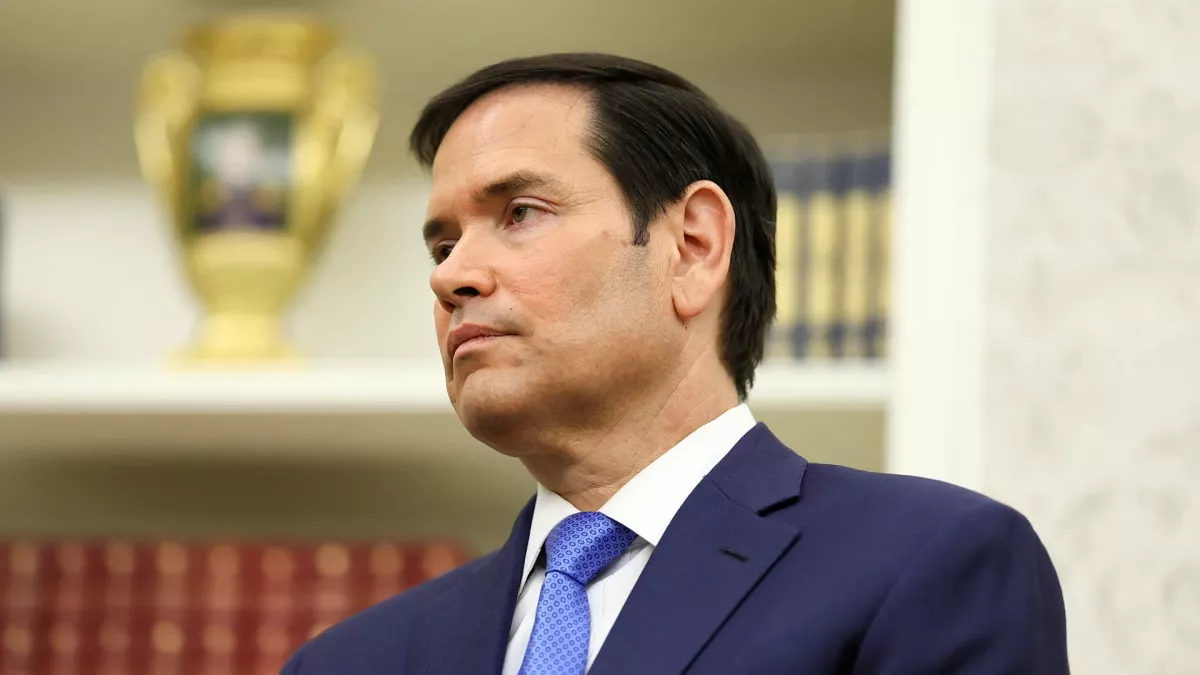
U.S. Secretary of State Marco Rubio said: “What is the purpose of being in an alliance whose benefit to us is these basing rights if, in a time of conflict like the one we’ve had with Iran, they can deny us the use of those bases?”

A well-known Turkish strategist, Admiral Cem Gürdeniz, recently noted that the alliance’s very “historical mission” is nearing its end: “This alliance was never a union of equals — it was an instrument for protecting the interests of a narrow group of countries, the so-called ‘one billion’, while the fate of other peoples was not taken into account. Türkiye, within this system, spent many years in the position of an executor rather than a subject. The clearest example is Libya in 2011, when our ships were deployed off its coast without a parliamentary decision and without a clearly defined national interest, simply because that is how NATO operated. This is the essence of the problem: membership in the alliance draws us into wars that are not ours.”
Much of the internal NATO disputes are brushed under the carpet. However, their consequences have already created an atmosphere of mutual distrust and confrontation among members of the collective West. This was demonstrated by recent incidents involving Austria, which, despite its formal neutrality, remains affiliated with NATO.
Last Sunday and Monday, the Austrian Air Force intercepted U.S. reconnaissance aircraft PC-12 when they entered Austrian airspace without permission. As a result, the Americans were forced to retreat on both occasions to Munich airport.
All of this is not a series of isolated incidents, but rather a sign of growing mutual estrangement between the United States and Euro-liberal regimes, which has even begun to affect strategic planning. Ahead of the announcement regarding the partial withdrawal of troops from Europe, interesting hearings were held in the U.S. Congress on nuclear deterrence and missile rearmament. Particular attention was drawn to remarks by U.S. Deputy Secretary of Defense Robert Kadlec, who stated that for the first time in history, the United States is facing two nuclear peers — Russia and China — and that the U.S. military is wary of entering a war with one of these states, fearing that the other could take advantage of the situation.
This sheds further light on Washington’s attempts to step back from the confrontation between European states and Russia. However, far less attention has been paid to the rest of Kadlec’s remarks, which are no less significant. He effectively announced a course aimed at reducing the role of U.S. allies in nuclear deterrence — for which the American government plans to invest in a nuclear-armed sea-launched cruise missile, the SLCM-N, and similar systems. This missile project was launched during Trump’s first term and continued under Biden, despite the latter’s objections. In other words, the U.S. side has long been moving toward distancing itself from NATO allies, it was simply not stated openly. In his speech, Kadlec removed the mask, saying that the missile is needed because it will “provide the President a persistent, survivable, regional, nuclear presence without dependence on allied host nations.” In short, he linked the issue to the broader problem of relations between the United States and Euro-liberal regimes.
Europe returning to the situation of 2022
In recent times, the strategic decoupling between the United States and Europe has become even more visible in the context of American troop redeployments. The issue made front-page headlines after the U.S. Department of Defense ordered the withdrawal of 5,000 soldiers from Germany on May 1, with President Trump warning that this number “would be significantly larger” and also pledging troop reductions in Spain and Italy.
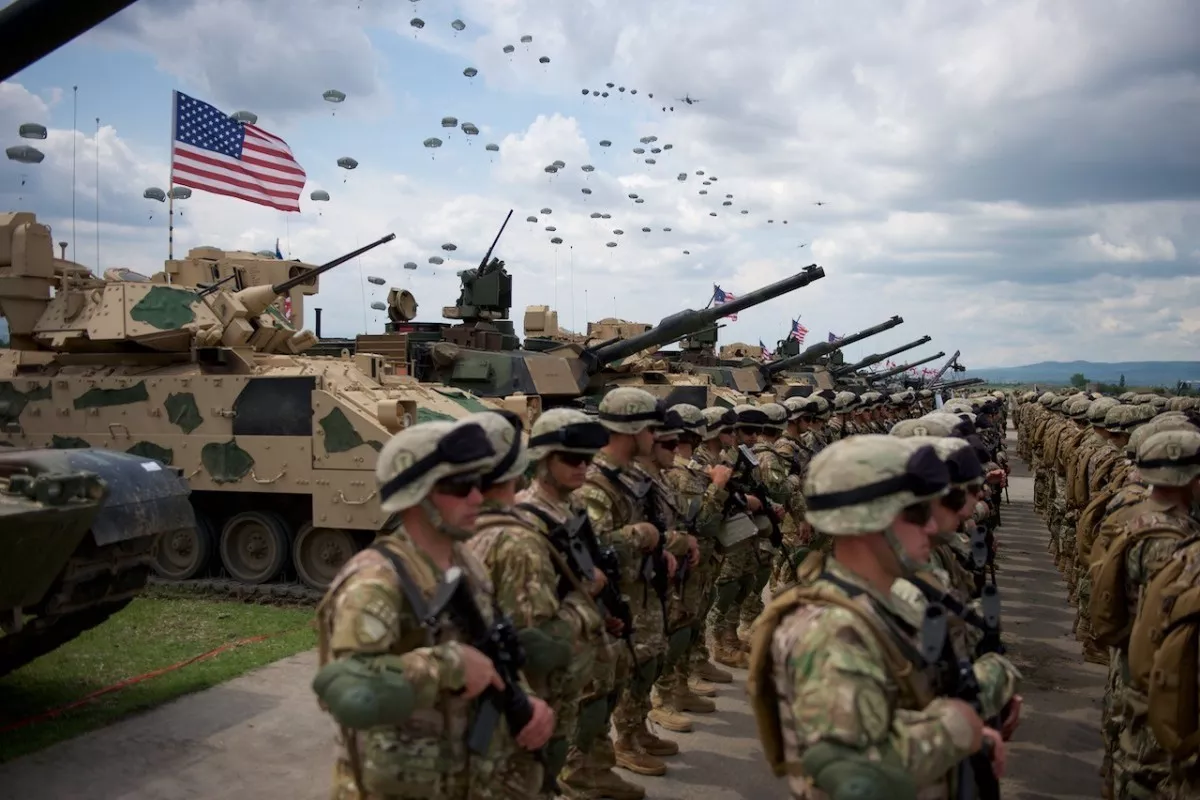
These are not sudden decisions. In fact, during his first term in July 2020, Trump sought to withdraw around 12,000 U.S. troops from Germany, and only the arrival in the White House of Democratic President Joe Biden halted such plans — or rather, suspended them. In other words, the current Trump team is now implementing what had long been envisioned.
Following Trump’s decision to pull U.S. troops out of Germany, Poland immediately extended an invitation to host them, and Lithuania and Latvia soon followed with similar requests addressed to Washington. These are not isolated moves, but rather actions by a long-formed axis of these countries within the EU and NATO, which already allows Poland to balance its position vis-à-vis Germany. But do the United States actually want to get involved in the affairs of these “northern Balkans” — as the region was once described by Western European politicians after the creation of the Baltic states a century ago?
After the recent withdrawal of 5,000 American soldiers from Germany, more than a thousand of them were indeed redeployed to Lithuania. However, on May 14, Lithuania’s Ministry of Defence announced a suspension of U.S. troop rotation in Europe. Its representatives relayed unofficial explanations from their American partners, suggesting that this is supposedly a temporary measure intended to reconsider the further distribution of U.S. forces in the region.
On May 14, it was reported that the U.S. Department of Defense is not only withdrawing troops from Germany, but has also decided to cancel the deployment of an armoured brigade to Poland that was meant to replace forces rotating out. This amounts to roughly 4,000 service members, while the total U.S. presence in Poland is about 10,000 troops. The decision is significant, as reflected in the fact that the brigade had already been partially redeployed to the European continent.
What all Euro-liberal enthusiasts of hosting great-power military forces on their territory should take note of is that the Polish authorities were not informed at all about what was happening. Great powers often act on the territory of their strategic allies without notifying those allies’ governments. Such behaviour is characteristic of all imperial powers: Russia likewise used Belarusian territory without authorisation during its invasion of Ukraine and, according to available information, did not even inform Minsk of the start of the operation.
In any case, when rumours recently emerged about a reduction of the American presence in Poland, senior officials in Warsaw rushed to deny them, claiming that any reductions concerned only Germany, which, in their view, had mishandled its relationship with Trump. Such denial of reality is not surprising: for the Warsaw establishment, which is determined to increase the American presence at any cost and has turned this ambition into a political objective in itself, such news strikes at the very foundations of its policy agenda.
Soon afterwards, media outlets, including The Wall Street Journal, began publishing evidence one after another that the Americans were withdrawing without coordination with the Polish leadership.
Euro-liberal elites are gravely mistaken in their assessment of Trump as an impulsive politician, supposedly disinclined toward complex planning and long-term strategy. He himself is not averse to maintaining this illusion in the minds of his opponents for his own purposes. However, the issue of withdrawing American troops from Europe once again shows that, unlike Euro-liberals, Trump persistently advances strategic ideas oriented toward long-term outcomes.
In particular, this concerns the reassessment of NATO relations and the effort to pull the United States out of the Eastern European “meat grinder.” This is already necessary for Washington at least in order to strengthen its own position in the confrontation with the emerging contender for global leadership — China.
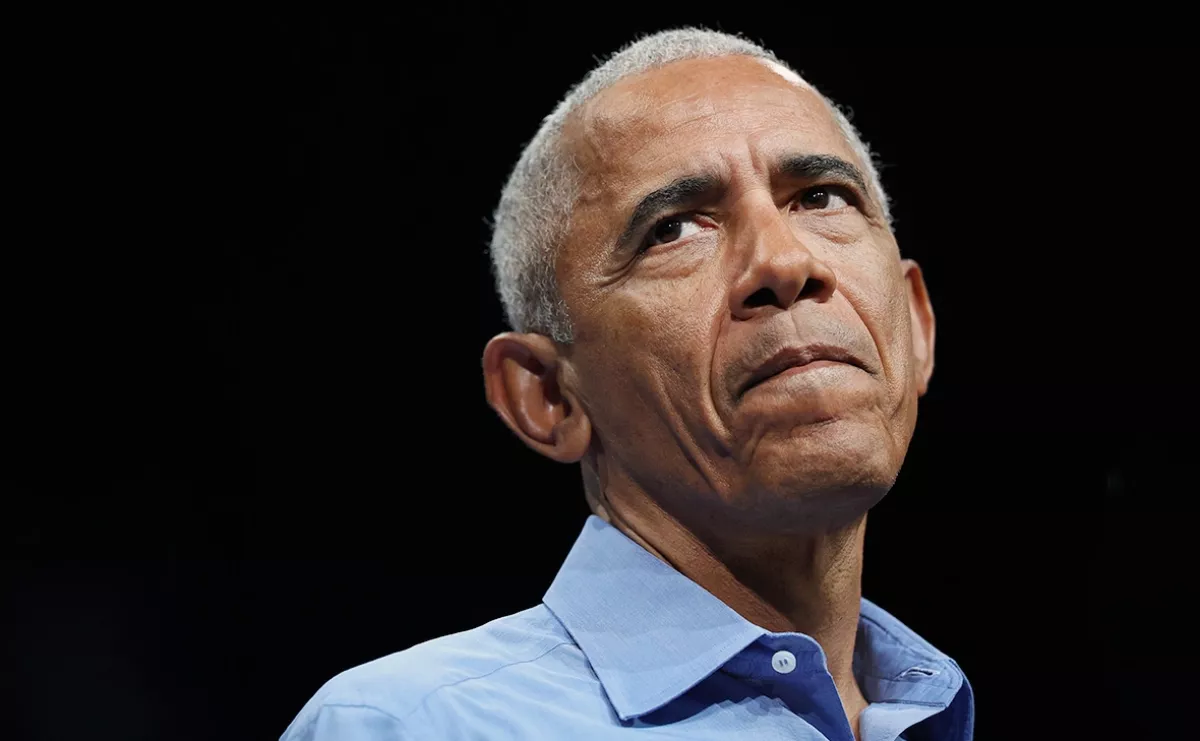
The need to redeploy U.S. military forces — and indeed those of the entire collective West — was already articulated by Trump during his first term. However, the process of shifting naval assets from the Atlantic to the Far East began even earlier under Obama, who in 2012 announced a reorientation of the fleet toward the Indo-Pacific region, moving from a 50:50 deployment split between the Atlantic and the Pacific to a 40:60 ratio in favour of the Far East.
In other words, there is little that is sudden or spontaneous in Trump’s actions. The same applies to the likely reduction of the U.S. military presence in Poland. In fact, shortly after Trump returned to power, Washington began preparing and implementing a reduction of its military footprint in Eastern and Southeastern Europe. All of this predates recent decisions on withdrawing part of the troops from Germany and possibly Southern Europe. For example, in September last year, the Pentagon ended the rotation of the 101st Airborne Division in Romania, withdrawing up to 4,000 troops from the country.
In addition, the U.S. command reduced a long list of small tactical groups, artillery batteries, and support units in Eastern Europe. As a result, up to 7,000 American troops have left Europe. The fact that these minor reductions went largely unnoticed at the time is still understandable. But how can anyone now be surprised by current decisions to reduce the American military presence after the aforementioned redeployment of the 101st Airborne Division? After all, this is one of the U.S. Army’s most renowned strike formations, and its relocation was therefore a highly symbolic event — a powerful impulse in the global reconfiguration of U.S. forces (Trump had hoped for a similar realignment of the wider West, but the war with Iran showed that the rest of the West is not eager to follow Washington).
If one adds up the known reductions, the United States is now close to returning its military presence in Europe to roughly the 2022 level. Washington is indeed preparing to focus on more important issues instead of being entangled in constant dealings with Russia.
Strategic poverty
At the end of April, following the first reports that Kyiv had received a long-awaited massive loan from the EU (the Hungarian Prime Minister Viktor Orbán, who had been blocking its approval within the bloc, lost the election), Ukrainian leader Volodymyr Zelenskyy boldly declared his readiness to continue the war without U.S. support.
Politico, a mouthpiece of the liberal-globalist establishment, reported that Kyiv was no longer interested in contacts with Washington and had even aligned itself with Trump’s opponents. The Ukrainian side began proposing that Europe abandon transatlantic relations and build a new European security architecture without the United States.

The Ukrainian government has indeed sensed the global shift in U.S. priorities far earlier and more sharply than European countries, from which American troops are now beginning to withdraw. After last year’s change of administration in the White House, U.S. “war minister” Pete Hegseth largely stopped participating in meetings of the Ukraine Defence Contact Group in the “Ramstein” format, even though they are held virtually.
Washington has reduced arms deliveries and cut them down to minimal levels following the start of the strikes on Iran. In addition, the United States has reportedly demanded that Ukraine cede its eastern territories to Russia.
But can the European Union or any other alliance of European powers replace the United States, especially in the event of a serious military confrontation with Russia?
The EU is indeed allocating enormous funds for what is presented as the construction of a bloc-wide military machine. However, first, this currently looks more like a redistribution of a new “fat pie,” and given the level of corruption and inefficiency exposed among Euro-liberal politicians during the previous round of allocations — the pandemic response — as well as the absence of a proper institutional framework for building an EU army, there are strong reasons to doubt the feasibility of these ambitions.
Second, it remains unclear how, within the EU — in the absence of the United States — the bloc would manage the resurgence of Germany’s hegemonic ambitions and their impact on other countries seeking military influence on the continent, notably France and Poland.

As for other possible European alliances and coalitions, Macron’s attempt to construct a “new Entente” together with Starmer quickly stalled after a couple of meetings, and its Euro-liberal architects are now close to being consigned to history.
New ideas continue to emerge, but they are largely situational and niche rather than comprehensive, unlike NATO with its U.S. backbone.
For example, at the end of April, the Commander-in-Chief of the British Royal Navy, Gwyn Jenkins, announced plans to create a “northern navies” alliance to counter Russia under London’s leadership. However, a closer look reveals that this “alliance” is in fact a rebranded version of the Joint Expeditionary Force created in 2014, and of the ten countries reportedly involved, only three possess significant naval capabilities: the United Kingdom itself, Sweden, and Denmark.
Militarisation, military competition, and potential further confrontation in Europe are therefore built on shaky foundations. There is simply not enough money — let alone public readiness. This is most visible in the countries at the forefront of the confrontation with Russia, from the Baltics to Poland and Germany.
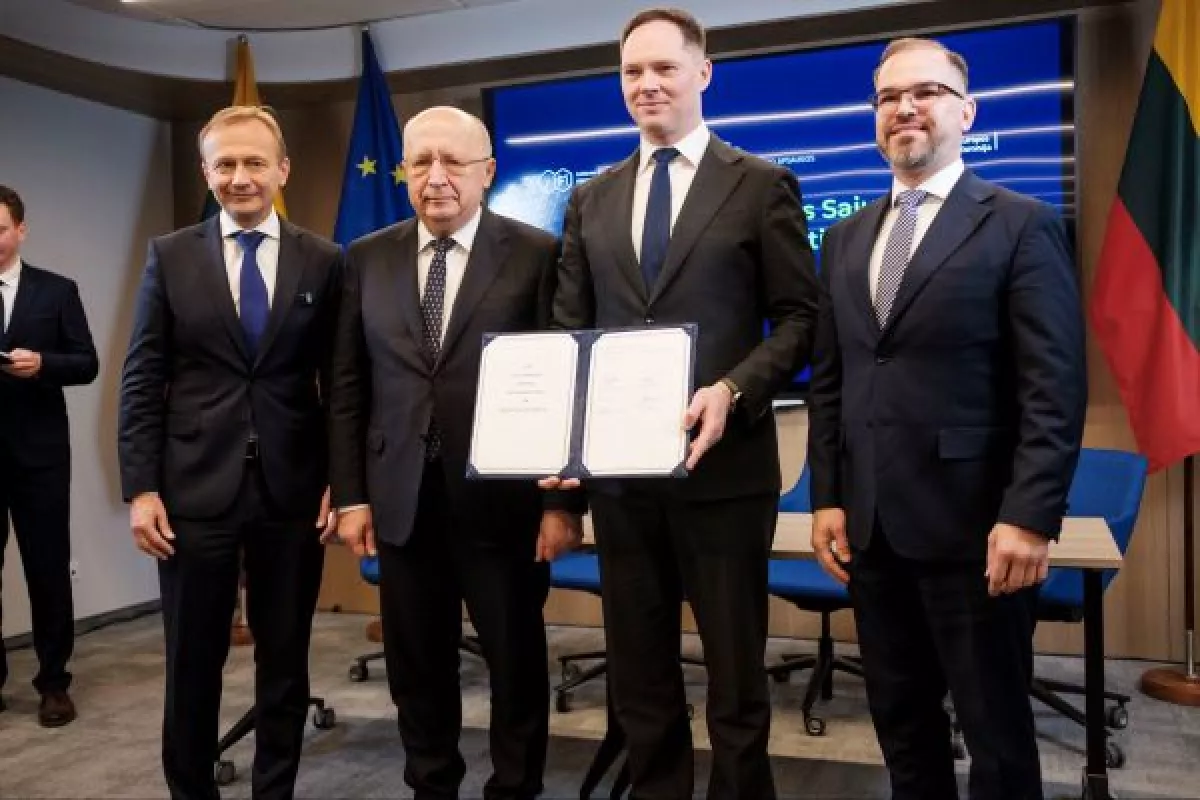
Speeding up the deployment of a German tank brigade on its territory, the Lithuanian government was forced on May 9 to sign an agreement with the European Commission under the SAFE scheme for a €6.375 billion loan in order to finance such an operation. The brigade was stationed right on the border with Belarus.
Vilnius has no money: this week it became known that 1,600 Lithuanian railway workers have been laid off, and railway trade unions, following two accidents last month, are raising alarms about the condition of critical infrastructure due to underfunding.
Lithuanians are having to pay for hosting German soldiers, since Germany itself is also facing financial difficulties. As Bloomberg noted recently, industrial production in Germany has been declining for two consecutive months. Growth had been expected in March, but the latest data shows that the downturn has only accelerated.
This is also visible to the naked eye. The pride of German automotive engineering, Mercedes-Benz, has sold all seven of its car dealerships in Berlin, laying off 1,500 employees, and is now planning to do the same in Hamburg and in the Rhine-Ruhr region — not on the periphery, but in the country’s central industrial heartlands.
Against the backdrop of Europe’s modest progress in military development and its overall condition, even the staunchly pro-Western leadership of Armenia is beginning to harbour serious doubts.
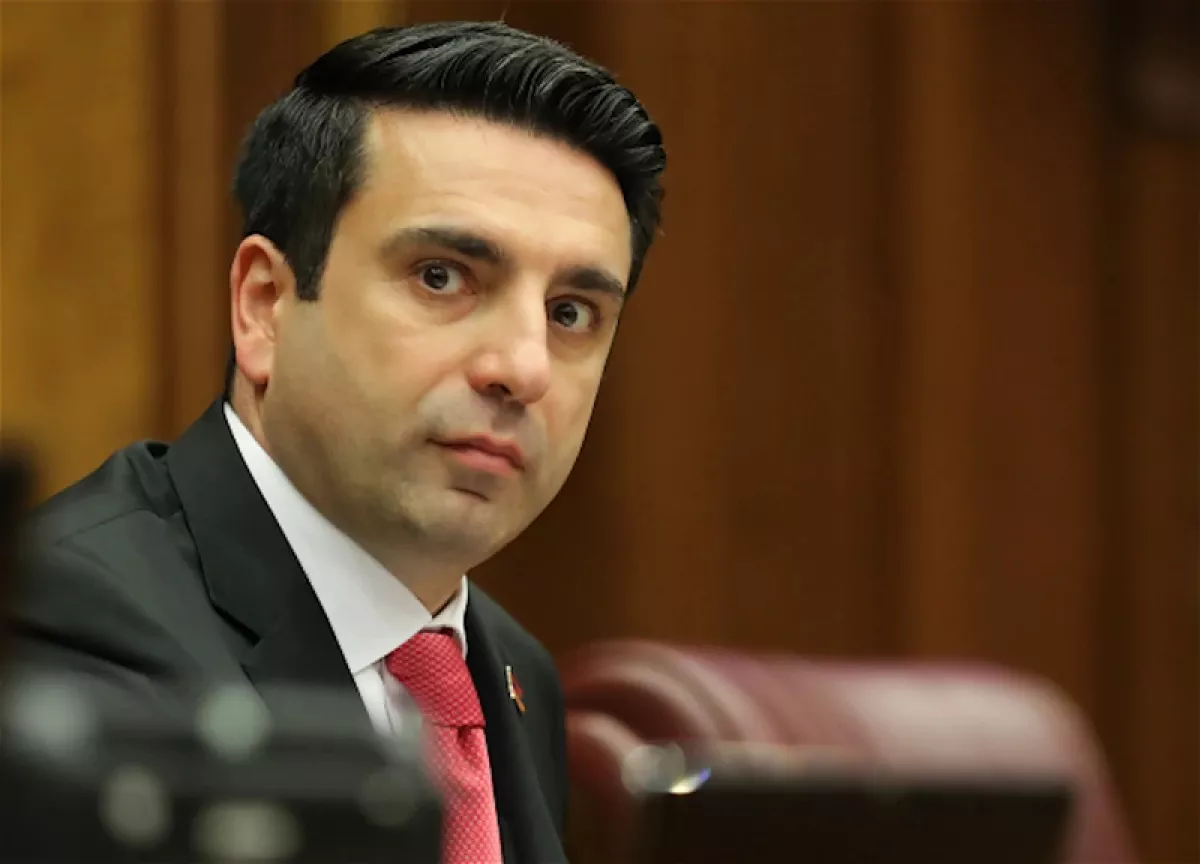
Last weekend, Deutsche Welle published an interesting interview with the Speaker of the Armenian Parliament, Alen Simonyan. When asked about the need to close the Russian military base in Armenia, he replied: “What can the same European partners offer us? [...] The EU is not a military bloc.” Simonyan stated that the issue of closing the Russian base could only be considered after the end of its lease in 2044. This, by the way, is not the first such statement — Simonyan has been saying this regularly over the past three years, even amid deteriorating relations with the Collective Security Treaty Organization (CSTO).
In short, the strategic situation in Europe is not moving toward replacing NATO and the United States with some kind of European alternative. It is moving instead toward a strategic vacuum and chaos. This does not imply a softening of tensions and conflicts — on the contrary, it is more likely to lead to rising hostility and adventurism.
For the South Caucasus, this means there is a need to construct its own regional security system and to prevent attempts to draw the region into an Eastern European arc of instability.







 editor@caliber.az
 +994 55 444-88-98
 Азербайджан, Баку, ул. Низами, 203, Af Business House, 5-й этаж