










Green transition and investment: new milestones in Baku–Berlin cooperation Review by Khazar Akhundov
Azerbaijan and Germany are committed to expanding their business partnership. Alongside traditional areas such as hydrocarbons and trade, the two countries plan to accelerate cooperation in green energy and non-oil industrial production.
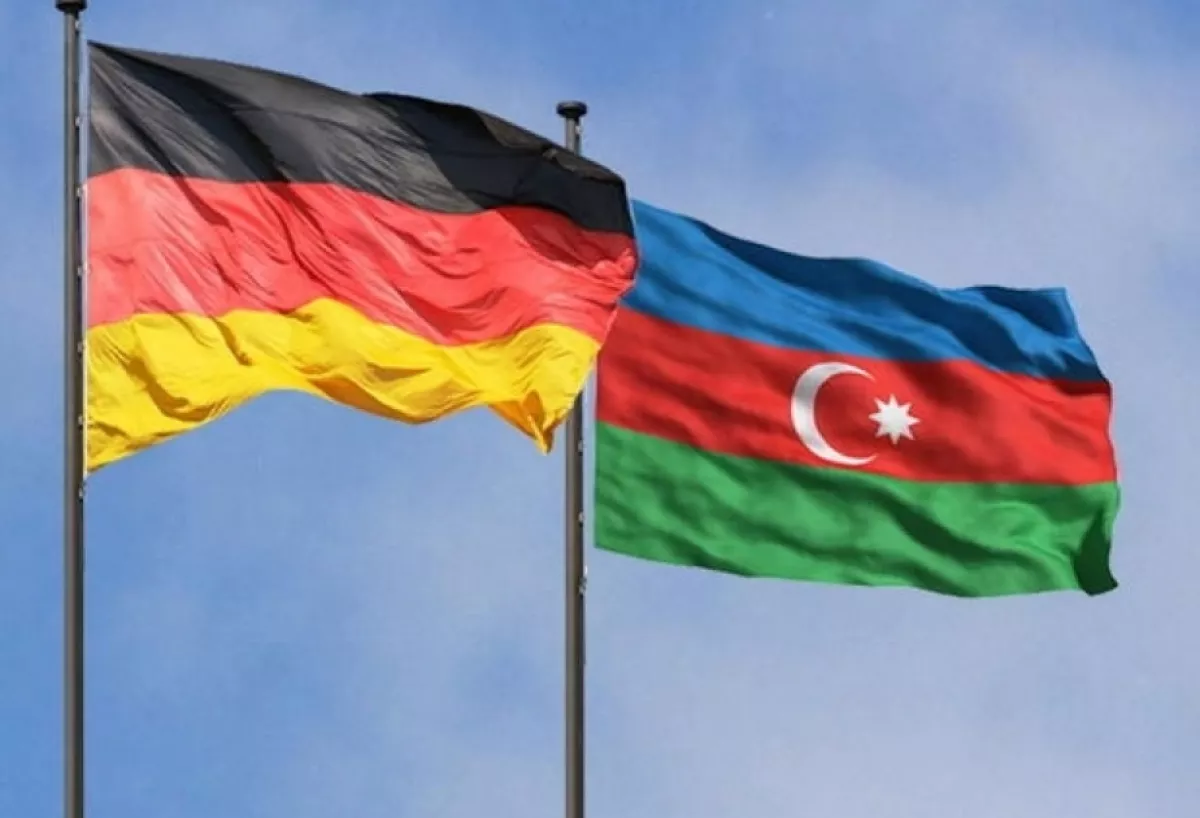
German companies have long been involved in major industrial projects in Azerbaijan, and this cooperation continues to broaden. This week, as part of the Baku Energy Week events, the German delegation held productive meetings with the leadership of Azerbaijan’s ministries of economy and energy.
In addition, on the eve of the event, AZPROMO Executive Director Yusif Abdullayev and Chairman of the Eastern Committee of the German Economy, Michael Harms, discussed in Baku the possibility of establishing an Azerbaijan–Germany Business Council.
Baku has traditionally attached great importance to developing trade, economic, and investment cooperation with Germany, which remains the driving force of the European economy. According to the International Monetary Fund, Germany’s nominal GDP was projected to reach nearly $5.05 trillion in 2025. However, for more than four years, the country’s economy has been grappling with the effects of the energy crisis triggered by the Russia–Ukraine war. In addition, the ongoing conflict in the Middle East and the shock of volatile hydrocarbon prices continue to hinder the full recovery of Europe’s economic powerhouse.
Energy insecurity continues to weigh heavily on the entire European Union, prompting Berlin to steadily diversify its sources of energy supplies, including by expanding cooperation with Azerbaijan and the countries of Central Asia. Oil and petroleum products have traditionally formed the backbone of Azerbaijan’s exports, and Germany ranks among the top ten purchasers of these commodities. Between January and April of this year, Azerbaijan exported more than 270,000 tonnes of crude oil and petroleum products to Germany.
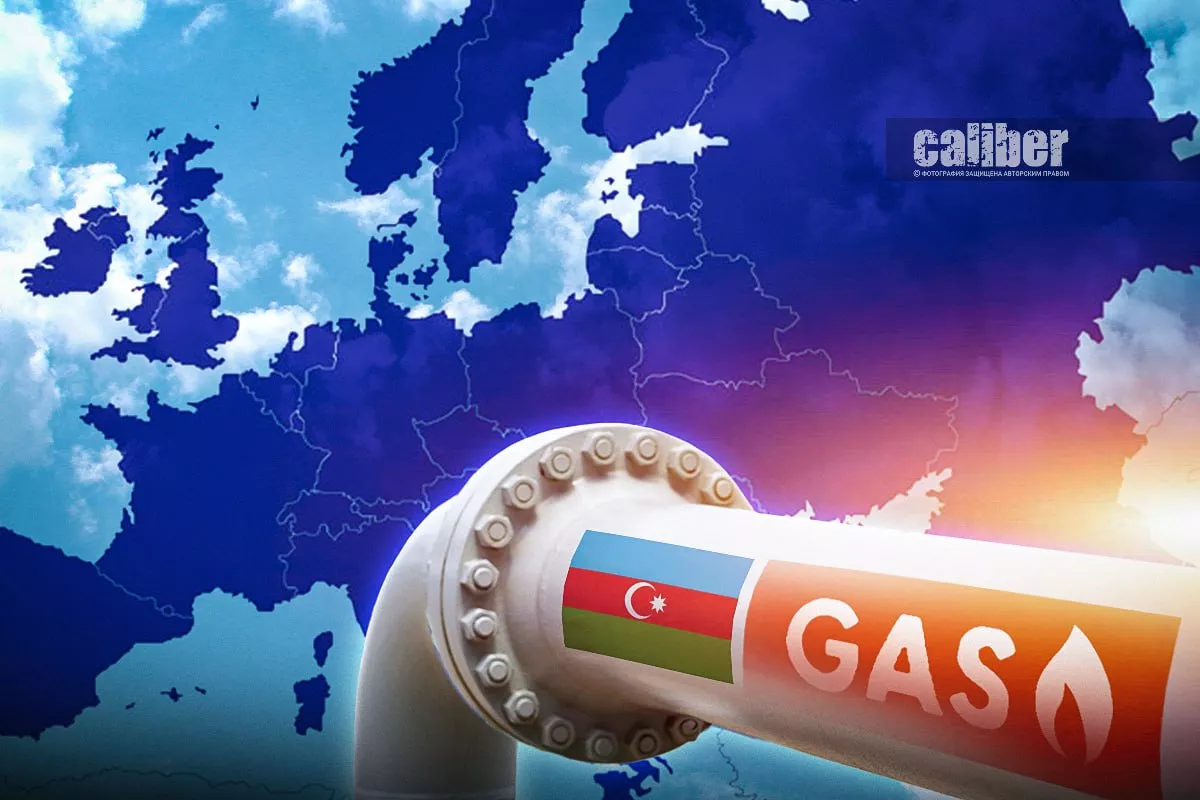
In 2026, Azerbaijan also expanded the range of energy products supplied to the German market. Speaking in Baku at the 12th Southern Gas Corridor Advisory Council Ministerial Meeting in early March, President Ilham Aliyev stated: “With respect to our plans, yes, we want to increase our presence in the European energy market. We have already started to supply two more countries in Europe — Germany and Austria.”
In this context, it is worth recalling that for several years the largest buyer of Azerbaijani pipeline gas in Southern Europe was the German gas trader Uniper SE. Since January 2026, Azerbaijani natural gas has also been supplied directly to Germany via transit routes through Italy. Under a ten-year agreement signed in June 2025 between the State Oil Company of the Azerbaijan Republic (SOCAR) and the German energy group SEFE (Securing Energy for Europe), Germany is set to receive 1.5 billion cubic metres of Azerbaijani gas annually.
Energy cooperation between Baku and Berlin remains the cornerstone of the bilateral business partnership. Azerbaijan accounts for roughly 70% of Germany’s total trade with the countries of the South Caucasus, and despite global conflicts, economic crises, and recessionary pressures, bilateral trade has continued to develop dynamically. In 2022, trade turnover between the two countries reached $1.3 billion, while the strongest results were recorded in 2023, when it climbed to a record $1.8 billion, marking a 45.4% increase.
In 2024, bilateral trade moderated to $1.6 billion. In 2025, Germany ranked as Azerbaijan’s sixth-largest foreign trading partner, with total trade turnover exceeding $1.376 billion by year-end.
At present, it is difficult to predict the final trade figures for 2026. However, during the first quarter of the year, Azerbaijani-German trade amounted to $295.2 million, of which $142.1 million was generated by Azerbaijani exports.
Notably, in recent years, domestic businesses have been increasing supplies of various non-oil products to the German market. In particular, Azerbaijan’s exports have seen a growing share of winemaking products, juices, fresh and canned fruits and vegetables, dried fruits, hazelnuts, and tea. Deliveries of petrochemical products, ferrous and non-ferrous metallurgy goods, mechanical equipment, and components produced in Azerbaijan’s industrial clusters are also being established.
German imports to Azerbaijan are mainly composed of passenger cars, other vehicles and spare parts, products of ferrous metallurgy, electrical equipment, electronics, optical, medical, and other precision instruments, as well as pharmaceutical products and cosmetics, consumer goods, and food products.
Azerbaijani-German business partnership is based on a broad legal framework: to date, more than eighty agreements have been signed between the two countries. In addition, around 200 German companies are registered in Azerbaijan, of which approximately 170 are members of the Azerbaijan-German Chamber of Commerce.
Thanks to legal alignment and well-established procedures for business cooperation, German companies have been actively involved in Azerbaijan for more than three decades, participating in various contracting projects in industry, construction materials production, agriculture, power engineering, telecommunications, green energy projects and digitalisation of the economy, as well as modernisation of ports, railways and other transport infrastructure.
At the same time, the volume of mutual investments between Azerbaijan and Germany now exceeds $1.5 billion. Notably, in the past year, Azerbaijan achieved significant progress in terms of foreign direct investment: the country invested $61.733 million in the German economy, which is 2.7 times higher compared to the previous year.
In the current challenging situation in the EU, German businesses are seeking not only to expand mutual trade and Azerbaijani energy supplies, but also to intensify investment cooperation and the implementation of joint industrial projects. An important role in this regard is played by the Eastern Committee of the German Economy (Ost-Ausschuss), established in 1952. With its strong traditions and extensive experience, this organisation acts as a key driver for promoting German companies in the markets of post-Soviet countries, including Azerbaijan.
This trend received an additional boost in May last year. During a visit to Baku by an Ost-Ausschuss delegation, a new roadmap for 2025–2026 was signed. The document covers a wide range of initiatives, including the localisation of electric bus assembly in Azerbaijan, the modernisation of railway infrastructure, as well as projects in hydrogen energy, water purification and desalination, among others.
In turn, German transport and logistics companies are strengthening cooperation with the Baku International Sea Trade Port and are exploring investment opportunities in the Alat Free Economic Zone.
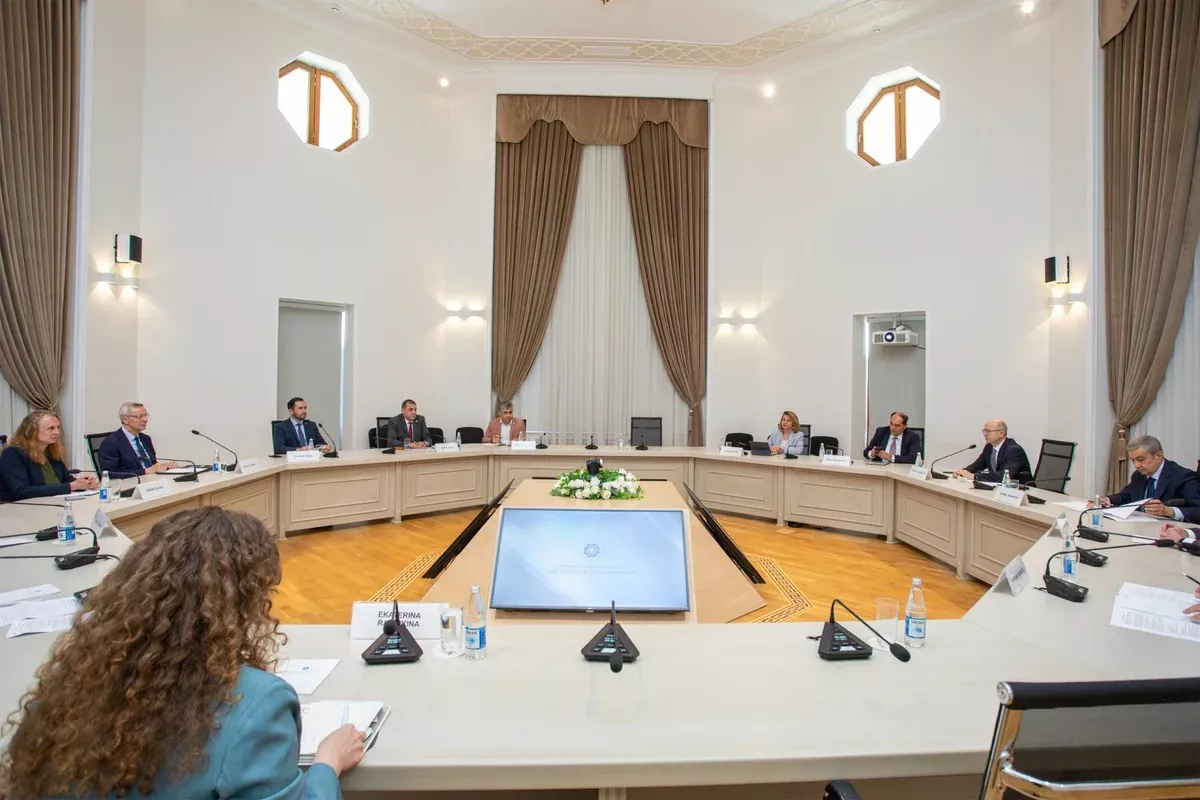
New vectors of Azerbaijani-German business initiatives were discussed during meetings held this week in Baku as part of Baku Energy Week. In particular, during talks between Azerbaijan’s Minister of Energy Parviz Shahbazov, Michael Harms, and representatives of leading German companies, the sides addressed cooperation in natural gas supplies, new opportunities within the global energy transition, and prospects for projects related to the creation of “green” electricity corridors and its transmission from Azerbaijan to Europe.
The parties also intend to expand cooperation in modernising the energy system and developing renewable energy sources, as well as in the implementation of energy efficiency systems, heat pumps, and battery energy storage solutions.
Within the framework of Baku Energy Week, a separate meeting also took place between Azerbaijan’s Minister of Economy, Mikayil Jabbarov and Michael Harms. As the minister of economy noted in a post on social media platform X, there is “broad potential for cooperation in trade, investment, SME development, energy, agriculture, and tourism.”
The minister also emphasised that the meeting discussed the expansion of ties between business communities, the development of human capital, and increasing the effectiveness of the Azerbaijan–Germany High-Level Working Group on Trade and Investment.
Meanwhile, on the eve of the events, during a meeting between the Executive Director of the Agency for the Promotion of Export and Investment (AZPROMO), Yusif Abdullayev, and a German delegation led by Michael Harms, discussions focused on expanding cooperation in industry and technology transfer, joint initiatives in green energy, and the establishment of an Azerbaijan–Germany Business Council.
It was noted that such a platform would facilitate regular dialogue between entrepreneurs of the two countries, the exchange of information, and the implementation of joint initiatives.
In addition, German partners were invited to participate in the Private Sector Forum, which will take place in Baku on June 16–19 as part of the 51st Annual Meeting of the Islamic Development Bank Group, as well as the 2nd Azerbaijan International Investment Forum, scheduled for September 25–26 this year.







 editor@caliber.az
 +994 55 444-88-98
 Азербайджан, Баку, ул. Низами, 203, Af Business House, 5-й этаж