










Turkestan and the Turkic world of the 21st century OTS strengthens its position on the global stage
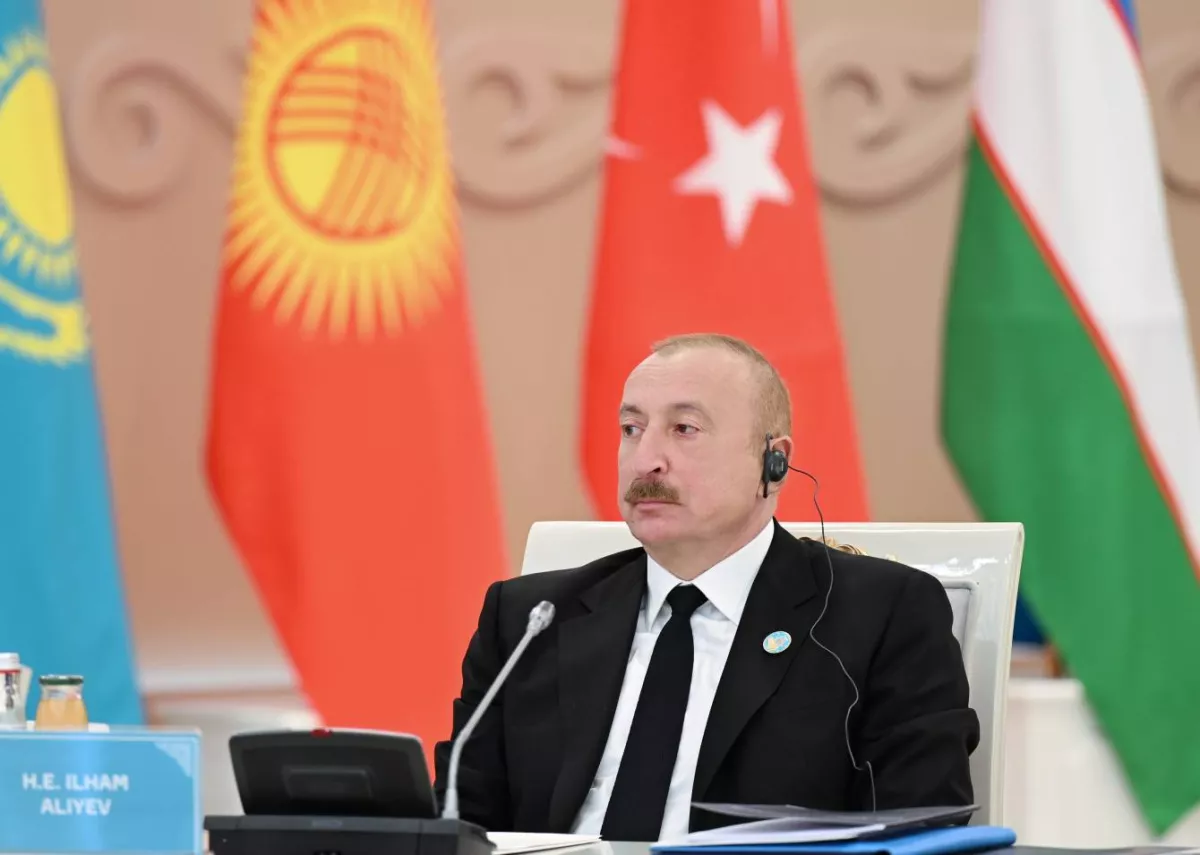
Today, an informal Summit of the heads of state of the Organization of Turkic States (OTS) was held in the Kazakh city of Turkestan, attended by President of Azerbaijan Ilham Aliyev. This event has attracted the attention not only of the entire Turkic world, but also of other countries, due to a number of factors — foremost among them the fact that, against the backdrop of the deepening crisis of traditional mechanisms of global governance, the Organization of Turkic States is gradually transforming into one of the most promising centres of regional cooperation across Eurasia.
Today, it can be stated that the Turkic world is entering a qualitatively new stage of integration. Whereas cooperation within the OTS was previously perceived largely as a symbolic or cultural-humanitarian initiative, the Organization is now increasingly and confidently expanding its agenda towards the economy, transport connectivity, energy, digitalisation, security, and the coordination of foreign policy approaches.
In effect, this points to the gradual formation of a sustainable geopolitical space possessing significant demographic, economic, and transit potential. It is particularly encouraging that Azerbaijan, within the framework of the Organization of Turkic States, is injecting new momentum into the institutional development of the organisation.
This point was also highlighted by President Ilham Aliyev in his speech at the summit in Turkestan.
“It is gratifying that the initiative for the informal Summit of the Heads of State of the Organization of Turkic States, held for the first time in Shusha in 2024, is already becoming a tradition […] Having assumed the chairmanship at the Gabala Summit in October last year, Azerbaijan is working toward further deepening cooperation within the framework of the organization,” President Aliyev said.
In this context, it should be noted that Baku has consistently advocated strengthening the practical dimension of cooperation, placing emphasis on the need to move from declarative mechanisms to concrete projects and initiatives. In this regard, Azerbaijan, owing to its advantageous geographical location and its role as a major transport and logistics hub between East and West, is objectively emerging as one of the key drivers of integration processes within the Turkic world.
It is no coincidence that in recent years particular attention within the framework of the Organization of Turkic States has been devoted to the development of the Middle Corridor, which, amid global geoeconomic transformations, is acquiring strategic significance. Growing interest in alternative supply routes between Asia and Europe is enhancing the role of the Turkic states as an important connecting link in Eurasian trade. At the same time, cooperation in the transport and energy sectors is gradually laying the foundation for broader economic integration.
In this regard, the head of the Azerbaijani state noted in his speech that, thanks to the opportunities created by digital development and artificial intelligence, the world is entering a new stage of development, and the Turkic states must occupy leading positions in this process.
Azerbaijan is ready to provide its platform for promoting the integration model of the Organization of Turkic States at the international level and is taking concrete steps in this direction. In particular, in the coming days, a high-level dialogue of the Organization of Turkic States on urban development will be organised in Baku within the framework of the 13th session of the United Nations World Urban Forum. In June, the Azerbaijani capital will also host Turkic World Week, dedicated to the 100th anniversary of the First Turkological Congress, which made an enormous contribution to the scientific and cultural unity of the Turkic peoples.
Each of these events clearly confirms that Azerbaijan serves as a reliable connecting link within the powerful system of the unified Turkic world.

The significance of the Turkic world is indeed extending far beyond a purely regional agenda: at the present stage, it is becoming an increasingly visible participant in global processes. This is reflected both in the growing international interest in the potential of the Organization of Turkic States and in the desire of member states to coordinate their positions on key issues of world politics and economics. Amid intensifying competition between global centres of power and the continuing transformation of the international system, the existence of such a platform is acquiring additional strategic value for the Turkic states.
Thus, the informal summit of the heads of state of the Organization of Turkic States took place at an extremely important historical moment, when the Turkic world has the opportunity not only to strengthen its internal unity, but also to secure a more prominent place in the emerging system of international relations. And it is precisely on how effectively the member states of the Organisation are able to utilise the current window of opportunity that its future role in geopolitics and geoeconomics will largely depend.
As President Ilham Aliyev stated in his speech at the summit in Turkestan, “our family, the Turkic world, must grow into one of the influential geopolitical centers of the 21st century.” These words of the head of state of Azerbaijan should serve as a guiding principle and a strategic objective for the member states of the Organization of Turkic States, a goal that, given their combined potential, is fully achievable in the very near future.







 editor@caliber.az
 +994 55 444-88-98
 Азербайджан, Баку, ул. Низами, 203, Af Business House, 5-й этаж