










From oil to wind: Azerbaijan speeds up its green energy transition Analysis by Khazar Akhundov
By consistently expanding the use of renewable energy sources (RES), Azerbaijan has, in recent years, intensified efforts to develop offshore wind power. Today, this trend is becoming inevitable, given the enormous energy potential of the Caspian Sea, estimated at 157 GW. Recently, EOLOS Floating LiDAR Solutions commissioned an integrated floating LiDAR buoy at a potential offshore wind development site of the Azerbaijan Green Energy Company. This step can be considered the first practical initiative to assess offshore wind zones and select appropriate turbines and foundation types for future wind power plants (WPPs).
While maintaining its reliance on the oil and gas sector, the Azerbaijani government is making maximum efforts to participate in global processes linked to the “global energy transition of 2030.”
According to experts, the total economically exploitable renewable energy potential in the country is estimated at nearly 27 GW, including 3 GW from wind energy, 23 GW from solar power, while hydropower potential from mountain rivers is assessed at 520 MW.
The potential of the “green” generation sector is being gradually developed. According to the Ministry of Energy, investments in the construction of 10 solar and wind power plants are expected to exceed $2.7 billion by the end of 2027.
In line with existing plans, 6,000 MW of solar, wind, and hydropower capacity will be integrated into the national energy system by 2030, and this figure is expected to reach 8,000 MW by 2032.
A key track in the development of the renewable energy sector in Azerbaijan has been the exploitation of wind energy potential. This trend has a solid background. In particular, during the period of independence, Azerbaijan began large-scale research in wind energy in 2011.
At that time, the company Caspian Technology purchased two wind power plants from Germany and Denmark, each with a capacity of 850 kW. They were installed at the “Shurabad” testing ground in the settlement of Yashma in the Khizi district. In addition, another wind turbine with a capacity of 550 kW was built here for specialist training purposes.
Subsequently, the “Yeni Yashma” wind generation park was established at the site, and new wind turbines were installed in May 2015. This experience had a highly positive impact on research into wind potential in the coastal zone of the Caspian Sea. Similar studies were also carried out in other areas of the Absheron Peninsula coastline, including the Garadagh district.
During that period, it was established that wind speeds in these areas fluctuate throughout the year between 4 and 27 m/s, which is suitable for the implementation of economically viable “green” projects.
Overall, according to data from the International Renewable Energy Agency (IRENA), Azerbaijan increased its wind power capacity from 3 MW in 2014 to 67 MW in 2023 over a ten-year period.
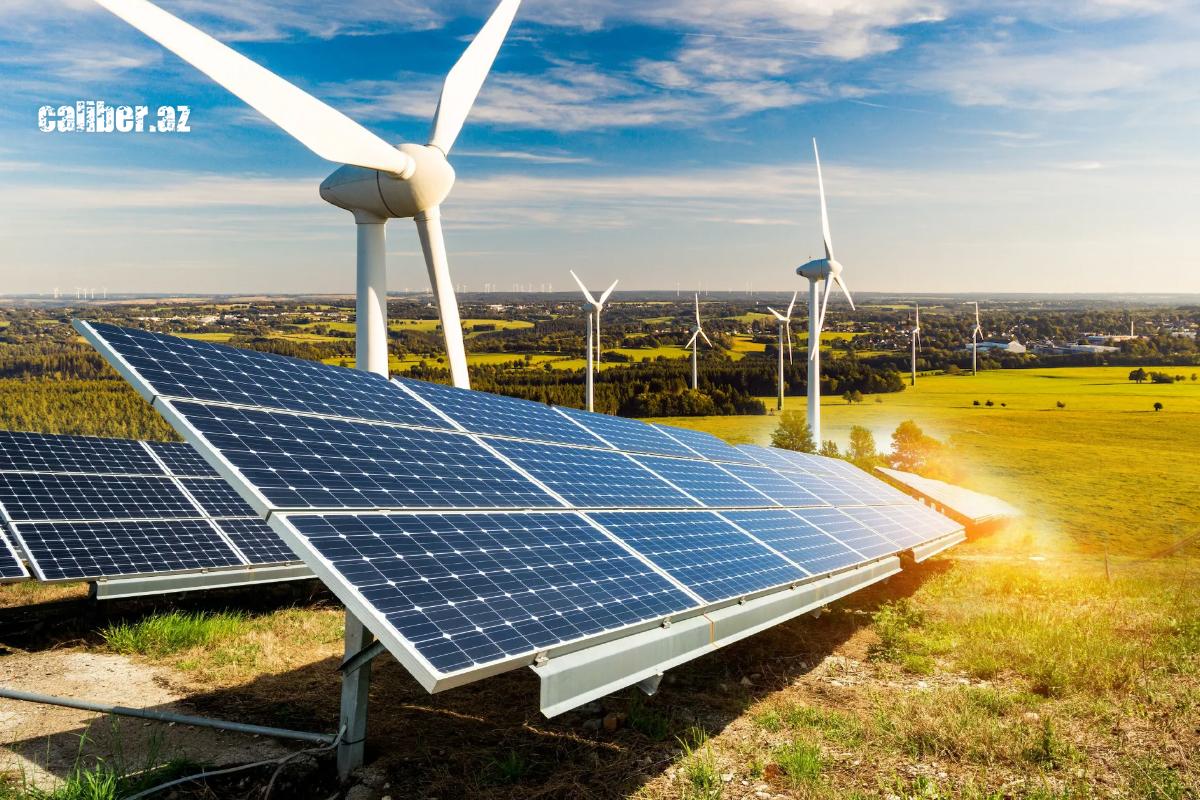
In the following years, this work continued on an upward trajectory. Given that the onshore wind energy potential in Azerbaijan alone is estimated at 3 GW, projects for the construction of wind power plants (WPPs) are already underway in the Karabakh region.
Thus, on the initiative of the joint venture Kalbajar Energy LLC, the foundation of a WPP with a projected capacity of around 240 MW has been laid in the Kalbajar district at an altitude of 3,100 meters. Another wind energy project is also expected to be implemented in the Lachin district.
Meanwhile, in the Julfa district of the Nakhchivan Autonomous Republic (NAR), a hybrid power plant is already in operation, including wind generation facilities, and these trends are planned to be further expanded in the region.
The most large-scale breakthrough in wind power generation, however, is the joint project with Saudi Arabia’s ACWA Power. On January 8, 2026, the “Khizi–Absheron” wind power plant with a capacity of 240 MW was commissioned with an investment of $340 million.
The new plant is equipped with 37 wind turbines, each with a capacity of 6.5 MW: 12 of them are located in the village of Pirekeshkul in the Absheron district, while the remaining 25 turbines are situated in the village of Sitalchay in the Khizi district.
Once the wind power plant reaches full operational capacity, its generators are expected to produce around 1 billion kWh of electricity annually.
At the same time, in the long term, the main direction for wind energy development in Azerbaijan is seen in the exploitation of the Caspian Sea’s potential.
This is not surprising, as according to the International Energy Agency (IEA), offshore wind energy is recognised as a driving force of the global “green” transition. The IEA estimates that offshore wind capacity will grow fifteenfold in the near future and become a sector with a turnover of $1 trillion.
Offshore wind turbines are capable of generating 50–60 per cent more electricity than onshore equivalents. In addition, offshore winds are stronger and more consistent, enabling the construction of much larger turbines. Offshore wind farms do not generate noise or affect onshore landscapes, and they eliminate the need for land acquisition and restrictions related to urban development.
In this context, the development of offshore wind power is also recognised as a strategic priority for Azerbaijan. The wind energy potential in the Azerbaijani sector of the Caspian Sea is estimated at 157 GW, including 35 GW in shallow waters and 122 GW in deep-water areas.
Moreover, Azerbaijan’s Caspian coastline is considered the second most promising in the world in terms of wind potential after the North Sea. However, actual projects in this field are expected to utilise only a small portion of offshore capacity — around 7.2 GW.
In order to assess the wind potential of the Caspian Sea, several years ago specialists from Azerbaijan’s Ministry of Energy and the International Finance Corporation (IFC) participated in the joint development of a roadmap for this segment.
Meanwhile, the Asian Development Bank (ADB) provided grant funding to the State Agency for Renewable Energy Sources under the Ministry of Energy to conduct research in this area. “We have already implemented three solar power projects, and now we intend to support the government in promoting wind energy. As far as I know, the potential for wind energy is currently being assessed, and we have received a request for assistance in creating offshore wind infrastructure,” said Sunniya Durrani-Jamal, Head of the ADB representation in Azerbaijan, recently.
At the same time, the European Bank for Reconstruction and Development (EBRD) is supporting Azerbaijan in developing a hydrogen energy roadmap, which is directly linked to offshore generation.
Alongside the EBRD, leading British energy giants such as bp and KBR, as well as Masdar from the UAE and Equinor from Norway, are studying prospects for introducing green hydrogen production technologies in Azerbaijan through seawater electrolysis, using low-cost electricity generated by offshore wind farms.
In the joint project portfolio of Masdar and SOCAR, offshore wind energy projects with a total capacity of 2 GW are also included.

Concrete initiatives are already on the horizon. In August last year, the State Agency for Renewable Energy Sources announced that five sites in the northern part of the Absheron Peninsula had been selected for offshore wind energy projects in the Caspian Sea. These areas could support the construction of power plants with a capacity of at least 10–15 GW.
In particular, at the first stage, the Ministry of Energy signed an agreement with Clean Energy Capital to assess, develop, and implement an offshore wind project with an initial capacity of 200 MW.
It should also be noted that the development of offshore wind power plants (WPPs) is a highly capital-intensive undertaking. In addition, installing turbines in the Caspian Sea will require complex engineering solutions, including the construction of 90-metre supports for wind generators.
Within the framework of upcoming works, technical solutions are being studied for transmitting electricity generated offshore to the mainland. Decisions will also need to be made regarding turbine specifications and installation methods at sea.
Wind turbines are generally divided into two types: fixed-bottom structures with monopile and caisson foundations for shallow waters (up to 50–60 metres), and floating platforms used in deeper waters, which are held in place by strong mooring cables and anchors.
Recently, within the framework of a joint programme between the Ministry of Energy and Azerbaijan Green Energy Company (AGEC), crucial research and preparatory works have begun at an offshore site.
The contractor for the works — Spanish company EOLOS Floating LiDAR Solutions, which won the tender in January 2026 — has commissioned an integrated floating LiDAR buoy of the FLS200 model. This offshore measurement campaign marks the first initiative in the Caspian Sea to assess offshore wind zones.
As part of the programme, the LiDAR system will measure wind speed, waves, currents, and other parameters over the course of a year. The collected data will be used to select appropriate turbines and design the foundations for a prospective wind power plant.







 editor@caliber.az
 +994 55 444-88-98
 Азербайджан, Баку, ул. Низами, 203, Af Business House, 5-й этаж