










Aliyev in Turkestan and Trump in Beijing Caliber.Az weekly review
The Caliber.Az editorial team presents a new edition of the programme “Events” with Murad Abiyev.
Azerbaijan – Armenia
President of Azerbaijan Ilham Aliyev visited the Jabrayil and Zangilan districts. Meeting with families who have moved into the first residential complex in the city of Zangilan, the president delivered a speech touching on certain aspects of the international agenda. In particular, Ilham Aliyev dispelled several myths previously promoted from Yerevan by French President Emmanuel Macron.
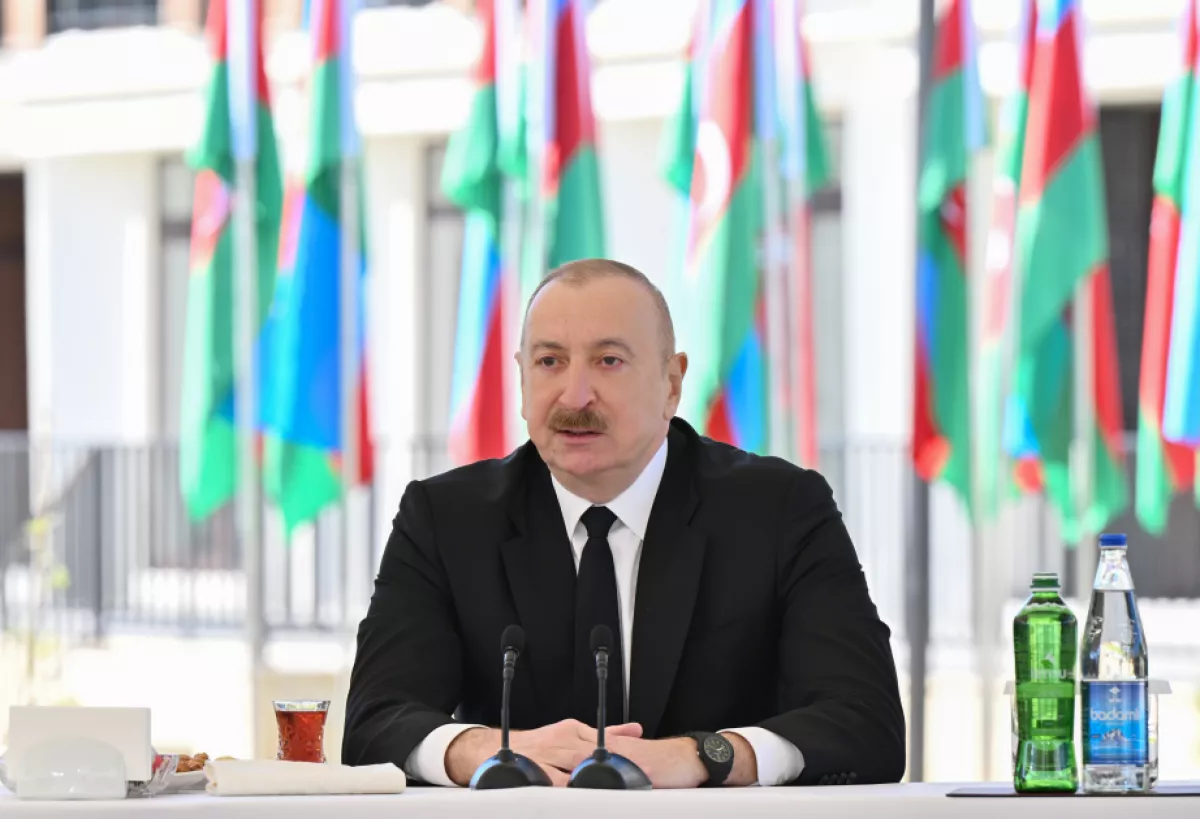
It should be recalled that Macron had attempted to present the agreement reached between Aliyev and Pashinyan in Prague in October 2022 as his own achievement. At that time, the leaders of the two countries announced the recognition of each other’s territorial integrity on the basis of the 1991 Almaty Declaration. Macron portrayed the situation in such a way as if Azerbaijan had threatened Armenia with an invasion and that only thanks to Paris’s intervention had Armenia been able to secure recognition of Azerbaijan’s borders.
Ilham Aliyev responded unequivocally: “Now they allegedly claim to have rescued Armenia from our hands. We had no intention of destroying Armenia or depriving it of its independence. Today, Europe’s so-called observers are still supposedly monitoring the Azerbaijan-Armenia border. I said it then as well: if we fired a single shot, they would immediately flee, and not a trace of them would remain there.”
In the Kazakh city of Turkestan, an informal summit of the Organization of Turkic States was held. The main theme of the talks was digital development and artificial intelligence. This topic, in particular, formed a significant part of Ilham Aliyev’s speech. The head of state highlighted one of Azerbaijan’s key priorities — strengthening the country’s digital sovereignty and accelerating the transition to an innovation-based economic model. He noted the Artificial Intelligence Development Strategy adopted in Azerbaijan and ongoing efforts to transfer all public services onto a unified digital platform.
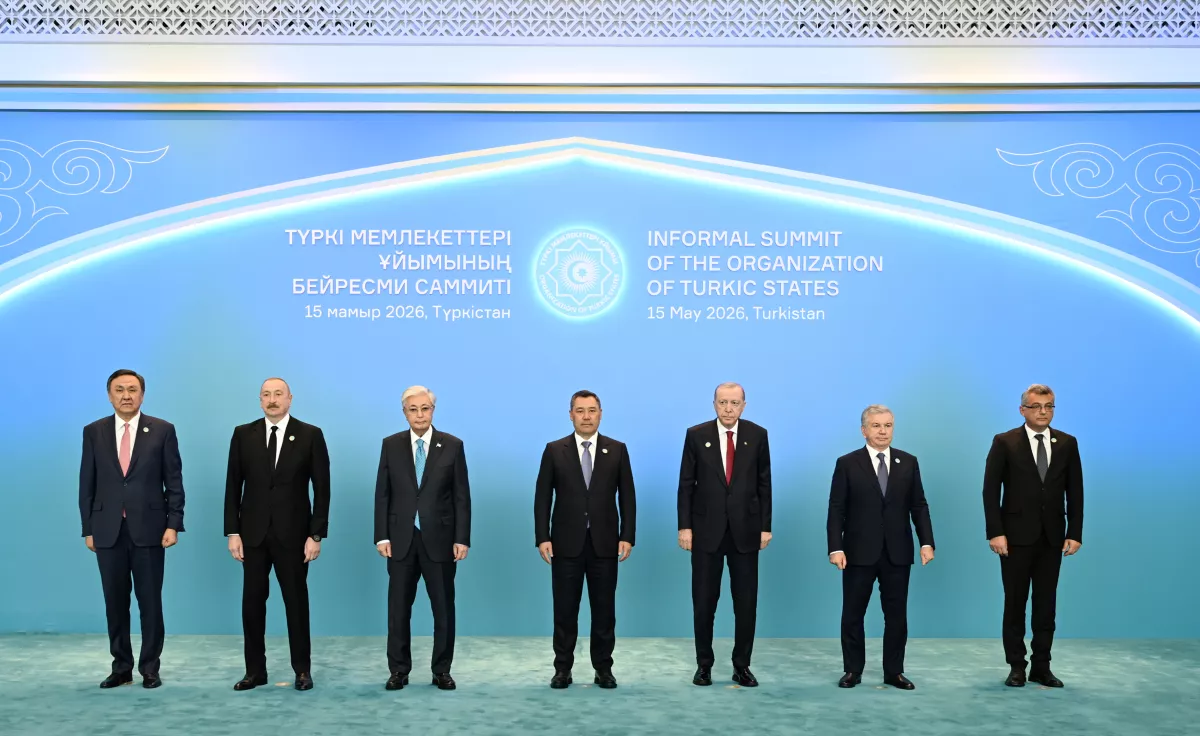
Aliyev also emphasized cooperation with Turkic states in the field of digital development, including the “Digital Silk Road” project between Europe and Asia, as well as the upcoming commissioning in the coming months of the Trans-Caspian fibre-optic cable line between Azerbaijan and Kazakhstan, which is an integral part of this project.
A vivid symbolic expression of the Turkic states’ commitment to technological progress was the participation of the leaders of Turkic countries in the online groundbreaking ceremony of the Turkic Civilisation Centre.
In the context of increasing turbulence in the global system, Turkic states should maintain a course of integration in order, on the one hand, to remain sovereign centres of power, and on the other, to use the opportunities provided by any crisis to create a new geopolitical reality of the Turkic world.
United States – China
During the week under review, the long-postponed visit of Donald Trump to China finally took place. The visit had originally been planned even before the United States and Israel launched their operation against Iran, and Washington had, in fact, intended to use the expected outcomes of that operation as leverage in talks with Beijing. As is known, Donald Trump was counting not only on a rapid collapse of the Iranian regime, but also on securing control over Iranian oil, which, combined with cutting off Venezuelan supplies, would have allowed Washington to place China under a form of completed strategic pressure.
The irony is that although control over Iranian oil was indeed established, it did not take the form the Americans had envisaged.
The blockade of the Strait of Hormuz became a problem not only for China, which lost access to oil supplies from Iran and other Gulf countries, but equally for the United States itself. For China, this meant a disruption in energy inflows from the region. For the United States, however, the issue is not only economic but also reputational — the White House risks being held responsible not only for rising global prices due to increasing oil costs, but also for food shortages expected in several regions of the world as a result of the inability to import fertilisers from Gulf states.
The key question is which side is prepared to endure the costs of this situation for longer. Many observers believe that China has a greater reserve of resilience.
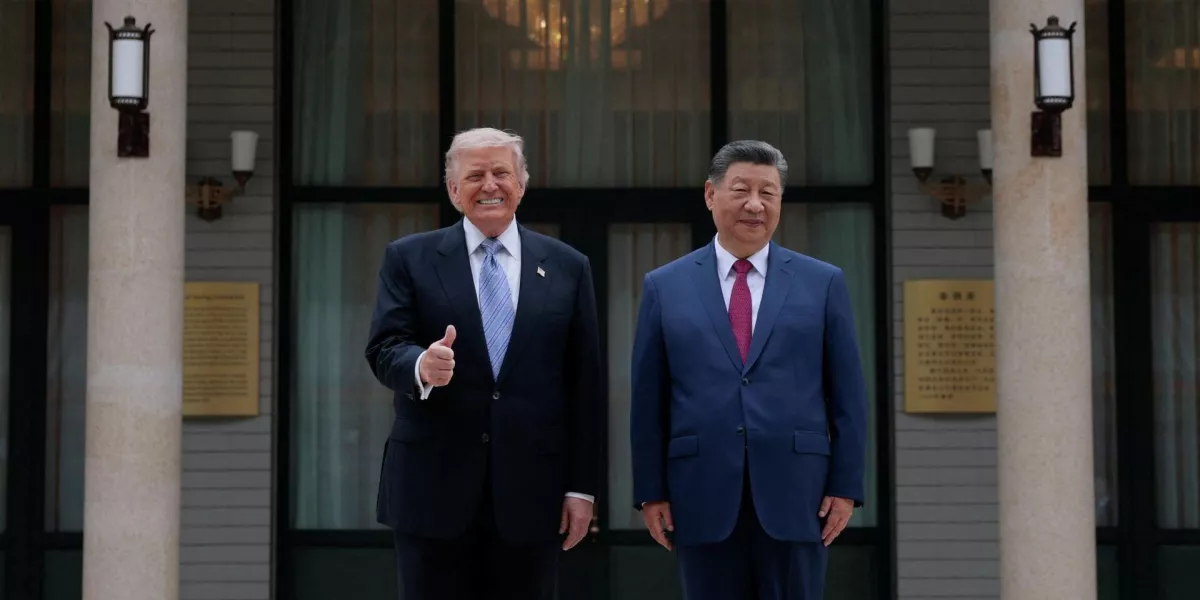
The White House stated following the talks that China had agreed on the need to reopen the Strait of Hormuz and opposed Iran’s control over this strategic artery. However, Beijing did not confirm such an interpretation of the results of the negotiations between Donald Trump and Xi Jinping.
It is quite likely that there is a general understanding in Beijing regarding the unblocking of the Strait, but that it comes with its own conditions — and it is far from certain that these conditions are favourable to the United States. For example, Xi Jinping may insist on an Iranian sequencing model: first reopening the Strait of Hormuz and lifting the U.S. naval blockade, and only then addressing Iran’s nuclear and missile programmes.
Another critical issue is the fate of Taiwan. Trump did not comment on this topic. However, following the talks, Secretary of State Marco Rubio warned that any forced change to the current status quo regarding Taiwan would have negative consequences for both countries. In this way, the White House clearly demonstrated its firm position on the issue.
It is noteworthy that Xi Jinping, during his meeting with Trump, expressed hope that the United States and China could overcome the so-called Thucydides Trap — a situation of inevitable conflict when an existing hegemon faces the rapid rise of another global power. The very fact that Xi Jinping voiced this concern may symbolically signal not so much a hope for peace, but rather a message that China is prepared for confrontation with the United States, including because the current balance of power appears to be shifting in its favour.
The only clear outcome of the talks is China’s intention to purchase 200 Boeing aircraft from the United States. However, even this is not as straightforward as it appears. Boeing shares reacted to the news with a decline. It turns out that the market had initially expected a contract for 500 aircraft.







 editor@caliber.az
 +994 55 444-88-98
 Азербайджан, Баку, ул. Низами, 203, Af Business House, 5-й этаж