










Turkic unity in the context of a fragmenting world order Review by Teymur Atayev
The geographical scope of the Organization of Turkic States (OTS) summits, including informal ones, is expanding, which demonstrates the uniqueness of this organisation’s reach into new geographical spaces. The turn has come for one of the emblematic cities of the entire Turkic world in Kazakhstan — Turkestan — which hosted the leaders of OTS member states with an agenda focused on “Artificial Intelligence (AI) and digital development” amid the geopolitical turbulence accompanying the formation of a new world order. It is precisely in this context that the prospects of the OTS are becoming increasingly relevant.
President of Azerbaijan Ilham Aliyev drew attention to this aspect last month, describing relations with this structure as a priority for Baku. He emphasised the importance of the OTS becoming one of the world’s leading international organisations, which could be facilitated by the joint efforts of its member states. Unlike many other international organisations, the OTS is based on ethnic roots, complemented by shared geography, common goals, and a special format of relations between the countries.

In Turkestan, the Head of State, highlighting the growing international authority of the OTS, specified the importance of Turkic states taking leading positions in the new stage of global development, driven by the vast opportunities of digital transformation and artificial intelligence. In this regard, he referred to Azerbaijan’s experience in this field.
In this context, an immediate association arises with the President’s remarks made at the event dedicated to the 80th anniversary of the Azerbaijan National Academy of Sciences (ANAS). At that time, he noted that while a decade ago artificial intelligence was hardly discussed, today it has become an integral part of the future development of states, and its application in the social, economic, and technological development of Azerbaijan is already a reality.
This once again demonstrates the unique worldview of National Leader Heydar Aliyev, who more than 25 years ago emphasised the importance of strengthening the independence of Turkic states through the prism of understanding contemporary “political realities and the new world order.” To achieve this goal, he stressed the need to mobilise shared national-spiritual values, scientific, intellectual and cultural potential, as well as political and economic strength in pursuit of such a sacred objective as the unity and integrity of the Turkic world.
Comments on the words of the National Leader expressed in 2001 are largely superfluous. It is sufficient to trace the trajectory from those statements to the adoption, at the 8th OTS Summit in 2021, of the document “Turkic World Vision - 2040,” which outlined the task of adapting the fraternal states to new global realities. In particular, it refers to the creation of intra-regional digital connectivity and deeper integration into the global knowledge economy through the use of big data. The development of artificial intelligence, in turn, is expected to facilitate transformation not only in the digital and green spheres, but also towards the formation of a smart economy and smart cities.
Within the framework of the 11th OTS Summit, the Agreement on Partnership in the Field of Digital Economy was signed.
With regard to Azerbaijan, this focus has been reflected in the adoption in 2025 of two strategies aimed at accelerating the development of artificial intelligence — the AI Strategy for 2025–2028 and the Digital Economy Expansion Strategy for 2026–2029. Among their priorities are the modernisation of digital infrastructure for economic development, support for the startup and innovation ecosystem, the use of data analytics in economic decision-making, and other related objectives.
It is highly symbolic that these ideas were further developed in Turkestan in the form of concrete initiatives proposed by the leaders of member states. In this context, President of Kazakhstan Kassym-Jomart Tokayev put forward an initiative to establish a Network of AI Centres of Turkic States.

President of Uzbekistan Shavkat Mirziyoyev, speaking about the formation of an open unified digital space, proposed the development of the concept of a “Digital Turkic Corridor,” which would connect regional data centres through high-speed communication channels.
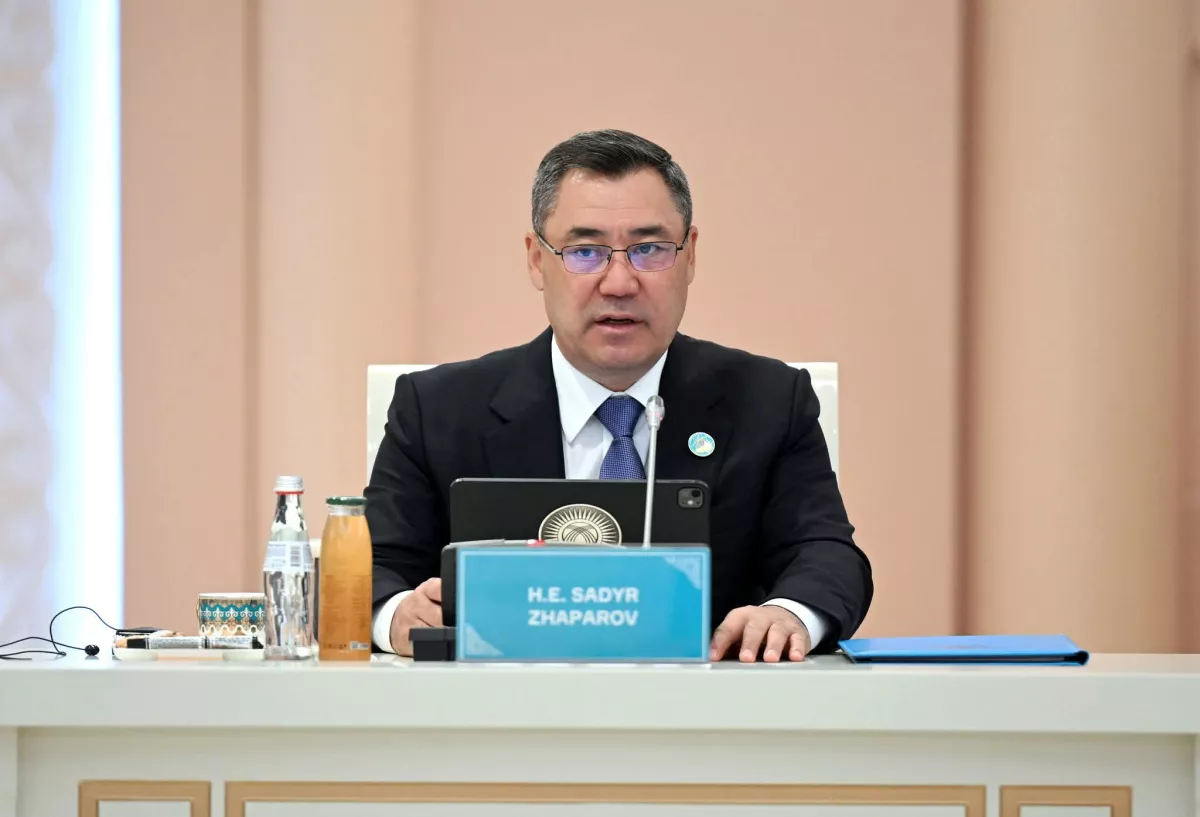
The President of Kyrgyzstan Sadyr Japarov also highlighted the significant potential for the formation of an independent geoeconomic and technological hub.

A similar position was expressed by President of Türkiye Recep Tayyip Erdoğan. Stressing that lagging behind in digital transformation could jeopardise the sovereignty of states, he also emphasised the need to strengthen digital interconnectivity among OTS countries.
However, alongside initiatives in the field of artificial intelligence, the leaders of the states also predictably focused on other global issues. Erdoğan, equating cyber security issues with security on land, in the air, and at sea, stressed that the crises in Ukraine, Lebanon, and across the Middle East demonstrate the need to strengthen defence capabilities and expand cooperation in the defence industry.
In this regard, Ankara, being ready to share its experience accumulated in its high-tech defence industry, attaches great importance to the regular holding of “Meetings of Defence Industry Institutions” within the framework of the OTS.

This can be seen as a continuation of the idea expressed by President Aliyev at the 11th OTS Summit in 2024: “Given the growing global threats, our cooperation in defense, security, and the defense industry is of tremendous importance.”
In Turkestan, the Head of State, speaking about OTS cooperation within the framework of the “Digital Silk Road” project between Europe and Asia and the readiness to commission in the coming months the Trans-Caspian fibre-optic cable line between Azerbaijan and Kazakhstan, also addressed the prospects of the Middle Corridor, one of the key components of which will be the Zangezur Corridor.
In parallel, the advantages of the China–Kyrgyzstan–Uzbekistan railway project were also discussed in Turkestan.
As noted by Sadyr Japarov, the integration of transport corridors with digital platforms would allow Turkic states to occupy an important position in the global logistics system.
Thus, the “digital” agenda of the informal OTS summit in Kazakhstan highlighted a range of related strategic dimensions.
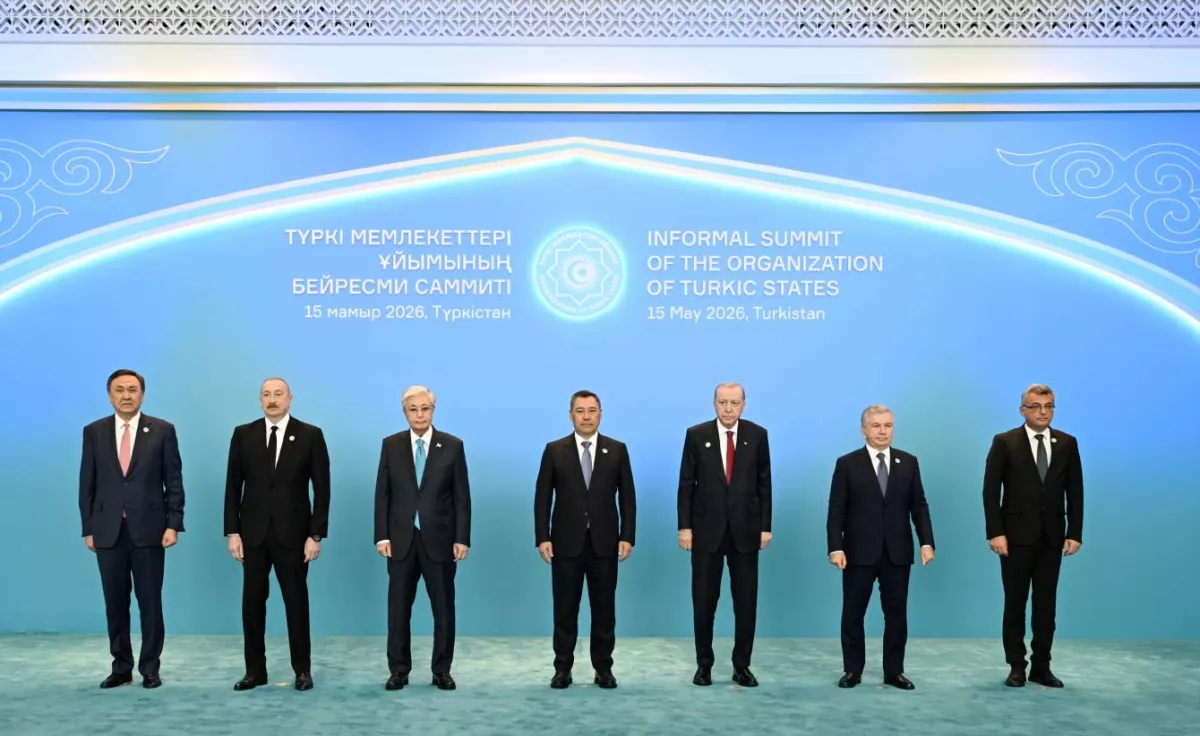
President of Azerbaijan Ilham Aliyev concluded his speech by stating that the Turkic world is our family and should become one of the influential geopolitical power centres of the 21st century, and that Azerbaijan will continue to make every effort to strengthen the Organization of Turkic States.
Thus, in the context of the breakdown of the old world order, the OTS is becoming an important geopolitical actor not only due to its geographical position, but also as a result of consistent steps aimed at forming a powerful centre of influence.







 editor@caliber.az
 +994 55 444-88-98
 Азербайджан, Баку, ул. Низами, 203, Af Business House, 5-й этаж