










Hezbollah’s kill zone in Southern Lebanon How drones are changing the war
Attacks by militants of the pro-Iranian group Hezbollah, which is using fiber-optic drones against Israeli soldiers in Lebanon, continue. In recent days, an expansion of such operations has been observed.
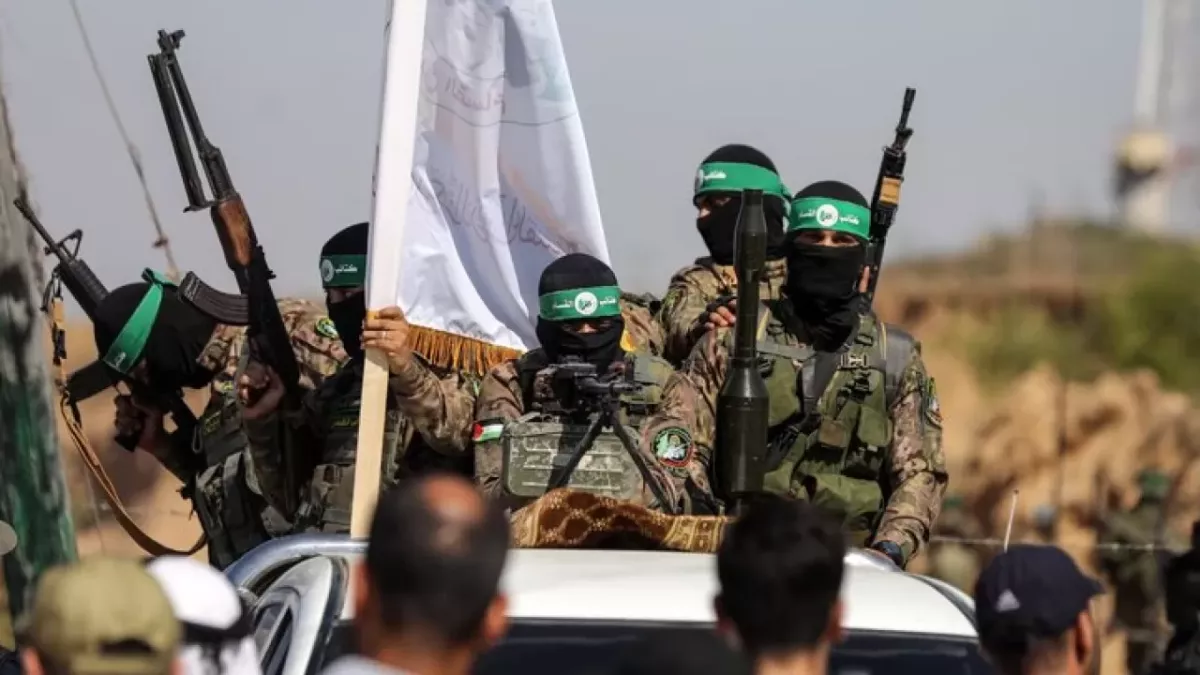
Israeli military campaigns in Lebanon have never been successful. From 1982 to 2000, the IDF occupied part of the country, gradually withdrawing to a security zone—a strip several kilometres wide in southern Lebanon along the border. It was believed to shield Israel from possible rocket fire and infiltration by militants.
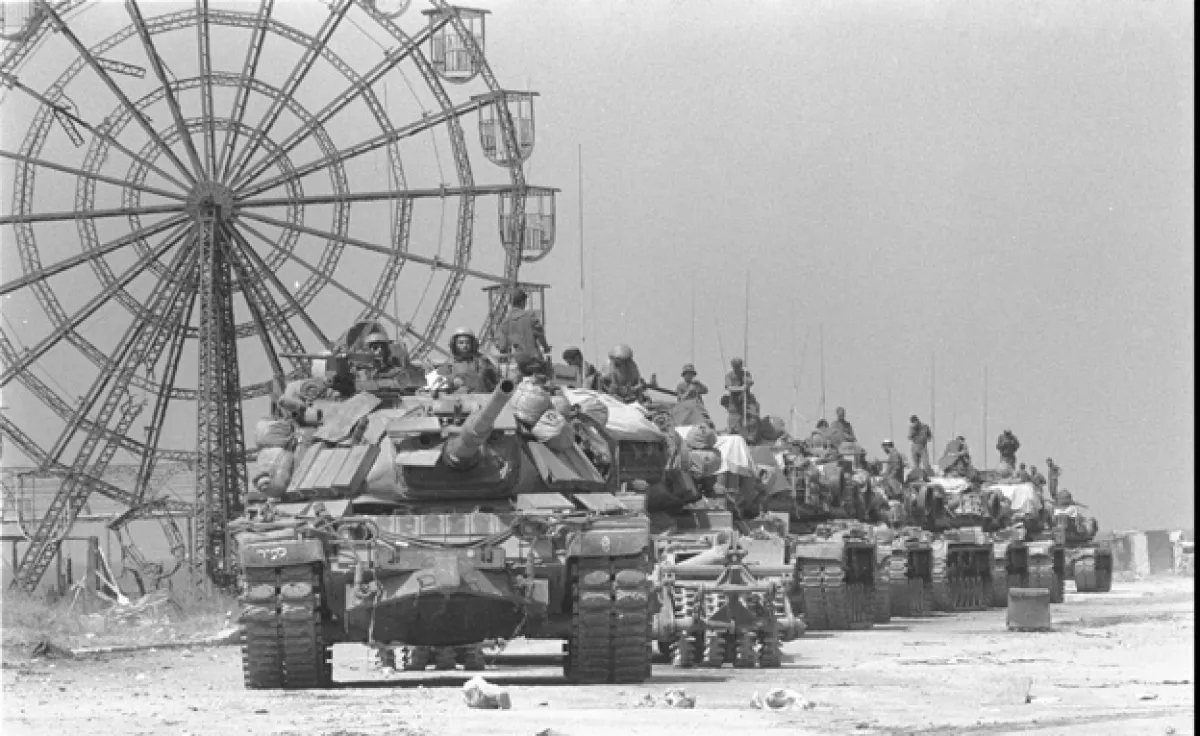
It was during this period of Israeli military presence that an uprising began among the Shiites of southern Lebanon—the poorest segment of the local population. These were mainly low-paid urban workers and owners of small farms. The uprising of residents of southern Lebanese villages and neighbourhoods, driven to despair by poverty and angered by the actions of the IDF, was quickly brought under the control of the local clergy, and then began to rely on assistance from Iranian military personnel, who supplied the rebels with weapons and trained them in the basics of guerrilla warfare.
Thus, the socio-class uprising of Shiite workers, which had significant potential for expansion, was integrated and transformed into a national and religious movement controlled by the wealthy upper strata of the Shiite community and Iran. These two forces in particular—the influential local clergy connected to part of the Lebanese business community, and Iranian emissaries from the Islamic Revolutionary Guard Corps (IRGC)—formed Hezbollah, a party that currently holds only 12 seats in Lebanon’s 128-member parliament. However, its relatively modest electoral results (Hezbollah does not even enjoy the support of a majority of Shiites, who make up 30–40 per cent of Lebanon’s 6-million population) do not reflect the organisation’s real influence.
Partly due to Iranian military and financial assistance, and partly due to its successes in the conflict with Israel, Hezbollah has evolved into the most powerful armed force in the country, significantly surpassing the Lebanese Armed Forces. As a result, it is effectively the one that dictates domestic politics in Lebanon. Even the current government, composed of parties and factions hostile to it, has been unable—despite official statements and demands—to disarm it.
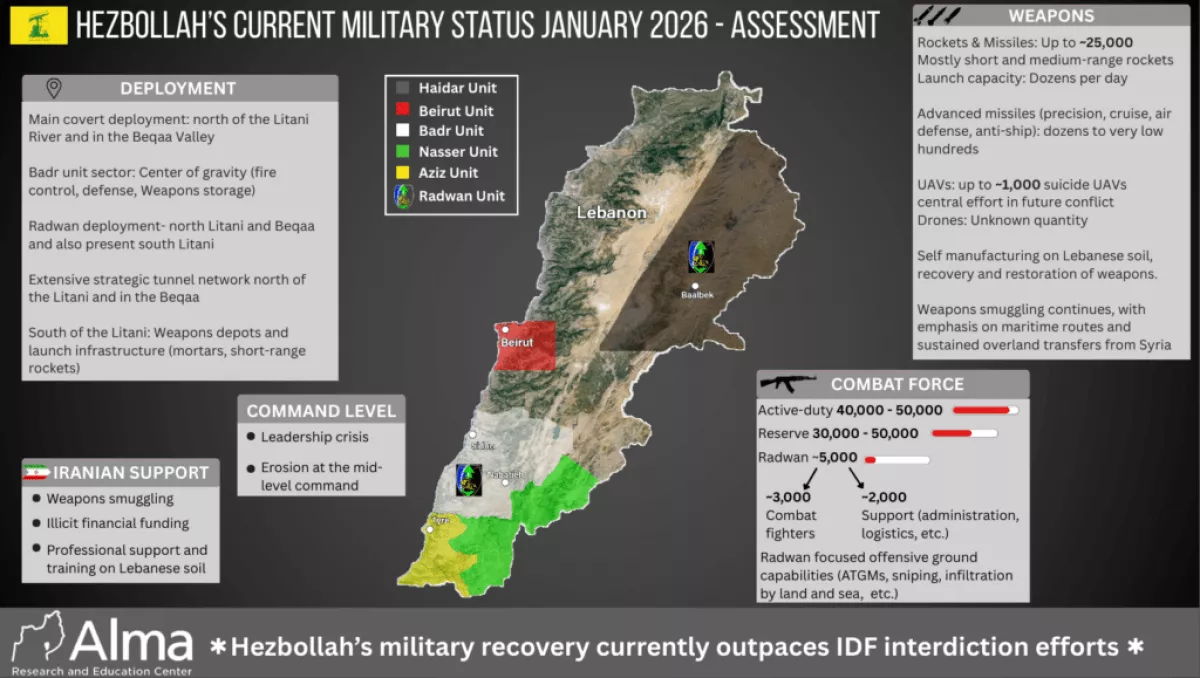
Hezbollah is not only a political party and an armed organisation, comprising 20,000–30,000 fighters (with a reserve of a similar size). It is also an international corporation whose activities are linked to a wide range of enterprises. It controls currency exchange and the production of certain illicit substances in Lebanon, as well as various trading networks in South America and East Asia—wherever large Lebanese diaspora communities are present.
Inside Lebanon itself, it pays salaries to fighters and maintains, for them and for the families of Lebanese who support Hezbollah, a network of free or heavily subsidised hospitals and schools. The organisation also operates its own construction companies, taxi services, and other businesses.
Hezbollah has managed to deeply embed itself in Lebanese society, becoming a “state within a state”, partly due to Iranian financial injections (which in the past amounted to around $700 million annually), and partly through integration via a network of social services. With its own armed forces, enterprises, and infrastructure, the group has effectively created a quasi-independent entity in southern Lebanon, the Beqaa Valley, and the Beirut suburb of Dahieh, where about half of all Lebanese Shiites live.
Hezbollah is part of the “Axis of Resistance” — a pro-Iranian coalition of various armed groups. Since its existence relies heavily on Iranian weapons supplies and financial support, it has become one of Tehran’s key forward outposts and a force opposing Israel in the struggle for dominance in the Middle East. As a result, the Lebanese–Israeli border is one of the most volatile in the region, with regular outbreaks of armed clashes.
The group’s guerrilla and sabotage operations against the IDF are facilitated by the fact that southern Lebanon’s terrain is exceptionally suitable for guerrilla warfare and highly unfavourable for advancing regular armies. Low, forested mountains are ideal for ambushes, while the narrow passes between them—along which Israeli armoured columns typically move—turn them into targets for precise fire.
Local Shiite villages have been turned into fortified strongholds, beneath which entire underground networks have been built. Civilians can be evacuated there, while fighters use them to hide, wait out bombardments, and launch rockets into Israeli territory. Similar underground complexes also exist separately: carved into rock, they extend tens of metres underground and stretch for several kilometres each. They can house party headquarters, military bases, ammunition depots, and food supplies.
There is a fairly widespread perception of a small Israeli “David” defeating massive Arab armies (“Goliath”) thanks to qualitative superiority. Perhaps that was once the case, but in the case of Hezbollah the picture looks different. Its forces are outnumbered by the IDF by roughly ten to one, and Israel’s advantage in military technology is virtually unmatched. However, the combination of terrain highly suitable for guerrilla warfare and the group’s chosen tactics has so far allowed it, in the words of the late Hezbollah leader Sheikh Hassan Nasrallah, to “absorb” Israeli attacks.
All attempts by Israel to destroy Hezbollah or push it out of southern Lebanon have failed.
Between 1982 and 2000, the IDF withdrew under pressure from guerrilla forces, abandoning military bases in the security zone, which subsequently became Hezbollah’s trophies.
In 2006, Israel sent its forces into Lebanon, but once again they withdrew after three weeks of fighting, having suffered losses. Later, an Israeli commission headed by Eliyahu Winograd acknowledged the operation’s failure.
In 2024, Israel launched large-scale attacks on Hezbollah after the group began shelling its territory. This time, it acted asymmetrically: a pager-related operation resulted in the deaths of around 100 militants and left 3,000–4,000 others seriously wounded. Subsequently, airstrikes destroyed the entire military-political leadership of Hezbollah, as well as a significant portion of its weapons depots.
Later, the IDF carried out a ground incursion into Lebanon and took control of five key strategic heights in the south of the country, but Israeli forces were unable to advance further. Around 100 soldiers were killed in ambushes, including members of elite special units.
Nevertheless, this round of confrontation ended largely in Israel’s favour, while Hezbollah was significantly weakened.
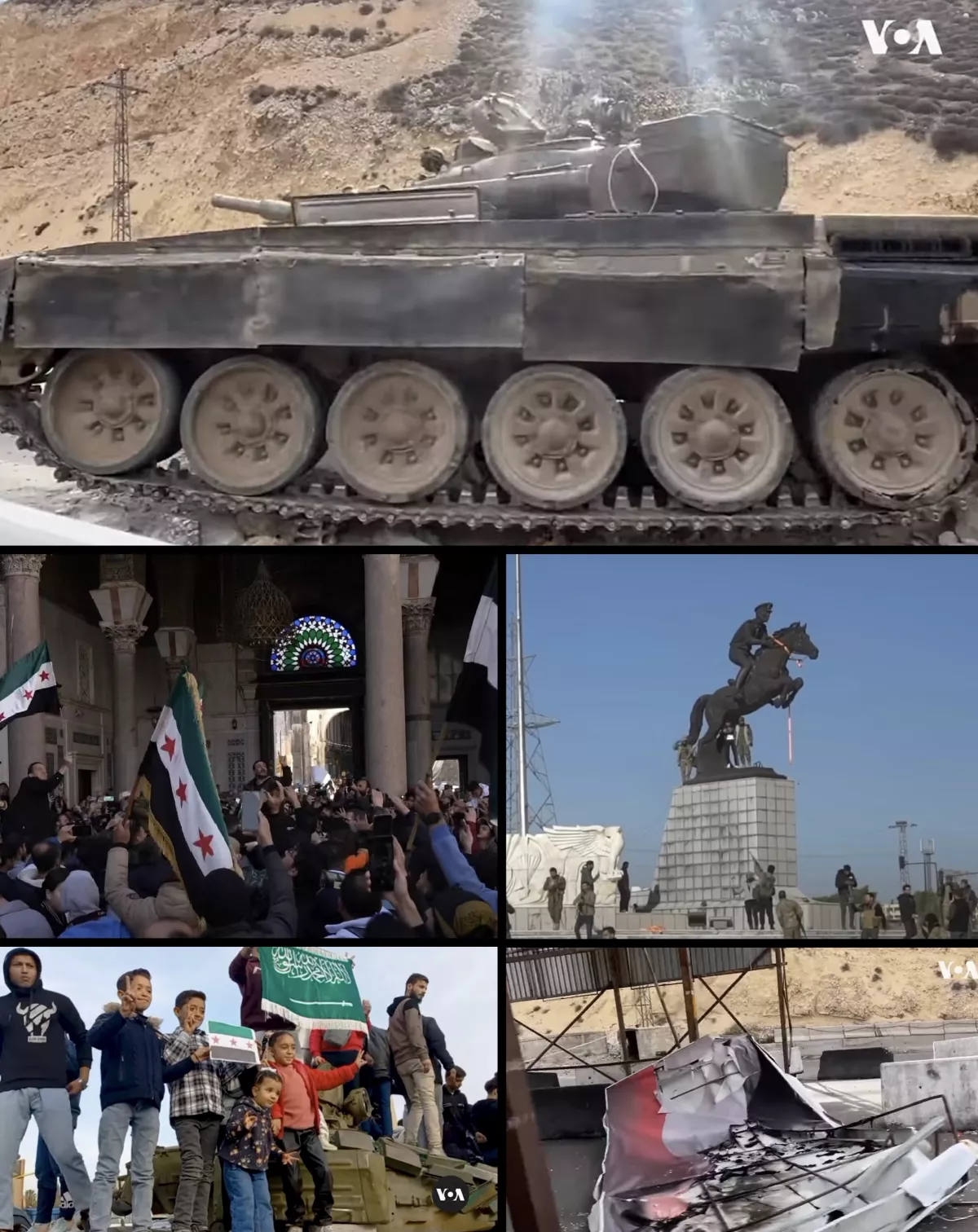
However, the most severe blow to it was the loss of the friendly Bashar al-Assad regime in Syria, which fell under the pressure of hostile Sunni rebels opposed to Hezbollah. Israel played a significant role in Assad’s defeat: for years it bombed and struck regime-aligned forces, thereby weakening them, which in turn allowed Sunni rebels led by Ahmed al-Sharaa (the current president of Syria) to prevail.
As a result, the main artery that supplied Hezbollah and enabled it to receive weapons and ammunition from Iran and Iraq was destroyed. To this day, this blow to its logistics creates certain conditions for the possible final defeat of Hezbollah.
In March of this year, the IDF launched a new ground offensive against Hezbollah forces simultaneously with the US–Israeli war against Iran. It should be recalled that Hezbollah is part of Iran’s alliance of partners, alongside the Houthis in Yemen, pro-Iranian militias in Iraq, and several other groups. Therefore, the new Lebanese–Israeli war can be viewed as part of the ongoing struggle between the US–Israeli coalition and Iran for dominance in the Middle East, its territory, resources, markets, trade routes, and political influence.
Three unpleasant realities for Israel then emerged.
First, Hezbollah managed to restore part of its command chains.
Second, even after losing leadership structures as a result of Israeli Air Force strikes, Hezbollah units are capable of conducting combat operations in a decentralised manner, acting in a manner similar to a swarm of bees.
Its formations carry out operations autonomously, attacking Israeli forces while maintaining communication with one another and concentrating on the enemy’s most vulnerable points.
However, they had operated in a similar way back in 2006: network-based organisation and decentralised coordination have long been Hezbollah’s signature tactic. But the biggest surprise came later.
The drone revolution of Hezbollah
During Israel’s 2024 incursion, Hezbollah used a limited number of FPV drones—both radio-controlled and fibre-optic-guided. It became clear that Israeli electronic warfare systems were highly effective at jamming radio communications. As a result, the new conflict turned into a showcase for fibre-optic drones, which are largely immune to electronic warfare (EW).
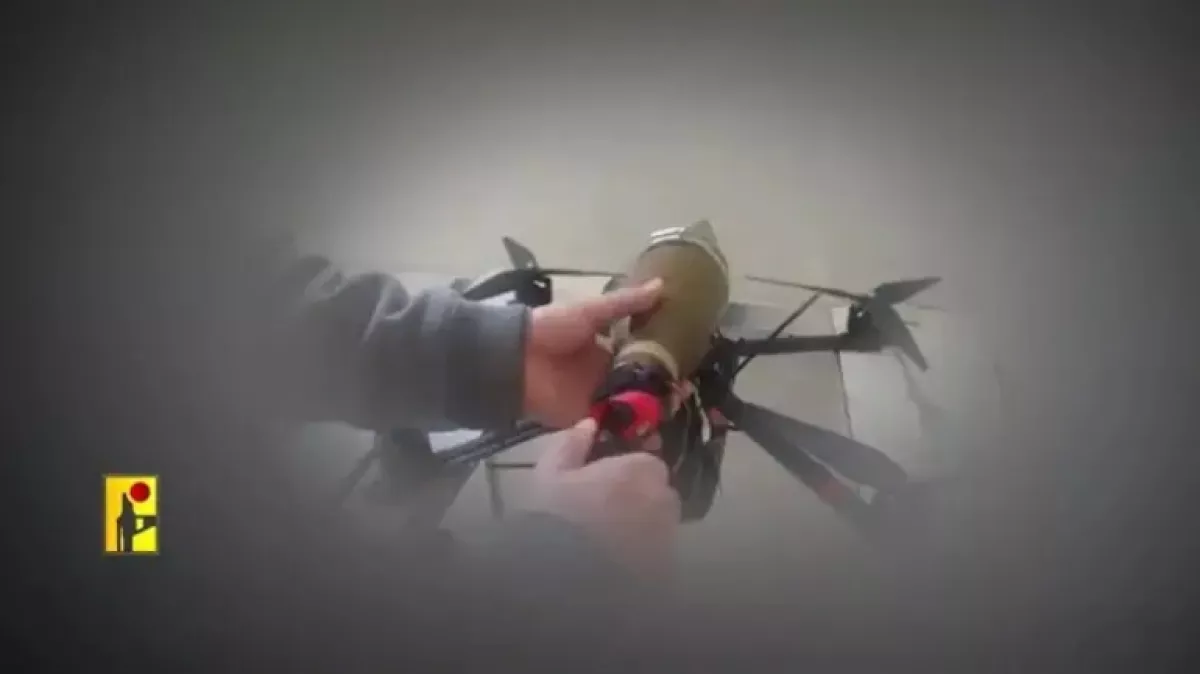
Initial attacks by such drones were relatively rare, but in recent days there has been a sharp increase in their use. Hezbollah released a major video showing the destruction of an entire IDF armoured formation.
Typically, these attacks unfold as follows: drones hover over dense concentrations of stationary armoured vehicles, calmly selecting suitable targets before striking. In addition, operators ambush military vehicles on roads, and in some cases carry out strikes on concentrations of enemy personnel.
The IDF appears to have been unprepared for this development, despite the fact that FPV drones have long become a hallmark of modern warfare. Military leadership missed yet another drone revolution, even though Israel was among the first to develop and deploy heavy UAVs in the past. IDF equipment is often left in the open air, and only in certain cases is it “protected” by improvised cage armour (“grills”).
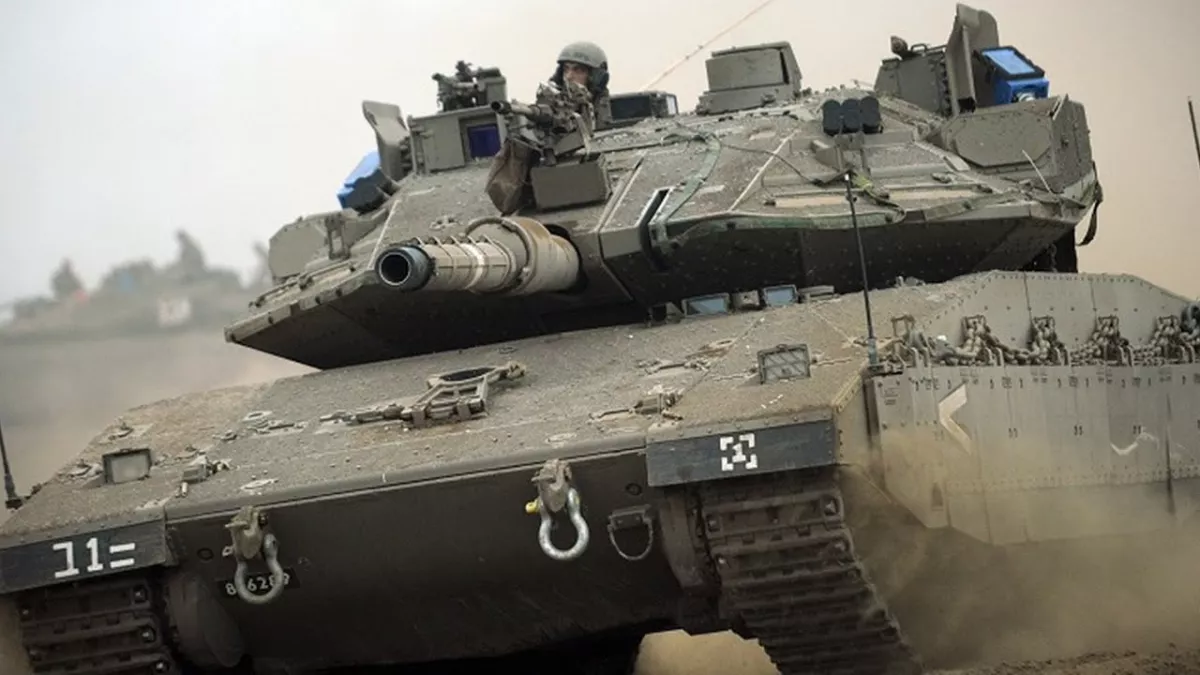
Now, a few Hezbollah drones costing a couple thousand dollars can destroy or damage an Israeli Merkava Mark 4 tank worth $5-6 million. Even a single drone aimed at a concentration of troops can kill and wound several soldiers at once.
At the same time, as noted, Hezbollah has entire underground complexes from which operators can conduct attacks with a relatively high degree of safety. The organisation’s new tactics are capable of combining drone warfare with classic guerrilla operations: for example, a large military convoy immobilised or disrupted by drones on a mountain road can become an easy target for an ambush.
However, for Israel this is still not the worst-case scenario. Even more serious challenges may lie ahead, potentially leading to catastrophic consequences.
If Hezbollah continues to increase the number of strikes and expand the training of operators at the current pace, within a year or two it could develop what modern military terminology describes as a “drone wall”. This would mean that multiple drones could be assigned to every IDF soldier, and dozens to every tank or armoured personnel carrier. Even well-protected equipment remains vulnerable to such saturation. At the same time, the Lebanese–Israeli border is only 79 kilometres long. This is not a front stretching for thousands of kilometres, which makes it significantly easier to saturate and control.
Secondly, fibre-optic drones make it possible to create a “kill zone” to a depth of 20–30 kilometres. The security zone from which Israel has been trying to push Hezbollah since March of this year extends from the border between the two countries to the Litani River, roughly 5–10 kilometres into Lebanon, and even this area is not yet fully under IDF control. This means that all Israeli military personnel in Lebanon, as well as military bases, and dozens of villages and towns in northern Israel, would fall within such a kill zone—in fact, many already do.
Even if Hezbollah were to increase the intensity of its drone strikes only severalfold, which would hardly pose a major difficulty for it, Israel could begin to suffer losses significant enough to force its forces to withdraw from Lebanon. Moreover, if the organisation continues along this trajectory, northern Israel risks becoming sparsely populated, and IDF bases in the area could be rendered inoperable.
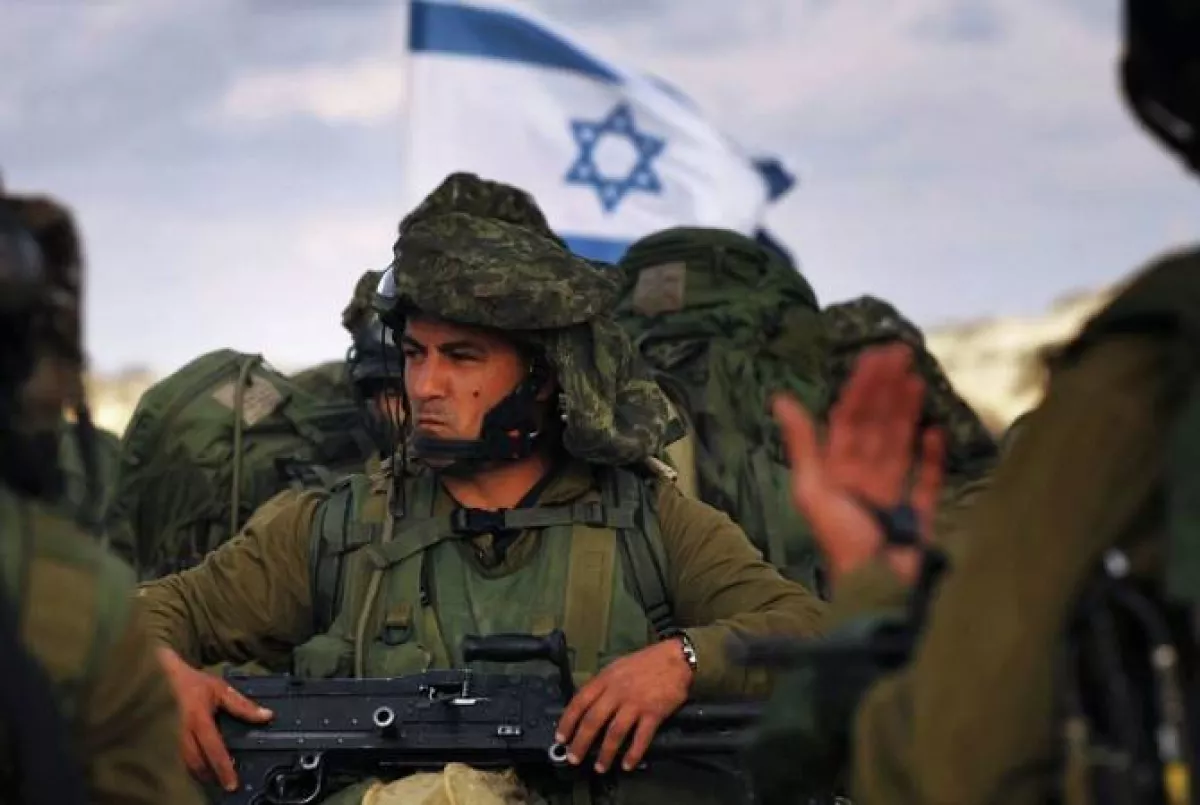
This no longer appears to be science fiction, but rather one of the likely scenarios of modern warfare. The alternative would be for Israel to advance deeper into Lebanon, yet this would only increase casualties and make IDF forces even more vulnerable.
Thirdly, specialists have already identified Hezbollah drones equipped with Starlink terminals. This potentially enables so-called middle-strike attacks at distances of 50–100, and possibly up to 200 kilometres deep into enemy territory, representing the next stage in the evolution of drone warfare. Meanwhile, Israel’s territory stretches roughly 470 kilometres from north to south, and 135 kilometres from east to west at its widest point. Due to its comparatively small size, the country remains vulnerable to such attacks.
Of course, Hezbollah’s possession of several hundred fibre-optic drones and a limited number of UAVs equipped with Starlink does not in itself mean catastrophe for Tel Aviv. Especially since Israel itself actively uses drones against Hezbollah and will likely attempt to create its own kill zone inside Lebanese territory. Nevertheless, the prospects of drone warfare may prove highly troubling for Israel. Drones are highly precise yet extremely inexpensive weapons, making their mass production and widespread use entirely feasible.







 editor@caliber.az
 +994 55 444-88-98
 Азербайджан, Баку, ул. Низами, 203, Af Business House, 5-й этаж