










Ukraine amid a wave of scandals What did Mendel’s interview reveal?
In the global media landscape, Ukraine — a country that has been resisting a major nuclear power for more than four years — is increasingly being associated with the word “scandal,” often in a negative context shaped by key political figures, both current and former officials.
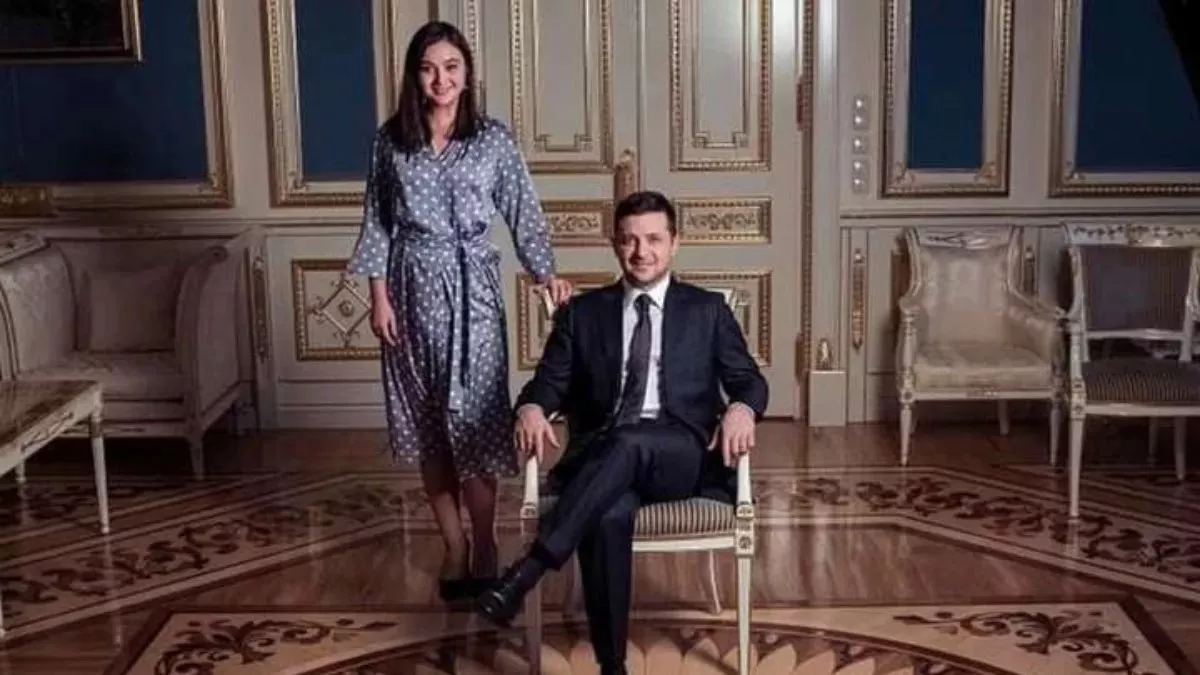
As an example of this, one can cite a recent interview given by former press secretary to the Ukrainian president, Iuliia Mendel, to American journalist Tucker Carlson, published on his YouTube channel under the title: “Zelensky’s Press Secretary Reveals All: Cocaine, Cover-ups, and the Only Obstacle Preventing Peace.”
The very title of the interview makes it clear that the purpose of this Q&A format was to explain to Americans—who are generally unfamiliar with the nuances of Ukraine’s domestic politics—why the United States is right to withhold support for Volodymyr Zelenskyy. Mendel appeared to be a particularly suitable spokesperson, as her credibility stemmed from her former official position rather than her current status as a public figure pursuing personal, political, and financial ambitions and seeking political asylum in the United States, which she indirectly confirmed by telling Carlson that she could no longer return to Ukraine.
The interview undoubtedly caused a strong reaction in Ukrainian public and political circles; however, the quality of the responses has left much to be desired, with many of them effectively reinforcing the narrative of the former presidential spokesperson. In particular, television host Natalia Moseychuk, while sharply criticising Mendel, noted that for an American audience, the interview was reminiscent of the scandalous era of Bill Clinton and Monica Lewinsky. Ironically, this comparison by one of the key voices of the current Ukrainian media landscape only added fuel to gossip, sarcasm, and ridicule, since the Clinton–Lewinsky affair and its outcome are widely known and frequently referenced in popular discourse.
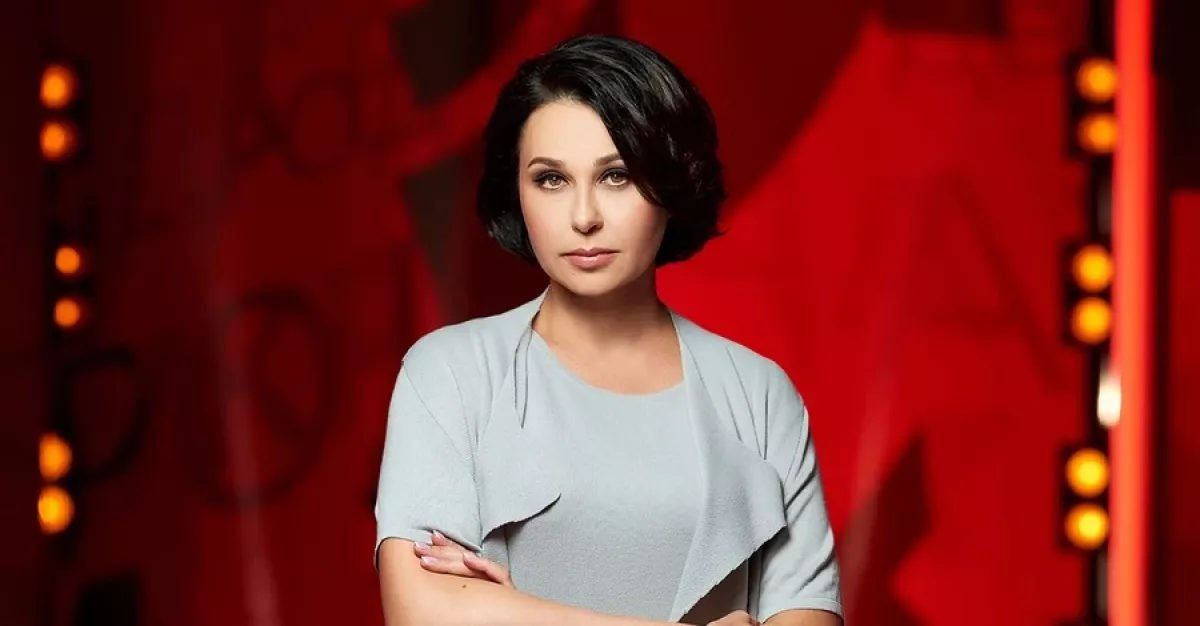
Meanwhile, if Moseychuk intended to suggest that the time has come to initiate impeachment proceedings against Zelenskyy, she should have relied on legal provisions—such as Article 111 of the Constitution of Ukraine and the Law “On the Special Procedure for the Removal of the President of Ukraine (Impeachment)”—rather than drawing highly ambiguous parallels.
Moreover, both she and other well-known Ukrainian journalists and bloggers, who rushed to equate criticism of Zelensky with criticism of Ukraine, in doing so effectively confirmed Mendel’s claims that he had called for the involvement of around 1,000 media figures who would broadcast an exclusively positive agenda.
“If 1,000 of talking heads tell positive things, then positive things are happening that people believe that there are positive things,” the former press secretary of the Ukrainian president stated in the interview, adding that, in response to objections, Zelenskyy leaned over the table in irritation and said: “I need Goebbels propaganda if you want. I need Goebbels propaganda. I need thousands of talking heads of Goebbels's propaganda.”
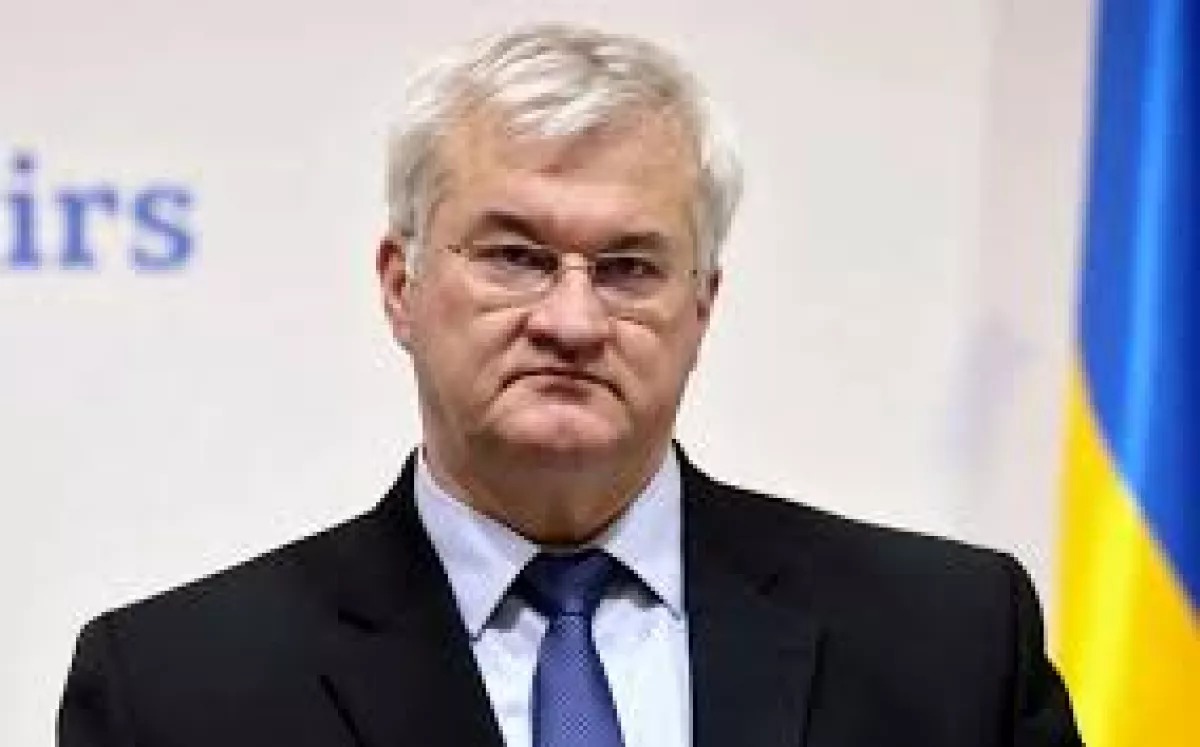
However, while Moseychuk’s remarks can still, to some extent, be stretched to fit within her professional responsibilities, it is far less clear why Foreign Minister Andrii Sybiha chose to comment on Mendel’s interview, given that it has no obvious connection to Ukraine’s foreign policy.
At the same time, the set of arguments adopted by the foreign minister deserves special attention. In particular, he stated that those who have worked with President Volodymyr Zelenskyy regard his contribution to Ukraine’s ability to withstand the events of 2022 and continue its resistance against Russia as undeniable, adding that “no false accusations will change these facts.”
These statements, to put it mildly, are far removed from reality, which is quite easy to demonstrate. We will begin with Dmytro Razumkov, who during the 2019 presidential campaign served as the chief political adviser, spokesperson of the election headquarters, and a key ideologue of the current head of state.
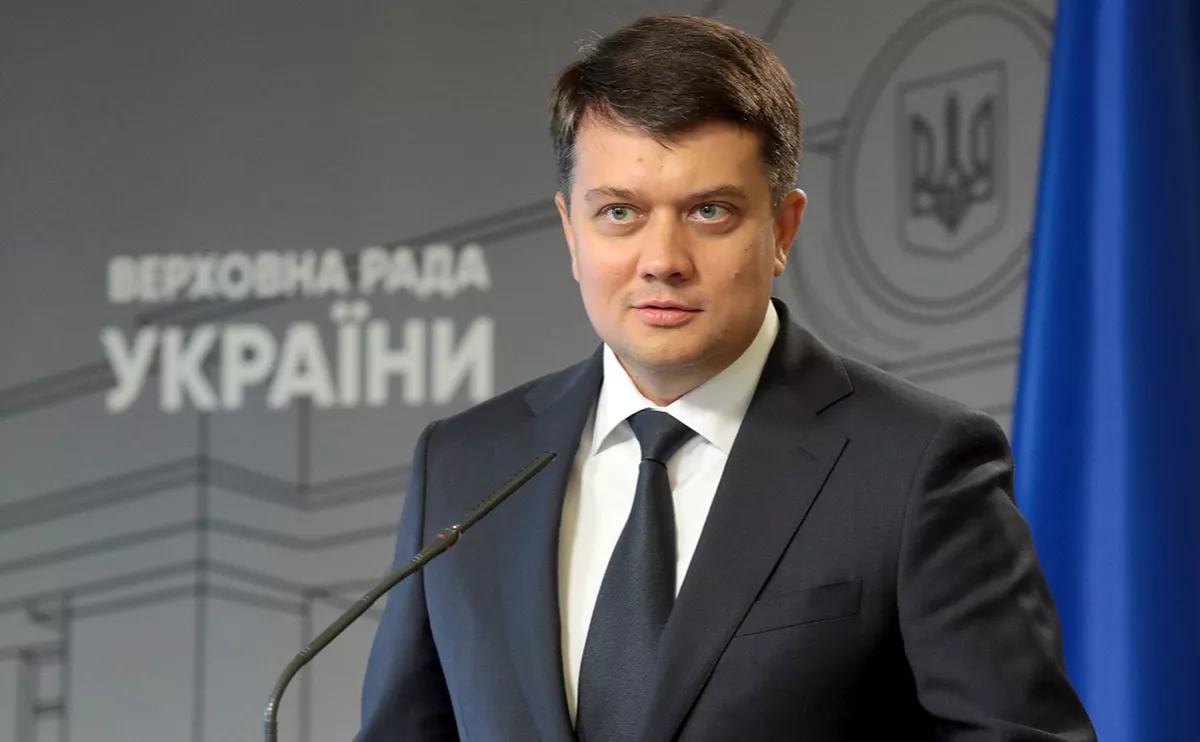
At that time, as is well known, Zelenskyy avoided direct interviews and traditional political debates, and it was Razumkov who represented him on television channels, answering difficult questions from journalists and political opponents. With a reputation as a balanced intellectual, he gave the campaign greater political credibility, helping to soften Zelenskyy’s image as a “show-business outsider” unfit for state governance.
However, relations between them later deteriorated. This was largely due to the Presidential Office’s push toward centralising power. Razumkov, in turn, insisted on strict adherence to parliamentary procedures and the rule of law, criticising the Presidential Office for using the National Security and Defence Council (NSDC) to impose sanctions on Ukrainian citizens without court decisions. The breaking point came with the so-called “de-oligarchization law,” which Razumkov, as Speaker of the Verkhovna Rada, submitted to the Venice Commission against the will of the Presidential Office. As a result, in October 2021, he was removed from office by the ruling party’s parliamentary majority.
Subsequently, Razumkov has repeatedly stated in public that Ukraine has effectively become an “office-based presidential republic,” that Zelenskyy no longer tolerates criticism, and that parliament has lost its autonomy, being viewed by the Presidential Office as nothing more than “people who simply have to press buttons.” In essence, he has long been voicing much the same assessment that Mendel articulated in her interview with Carlson.
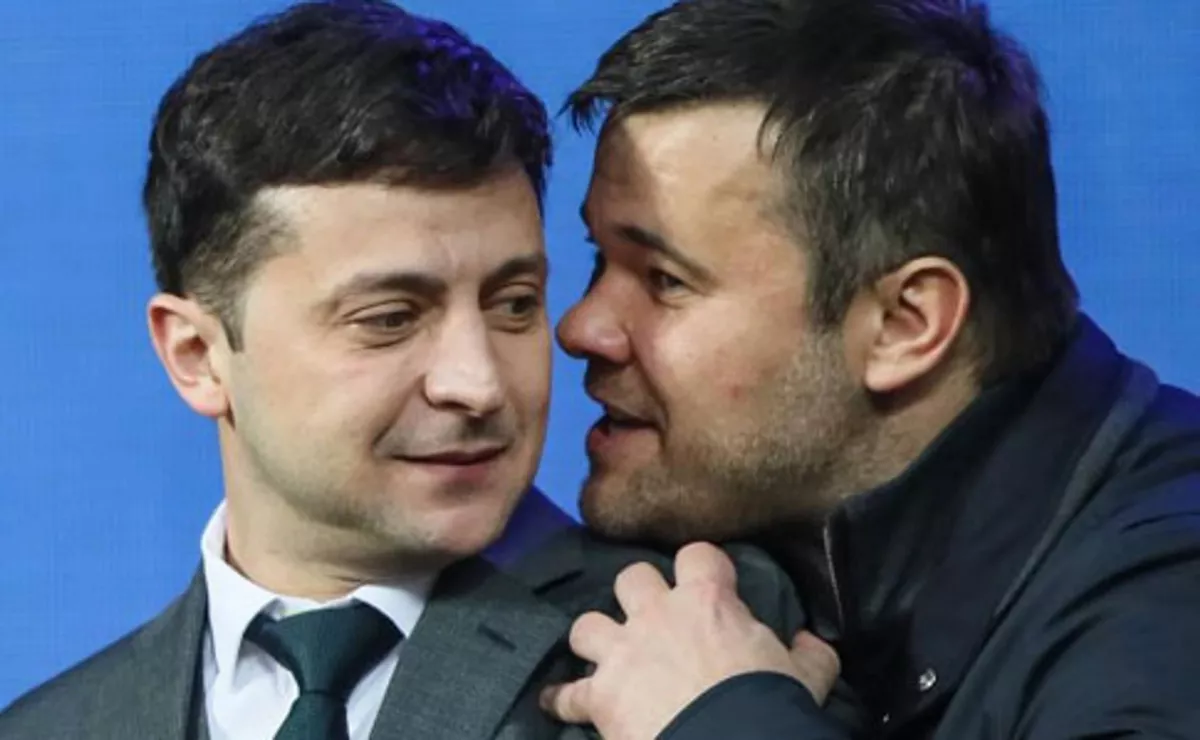
Another example is Andriy Bohdan, who played a key role in Volodymyr Zelenskyy’s rise to power, moving from being one of the initiators of his nomination to effectively heading the election campaign and later becoming the first Head of the Presidential Office. Today, however, he is among Zelenskyy’s most outspoken critics.
For instance, in an interview with Dmytro Gordon in September 2020, Bohdan claimed that the Ukrainian side had failed to fulfil the commitments made to Russian President Vladimir Putin during the Normandy Format meeting in Paris. “What I see is that it seems we kind of screwed him over: we promised one thing and did nothing,” Bohdan said at the time. He is now under sanctions imposed by the Ukrainian president.
Another figure who should be included in the list of Zelenskyy’s former allies is Oleksiy Arestovych, the former freelance advisor to the Head of the Presidential Office of Ukraine on strategic communications in the sphere of national security and defence. He resigned in January 2023 amid a scandal triggered by an inaccurate statement regarding the causes of the destruction of a residential building in Dnipro.
He also took part directly in Russian–Ukrainian negotiations in two formats, contributing to discussions on the parameters of potential agreements, including issues such as the size of the Armed Forces of Ukraine and demilitarisation. In other words, Arestovych was not only a key figure in shaping the Ukrainian leadership’s information policy during the most critical phase of the war, but was also privy to the details of negotiations between Kyiv and Moscow. Today, he has become one of the most vocal critics of Volodymyr Zelenskyy.
Taken together, these examples sufficiently demonstrate the inconsistency of Sybiha’s claim that “everyone who worked with the president of Ukraine in the most difficult times” considers his role in Ukraine’s endurance in 2022 to be undeniable. Such a presentation of facts, to put it mildly, appears selective and does little credit to the head of a ministry responsible for the country’s foreign policy direction.
On the other hand, the inability of Ukrainian officials and media representatives to formulate coherent and substantiated counterarguments in response to criticism could, in the near future, once again result in headlines in the global press announcing that “another scandal has erupted in Ukraine,” accompanied by the usual explanatory framing.







 editor@caliber.az
 +994 55 444-88-98
 Азербайджан, Баку, ул. Низами, 203, Af Business House, 5-й этаж