










War-torn Ukraine and “cottages built on blood” For some, war; for others, a mother lode of fortune
In Ukraine, which has been in a state of full-scale war for more than four years, scandals linked to corruption are increasingly coming to light, with networks of influence reaching the highest levels of power. The National Anti-Corruption Bureau (NABU) and the Specialised Anti-Corruption Prosecutor’s Office (SAP) have uncovered an organised group allegedly involved in laundering 460 million hryvnias ($10.58 million ) through elite construction projects.
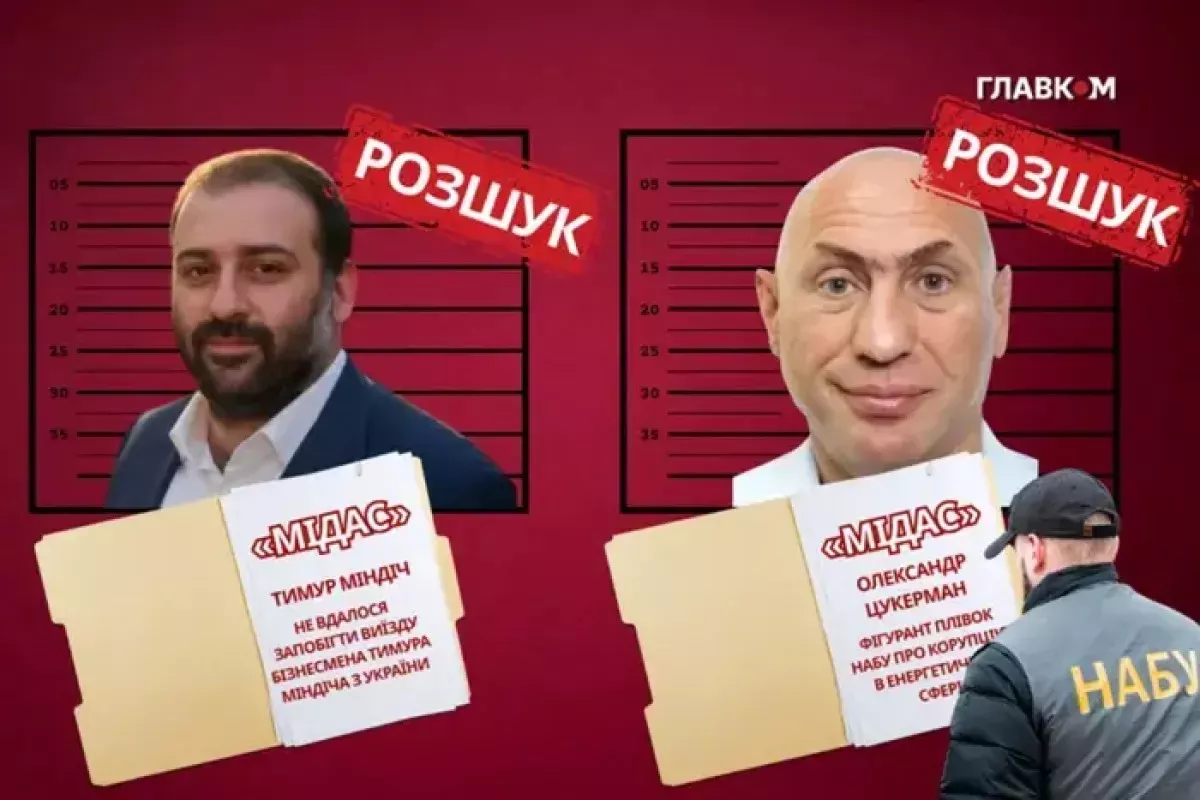
In particular, journalists from Ukrainska Pravda recently published previously unreleased recordings of conversations involving figures from the “Midas” operation, within which a high-level criminal organisation in Ukraine’s energy sector was exposed. The recordings, dated 2025, contain detailed discussions about the construction of a cottage settlement in the “Dynasty” cooperative, located in Kozyn on the first line of the Dnipro River.
In conversations with a woman named Natalia, Timur Mindich—who, incidentally, officially owns 50% of the shares in LLC “Kvartal 95 Studio”—discusses technical aspects of arranging the estates: installing fences, planting trees, and building swimming pools. Particular attention from journalists has been drawn to the names of the owners or clients of these houses mentioned in the transcripts. In particular, the discussion refers to properties intended for “Vova” and “Andriy".
At the same time, there is a well-known fact: Zelenskyy has repeatedly said that for his friends and family, he is “just Vova,” and he was addressed in the same way by colleagues from the “Kvartal 95” studio. So it is hardly surprising that many in the country became interested in the question of who this mysterious “Vova” mentioned in the “Mindich tapes” might be.
Yesterday, on May 12, the head of NABU, Semen Kryvonos, stated at a briefing on the “Dynasty” case that the president of Ukraine had not been and is not currently a subject of the pre-trial investigation: “Other investigative versions regarding the ownership of certain property are being checked within the framework of the pre-trial investigation. The investigation is ongoing.”
In this context, however, one important nuance should be taken into account: Article 105 of the country’s Constitution states that “the President of Ukraine enjoys immunity for the duration of his powers.” Thus, Volodymyr Zelenskyy cannot, in principle, be formally involved in pre-trial proceedings while serving as head of state, as he enjoys constitutional immunity.
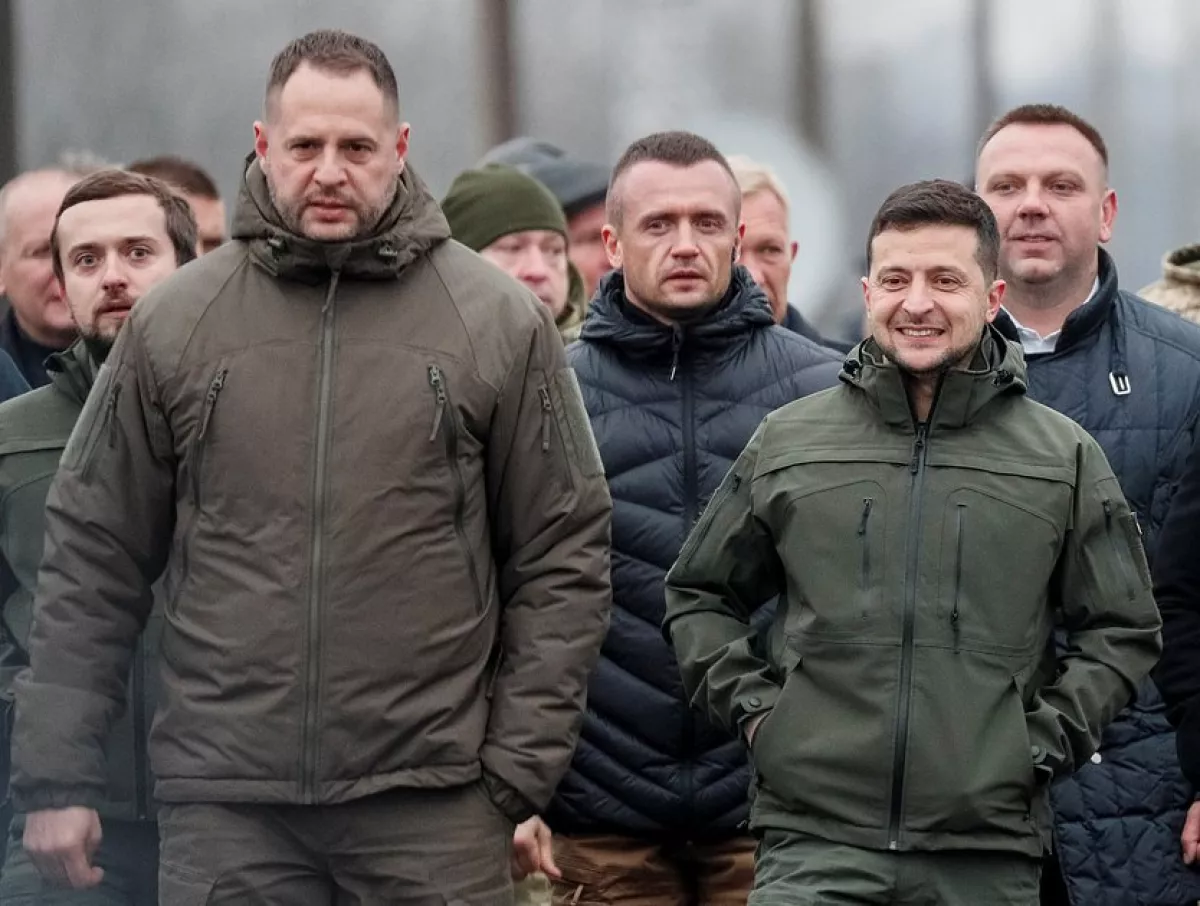
However, such immunity does not extend to other high-ranking officials, especially former ones—for example, Andriy Yermak, who on May 11 was formally notified by the SAP of suspicion in a case involving the legalisation (laundering) of property obtained through criminal means on a particularly large scale, as part of an organised group. Similar suspicions were also issued against six other individuals: the former Deputy Prime Minister Oleksii Chernyshov—identified in the “Midas” case as “Che Guevara” and described by investigators as the alleged organiser of the scheme—Timur Mindich, a key suspect in coordinating corruption schemes within the same criminal proceeding, and four individuals allegedly controlled by the former Deputy Prime Minister.
According to blogger Volodymyr Bondarenko, NABU established that the project is being implemented on a 4-hectare land plot in Kozyn, which was at one time allocated to the company “Blum Development,” founded by structures linked to Chernyshov. Later, the land plot was subdivided into several separate cadastral parcels for development purposes.
In turn, SAP prosecutors presented details to the public regarding the construction of elite residences. It was reported that a file on the project’s chief architect’s phone contained an Excel document with scheduled meetings, listing residence numbers and participants in construction coordination meetings for each of them. Next to R2, the initials “A.B.” appear in brackets, referring to “Andriy Borysovych.” In addition, the authorised representative of A. Yermak in the project from July 2020 to August 2022, was his father, Borys, and later another individual.
Funding for the construction of the estates in “Dynasty” began in June 2021, and after the start of the full-scale Russian-Ukrainian war, the works did not stop. In particular, Oleksii Chernyshov reportedly demanded that construction be accelerated and carried out in multiple shifts—from early morning until late evening. In a conversation dated March 29, 2022, “Che Guevara” speaks with his wife about the need to gradually resume construction, noting that windows, roofing, and tiles had already been ordered in advance.
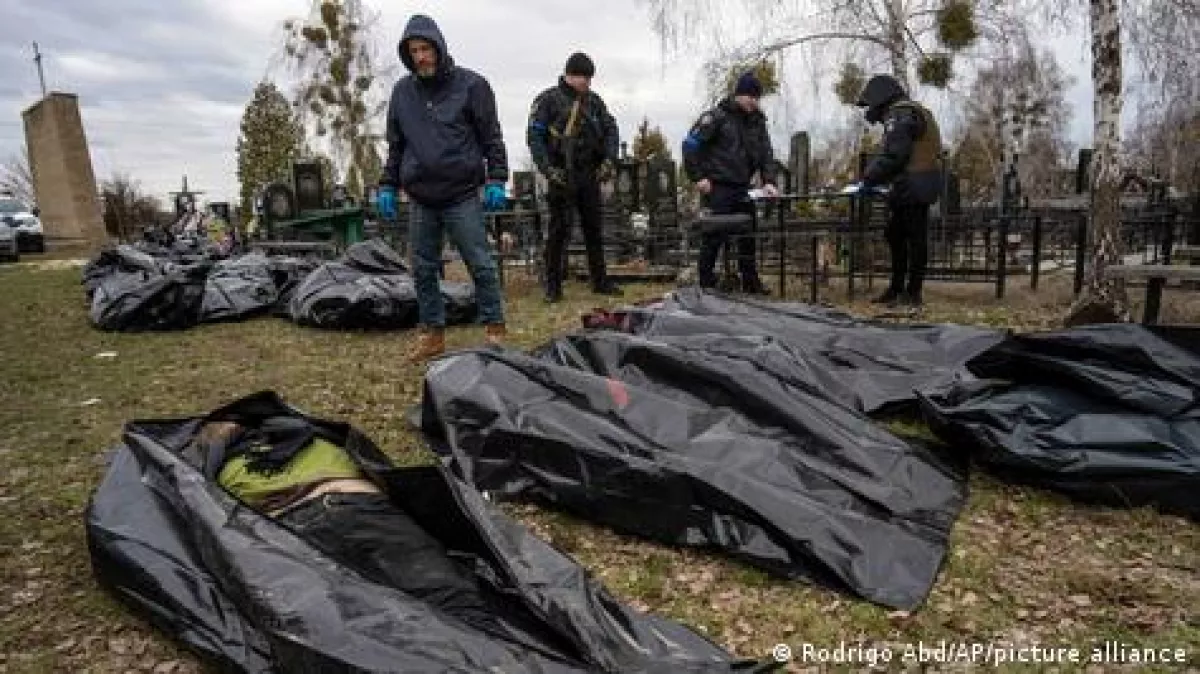
To fully illustrate the cynicism of the situation, it should be recalled that on the morning of the same day, a Russian missile destroyed the central section of the regional administration building in Mykolaiv, resulting in the deaths of 37 people and more than 30 injuries. At that very time, Chernyshov was, as if nothing had happened, discussing the construction of elite cottages for himself, Yermak, Mindich, and an unidentified “Vova.” In addition, throughout March of that year, in the then-occupied town of Bucha—located northwest of Kyiv and about 40 kilometres in a straight line from Kozyn—mass executions and torture of civilians were taking place.
However, such “details” did not seem to concern those who were fully absorbed in building prestigious housing, and they were in a great hurry. In particular, in August 2022, due to the slow pace of construction, Mindich and Yermak brought Natalia Kvelenkova into the project, tasking her with overseeing the construction. On the 8th, the latter sent her the design of the residence, after which a phone conversation took place to discuss the details.
According to the investigation, 72% of the construction of the “Dynasty” cooperative was financed in cash provided by Mindich and his company. Where did such funds come from? According to NABU and SAP, within the framework of the high-profile “Mindichgate” case, a criminal organisation led by him allegedly caused damage to the state amounting to around 100 million US dollars. Thus, what we are seeing is a classic example not only of “business on blood”—a term previously used by supporters of the current Ukrainian president against former President Petro Poroshenko—but also of “elite cottages built on blood.”
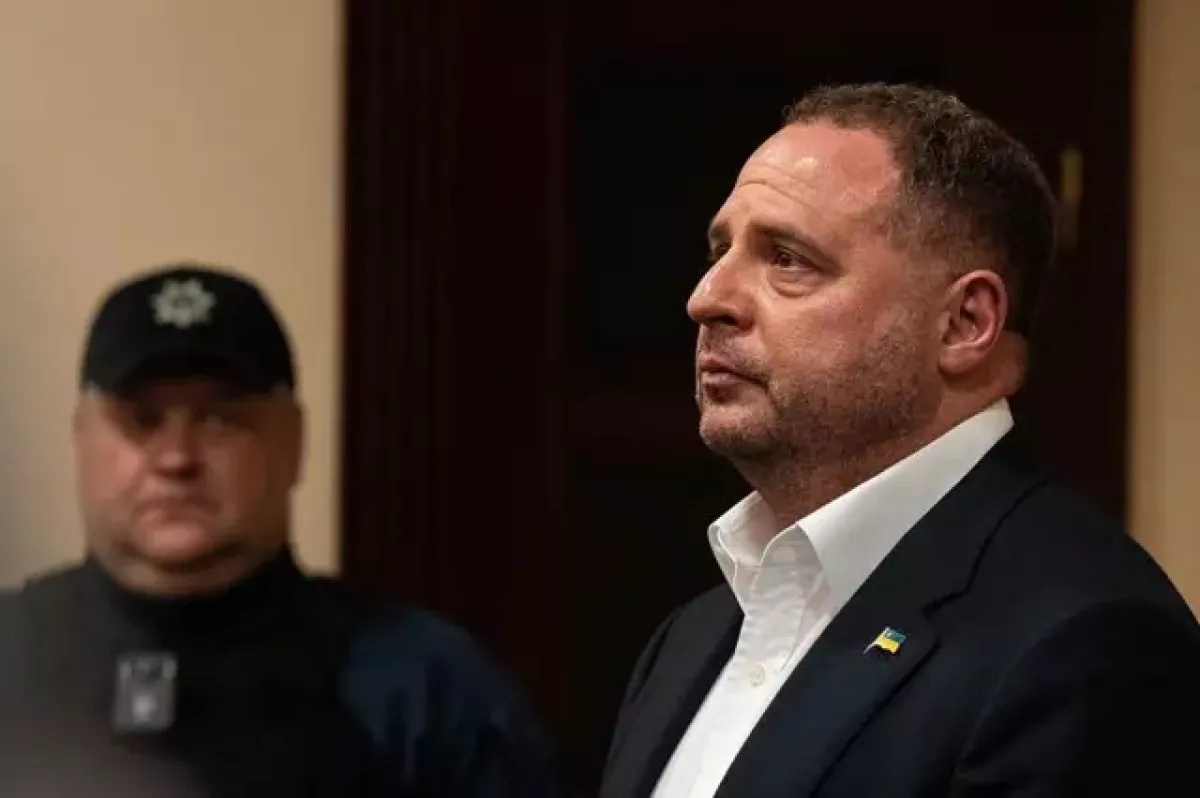
At the same time, Andriy Yermak, of course, denies any wrongdoing and remains firmly convinced that he will be able to emerge unscathed. This suggests that the process is likely to become highly public and politically explosive, and this assumption is already beginning to be reflected in developments on the ground.
According to SAP prosecutor Valentyna Hrebeniuk, as reported on May 12 at a hearing of the High Anti-Corruption Court (HACC), a search was conducted on December 24, 2025, at the home of Yermak’s driver. During the inspection of a Mercedes vehicle, law enforcement officers reportedly seized three sheets of paper containing a text beginning with the words “SBU Ukraine: maximum programme.” It allegedly outlined plans for appointing certain individuals to key positions in the Security Service of Ukraine (SBU), some of whom already hold those positions. Alongside the “maximum programme,” there were also references to a “medium programme” and a “minimum programme.” Among the names mentioned was, in particular, former head of the SBU Cybersecurity Department, General Illia Vitiuk, who has also received suspicion from NABU and SAP.
The prosecutor also added that the driver’s phone contacts included two former Prosecutor Generals—Andriy Kostin (currently Ukraine’s ambassador to the Netherlands) and Iryna Venediktova (currently ambassador to Switzerland)—as well as former head of the State Border Guard Service Serhii Deineko, and Oleksandr Poklad, who serves as First Deputy Head of the Security Service of Ukraine, is responsible for key counterintelligence and special operations areas, and was part of the Ukrainian delegation in peace talks with Russia in Istanbul. In the same vehicle, a document titled “Support from the following sides” was also found, listing institutions such as the SBU, the State Bureau of Investigation, the Prosecutor’s Office, the National Security and Defence Council, and the Ministry of Finance.
The prosecution also drew attention to the fact that Yermak holds four diplomatic passports, one of which is valid until 2030, which, incidentally, suggests that he also has strong ties within the Foreign Ministry. All of this allows observers to argue that even after leaving his post as Head of the Presidential Office, he retained significant influence and is capable of exerting pressure on witnesses.
Finally, another detail from the investigation should be mentioned: Yermak allegedly facilitated the appointment of various individuals to state positions by sending their dates of birth to a contact saved as “Veronika Feng Shui Office.” As can be seen, he followed modern trends and sought to do everything according to feng shui in a war-torn Ukraine, from which he reportedly amassed considerable wealth.







 editor@caliber.az
 +994 55 444-88-98
 Азербайджан, Баку, ул. Низами, 203, Af Business House, 5-й этаж