










"Islamic NATO": Ankara and Doha's "red lines" Expert opinions on Caliber.Az
As is known, in 2025, Pakistan and Saudi Arabia signed a “Joint Strategic Defence Agreement.” This development was perceived in expert and analytical circles as a first step toward the creation of an “Islamic NATO,” possibly because the document includes a collective security clause similar to Article 5 of the North Atlantic Treaty: an attack on one party to the agreement is treated as aggression against all its members.
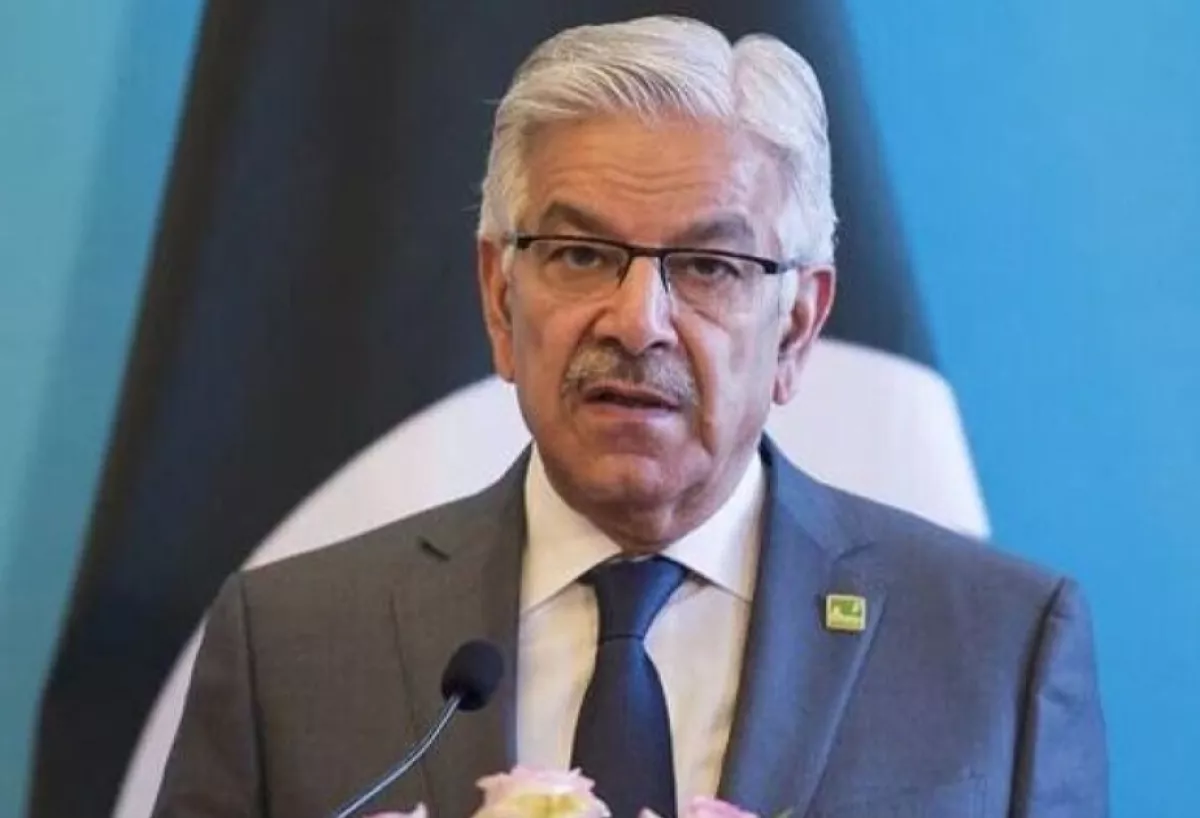
And recently, Pakistan’s Defence Minister Khawaja Muhammad Asif made a statement that practically confirmed the assumptions of political analysts: “If Qatar and Turkey also join this existing agreement, it will be a welcome development.”
He also added that the initiative is aimed at forming a broader platform of cooperation among like-minded states to strengthen regional stability and collective security, thereby confirming Islamabad’s intention to pursue the creation of a military alliance with other Muslim countries.
So, how high are the chances that such a military bloc could actually be created, and that Türkiye and Qatar would also become its members? This question is addressed for Caliber.Az by a Turkish expert and a Russian-German orientalist analyst.

In particular, Göktuğ Çalışkan, a specialist in international relations at the Ankara Center for Crisis and Policy Studies (ANKASAM), believes that Türkiye and Qatar’s participation in this process should not be understood through the rigid lens of “immediately or never,” but rather through several critically important parameters.
“Right now, what is being discussed is not a fully institutionalised alliance similar to NATO, but rather an expansion of the defence agreement signed between Riyadh and Islamabad, and a more flexible security architecture built around it. Therefore, the concept must first be properly assessed, and only then should all the ‘pros and cons’ be weighed. At this stage, I view this initiative less as a bloc with strong ideological connotations, such as an ‘Islamic NATO’, and more as an attempt to align the defence, technological, and, to some extent, geopolitical interests of certain Muslim-majority countries.
It brings together Saudi Arabia’s financial capabilities, Pakistan’s nuclear deterrence potential, and Türkiye’s defence industry and operational experience. Qatar, with its political capital and investment capacity, is a natural component of this picture. However, how this framework is ultimately presented as a whole will be the key factor determining Türkiye’s position,” he said.
According to the expert, from Ankara’s perspective, participation in such an initiative has attractive aspects:
“Firstly, it provides an opportunity to elevate the Türkiye–Saudi Arabia–Qatar axis, which has already gained momentum following the normalisation of relations, to a more institutional level. For example, within the framework of this initiative, joint exercises, defence industry projects, and cooperation that could be developed using UAVs and air defence systems could be considered.
Secondly, it aligns with Türkiye’s long-standing goal of a ‘multi-axis foreign policy’. Ankara is seeking to build its own security network in the Persian Gulf and South Asia while remaining a member of the North Atlantic Treaty Organization. This expands its room for manoeuvre both politically and economically.
However, there is also a risk dimension. If Türkiye sits at this negotiating table, it will do so very cautiously, because a NATO member entering into frameworks resembling ‘collective defence’ alongside nuclear-armed Pakistan and Saudi Arabia, which sometimes experiences tensions with the West, could reignite debates within the Alliance about Türkiye’s strategic direction.
In addition, there is a possibility that such a formation could be interpreted by actors such as Israel, India, or Greece as a ‘Muslim military bloc’ directed against them, which could intensify competition along a broad arc stretching from the Eastern Mediterranean to the Indian Ocean,” he noted.
Ankara, he said, does not want to be perceived as a factor that could damage both potential channels for normalising relations with Israel and the economic and technological programme it is trying to develop jointly with India.
“Therefore, I would describe the path Türkiye would take in this case as follows: Ankara would be open to expanding cooperation in areas such as the defence industry, joint exercises, counterterrorism, and intelligence sharing, but would distance itself from agreements that create an automatic collective defence obligation similar to NATO’s Article 5, making it a direct party to conflicts with third countries.
In other words, the Turkish side would prefer a flexible, functional security platform from which it can step back if necessary, rather than a fully binding military bloc,” the political scientist emphasised.

He also noted that a similar situation can be observed in Qatar: Doha is already an actor that has established a strategic partnership with Ankara and developed significant cooperation in the defence sector. Türkiye and Qatar would like to join such an initiative, but they will avoid a rigid military bloc that would directly expose them to the Iran–Saudi or Iran–Israel tensions.
“Thus, the likelihood of Türkiye and Qatar joining this grouping depends on how the initiative is designed. If this structure is conceived as an ideological ‘Islamic alliance’ attempting to replace NATO, then both Ankara and Doha will maintain distance and adopt a restrained position.
However, if it transforms into a platform focused on the defence industry, capacity-building, and regional stability, with flexible and legally limited commitments, then both Türkiye and Qatar are highly likely to participate as actors ‘inside the system but seeking to shape the rules’.
Therefore, in the short term, it is more realistic not to speak of a completely new military alliance, but rather of controlled yet increasingly utilised mechanisms of defence cooperation, in which Ankara and Doha can participate while still protecting their own ‘red lines’,” Çalışkan stated.

Meanwhile, Russian-German political scientist and Middle East expert, editor-in-chief of the “Poistine” portal, Ruslan Aysin, is convinced that in today’s rapidly changing world, the likelihood of creating such an alliance is higher than ever.
“We are witnessing the United States no longer being able to control, coordinate, or oversee large territorial spaces and dictate terms to certain countries, as well as Russia losing its former influence. We see other players gaining strength; in particular, Türkiye and Azerbaijan have demonstrated that their tandem is capable of implementing set objectives. We are also observing developments on the Iranian track and seeing how a conflict in one region can shake the entire world.
I believe that for these reasons, countries in the Middle East are considering how to reconfigure themselves in order to prevent the domination of external powers in the region. Accordingly, in my view, this alliance will have various vectors of cooperation, especially given that over recent years the positions of Pakistan, Türkiye, Qatar, and Azerbaijan have been increasingly converging. And the natural direction of this process is the creation of a military-political alliance,” Aysin concluded.







 editor@caliber.az
 +994 55 444-88-98
 Азербайджан, Баку, ул. Низами, 203, Af Business House, 5-й этаж