










Macron fuels tensions in the Eastern Mediterranean Expert opinions on Caliber.Az
French President Emmanuel Macron has pledged military support to Greece in the event of a war with Türkiye, according to Reuters.
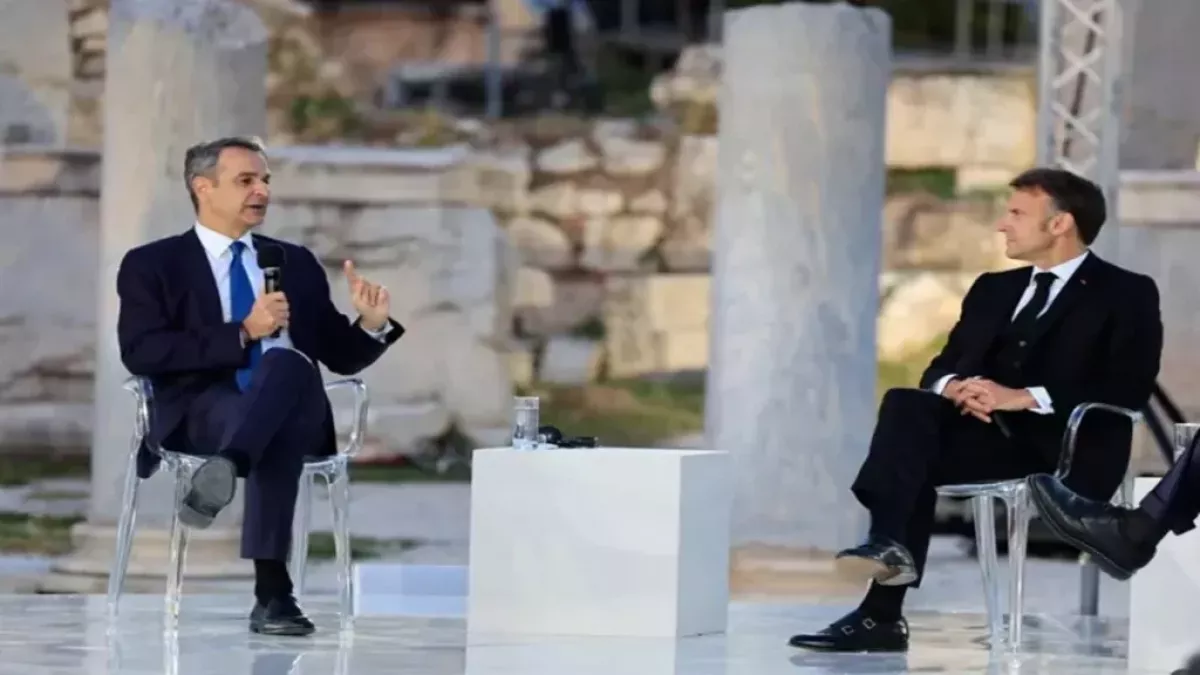
On April 24-26, 2026, during an official visit to Athens, Macron repeatedly stated that France would defend Greece. “Don’t even ask the question. Whatever happens, we will be there, by your side,” he said.
Macron added that if Türkiye were to threaten Greece, France would stand by it. “We will be there for you if your sovereignty is threatened,” the French leader concluded.
Media outlets note that all three countries are NATO members.
What prompted Macron to make such “tough” statements? Has Türkiye recently issued any warnings to Athens or, moreover, voiced threats of an intention to attack Greece? No. So what lies behind the French president’s position? Is Macron not increasing tensions in the already complex relations between Türkiye and Greece?
Well-known international political analysts shared their views with Caliber.Az.
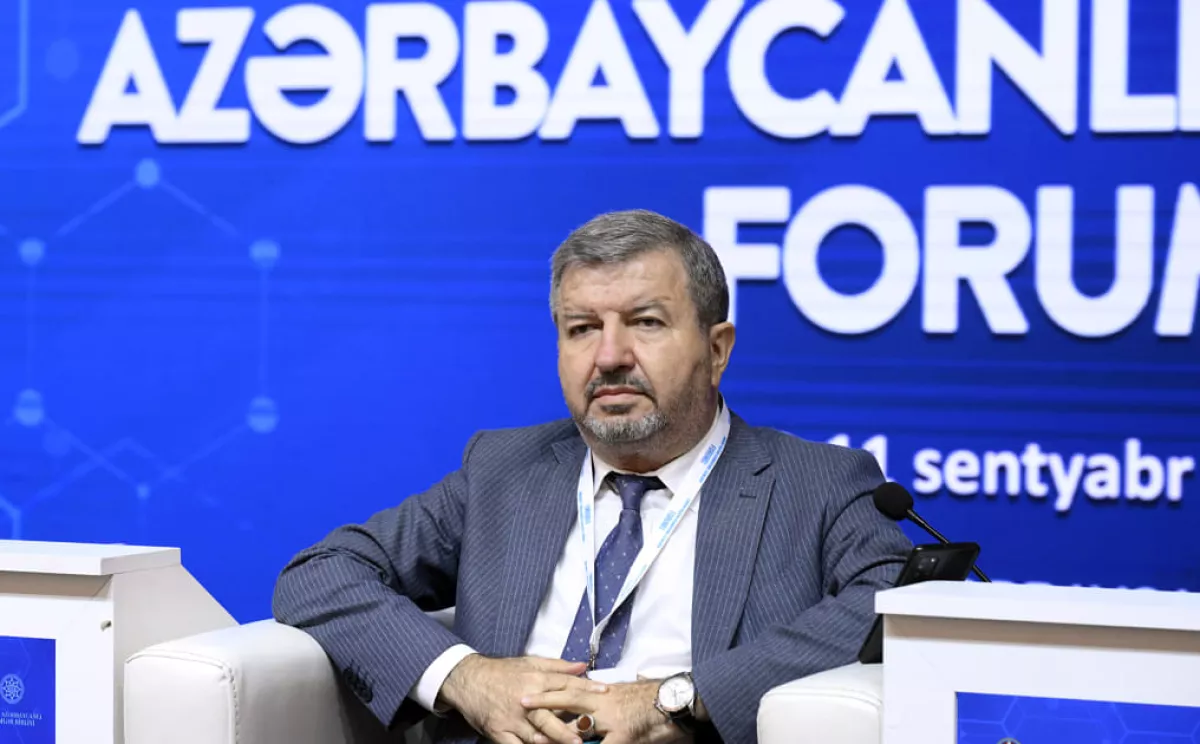
Turkish political analyst, professor at Ankara University, Togrul Ismayil, noted that Emmanuel Macron’s statements in Athens should be viewed not as impulsive rhetoric, but as part of a multi-layered strategic approach by Paris in the Eastern Mediterranean.
“First, this concerns France’s military-political positioning in Europe. Against the backdrop of a weakening transatlantic partnership and periodic fluctuations in U.S. policy, Paris is seeking to cement its role as a key security guarantor within the EU. Supporting Greece is a convenient tool to demonstrate leadership, especially in a region where energy interests, maritime law, and military presence intersect.
Second, the defence-industrial factor is important. France has already concluded major contracts with Athens (including the supply of frigates and aircraft), and political guarantees are a way to institutionalise military-technical dependence. Such statements send a signal not only to an ally but also to the market: France is selling not just weapons, but a ‘security umbrella.’
Third, this reflects intra-European competition. Paris is competing with Berlin and other centres of power for influence on the EU’s southern flank. Supporting Greece is also an attempt to secure a place in the Eastern Mediterranean security architecture, where Türkiye’s interests play an increasingly autonomous and independent role.
Fourth, it is a matter of strategic deterrence. Even in the absence of direct threats from Ankara, France is acting preemptively, shaping a ‘policy of signals.’ This follows the classic logic of deterrence: to define ‘red lines’ in advance in order to reduce the likelihood of a future crisis.
Does this increase tensions? The short answer is yes—but not critically.
On the one hand, such statements increase distrust between Türkiye and Greece, create a sense of external ‘patronage’ toward one side, and may push Ankara toward tougher rhetoric.
On the other hand, it is important to understand that all three states operate within NATO, where institutional mechanisms exist to prevent escalation. Neither Paris, Ankara, nor Athens is objectively interested in a direct military confrontation,” the professor noted.
According to his assessment, Macron’s rhetoric does not reflect an imminent confrontation but rather constitutes a geopolitical signal.
“It is addressed to several audiences at once: Greece as an ally, Türkiye as a regional competitor, the EU as a space for leadership, and the United States as a partner whose influence France seeks to partially offset.
However, such statements do carry risks—namely, the erosion of balance within NATO and the gradual transformation of Greek-Turkish contradictions into an element of a broader European power game.
From an academic perspective, we are observing a classic example of how a low-intensity regional conflict is used by external actors to expand their strategic presence—even without actual escalation on the ground,” Ismayil explained.

French historian and researcher Maxime Gauin noted that several contextual factors are at play.
“Emmanuel Macron is promoting the European Union as a whole—and France in particular—as reliable partners and allies, emphasizing commitment to signed agreements. In the context of a potential deterioration in relations with Türkiye, Greece is essentially asking him whether he would honour the mutual defence clause embedded in EU treaties. And what is he supposed to do—say ‘no’?
There is another context as well. Neither under the Biden administration nor under the Trump administration did the United States provide Ukraine with fully operational F-16 Fighting Falcon jets—apart from decommissioned aircraft transferred in 2025 as a source of spare parts. France is supplying Dassault Mirage 2000-5 jets, while Belgium, the Netherlands, Denmark, and Norway are providing F-16s. However, Ukraine needs more, and Greece possesses Mirage 2000-5 aircraft. For two years, Paris and Kyiv have been urging Athens to transfer these jets. Clearly, the current statements are part of a broader deal,” the expert believes.
He also pointed to a third factor.
“In December 2024, despite protests from Athens, Emmanuel Macron gave the ‘green light’ for the sale to Türkiye of Meteor air-to-air missiles, widely regarded as among the most advanced in the world.
In addition, Türkiye’s request to purchase the Franco-Italian SAMP/T NG air defence system stands a strong chance of being approved. Ankara’s participation in Franco-Italian missile defence projects—capable of intercepting targets at altitudes exceeding 100 km—is also under discussion. Against this backdrop, it is more accurate to speak not of ‘adding fuel to the fire,’ but of a tightrope-walking policy,” Gauin concluded.







 editor@caliber.az
 +994 55 444-88-98
 Азербайджан, Баку, ул. Низами, 203, Af Business House, 5-й этаж