










UN on the edge: Will a new secretary-general change anything? Expert opinions on Caliber.Az
The term of UN Secretary-General António Guterres ends later this year. The application period has already closed, and four candidates have been nominated so far.
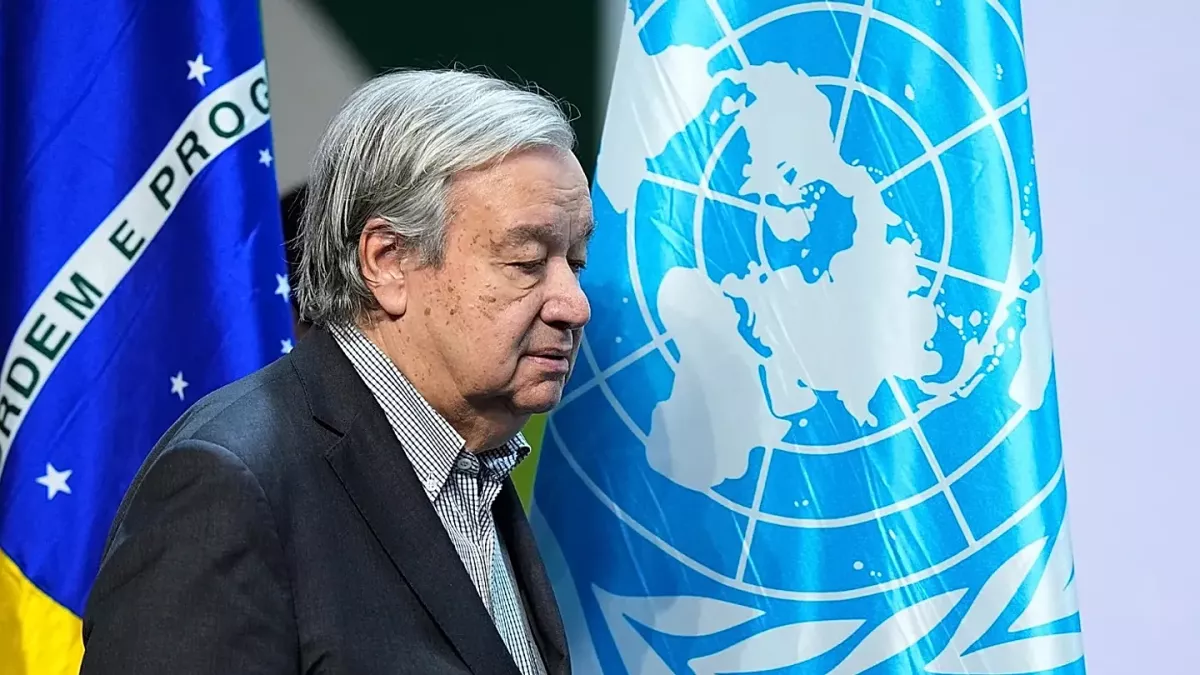
The next UN Secretary-General faces a challenging task. Against the backdrop of an impending financial crisis, major reforms are being discussed: the budget is being cut, while conflicts and wars around the world continue to intensify.
Currently, four candidates have officially declared their intentions — two men and two women. In mid-April, interactive online dialogues will begin, during which the candidates will present their programmes and answer questions from UN member states. Starting in July, the Security Council will conduct several rounds of voting until one candidate obtains the required majority without the use of a veto.
Member states can nominate candidates at the last minute before the voting begins. In the final stage, the candidate must be approved by the General Assembly. The results are expected to be announced by early autumn.
Will the arrival of a new UN Secretary-General change anything? What real powers does this international body hold today, and what tools does it have to influence problem situations around the world? Is it possible to restore its former authority?
Renowned international political analysts shared their assessments of these questions with Caliber.Az.
As noted by American political scientist and publicist Samson Katsman, the issue essentially concerns the real capabilities and limitations of the UN in the modern era.
“Briefly put, the new Secretary-General can influence the tone, priorities, and effectiveness of the organisation, but cannot radically ‘reboot’ the system or change it without the will of states. What is the role of the Secretary-General? They are a diplomat and mediator, an administrator of a massive bureaucratic structure, and also the ‘moral voice’ of the international community. The latter, however, is highly diffuse and, with few exceptions, largely opportunistic: it depends on which global power, country, or group of countries is advancing its interests.
What depends on the personality of the Secretary-General? Primarily—mediation and crisis management within the UN system itself: this includes reforms, the budget, and the effectiveness of missions. However, the Secretary-General cannot stop a war without the consent of the parties involved and cannot force states to comply with decisions while bypassing key players. They can improve how the system functions, but cannot change its fundamental nature—and this does not depend on which candidate is elected.
The UN is not a supranational authority, but a platform where states either negotiate or fail to do so. The organisation has two key bodies: the Security Council—the only organ with the power to adopt binding decisions, including sanctions and mandates for the use of force—and the General Assembly, where issues are discussed and mostly non-binding resolutions are adopted,” the expert noted.
Perhaps the only area where the UN plays a noticeable role is in crises involving refugees, famine, and epidemics, he added.
“In all other matters—whether peacekeeping missions, sanctions policy, or international law—the organisation’s capabilities are limited by the positions of states. It is important to remember that the UN was created after World War II under a very different geopolitical reality. Today, with the five permanent members of the Security Council—the US, Russia, China, France, and the UK—holding veto power and often in confrontation with each other, the system frequently finds itself paralysed.
The UN cannot act against the will of powerful players and is directly dependent on state funding. Its effectiveness is determined by countries’ willingness to cooperate.
At the same time, the UN remains a unique organisation, uniting almost all countries in the world, and restoring its authority is worth the effort. Possible steps include expanding the Security Council’s membership—such as by including India, Japan, and Germany—limiting the use of the veto, reducing financial dependence on individual donors, and strengthening the political weight of the General Assembly so that its resolutions are no longer purely declarative and can actually influence state behaviour. Ultimately, however, everything comes down to resources: most countries have a vote but lack financial capacity, while donors formally have fewer votes but far greater real influence,” Katsman stated.
The director of the Kyiv-based Institute of World Policy, Yevhen Mahda, believes that the United Nations can no longer be saved.
“Unfortunately, like many other international structures, it has effectively failed to fulfil its functions in the context of Russia’s full-scale war against Ukraine. The organisation also did not respond in any meaningful way to the war involving the US and Israel against Iran. So, in my view, there is hardly anything to discuss here.
As for the upcoming elections, from what I understand, the favourite could be Rafael Grossi—the current head of the IAEA. I believe Russia and China will promote his candidacy. However, this is unlikely to change anything: the US will seek its own candidate, and European countries will push for theirs.
At the same time, the UN system itself, formed after World War II, will not undergo positive changes because the format of international relations is evolving. We are living through a deep crisis and witnessing transformation before our eyes, while the UN, as regrettable as it is to admit, remains a ‘living corpse,’” Mahda stated.







 editor@caliber.az
 +994 55 444-88-98
 Азербайджан, Баку, ул. Низами, 203, Af Business House, 5-й этаж