










Azerbaijan–European Parliament: crisis of trust and a signal to Brussels Expert opinions on Caliber.Az
With its latest resolution—essentially directed against Azerbaijan—one of the European Union’s institutions, the European Parliament, has demonstrated the full extent and irreversibility of its own degradation. Given this, and considering that anti-Azerbaijani policy within this body has persisted for decades, Baku has decided to suspend all cooperation with the institution.
Thus, at a plenary session, the Milli Majlis adopted a decision to suspend all areas of cooperation with the European Parliament: to cease the Azerbaijani parliament’s participation in the EU–Azerbaijan Committee and to initiate procedures to terminate its membership in the Euronest Parliamentary Assembly. In addition, the European Union’s Ambassador to Azerbaijan, Marijana Kujundžić, was summoned to the Ministry of Foreign Affairs, where she was presented with a strong protest over the unfounded and biased provisions contained in the European Parliament’s resolution against Azerbaijan, and was handed an official note of protest.
How has Baku’s decision to suspend cooperation with the European Parliament been received within the expert and analytical community? To explore this question, Caliber.Az reached out to an Azerbaijani politician and a German political analyst for their views.
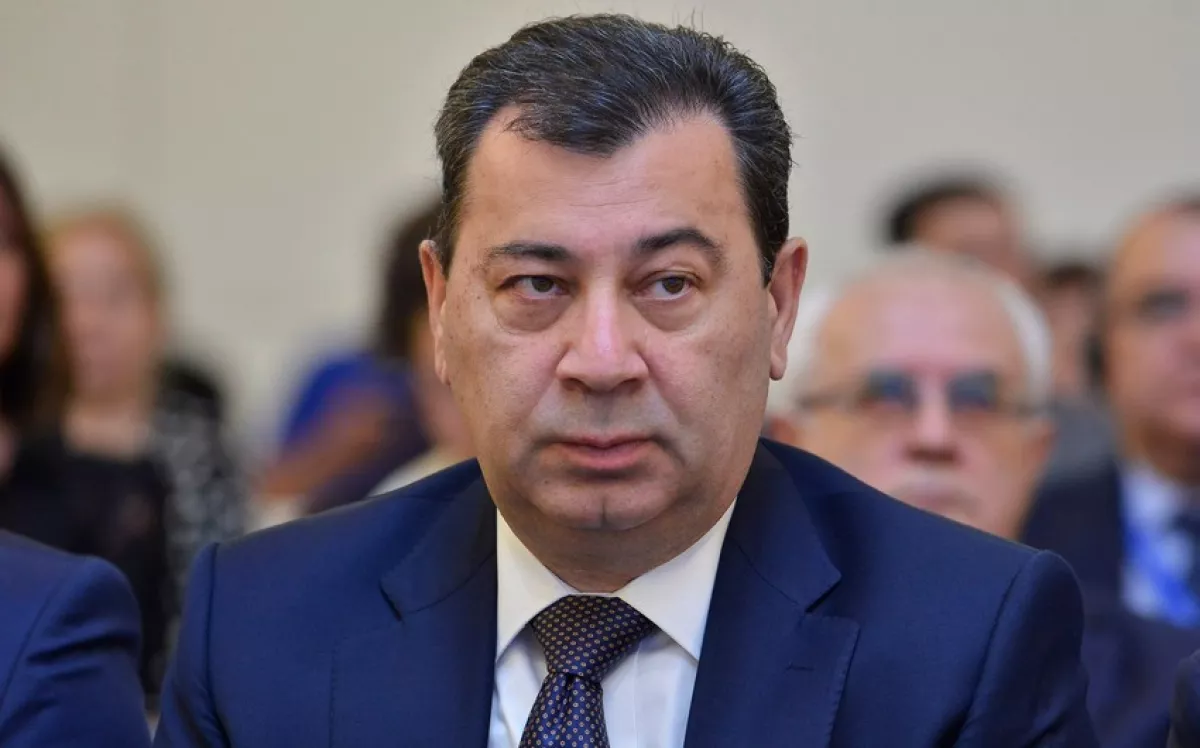
In particular, the Chairman of the Committee on International Relations and Interparliamentary Ties of the Milli Majlis, Samad Seyidov, noted that Azerbaijan has prior experience of suspending cooperation with the European Parliament due to its persistent anti-Azerbaijani rhetoric.
“In 2015, the Azerbaijani parliament adopted a corresponding resolution; however, just a month later, a large group of Members of the European Parliament arrived in Baku, asking for the decision to be reconsidered. Moreover, they expressed their regret over what had happened, both verbally and in writing, and assured us that no further precedents of an anti-Azerbaijani nature would occur in the future.
However, since then, the European Parliament has adopted 13 resolutions against Azerbaijan, apparently having completely forgotten that promise. As a result, Baku has lost patience—especially given that these negative decisions by European lawmakers tend to come precisely at moments when our country’s policy is at the height of its success.
Moreover, it is difficult not to link what is happening to the upcoming summit of the European Political Community scheduled to take place in Yerevan, in which Azerbaijan, for obvious reasons, will not participate. One could even say that this summit has effectively already begun and is, in a sense, taking place in Azerbaijan’s Gabala. Just look at how many European politicians have visited Azerbaijan in recent times. Furthermore, another high-ranking European guest—the Prime Minister of Italy, Giorgia Meloni—is expected to visit Azerbaijan in the near future. So I am almost certain that, after some time—perhaps even immediately following the summit in Yerevan—a group of Members of the European Parliament will once again visit Baku, as they did several years ago, with persistent requests to reconsider this decision,” the Azerbaijani parliamentarian stated.
Seyidov also stressed that, if one traces the entire chain behind figures like “Ocampo” and others who prepare such resolutions, it becomes evident that an Armenian lobby stands behind them—one that is not interested either in peace or in Armenia’s current political leadership, and openly opposes Prime Minister Pashinyan and his team.
“These are criminal financial syndicates from Russia that have corrupted Members of the European Parliament—led by Ara Abramyan, Karapetyan and others—as well as anti-Azerbaijani and Islamophobic forces that believe any success of a multicultural state represents a defeat for their so-called ‘Christian club.’ In an effort to undermine the realities that have taken shape in our region, they are taking such steps. At the same time, what is particularly interesting is that, if one looks at the statistics, a clear trend emerges: voting on the 13 anti-Azerbaijani resolutions has been on a downward trajectory, meaning they are attracting less and less interest among European deputies.
It is precisely for this reason that, seeing their failure, lobbyists have turned to another approach—if I may put it this way, they are now inserting anti-Azerbaijani elements into other resolutions that the European Parliament is set to adopt—in this case, those concerning elections in Armenia.
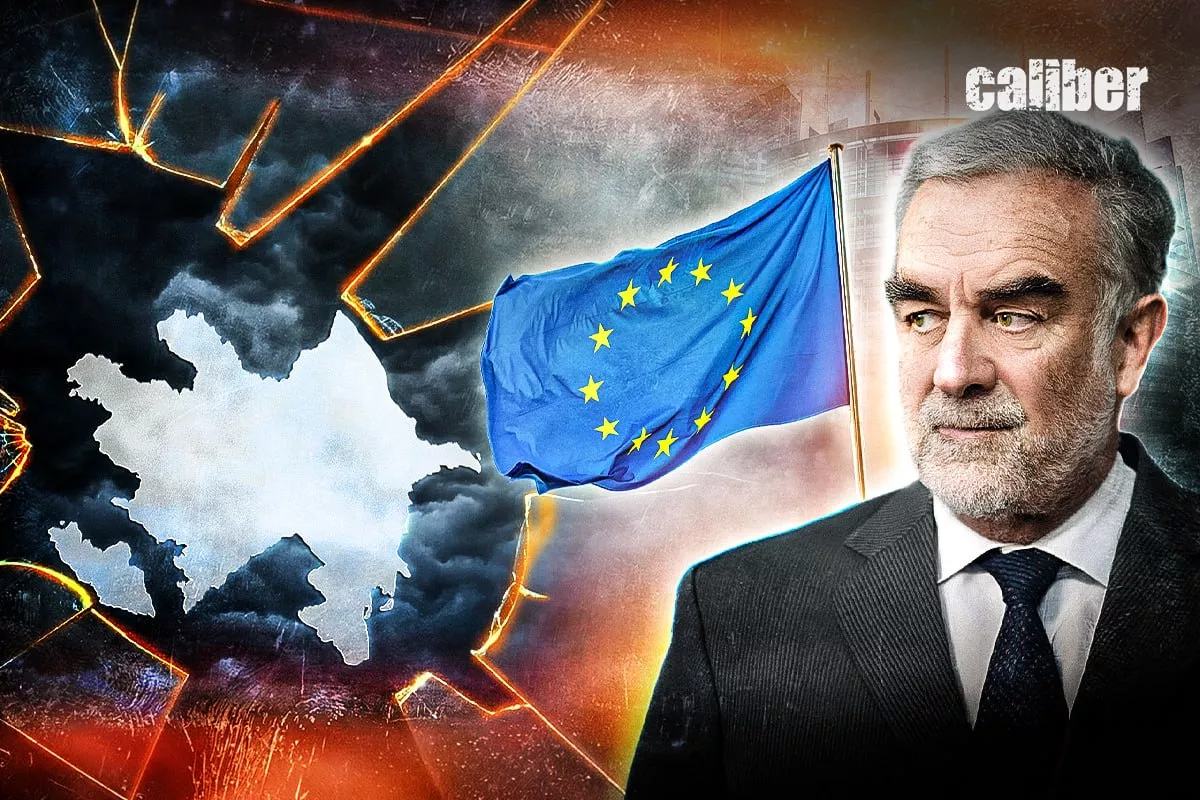
The leadership of the European Parliament and the heads of its committees are well aware of these political tactics; however, as we can see, they are unable to counter such manipulation. This is evidenced, for example, by statements made by a political operator like Ocampo—particularly his claim that he can ‘wrap around his finger commissioners such as Josep Borrell or figures like Ursula von der Leyen.’ In other words, all of this—corruption, criminal activity, and networks of influence—is inherently unlawful and, above all, undermines the very fabric of the European community. That is the real tragedy.
Therefore, European organisations such as the Council of Europe and the European Parliament are in a profound crisis, and to engage with them is to become tainted, because they themselves are already tarnished—openly speaking about being ready to pay, to buy influence, and so on. Moreover, this rhetoric has become public knowledge. For this reason, Azerbaijan’s decision to suspend cooperation with the European Parliament is absolutely the right step, while how to respond to it and what conclusions to draw is a matter for European parliamentarians themselves,” Seyidov stated.
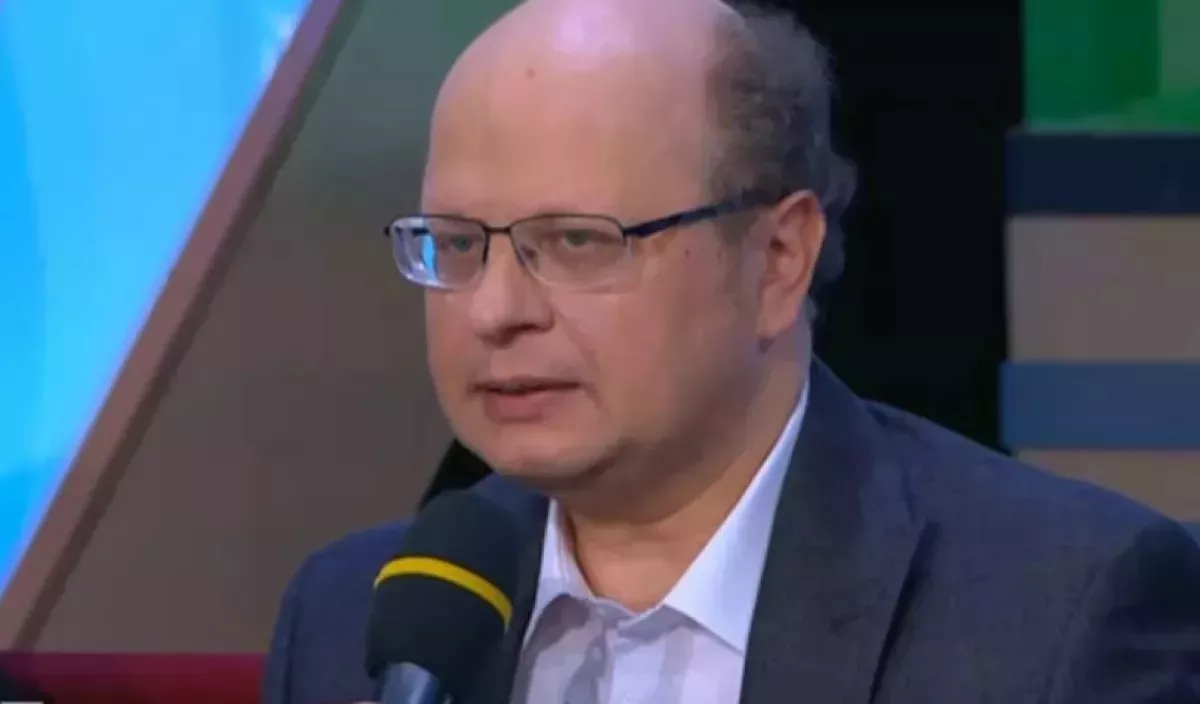
In turn, German political scientist and international affairs expert Yevgeny Kudryats emphasised that Baku’s decision to suspend cooperation with the European Parliament across all areas of interparliamentary interaction is a response to the European Parliament’s resolution, which Azerbaijan considers hostile and views as interference in its internal affairs.
“However, this does not amount to a rupture in relations with the EU: the embassy, trade, and energy projects—all of this formally remains in place. What is being addressed here is specifically the parliamentary level of engagement, not a complete political break. What does this actually mean? Such steps are usually taken when one side seeks to register its disagreement with specific decisions or adopted documents, and to lower the level of political dialogue without harming practical interests. The European Parliament’s critical resolution on the elections in Armenia, which rather tactlessly touches upon Baku’s regional policy, is a sensitive issue.
At the same time, Azerbaijan is pursuing a successful multi-vector foreign policy and can afford such a firm step. In this regard, I would note that I share the view of the Azerbaijani authorities and support this decision, as it is essentially a forced measure and reflects the fact that the European Parliament has lost its sense of reality and its ability to engage in constructive dialogue.
However, I would not overestimate the negative impact of this development, since economic and energy ties—including gas supplies to the EU—as well as diplomatic relations remain intact, along with contacts at the level of governments and EU institutions. It is also possible that this decision will prove temporary; much will depend on the political climate. The conclusion to be drawn is that this is a signal of serious political disagreement, but not a strategic rupture. For now, it appears to be a limited-scale conflict that does not affect key mutual interests,” Kudryats concluded.







 editor@caliber.az
 +994 55 444-88-98
 Азербайджан, Баку, ул. Низами, 203, Af Business House, 5-й этаж