










NATO and Europe’s backup plan American and British experts speak to Caliber.Az
In Europe, a “backup plan” is gaining momentum, aimed at “Europeanizing” NATO amid threats by President Donald Trump to withdraw the United States from the Alliance.
As The Wall Street Journal writes, officials working on the plan describe it as a “European NATO” project. According to informed sources, the backup plan is being advanced through both formal and informal discussions within the Alliance and beyond, and in essence, the outlines of a new organisation are becoming increasingly clear. As part of this initiative, Europe also plans to ramp up weapons production in areas where it lags behind the United States, including anti-submarine systems, space-based intelligence and surveillance capabilities, as well as aerial refuelling systems.
What do the United States and Europe think about such developments? How realistic and viable is this initiative? These questions are answered for Caliber.Az by American and British experts.

The British political scientist Neil Watson believes that the idea that Europe could launch a functioning NATO model without the United States is strategically possible, but in the short term, it is operationally limited.
“In fact, Europe already possesses many of the components necessary for greater defence autonomy. These include, in particular, modern armed forces, a growing defence industrial base, and developing coordination mechanisms within the EU and the European wing of the Alliance. However, the reality is that NATO still remains deeply dependent on the United States in three critically important areas: strategic intelligence, nuclear deterrence, and high-tech military capabilities such as long-range strike systems, missile defence, and logistics. Filling this capability gap will take several decades.
Therefore, the push to create a ‘Europeanized’ version of the North Atlantic bloc is driven not so much by a desire to exclude the United States, but rather by the need to hedge against strategic uncertainty. Concerns about the future of U.S. commitments, especially in light of shifts in domestic politics, are encouraging European states to think in terms of strategic autonomy or strategic responsibility. In this sense, the discussions reflect a shift from dependency toward burden-sharing, rather than full separation,” the expert said.
In his view, there are also internal constraints. Europe remains politically divided on defence priorities: Eastern European states prioritise deterring Russia and strongly support maintaining the U.S. presence, while other countries are more focused on industrial policy or crisis management.
“Without a shared understanding of threats and a unified command structure, a fully independent system similar to NATO risks becoming institutionally complex and strategically inflexible. The wars in Ukraine and the Middle East are accelerating changes. Europe’s defence spending is increasing, joint procurement is expanding, and the rationalisation of European command structures and rapid reaction forces is increasingly being discussed. Over time, this could evolve into a more autonomous European defence structure capable of operating both with and without the United States. A clone of the Alliance without the U.S. is unrealistic in the short term, but the direction of movement is clear. Europe is preparing for a scenario in which it will have to assume a significantly larger share of NATO’s historical functions and possibly act with greater independence,” said Watson.

The American analyst, Honorary Professor at Radford University, Grigory Ioffe, believes that the European Union has sufficient resources to implement the idea, but the disunity of European countries may delay the process or even nullify it.
“Given the scale of the European, more precisely EU, economy, the idea is quite realistic, but taking into account the difficulties of decision-making among 27 EU members, as well as the structural features of the combined Euro-economy, and the inertia of dependence on the United States in security matters, its implementation in the foreseeable future may be called into question. Even arms deliveries to Ukraine, now paid for by the EU, still come mainly from American stockpiles,” he noted.
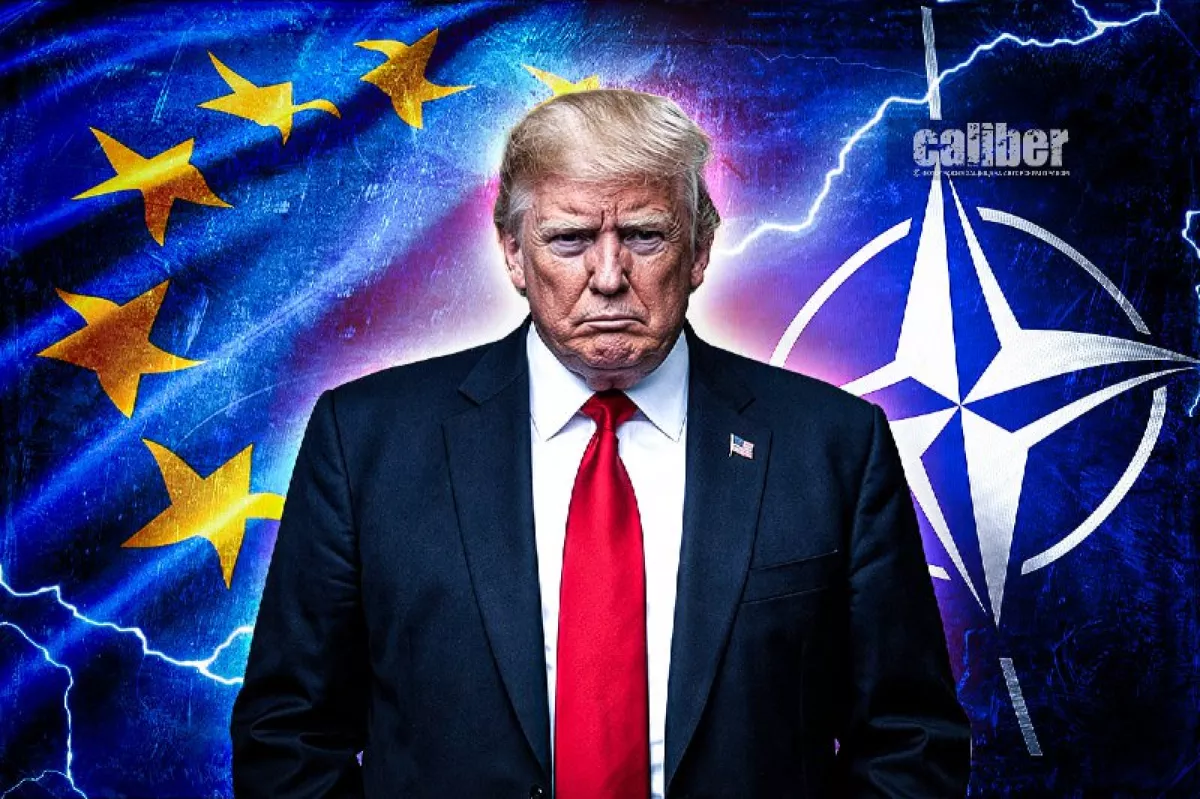
According to the analyst, the dynamics of these processes are also shaped by Donald Trump himself, who actively raises this issue because, in his view, Europe’s geostrategic importance is declining.
“This is also underscored by statements from Rubio about the possibility of relocating U.S. bases in Spain and even in Germany. However, American policy is embedded in four-year and sometimes even two-year electoral cycles. What will happen after the 2028 elections, or even the 2026 congressional elections, is not entirely clear. At the same time, the European initiative we are discussing cannot be implemented within such timeframes. So, as they say, we will see what happens,” concluded Ioffe.







 editor@caliber.az
 +994 55 444-88-98
 Азербайджан, Баку, ул. Низами, 203, Af Business House, 5-й этаж