










Attacks on Azerbaijan: who is trying to undermine the peace process? Expert opinions on Caliber.Az
In recent days, there has been a targeted disinformation campaign against Azerbaijan, as well as against the peace agenda between Baku and Yerevan. This is stated in a declaration by the Milli Majlis Temporary Commission on Foreign Interference and Hybrid Threats, issued in connection with the information campaign being conducted by pro-Armenian circles against Azerbaijan.

“During monitoring conducted within its mandate, the Milli Majlis Temporary Commission on Foreign Interference and Hybrid Threats (the Commission) has observed a disinformation campaign in recent days targeting Azerbaijan, as well as the peace agenda between Armenia and Azerbaijan. Investigations have determined that this campaign is being conducted in a targeted and unified manner by Armenian lobby organizations operating in various countries, foreign citizens holding certain influence and positions, and media outlets,” the Commission emphasises.
According to the Commission, Armenian lobbying organisations have this time chosen a different tactic in their campaign to discredit Azerbaijan—creating hype around several issues, including the fabricated “Armenian genocide,” “Armenian prisoners of war,” and sites in the city of Khankendi. In order for this not to appear as a coordinated campaign, the narratives were transmitted to participants through closed channels, email, and encrypted messaging platforms.
According to the Commission’s findings, Armenian lobbying organisations based in the United States, Europe, and Russia were particularly active in the anti-Azerbaijani campaign.
“An analysis of the campaign on the 'X' (formerly Twitter) social media platform over the past week shows that more than 220 posts were made through 130 different accounts, recording nearly one million total interactions. These posts were primarily made from the accounts of bloggers of Armenian origin, Armenian news sites, and pro-Armenian foreign bloggers and activists,” the Commission emphasises.
In addition, materials based on similar narratives were also published in a number of less influential online outlets operating in the following foreign countries: the United States, the United Kingdom, Belgium, Poland, Italy, Mexico, Spain, Georgia, Israel, the Vatican, Greece, India, Russia, Armenia, and others.
“The facts established by the Commission once again demonstrate that these circles, who prioritize personal goals and once reaped high dividends from the conflict, are using all available means, including their proxies in foreign parliaments, certain city mayors, and current or former officials, to strike a blow to the fragile peace process between Armenia and Azerbaijan and to harm interstate relations,” the statement of the Temporary Commission of the Milli Majlis emphasizes.
Which external forces exactly need all of this? Who stands behind the direct executors who are raising the noise? And what are their ultimate goals and benefits? Who might be dissatisfied with Armenia and Azerbaijan moving towards full peace with each other?
Well-known experts have shared their views on this matter with Caliber.Az.
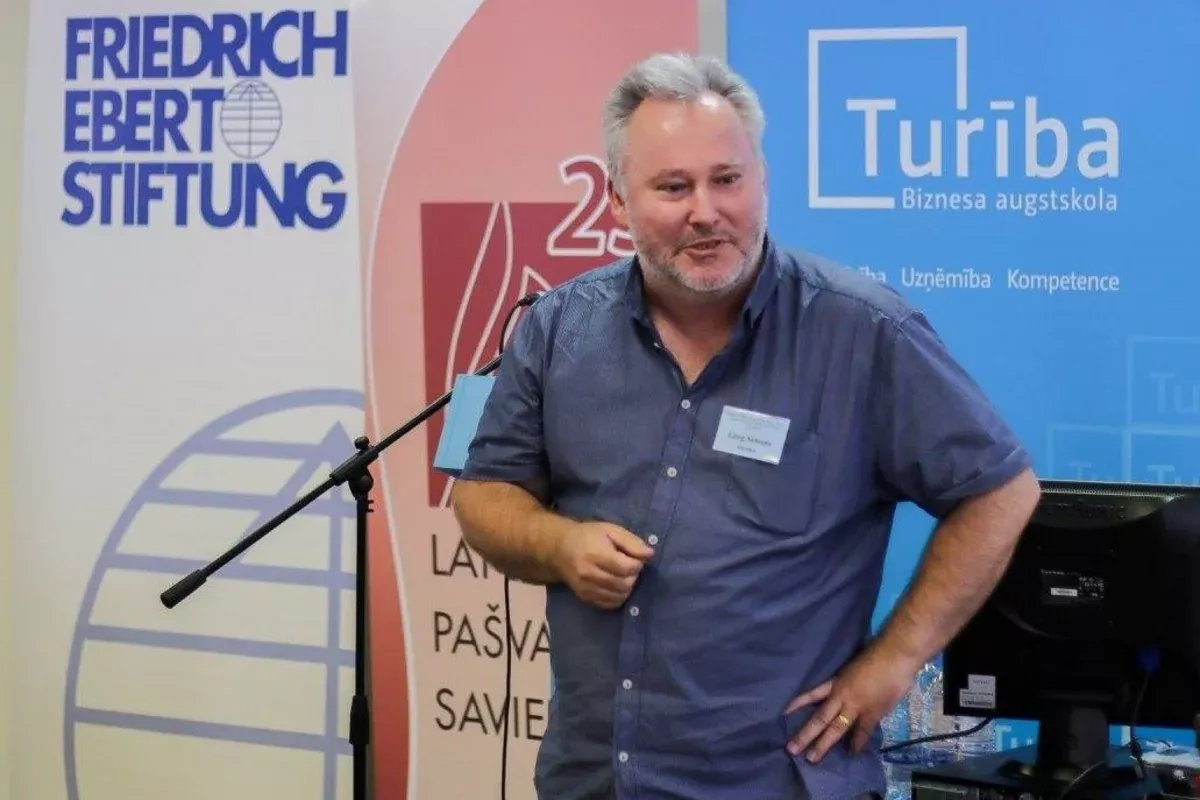
As stated by Dr. Greg Simons, PhD in Philosophy and political scientist, professor at Daffodil International University in Dhaka, this resembles a classic pattern of work typical of both lobbying groups and proxy organisations.
“Given the geography of these information operations and influence activities, they are likely connected to the Armenian diaspora or aimed at influencing it. There will always be those who disagree for political reasons and who oppose the implementation of the policies being pursued.
Judging by the nature of the content, this appears to be an attempt to emotionally frame and mobilise Armenian audiences against the current political course in relations between Armenia and Azerbaijan. This is clearly being done in the interests of a specific group, and the obvious intention is to disrupt any normalisation of relations between Armenia and Azerbaijan,” Simons said.

Deputy Director of the Topchubashov Center in Baku, Murad Muradov, stated that, in his view, there are three groups of stakeholders interested in maintaining conflict dynamics in the South Caucasus.
“First, a significant part of the Armenian diaspora. Many representatives of diaspora circles are unable to accept the new realities. Issues such as Karabakh, Ararat, claims against Türkiye regarding so-called ‘Western Armenia’, and demands for reparations are matters of life and death for them. For these individuals, abandoning these claims is equivalent to betrayal. Among them are many influential figures who often do not take into account the real situation in the region or the consequences this may have for Armenia itself.
Another segment of the diaspora, especially the American lobby, has more pragmatic motivations related to politics and large sums of money. Their presence in the corridors of the US Congress is directly linked to conflict-related issues. For them, exerting pressure on Türkiye in connection with the recognition of the ‘genocide’ and obtaining reparations is more important than Karabakh, as it gives them political weight and a place in US political life. Most importantly, it allows them to regularly raise significant funds for campaigns.
They understand that if these issues are fully closed, their mediation and influence will become unnecessary. For these actors inside America, the preservation of a conflict agenda is a matter of survival, combining beliefs, emotions, and cold calculation.
The second group consists of countries and forces that use the Karabakh issue as a tool of influence and manipulation over Azerbaijan and Armenia. This primarily applies to Russia. Historically, Moscow has seen itself as the ‘overseer’ hegemon in the Caucasus. Armenia was the most convenient instrument for it, being the smallest and most vulnerable country in the region, while at the same time having unrealistic ambitions regarding Azerbaijan. Russia used this conflict to keep Armenia ‘on the hook’ and, at the same time, to prevent Azerbaijan from developing too rapidly.
As for Iran, this was less characteristic of it, as it never had sufficient resources to simultaneously control both Baku and Yerevan.
In general, Moscow has tried not to escalate matters to the extreme; however, Russia’s position is now changing. The Kremlin has concluded that the current ruling regime in Armenia does not intend to maintain ‘special relations’ with Russia, instead opting for a multi-vector foreign policy. Seeing that Armenia, in the long term, will move further away from Russian influence, Moscow has begun to more actively support the opposition and to harden its rhetoric,” the analyst noted.
Finally, he says, the third group consists of forces that, for various reasons, are not interested in Azerbaijan’s dominance.
“First of all, this is a matter of combining values and political pragmatism. Those forces in Europe that have now become more active in the European Parliament see Azerbaijan as an example of a ‘non-democratic’ country that does not follow European values and is unwilling to adopt European rules and standards.
For many ruling political elites, this is a kind of failure story, since in the 1990s, Azerbaijan was much closer to the European Union and listed Euro-integration among its priorities. However, this position changed later. Today, Baku speaks only about pragmatic relations and does not wish to allow the European Union too deep an involvement in regional affairs. This causes a certain degree of dissatisfaction, and these forces believe that supporting Armenia is the EU’s duty in terms of upholding its values.
Finally, there are forces that are simply wary of Azerbaijan, primarily Iran. For Iran, Azerbaijan is a potential competitor in the struggle for the loyalty and minds of many of its citizens, especially those of Azerbaijani origin. As a secular state, Azerbaijan does not share Iran’s approach to governance and, since the 1990s, has significantly reduced Iranian influence in its internal affairs.
This leads to the situation where pro-Iranian lobbyists often act in unison with many European and even American circles on this issue. As a result, we see such interesting coalitions of actors who, at first glance, have little in common with one another.
And within Armenia itself there are forces for whom, the closer the elections get, the stronger the temptation to press on old wounds and sensitive points. I think they understand that this year’s elections play a decisive role: if Armenians vote for peace and for the current government, then in the next five years the peace process will become fully irreversible.
In principle, perceptions and approaches within Armenian society are also transforming, which shows that these wounds are gradually healing. The opposition is trying by all means to side with those external forces that would also prefer to see the conflict continue.
I think the calculation is that certain steps may provoke irritation in Baku, which in turn could trigger more rigid responses. This would push Armenian voters to support the opposition more actively, for whom neighbours are still seen as opponents and enemies. In this way, they are attempting to turn back time.
Of course, I think their chances of major success are limited. But the awareness that this is a ‘final battle’—especially for Kocharyan and similar old elites—gives them a certain boldness and a desire to do as much as possible,” Muradov believes.







 editor@caliber.az
 +994 55 444-88-98
 Азербайджан, Баку, ул. Низами, 203, Af Business House, 5-й этаж