










Bucharest crisis: Romania after Bolojan Analysis by Matanat Nasibova
The first week of May in Romania was extremely tense due to another political crisis that led to significant upheavals in the government.
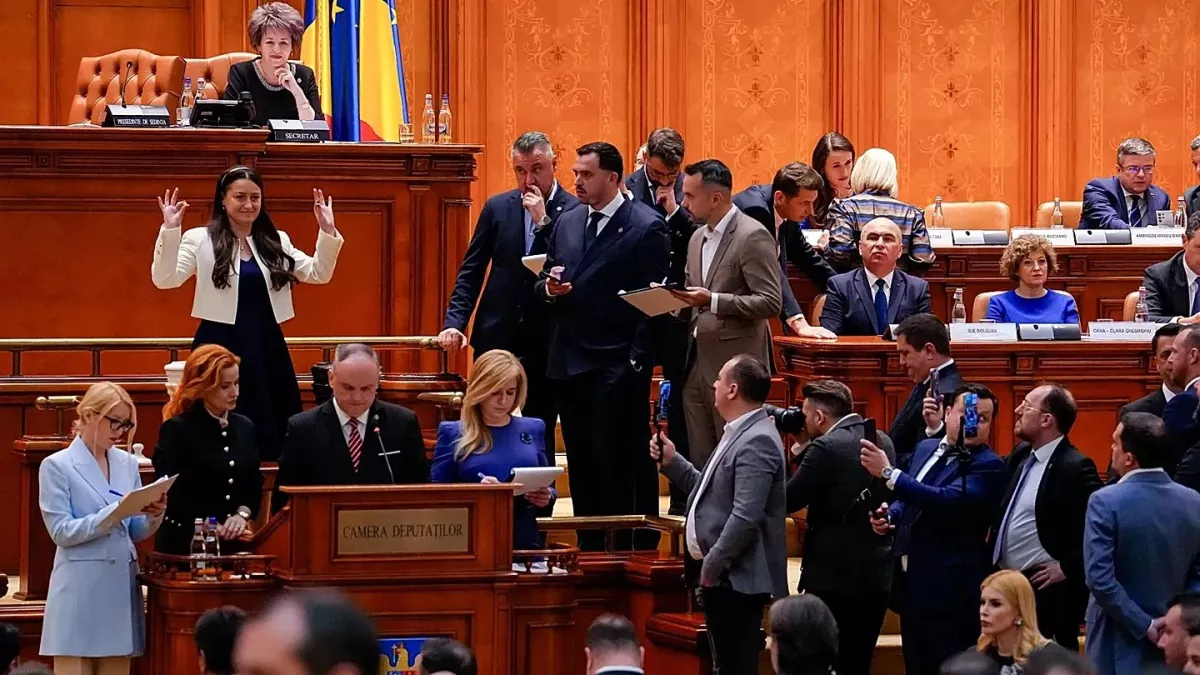
On May 5, the Romanian parliament voted in favour of a no-confidence motion against the pro-European cabinet of Prime Minister Ilie Bolojan, supported by 281 parliamentarians — exactly the same number who voted in October 2021 for a similar motion against the government of Florin Cîțu. In a parliamentary system, this automatically means the fall of the government.
It should be noted that the main role in its adoption was played by the centre-left Social Democratic Party (PSD), which was supported by the far-right Alliance for the Union of Romanians (AUR). According to the Antena 3 television channel, Prime Minister Bolojan left the parliament building without waiting for the results of the vote and refused to deliver the traditional speech.
Up to now, the country had been governed by a heterogeneous ruling coalition composed of the centre-left PSD, the centre-right National Liberal Party and the Save Romania Union, as well as the Democratic Alliance of Hungarians in Romania. At the same time, the Alliance for the Union of Romanians (AUR), which many describe as extremist, remained in opposition. The political crisis in the country erupted after, on April 20, the PSD decided to withdraw its political support for the Prime Minister and recall its ministers from the cabinet, disagreeing with a number of measures adopted by the government.
To understand the situation, it is worth outlining the chronology of events that led the now former Romanian government to political default. According to Romanian media, the main trigger for this outcome was the unpopular measures introduced by the Bolojan cabinet, including tax increases, a freeze on pensions and salaries, as well as cuts in public spending.

Against this backdrop, mass protests were repeatedly held across the country over the past year. In particular, in June 2025, street demonstrations took place in 40 cities under slogans such as “Freedom! We don’t want tax increases!”, directed against the government’s economic policy.
However, despite this, major reforms providing for tax increases — including a rise in local property taxes of up to 80% — entered into force on January 1, 2026. Importantly, these tax hikes came against the backdrop of high annual inflation, which at the time had already reached 9.6%, a record figure within the EU. Romanian media at the time almost unanimously reported that the country remained the leader in price growth across the European Union.
However, as the resignation of the Romanian prime minister has shown, strict austerity proved politically toxic, and the government crisis that has erupted in the country raises a single question: what scenario for further developments in domestic political life appears most likely?
Thus, given that Bolojan’s departure marked the culmination of the ruling coalition’s collapse, Romania now faces difficult negotiations on forming a new government. At present, there is not a single concrete candidate for the post of prime minister, which inevitably means that the decision will rest with President Nicușor Dan.
This is quite logical, since Romania is a unitary state and a semi-presidential republic, where the president is elected by universal suffrage for a five-year term and holds significant powers in the fields of foreign policy, defence and national security. As guarantor of the Constitution and state independence, the president appoints the prime minister and heads of special services with parliamentary approval.
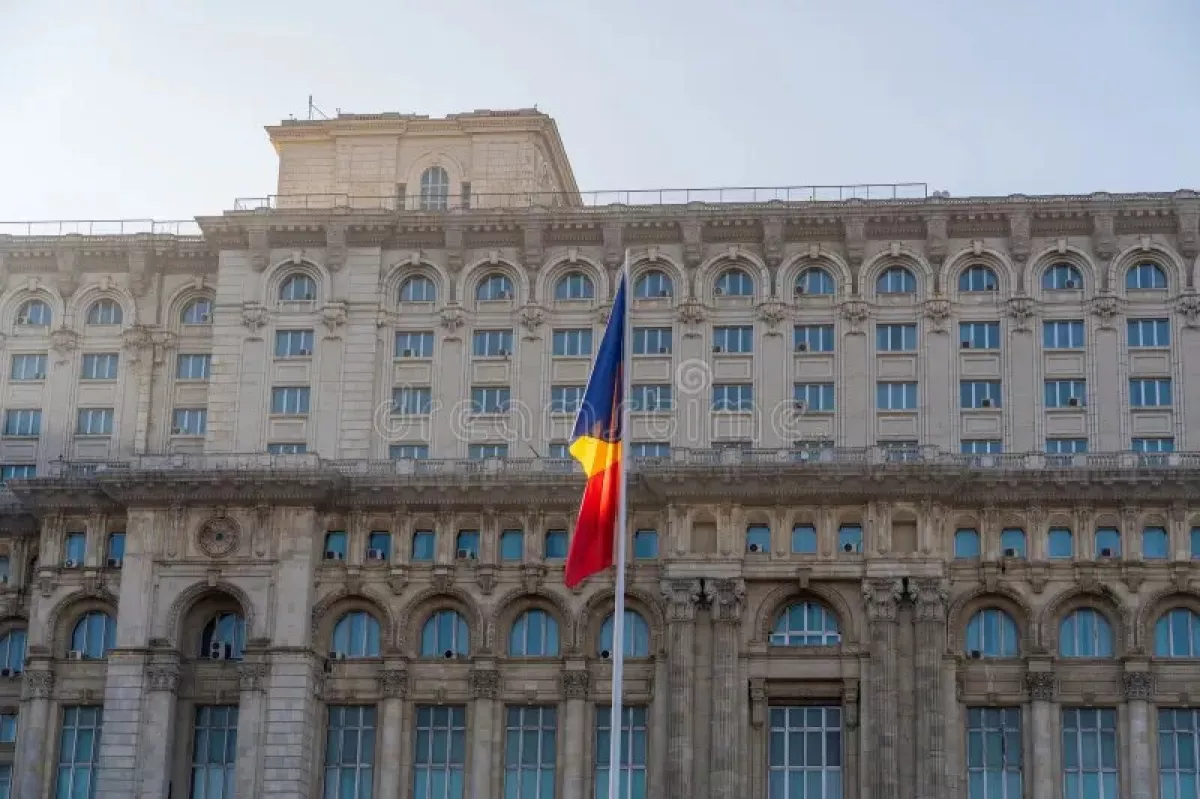
At the same time, in periods of political instability, Romania has previously resorted to appointing independent figures to government leadership. This has occurred when political parties lost public trust or were unable to form a stable coalition. For instance, Mugur Isărescu was appointed amid a severe economic crisis and declining popularity of the ruling coalition in 1999–2000. As a non-partisan economist and Governor of the National Bank, he headed the government with the aim of stabilising the financial system.
In 2012, following the resignation of Emil Boc amid mass anti-government protests and an economic downturn, the post of prime minister was taken by Mihai Răzvan Ungureanu. Later, after the resignation of Victor Ponta, triggered by widespread protests following the Colectiv nightclub tragedy, President Klaus Iohannis appointed Dacian Cioloș as prime minister in November 2015 specifically to form a “technocratic cabinet”: his government consisted of professionals, diplomats and managers rather than party politicians, and was intended to stabilise the situation in the country. Prior to this appointment, Cioloș had served as the European Commissioner for Agriculture.
Thus, it cannot be excluded that Romania may again see the emergence of a non-partisan candidate or technocrat as prime minister. It is reasonable to assume that Brussels would be satisfied with a technocratic head of government, provided that he or she commits to maintaining a pro-European course and fulfilling obligations to the European Union — including participation in funding programmes and adherence to its foreign policy line, particularly regarding Ukraine.
In any case, this remains one of the most likely scenarios at present, especially given that the AUR is currently leading in public opinion polls. Whether such a scenario proves sustainable will become clear in the not-too-distant future.







 editor@caliber.az
 +994 55 444-88-98
 Азербайджан, Баку, ул. Низами, 203, Af Business House, 5-й этаж