










"Punishment" for Victory Aliyev responds to PACE and the European Parliament
The chronology outlined today by President of Azerbaijan Ilham Aliyev in his video address at the 8th Summit of the European Political Community in Yerevan is based on two key dates, separated by four months.
September 2023: Azerbaijan, through a one-day counter-terrorism operation, eliminates the remnants of the separatist regime in Karabakh and fully restores its sovereignty and territorial integrity. This marked the implementation of four UN Security Council resolutions—822, 853, 874, and 884—adopted back in 1993 and left without enforcement for thirty years.
January 2024: The Parliamentary Assembly of the Council of Europe refuses to ratify the credentials of the Azerbaijani delegation.
The logic here is clear: Baku is being “punished” not for violating international law, but for enforcing it. A paradox? Yes. The sanctions followed because Azerbaijan restored its own sovereignty.
PACE has long been adept at turning its own procedures into a political instrument, but in the Azerbaijani case, the optics are particularly unforgiving.
For thirty years, UN Security Council resolutions—legally binding and calling for implementation—remained words without consequences. Armenia kept the Karabakh region and seven surrounding districts under control, while more than a million Azerbaijanis continued to live as refugees and internally displaced persons. Yet over all those decades, not a single sanction came from Strasbourg.
And when Baku did what international law itself had demanded, the Assembly proceeded to suspend the credentials of the Azerbaijani delegation to PACE.
The connection between the two dates is read through a classical formula: one side is entitled to punish, the other is not entitled to victory.
President Aliyev himself delivered a blunt verdict on the institution in his speech: “Unfortunately, double standards are today a kind of modus operandi for PACE. Azerbaijan’s territorial integrity has the same value as that of any other country. And in this issue, double standards are unacceptable.”
A clear and well-argued position.
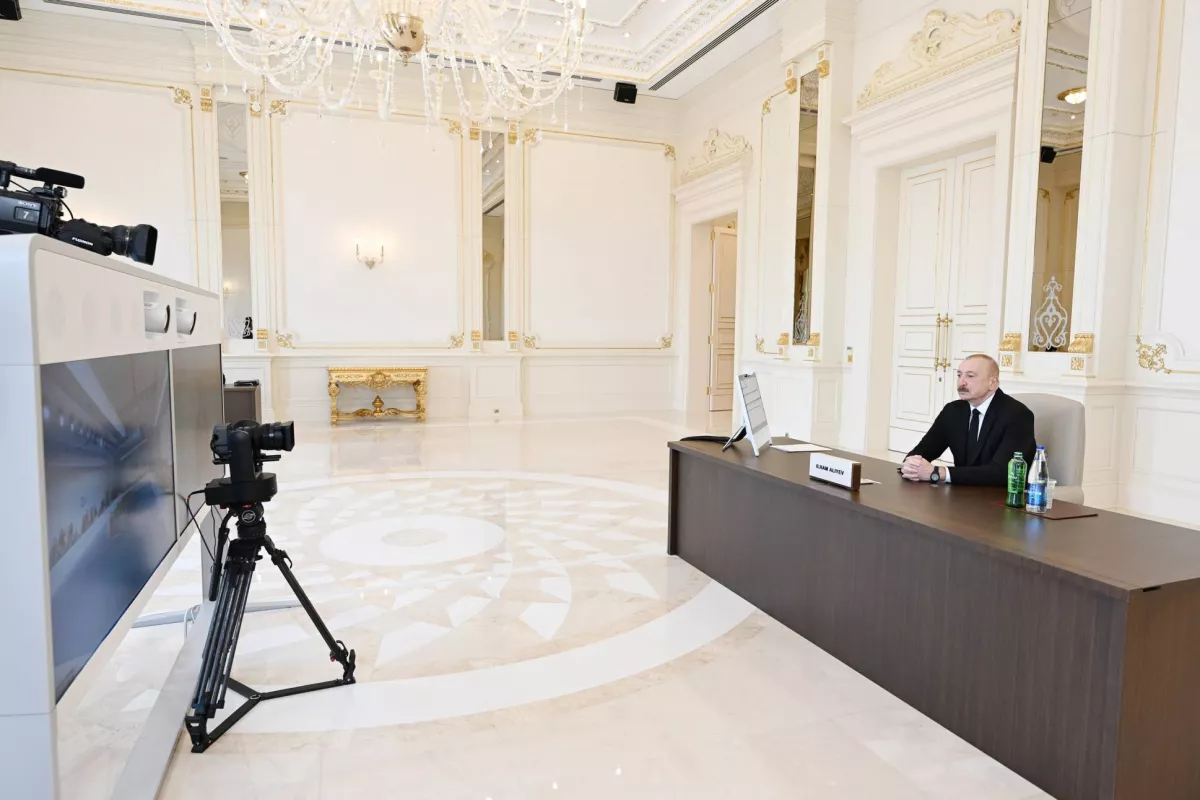
Regarding the European Parliament, President Aliyev stated: “...this body, instead of supporting the peace process, prefers to sabotage it. Since May 2021, six months after the end of the Second Garabagh War, until April 30, 2026, the European Parliament has adopted 14 resolutions full of insults and lies about Azerbaijan. Just imagine—14 resolutions in five years is a kind of obsession. The last one was adopted only four days ago, deliberately right before the summit. Instead of addressing fundamental problems of some member states, such as xenophobia, Islamophobia, antisemitism, migration, competitiveness, and homelessness, the European Parliament targets Azerbaijan, spreading slander and lies. And the reason is that Azerbaijan restored its territorial integrity and sovereignty, put an end to separatism, and brought war criminals to justice.”
As we can see, the European Parliament is acting in sync with PACE in this anti-Azerbaijani campaign.
The resolution adopted on April 30, titled “On supporting democratic resilience in Armenia”, is a document which, under a neutral heading, incorporates clauses containing direct demands and accusations against Azerbaijan.
Thus, in paragraph 12 of the resolution, the European Parliament “reiterates its support for the rights of Nagorno-Karabakh Armenians, including the protection of their identity, property and cultural heritage, and their right to a safe, unimpeded and dignified return under appropriate international guarantees; calls for those responsible for the destruction of Armenian cultural and religious heritage to be held accountable, and for an international assessment mission.”
In paragraph 13, it “condemns Azerbaijan’s unjust detention of Armenian prisoners of war, detainees and hostages.”
There is no legal substance in these paragraphs—only clichés imported from the vocabulary of Armenian lobbying networks.
A particularly telling technical detail stands out here. The 2026 resolution refers to “Nagorno-Karabakh” as if it were still an existing entity.
First, the Nagorno-Karabakh Autonomous Oblast was abolished by the Milli Majlis of the Republic of Azerbaijan back in November 1991. Second, for five years now, there has been no administrative-territorial unit in Azerbaijan under the name “Nagorno-Karabakh”.
By presidential decree dated July 7, 2021, the Karabakh and East Zangezur economic regions were established.
The use of this anachronism in a 2026 European Parliament document is not a clerical error. It is a deliberate attempt to keep alive in political discourse a construct that no longer exists—neither on the map nor in legal reality, and one that cannot exist there any longer.
Baku’s reaction this time went beyond a standard diplomatic protest.
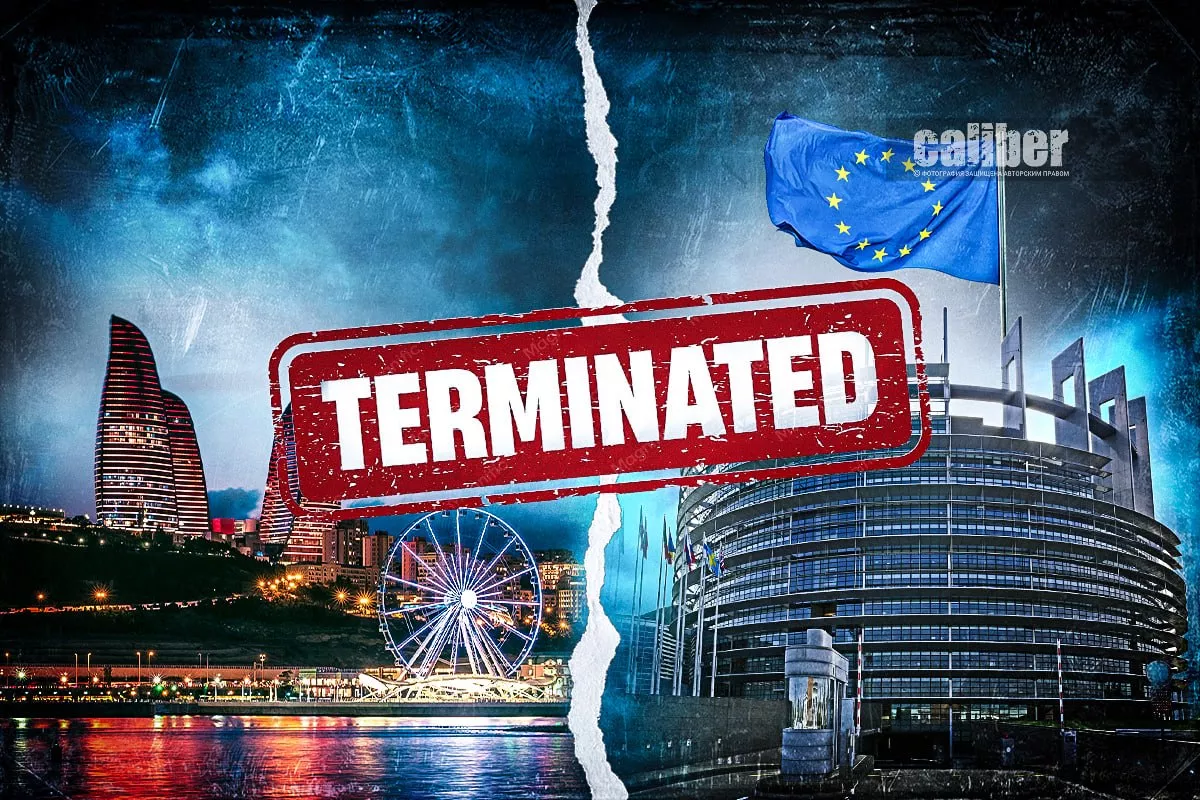
On 1 May, the Milli Majlis decided to fully suspend cooperation with the European Parliament, terminate participation in the EU–Azerbaijan Parliamentary Cooperation Committee, and initiate the procedure for withdrawal from the Euronest Parliamentary Assembly.
Speaker Sahiba Gafarova stressed that the problems in the European Parliament’s approach to developments in Azerbaijan and the region have caused significant dissatisfaction and concern, and that this process has been ongoing for many years.
In this context, she recalled that in 2015 the Azerbaijani parliament, in response to a systematic and prolonged smear campaign against the country conducted in the European Parliament, was forced to suspend mutual cooperation with the institution.
The Milli Majlis called on the European Parliament to adopt an objective stance towards Azerbaijan and demonstrate this approach through concrete steps.
Following that decision, the European Parliament took a series of measures aimed at restoring bilateral dialogue, including sending an authorised delegation of its members to Azerbaijan. As a result of these efforts, in September 2016, the Milli Majlis decided to restore relations with the European Parliament.
However, the past 10 years have shown that the European Parliament is not willing to abandon its anti-Azerbaijani course. During this time, its composition has changed, as have the presidents of the European Commission and the contours of EU foreign policy. The only consistent line has remained opposition to Azerbaijan.
The explanation for this persistence lies outside political logic—in the sphere of cultural and religious anatomy, where Armenia is perceived as a Christian outpost and Azerbaijan as a Turkic-Muslim periphery. No factual evidence outweighs this preconception; rather, facts are rewritten to fit it.
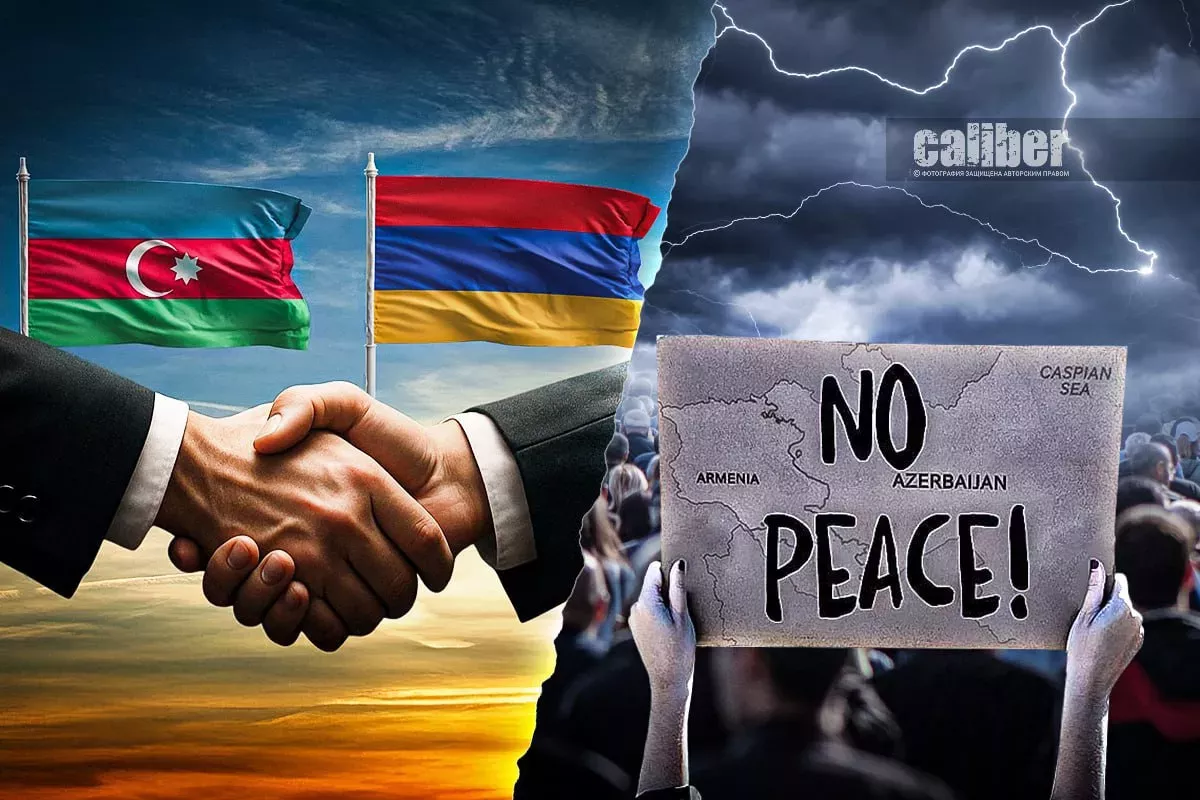
The contrast with the current state of affairs is obvious. Yerevan and Baku are engaged in negotiations on border delimitation and have advanced further on a peace treaty than at any previous point. The text of the peace agreement has been initialled. Armenian Minister of Economy Gevorg Papoyan acknowledged in April that gasoline supplies from Azerbaijan helped prevent a price shock on the Yerevan market after a new escalation of the Middle East crisis.
In other words, the two countries are attempting to build an architecture of normal neighbourly relations—while at the same time the European Parliament is adopting a text in which the conflict is being revived through a distorted logic. This is not support for Armenia in the peace process. It is its direct sabotage.
Brussels diplomacy likes to argue that its resolutions are a form of soft power—a way of signalling values, nothing more. This is self-deception.
The European Parliament’s resolution of April 30 simultaneously validates Pashinyan’s political line just weeks before parliamentary elections in Armenia and legitimises the demands of diaspora structures that have worked for decades against Azerbaijan. This is not a value-based declaration, but an act that undermines the peace process between the two countries.
Value signalling presupposes that a subject speaks about itself. Brussels has long been speaking about others—and in a one-sided manner.
Baku’s further course is clear. The Milli Majlis decision to suspend relations with the European Parliament and withdraw from Euronest is not an isolated emotional reaction, but part of a consistent trajectory: following PACE 2024, Azerbaijan is systematically distancing itself from those European parliamentary formats that have been turned into instruments of pressure rather than platforms for dialogue.
The same patterns are visible in its engagement with certain Council of Europe committees and in its negotiating position on a future agreement with the EU.
Azerbaijan is not leaving Europe—it is leaving those European institutions that lack both a factual basis and respect for dialogue with it.







 editor@caliber.az
 +994 55 444-88-98
 Азербайджан, Баку, ул. Низами, 203, Af Business House, 5-й этаж