










Customs goes digital: Azerbaijan reshapes trade flows Khazar Akhundov’s breakdown
The large-scale reforms launched in 2022 within Azerbaijan’s State Customs Committee (SCC) have already led to tangible positive changes in the agency’s performance. The core focus of these reforms has been on enhancing transparency, curbing abuses, introducing digital tools, and streamlining regulatory and administrative mechanisms. A logical continuation of this process is the proposed amendments and additions to the Customs Code, which were recently placed on the agenda of a plenary session of the Milli Majlis (parliament).
Addressing the existing problems was identified as a top priority for the government, particularly in light of the new phase of Azerbaijan’s economic modernisation in recent years, which envisages comprehensive support for the development of the non-oil sector, especially small and medium-sized enterprises. The key objective of these reforms is to expand production and exports of non-resource industrial and other goods.
An important role in this process has been assigned to the State Customs Committee (SCC), where notable qualitative changes have taken shape over more than three years. Efforts to combat corruption and bureaucratic delays have been strengthened, alongside a personnel overhaul of the customs authorities. Equally significant has been the intensified drive to fully digitalise customs procedures and administrative mechanisms, with the aim of increasing transparency and simplifying foreign trade operations for businesses.
As part of the reforms, the capabilities of the SCC’s electronic resources — the e-customs platform and its mobile version, Smart Customs — have been significantly expanded in subsequent years. Participants in foreign trade operations have gained access to new rules for registering goods on the e-customs platform, as well as to a range of digital services such as the “simplified declaration – e-commerce” system, “electronic queue”, “fast track”, and “calculation of customs payments related to the import of passenger vehicles”, among many others.
Thanks to the introduction of the simplified “green corridor” clearance system, along with modern digital risk assessment tools and electronic documentation, physical inspections of goods have been reduced by 70%, while the throughput capacity of customs checkpoints has increased more than threefold.
The process of modernising administrative mechanisms and optimising customs legislation has continued this year as well. Thus, on May 1, amendments and additions to the Customs Code were placed on the agenda of a plenary session of the Milli Majlis. The current version of the Customs Code was adopted several years ago; however, given changes in the global economy and international trade, there has arisen a need for its improvement.
“The amendments to the Customs Code of Azerbaijan currently under consideration in the Milli Majlis are aimed at supporting economic growth and introducing international trade practices in our country,” said Chairman of the State Customs Committee Shahin Bagirov during a parliamentary plenary session. “As global processes evolve and the economic environment transforms, there is a need to make changes and clarifications to legislation.”
The head of the SCC also emphasised that the main objective of the amendments is to support businesses and improve the regulation of customs operations. In particular, he noted that various procedures require certain operations to be carried out with goods imported into the country and stored in different customs zones.
For these purposes, a regulation on the Customs Administration of Free and Special Economic Zones will be approved by the State Customs Committee, granting it the authority to implement relevant organisational, administrative, and supervisory measures within its competence. Among other things, this activity will cover the control of goods, equipment, and other items imported into and exported from industrial and technology parks, industrial districts, and special economic zones (SEZs).
In addition, the new amendments will define a special customs procedure for duty-free trade and its scope of application. This refers to duty-free trade involving the retail sale in duty-free shops of foreign goods brought into the customs territory of the country without the payment of import customs duties and taxes, and without the application of trade policy measures, for personal use by individual consumers.
Under the new version of the Code, the territory where duty-free shops are located will be considered a customs control zone. Accordingly, the import and sale of goods in this area will be carried out under the supervision of the State Customs Committee.
The procedure for placing goods under the special customs regime of duty-free trade will be determined by the relevant executive authority, while the issuance, reissuance, suspension, restoration, and cancellation of permits for establishing duty-free shops, as well as monitoring compliance with their conditions, will be regulated by the Law “On Licences and Permits.”
The innovations in the Code will also cover issues related to the storage of goods with the permission of the customs authority. At present, placing goods under a special customs storage procedure is carried out in temporary storage warehouses and customs warehouses established by licensed entities.
However, if the amendments to the Customs Code are adopted, the process of storing goods will be optimised and costs in this area will be reduced. It will become possible to place goods not only in these facilities, but also in other warehouses and storage locations, subject to authorisation by the customs authority.
It is noted that this change is of significant importance for participants in foreign trade, as it will simplify and reduce the cost of their operations.
Planned amendments also include changes to the rules on providing customs authorities with information on the import of vehicles into the customs territory. Individuals responsible for a vehicle will be required to submit in advance to customs authorities the data reflected in the vehicle registration certificate, including in electronic form.
According to the draft amendments, goods and vehicles that are not cleared through customs within six months will be transferred into state ownership. Under the current legislation, state ownership applies to goods and vehicles confiscated on the basis of a court decision that has entered into force in criminal cases and other customs-related offences.
Following the adoption of the amendments to the Customs Code, a similar mechanism will also apply to “pirated” and counterfeit goods. Such goods, at the discretion of the entrepreneur, will be subject to immediate removal from the customs territory, destruction, or may alternatively be relinquished to the state.
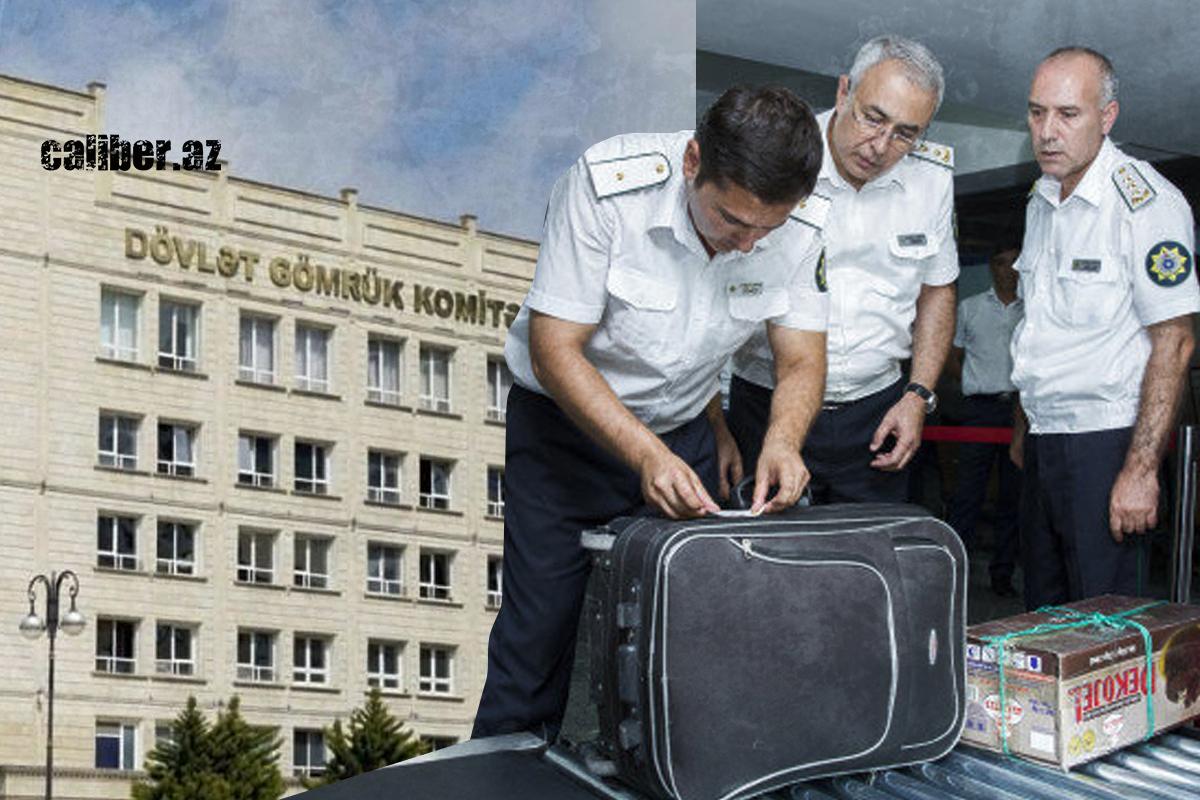
The current Customs Code also provides for customs audits; however, the new draft distinguishes between on-site and desk inspections, with on-site inspections to be conducted simultaneously with the State Tax Service (STS).
The existing provision on on-site customs audits has been applied for many years, but the new approach introduces a clearer separation between desk and on-site inspections. Desk inspections will be carried out remotely on the basis of electronic data, while on-site inspections will be conducted in accordance with established procedures jointly with the STS.
Within the framework of on-site customs audits, video recording and other forms of documentation are envisaged. Overall, the emphasis will be placed on a remote control format that creates fewer barriers for businesses.
It is also proposed to oblige customs authorities to provide audited entities with the results of on-site audits and related decisions within three working days. Following the inspections, mechanisms will be defined for appealing decisions in court as well as for their administrative annulment.
The draft law introducing amendments to the Customs Code also envisages aligning the Code with a number of existing laws, including those on licences, inspections in the field of entrepreneurship, personal data, administrative proceedings, and food safety.
Customs authorities are expected to be granted the right to apply to a court for the temporary restriction of exit from the country for participants in foreign trade in cases of outstanding customs debt, as well as to independently lift such restrictions once the debt has been repaid.
It is also planned to expand information exchange with the customs authorities of other countries, including transit-related data, which should speed up cargo transportation through Azerbaijan’s territory.
In addition, the concept of “indirect customs representation” is being introduced to replace the term “customs broker”. To perform the duties of a customs representative, registration in the relevant register will be required.
All of these measures, along with many others, are aimed at expanding the opportunities of foreign trade participants and strengthening competition in the services sector.







 editor@caliber.az
 +994 55 444-88-98
 Азербайджан, Баку, ул. Низами, 203, Af Business House, 5-й этаж