










Blurred contours of the Island of Freedom Cuba on the brink of a US strike
After a brief pause, Cuba is once again returning to the centre of the global agenda. It should be recalled that at the beginning of the year, following a US special operation in Venezuela, the Island of Freedom lost its main source of oil, and Washington imposed an embargo on any supplies of crude oil from third countries. During that period, informal negotiations began between Washington and Havana on the terms of Cuba’s de facto capitulation after decades of ideological confrontation. At the same time, Trump repeatedly stated that, in the event of the Cuban regime’s unwillingness to compromise, he did not rule out a military operation against the island.
Later, this agenda—if not politically, then at least in media terms—experienced a pause, most likely linked to the United States being fully occupied in the Middle Eastern theatre, more precisely in its joint military operation with Israel against Iran.
And now, headlines across international publications are once again filled with reports of a possible US military operation against Cuba. The original sources of this information—Politico and The New York Times—write that within Donald Trump’s administration, options for direct pressure on Cuba are indeed being discussed, including the use of force, such as scenarios involving airstrikes, demonstrations of military power, and even an operation to detain Raúl Castro, who has formally stepped down from all positions but is still considered an informal senior state advisor.
This raises the question: does the fragile ceasefire reached with Iran on April 12 really provide sufficient grounds for the United States to believe it can conduct another military operation? There is no clear answer to this question; however, it is often precisely the ambiguity of geopolitical contours that pushes policymakers toward decisive actions.
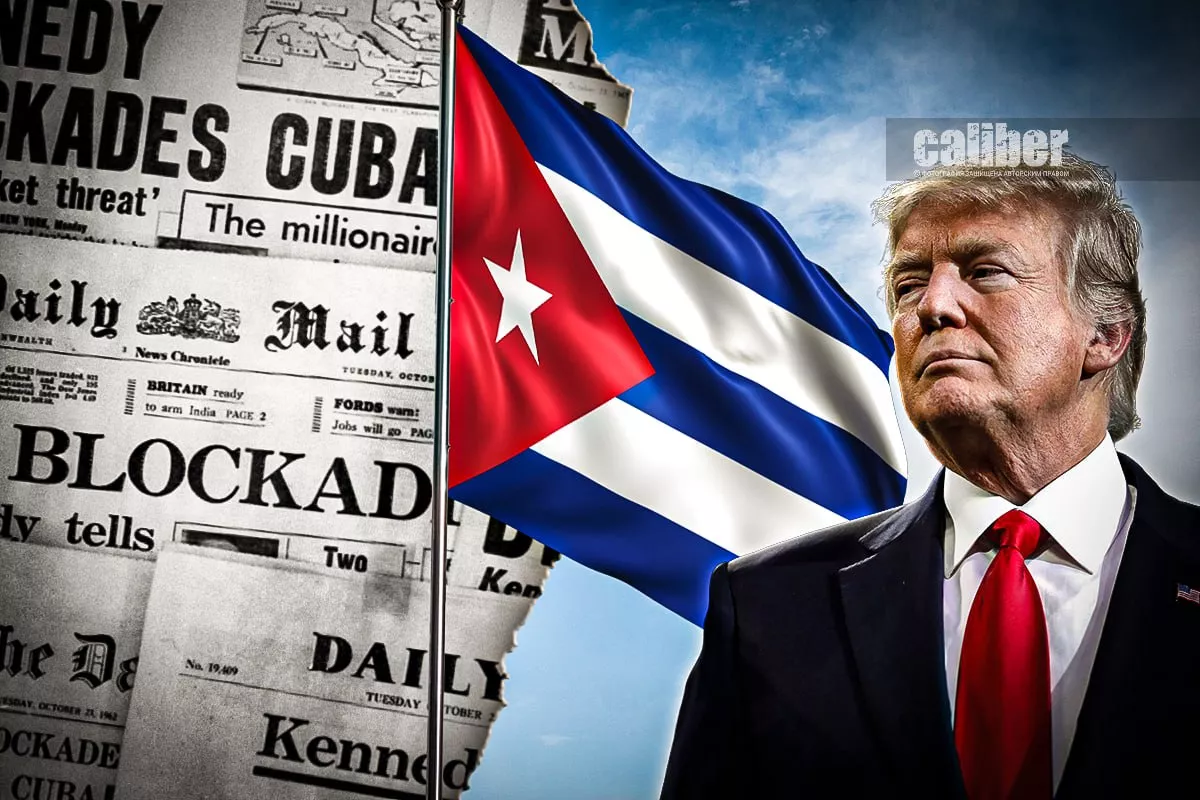
US strategy toward Cuba in recent years—and especially in recent months—has been built on a fairly simple logic: maximum economic pressure would eventually break the Cuban system from within. Sanctions were tightened, fuel supplies restricted, financial channels cut off, and Cuba itself was increasingly framed as a source of security threats to the United States. The expectation was that a deepening economic crisis would force Cuban authorities either to undertake large-scale reforms or face internal destabilisation.
The crisis has indeed been unprecedented. The island is experiencing chronic electricity outages, severe shortages of fuel and food, a rapid rise in emigration, a devastated tourism sector, and an almost constant sense of economic collapse. Yet the system has not collapsed. And it is precisely this outcome, according to leaks from the White House, that is increasingly causing frustration within Trump’s inner circle.
It is possible that, initially, Washington expected that pressure on Cuba, combined with US gains in Venezuela and a hardline approach toward Iran, would create a broader effect of geopolitical deterrence. However, events have unfolded differently. Iran did not capitulate, and Cuba, contrary to expectations, has demonstrated its usual capacity to survive under near-siege conditions. For the current US administration, this increasingly appears as a failure of a coercive strategy.
The White House is facing a significant reputational problem. Having presented the Cuban issue as almost resolved, it cannot simply leave the matter unfinished, despite the geopolitical deadlock it is experiencing in Iran. It needs to undertake some kind of operation—at least an informational one—to signal to the world that the issue has not been put on the back burner.
This is precisely why the expression “Venezuelan scenario” is appearing more frequently in the American press. The entire new logic of pressure is now being built around it. Whereas previously the United States sought to achieve change through sanctions and support for the opposition, the current focus is shifting toward personal intimidation of the elite and a demonstration of readiness to resort to force, in order to compel Havana to accept negotiations on American terms. Raúl Castro has become a symbol of this policy.
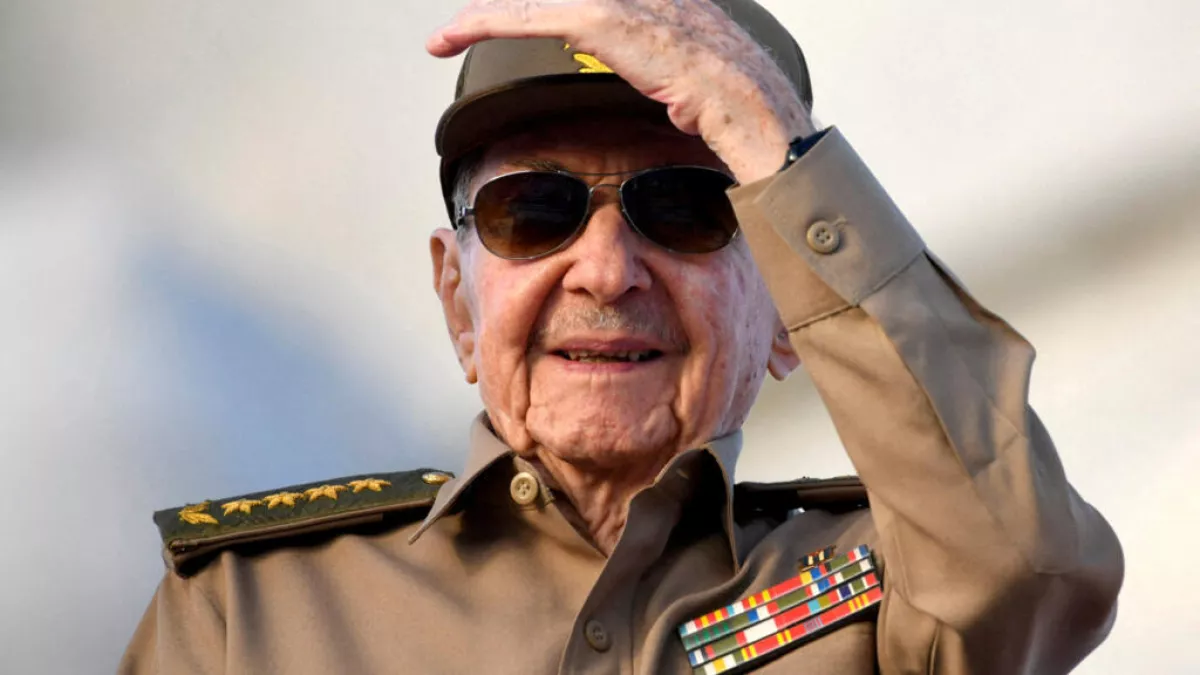
The very fact that discussions about his possible arrest are taking place already appears almost surreal. Raúl Castro is 94 years old; he has long since stepped down from state positions, yet for the Cuban system, he remains a living symbol of the revolutionary era and one of the last bearers of the regime’s historical legitimacy. Therefore, talk of his potential capture—even if it is never implemented—carries significant psychological weight. Washington is effectively signalling to the Cuban elite that the era of inviolability is over.
At the same time, the Trump administration itself appears to be deliberately playing on the edge. On the one hand, the White House is demonstrating readiness for the use of force. On the other hand, there are still no signs of preparations for a full-scale war. Instead, it is trying to create an atmosphere of strategic uncertainty in which the Cuban leadership is forced to constantly anticipate further escalation. This is why reports are appearing simultaneously about US reconnaissance flights around the island and discussions of a possible expansion of American military presence in the region.
It is notable that in recent days, US media have also published reports about Cuba allegedly purchasing Russian and Iranian drones—claims that official Havana has firmly denied.
All of this increasingly resembles a return to the language of the Cold War. Cuba is once again being described as a potential forward base for US adversaries, located just dozens of kilometres from the American coastline. For American “hawks,” this is a highly convenient narrative. It allows them to transform a local sanctions dispute into an issue of national security and global confrontation.
But this is precisely where the situation becomes particularly dangerous. Today’s Cuba is no longer the isolated island of Fidel Castro’s era. In recent years, Havana has significantly expanded its ties with Russia, Iran and, most importantly, China, while the broader narrative of resistance to US pressure has become part of a wider anti-Western alignment. Although it is still too early to speak of a formal military alliance, the very existence of such links sharply increases the cost of any potential escalation.
This is understood particularly well in Latin America. It is noteworthy that Brazilian President Luiz Inácio Lula da Silva, according to US media reports, personally urged Trump to abandon the blockade and instead pursue negotiations with Havana. For the region, the Cuban issue is not only about politics, but also about historical memory. Any prospect of American intervention immediately revives associations with the era of coups, CIA operations, and direct US involvement in the internal affairs of neighbouring states.
The history of US–Cuba relations has almost never unfolded according to plan. It only takes a random incident, provocation, or miscalculation for the logic of deterrence to take on a life of its own. This is especially true in a region where the memory of the Cuban Missile Crisis is still not a historical episode, but a constant reminder of how quickly political demonstrations of force can turn into a full-scale international crisis.
Today, Washington may not be intending to start a major war against Cuba (and any attempt to abduct Castro would most likely lead to such a war), especially at a time when the vast Iranian crisis remains unresolved. On the other hand, demonstrating another success in the Western Hemisphere could help the United States repair its shaken reputation as a militarily effective superpower after Iran.
However, no one can be certain of the success of any operation against the Island of Freedom. The United States is once again stepping into a zone of unpredictability, while China watches these developments with bated breath.







 editor@caliber.az
 +994 55 444-88-98
 Азербайджан, Баку, ул. Низами, 203, Af Business House, 5-й этаж