










World after Western hegemony Competing visions of the global Order
Just one day after the conclusion of the high-level U.S.-China talks, Chinese President Xi Jinping called for accelerating the development of a Chinese intellectual framework in the fields of philosophy and social sciences.
In this context, the central issue is not so much why China’s leader chose to highlight this point in the immediate aftermath of U.S. President Donald Trump’s visit to China, but rather the broader absence in today’s world of a coherent philosophical framework for global development — or, at the very least, a clear vision for the future direction of the international order.
Viewed from this angle, it is important to recall that Western historical, philosophical, and sociological thought once served as a major catalyst for the advancement not only of leading world powers, but of societies as a whole. Even Marxist thinkers consistently acknowledged the significance of the intellectual traditions that emerged in the 18th and 19th centuries — German classical philosophy, English political economy, and French socialism, the latter of which was nevertheless labelled utopian socialism.
At the turn of the 20th century, the Western analytical community continued to produce a broad range of concepts and political theories, however controversial or debatable they may have been. Yet for a long time now, nothing of comparable intellectual scale has emerged. Moreover, neither the World Economic Forum nor the Munich Security Conference appears capable of shaping meaningful global trends — economically or politically.
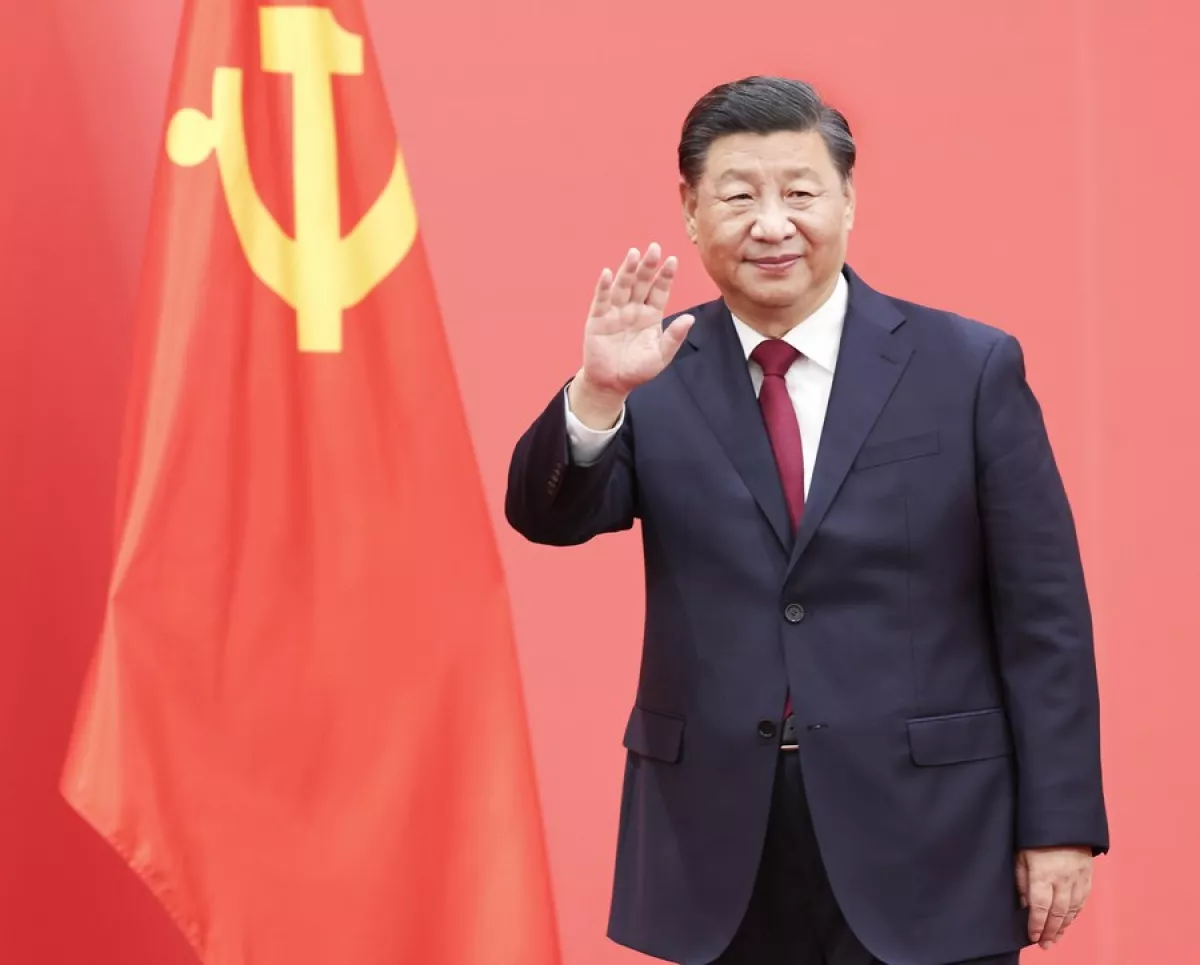
Against this backdrop, China is effectively seeking to present the world with its own vision of the international order — something clearly reflected in the above-mentioned remarks by Xi Jinping. In many ways, however, these statements merely expand upon the initiative he first introduced in 2012: the concept of a “Community with a Shared Future for Mankind,” which emphasises the creation of a common, comprehensive, and stable security environment through universal participation and the exchange of experience among different civilisations.
In this context, the significance of the Global Governance Initiative becomes increasingly apparent, as it is intended to function through the collective efforts of the international community. At its core lies Beijing’s promotion of principles such as sovereign equality, the primacy of international law, multilateralism, a people-centred approach, and a focus on practical outcomes — all aimed at fostering a more just and rational world order. This is precisely why particular emphasis is placed on multilateralism, understood as cooperation among states in addressing global challenges through inclusive and coordinated engagement.
China’s initiative largely aligns with Azerbaijan’s vision of how the global order should evolve. In this regard, it is important to emphasise that the principles of peaceful coexistence promoted by Azerbaijan stem from its own experience in building a diverse and cohesive society. Positioned as a strategic bridge between East and West, as well as North and South, the country actively advances the ideas of multiculturalism, peace, and constructive engagement on the global stage, while placing particular emphasis on inter-civilizational, interethnic, intercultural, and interreligious dialogue. Within this framework, Baku stands alongside countries engaged in the struggle against neocolonialism. At the same time, Azerbaijan is undertaking concrete efforts to build bridges between the Global South and the Global North. It was precisely with these objectives in mind that the Baku Process was launched.
At the same time, Azerbaijan has also established itself as a bridge of cooperation in the economic sphere, earning a reputation as a reliable partner in ensuring the energy security of numerous countries. This role has been reinforced by its strategic position in connecting the Caspian region with international markets through the diversification of oil and gas export routes.
And does not the Middle Corridor itself serve as a link uniting civilisations and diverse cultures?
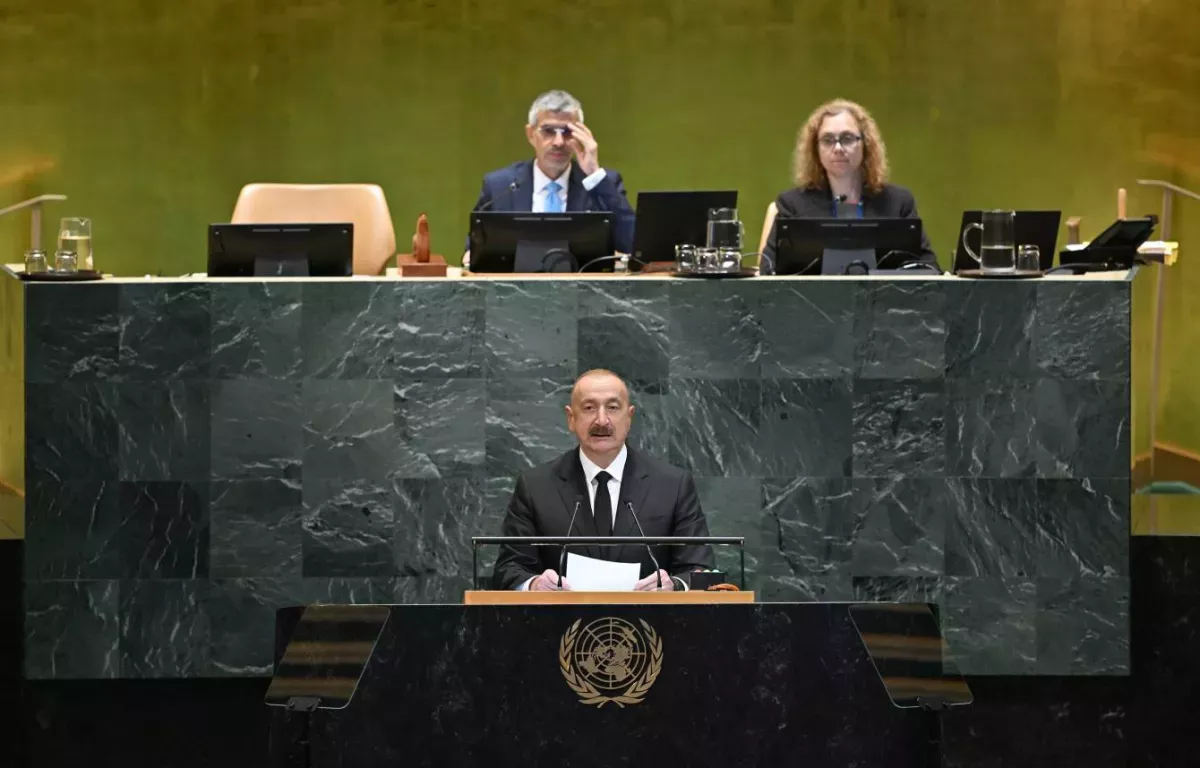
That is why the Azerbaijani president describes Baku’s vision as being extremely clear: “peace and development based upon international law, non-interference in the internal affairs of States, mutual respect, and cooperation.”
In this context, the president calls for the joint construction of a world free from double standards, where “justice is not selective, the rule of law is respected, and peace is achieved not through words alone, but through actions.”
This also includes reforming the United Nations, particularly expanding the composition of the Security Council, with permanent seats reserved — on a rotating basis with veto rights — for the Non-Aligned Movement, the Organisation of Islamic Cooperation, and the African Union.
At the present stage of world history, only a handful of states — including Azerbaijan — are putting forward meaningful ideas aimed at shaping a new world order. Against this backdrop, Western historical, philosophical, and sociological thought is hardly heard at all, which speaks for itself. What we are witnessing is the emergence of new centres of power on the global geopolitical stage, something that is particularly vividly underscored by Baku’s transformation into a major venue for leading international forums such as WUF13 or COP29, where, unlike many other summits, discussions focus not only on today’s challenges but also on ways to overcome them.
And this is by no means accidental, since Azerbaijan, as we have already noted, is advancing concepts grounded in its own achievements, including the unique results of reconstruction and development efforts in Karabakh and Eastern Zangezur.







 editor@caliber.az
 +994 55 444-88-98
 Азербайджан, Баку, ул. Низами, 203, Af Business House, 5-й этаж