










Under the dictatorship of Frau Ursula And Ukraine can wait…
On June 4, Ursula von der Leyen called Nikol Pashinyan, and from that phone conversation Yerevan emerged with a promise of €50 million in immediate aid, a preferential regime for its goods, and a separate support programme for agriculture and floriculture. The reason given was “economic pressure from Russia”: Moscow had closed its market to Armenian products — seed crops, dried fruits, flowers — and Brussels immediately rushed to fill the gap with European money. The decision was personally taken by the President of the European Commission. And on June 6, the European calendar marks a date with a completely opposite meaning, and the coincidence of these dates is worth taking a closer look at.
On June 6, 2025, the European Union reinstated tariffs and quotas on Ukrainian agricultural products — for the first time since the start of the full-scale war it did not extend the duty-free trade regime with Kyiv — and since then the restored pre-war order has simply continued to function. A year later, the same dates — June 4 and June 6 — align sharply: on one day Yerevan is called with promises of money and open markets, on the other Kyiv is reminded of a closed door.
The logic used by European officials to justify this decision is well known, because it has been repeated for years. Cheap Ukrainian grain, sugar, poultry, and eggs depress prices on European markets. Polish, Hungarian, and Slovak farmers take to their tractors, block borders, and dump Ukrainian grain onto the roads. Ukrainian producers are not bound by strict environmental rules and animal welfare standards, meaning their products are cheaper and, in the view of Europeans, represent unfair competition.
Under this slogan — protecting European producers — Brussels spent three consecutive years alternately introducing and lifting restrictions, negotiating “safeguard mechanisms,” and designing quotas for each category of goods separately. For a country at war, whose Black Sea ports are blocked and whose agricultural sector accounts for more than half of its total exports, every concession came with a caveat: but only if it does not harm our farmers.
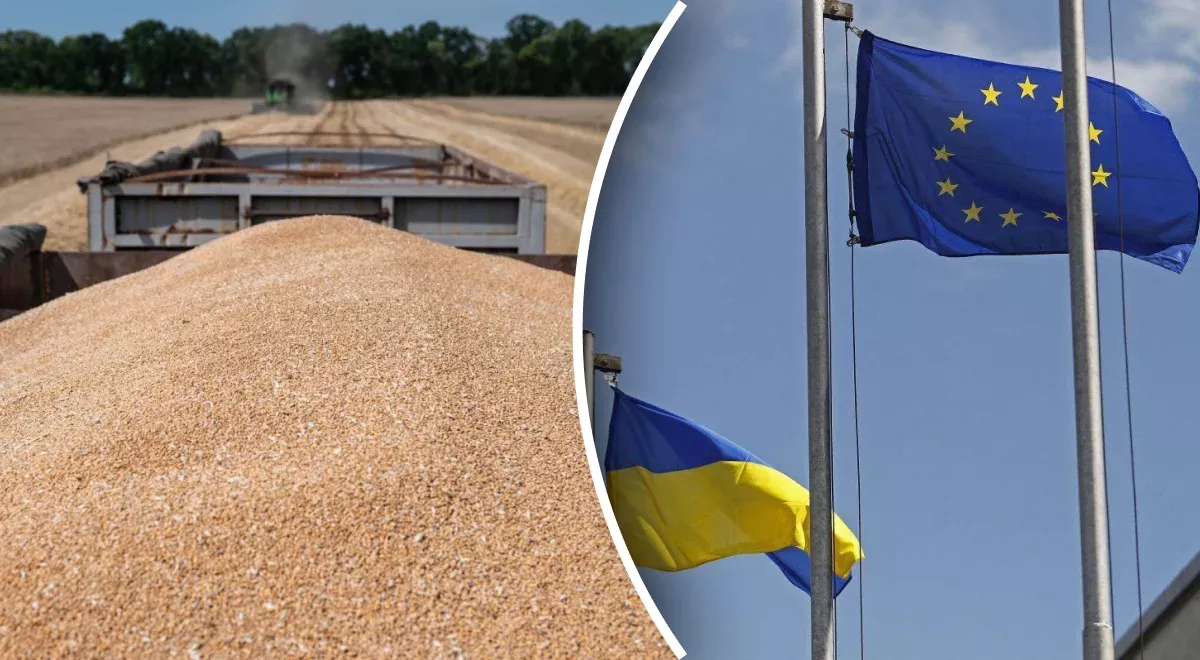
And here a contrast emerges that cannot be dismissed as coincidence. For Ukraine — a country giving lives in a war that Europe officially calls its own — market access was granted reluctantly, through endless rounds of consultations, under pressure from farmers’ protests, and with the obligatory requirement of consensus among all interested parties. Every decision on Ukrainian grain passed through the Council, through bargaining between capitals.
For Armenia, the same market is opened with a single phone call. No consensus. The President of the European Commission personally decides to allocate funds and personally decides to allow Armenian goods into Europe. For the first batch, an import of 10,000 flowers from Armenian producers to Latvia is permitted — a detail almost comic in scale, yet telling in principle: when needed, the bureaucratic machine capable of dragging out the Ukrainian question for years suddenly operates with instant speed.
This contrast looks especially striking against the backdrop of the European cult of standards. Brussels is capable of regulating everything: the curvature of cucumbers, the diameter of apples, the permissible sugar content, labelling of origin, phytosanitary certificates, packaging rules — for every product there is a rulebook that European farmers have spent decades adapting their businesses to, and for any violation of which they are fined.
It was precisely these standards that were used for years to resist Ukrainian exports: your products do not meet our requirements, your producers do not bear our costs. But once the discussion turns to Armenia, the standards suddenly disappear.
Where are the requirements for the shape and size of every fruit? Where is the phytosanitary control? Where is the concern about unfair competition that tormented European farmers in relation to Kyiv? They are gone. They dissolve precisely at the moment when it becomes necessary to provide Yerevan with a political favour.
And this is perhaps the clearest proof that the entire standards machinery is an instrument of selective application — switched on and off depending on whom needs to be helped, and whom needs to be denied.
Because, of course, this is not about economics. Ten thousand flowers to Latvia and €50 million will neither save Armenian agriculture nor compensate for the loss of the Russian market. Brussels is not solving an agricultural problem — it is sending a political signal, and it is doing so at an extremely sensitive moment: Armenian parliamentary elections were held on June 7, and the package of European assistance announced on the eve of the vote is read exactly as intended — as a demonstration that the West stands behind the current government, that Yerevan’s European choice is being paid for in real money and open markets.
The economic framing here serves only as a veneer of respectability. The substance is purely political.
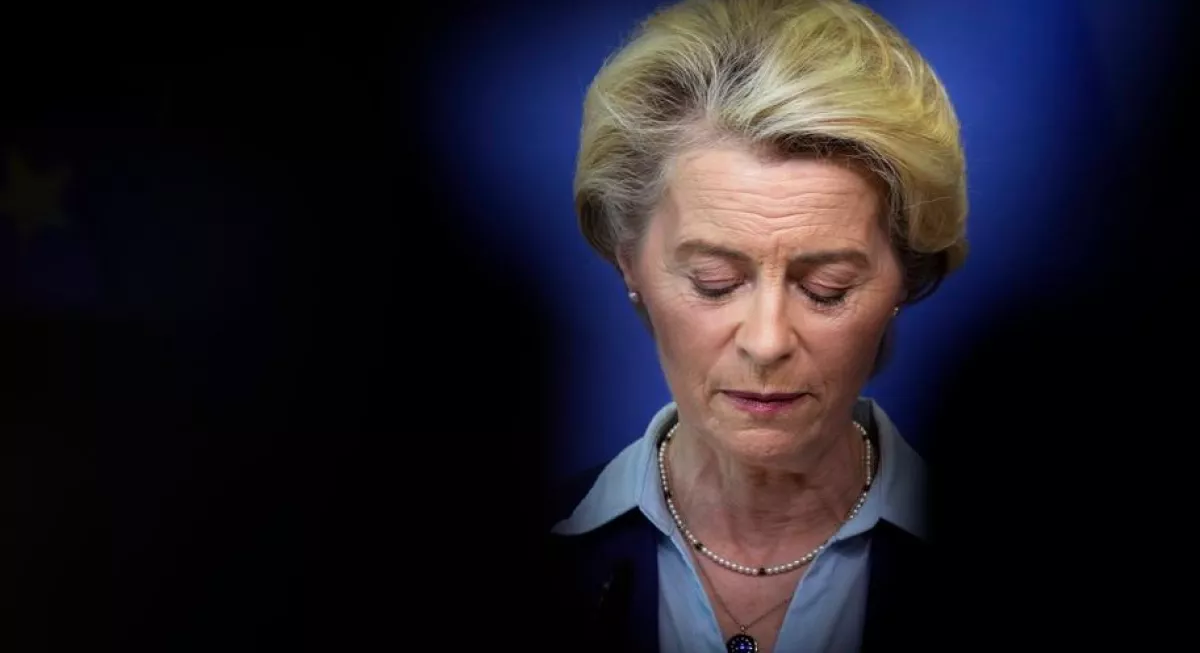
And it all comes down to a single figure and a single style of decision-making. Von der Leyen acts as if the European Commission were her personal office, and the 27 member states exist merely to ratify decisions already taken.
The manner in which the Armenian case was handled exposes something that is being discussed in Europe with increasing frequency and unease: decision-making procedures are applied selectively — strictly enforced for some, ignored for others. Ukraine passes through a gauntlet of consultations; Armenia receives a decision by phone call.
The difference is not explained by law or economics, but by the political objectives of the Commission’s head, pursued without regard for the mechanisms designed precisely to ensure that no single person in Brussels can decide such matters alone.
Here, one cannot ignore what stands behind Europe’s apparent goodwill toward Yerevan — the Armenian lobby and the Russian trace, intertwined in Europe more closely than is usually acknowledged. The story involving Luis Moreno Ocampo, the former prosecutor of the International Criminal Court, exposed the mechanics of this influence with rare bluntness.
In leaked recordings published in the spring, Ocampo and his son discuss a “favourable price” for exerting pressure on EU institutions — the European Commission and the European Parliament. Ocampo directly speaks about working in coordination with the Armenian lobby in the United States, about funding that initially came from Armenian sources and later from wealthy diaspora sponsors. In the same conversations, former EU foreign policy chief Josep Borrell and his circle are also mentioned.
Ocampo himself describes his leverage without ambiguity: there is no need to break down the wall — the door is already open, it is simply being pushed wider.
And if the door to European institutions is indeed open to such actors — as Ocampo, a man who knows these corridors from the inside, claims — then it is naïve to assume that influence is limited to a single figure like Borrell. A network capable of exerting pressure on the European Commission and the European Parliament does not, by definition, stop at a former foreign policy chief.
The logic of such a system is to operate through indirect channels — through assistants, through those who shape the agenda and prepare decisions, reaching all the way to the top: to von der Leyen herself, and to the President of the European Parliament, Roberta Metsola. There is no direct evidence that these channels dictated the phone call of June 4, and it would be dishonest to invent any.
But there is a convergence of interests, a documented infrastructure of influence, and a characteristic selectivity in Brussels — strictness toward Kyiv, generosity toward Yerevan. And when decisions are taken unilaterally, by phone call, on the eve of decisive elections, the question of whose interests are being served ceases to be conspiracy theory and becomes the only reasonable question left.
Ten thousand flowers will be sent to Latvia. The real question is who will receive the bouquet — and that is what European institutions should be trying to find out, if they are still capable of investigating anything beyond the curvature of cucumbers.







 editor@caliber.az
 +994 55 444-88-98
 Азербайджан, Баку, ул. Низами, 203, Af Business House, 5-й этаж