










Armenia’s elections: democracy by invitation only Caliber.Az analysis
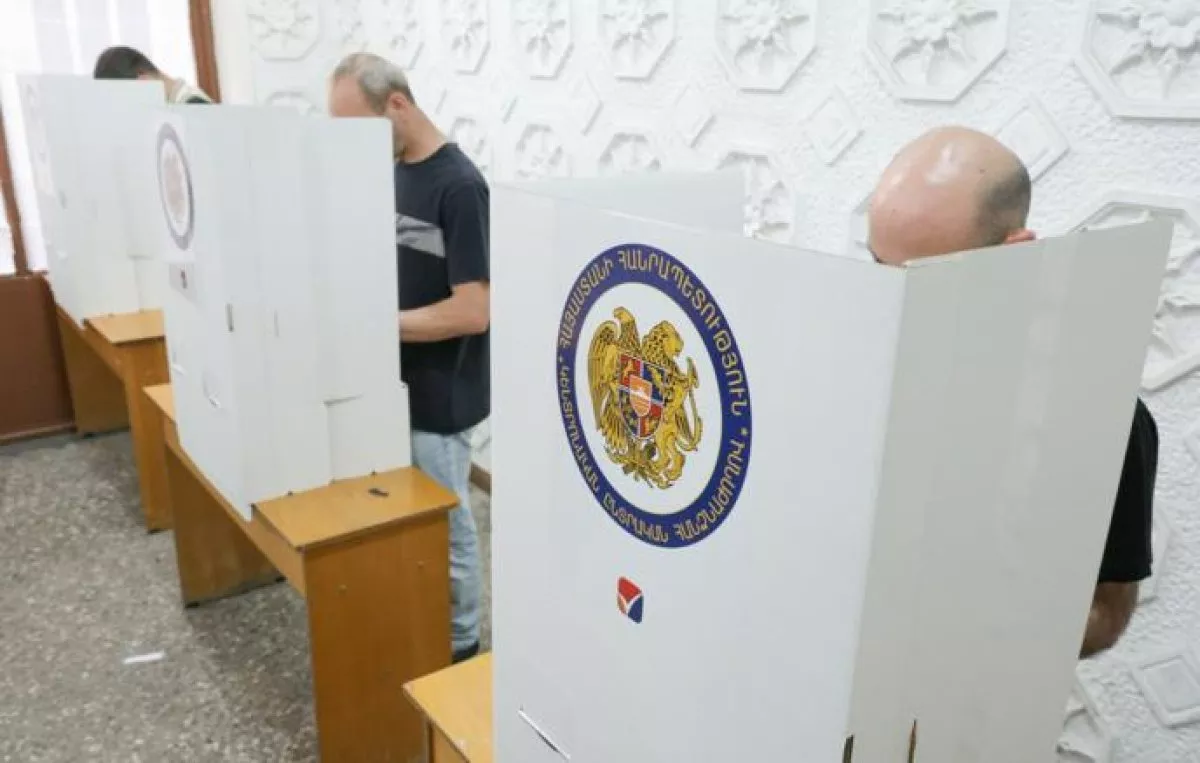
Polling stations in Armenia opened at 8 a.m., while the first arrests took place at 5 a.m. In Gyumri, security forces entered the headquarters of the “Armenia” bloc still before dawn, took away parliamentary candidate Hasmik Sagradyan, and searched the apartment of human rights defender Karapet Poghosyan. In Ashtarak, a search was conducted in the election office of the same bloc, while in Yerevan — in the home of Dashnaktsutyun MP Ashot Simonyan.
The head of the Central Election Commission stated matter-of-factly that two precinct commission chairpersons and one secretary had been detained overnight — as a result, voting at several polling stations began without them.
By midday, the “Independent Observer” mission, whose data is cited by the Armenian service of Radio Free Europe/Radio Liberty, recorded violations at 387 out of 1,420 polling stations covered: ballot stuffing, pre-marked signatures next to names, and people entering voting booths in groups and photographing completed ballots.
All of this is unfolding not in a vacuum, but after a campaign in which Armenian politics has finally lost what little seriousness it had left.
Two days before the elections, during the June 4 televised debates, incumbent Prime Minister Nikol Pashinyan proposed that other participants collectively appeal to the Central Election Commission with a demand to remove three parties from the race at once — “Strong Armenia,” the “Armenia” bloc, and the “Prosperous Armenia” party. In other words, precisely those forces around which an anti-Pashinyan majority could coalesce.
Authorities confident of victory do not normally ask for rivals to be taken off the ballot 48 hours before the vote count begins.
The debates themselves were described by Armenian commentators as resembling a bazaar, where it is not arguments that prevail, but whoever delivers the most spectacle.
A month earlier, a court ordered the arrest of a blogger who had called the prime minister a traitor at his own campaign event; meanwhile, the Ministry of Education opened an investigation into schools in the Aragatsotn region allegedly involved in campaigning activities.
The election campaign unfolded on the edge of farce — and that farce, by all appearances, was carefully managed.
Under the noise of debates and mutual accusations, a far more serious picture was taking shape.
The main storyline became the criminal prosecution of the pro-Russian camp. In April, Samvel Karapetyan was placed under house arrest. In May, Andranik Tevanyan, a candidate from the “Prosperous Armenia” party, was arrested for two months on charges of high treason, which he called fabricated; prior to that, the Prosecutor’s Office had persuaded the Central Election Commission to give consent for his prosecution.
Two days before the elections, investigators conducted a search at the editorial office of Armat Media, linked to Karapetyan’s team, and seized 11 phones and 2 computers.
On the eve of the vote, the Central Election Commission rejected a complaint by the pro-European “Republic” party seeking the removal of the “Strong Armenia” alliance from the elections, but the Investigative Committee immediately authorised the arrest of six candidates from the bloc.
The formal basis for this wave of actions is one: vote-buying. And here it is worth calling things by their exact names.
Documented episodes of bribery, according to the Armenian investigation, lead to the pro-Russian bloc. Samvel Karapetyan’s associate, Alik Aleksanyan, is accused of money laundering and distributing cash in exchange for votes. More than fifty searches have been carried out in this case, with 37 people under investigation and 25 detained.
The Investigative Committee describes the scheme as follows: representatives of “Strong Armenia” allegedly distributed between 70,000 and 200,000 drams to voters in exchange for their ballots.
The Armenian community in Russia was drawn into the same scandal — according to investigators, money was flowing from there as well.
But it is precisely the position of the West that becomes the subject of a separate discussion here.
Brussels is not turning a blind eye to violations out of negligence — it became embedded in the Armenian campaign long before election day, and it became embedded on one side.
The chronology leaves little room for interpretation. On April 30, the European Parliament, by 476 votes to 47, adopted a resolution supporting “free, fair and transparent elections” in Armenia and condemning Russian disinformation — more than a month before a single ballot had been cast.
On May 4–5, Yerevan effectively turned into Europe’s capital for two days: the 8th summit of the European Political Community, followed by a state visit by French President Emmanuel Macron, and the next day the first-ever Armenia–EU summit with the participation of European Council President António Costa and European Commission President Ursula von der Leyen.
The intention was clear: the EU signalled its preferred partner.
Kaja Kallas had already announced in March the deployment of a rapid response team to Armenia to counter hybrid threats — a measure presented as protection against external interference, but in practice working in favour of the ruling camp.
On May 26, US Secretary of State Marco Rubio made a brief stop in Yerevan, signed a strategic partnership agreement, and publicly expressed support for Pashinyan.
The West was not merely observing the elections — it was participating in them.
Against this backdrop, the figure entrusted with European election monitoring is particularly telling.
The European Parliament delegation to the Armenian elections was led by Nathalie Loiseau, a French MEP, shadow rapporteur of the same April resolution and author of a Renew Europe group appeal titled “Hands off Armenia.”
In that text, she explicitly described Armenian democracy as a “miracle” and called on Europe not to leave the country alone in its struggle against those exerting pressure on Armenian voters.
A person who had publicly declared her position before the start of voting formally arrived to assess its impartiality.
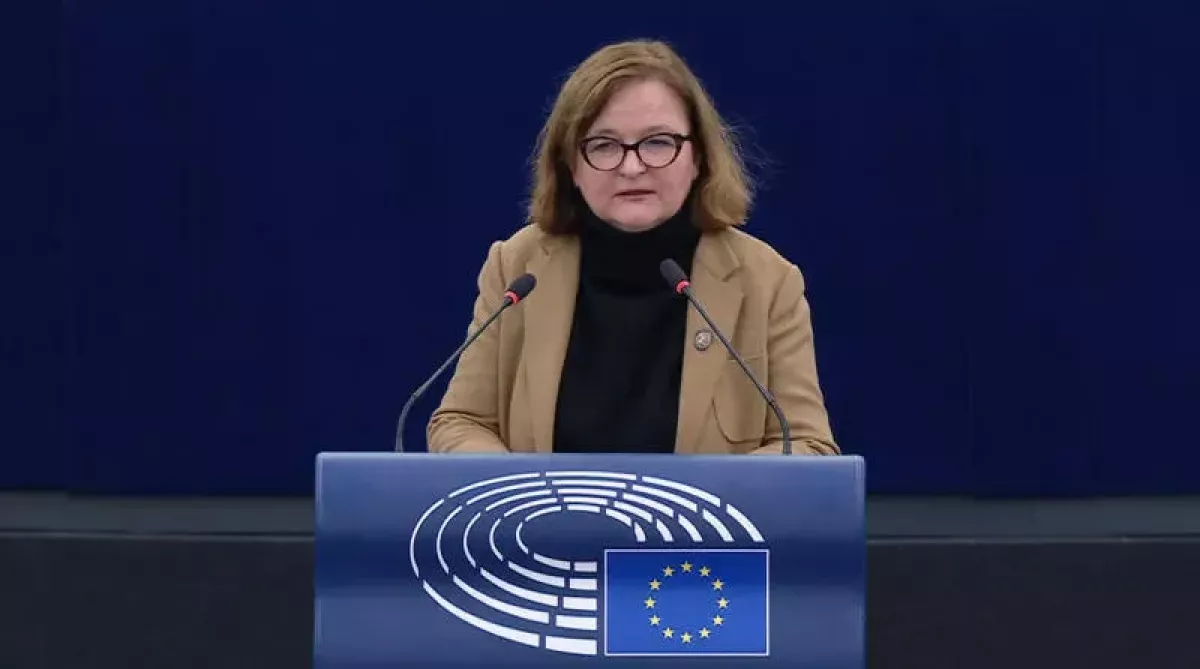
Here it is important to be precise: Loiseau does not head the entire international observation mission.
The long-term OSCE observer mission is led by Slovenian diplomat Janez Lenarčič, while the short-term component on election day is coordinated by the OSCE Special Coordinator, Dutch senator Farah Karimi. In parallel, a delegation of the Parliamentary Assembly of the Council of Europe (PACE), headed by Swiss politician Damien Cottier, is also operating, along with around a hundred parliamentarians from the OSCE Parliamentary Assembly.
However, it is the European Parliament’s component — the most politicised and the most vocal — that was entrusted to a figure who had already made clear her position in advance.
That delegation was led by Nathalie Loiseau, who had publicly signalled her stance well before polling day, effectively indicating which side she saw herself on.
The paradox is that the methods used by Yerevan, in any other context, would trigger a wave of statements from Brussels about democratic backsliding.
The arrest of opposition candidates on the eve of voting, searches in media outlets affiliated with the opposition, criminal cases of high treason against political rivals, and pressure on members of election commissions — all of this falls within the standard European vocabulary of politically motivated persecution.
When similar events occur in other countries, the reaction is usually immediate.
As early as March, Karapetyan’s international legal team sent an open letter directly to Kaja Kallas, warning that the Armenian government itself could become the main threat to free elections, and that repression was targeting opposition mayors, religious leaders, and anyone who dared to criticise the administration.
The response was silence.
The explanation for this selectivity lies not in law, but in geopolitics — and Brussels does not even try to conceal it particularly well.
Armenia is carrying out a pivot away from Moscow toward the West. Moscow responds with trade restrictions on Armenian water, wine, and fish, and with direct political pressure — Vladimir Putin personally asked Nikol Pashinyan to allow pro-Russian forces to participate in the elections, later reducing his position to a single demand: that the vote be conducted fairly.
Within this logic, an outcome in which the pro-Western Pashinyan remains in power is desirable for Europe in itself, regardless of the methods by which it is achieved.
And here an old rule comes into play, one that the West applies consistently, even if reluctantly acknowledged: electoral violations are noticed when the outcome diverges from the observer’s interests, and overlooked when it aligns with them.
The 2026 Armenian election campaign is almost a textbook case of this rule in action.







 editor@caliber.az
 +994 55 444-88-98
 Азербайджан, Баку, ул. Низами, 203, Af Business House, 5-й этаж