










Baku unites the Global South Principles of justice and equality
Recently, Baku has become a place where a new political tone is being shaped for the Global South — a space that includes countries of Asia, Africa, Latin America, and the Pacific region. It is here that the First General Assembly of the Global South NGO Platform is taking place — a structure created just a year ago, but which has already brought together representatives from more than 110 countries.
The platform emerged in April 2025, also in the Azerbaijani capital, following discussions within the framework of the Non-Aligned Movement and COP29 events, when the need for a separate network of non-governmental organisations from the countries of the South was raised.
The General Assembly itself is being held against the backdrop of Azerbaijan’s increasingly active promotion of the Global South agenda in international diplomacy. In recent years, Baku has been steadily transforming into an authoritative platform for major international forums — from climate discussions to debates on global security, the eradication of neocolonialism, and the transformation of the global order.

One of the central speeches at the Assembly was delivered by Hikmet Hajiyev, Assistant to the President of Azerbaijan, who framed his address around the idea that colonialism has not disappeared but has merely changed its form.
“This is a scar on the face of humanity. But has it remained in the past? Unfortunately, these practices continue today,” Hajiyev said, referring to neocolonialism and the resistance of certain countries to decolonisation processes.
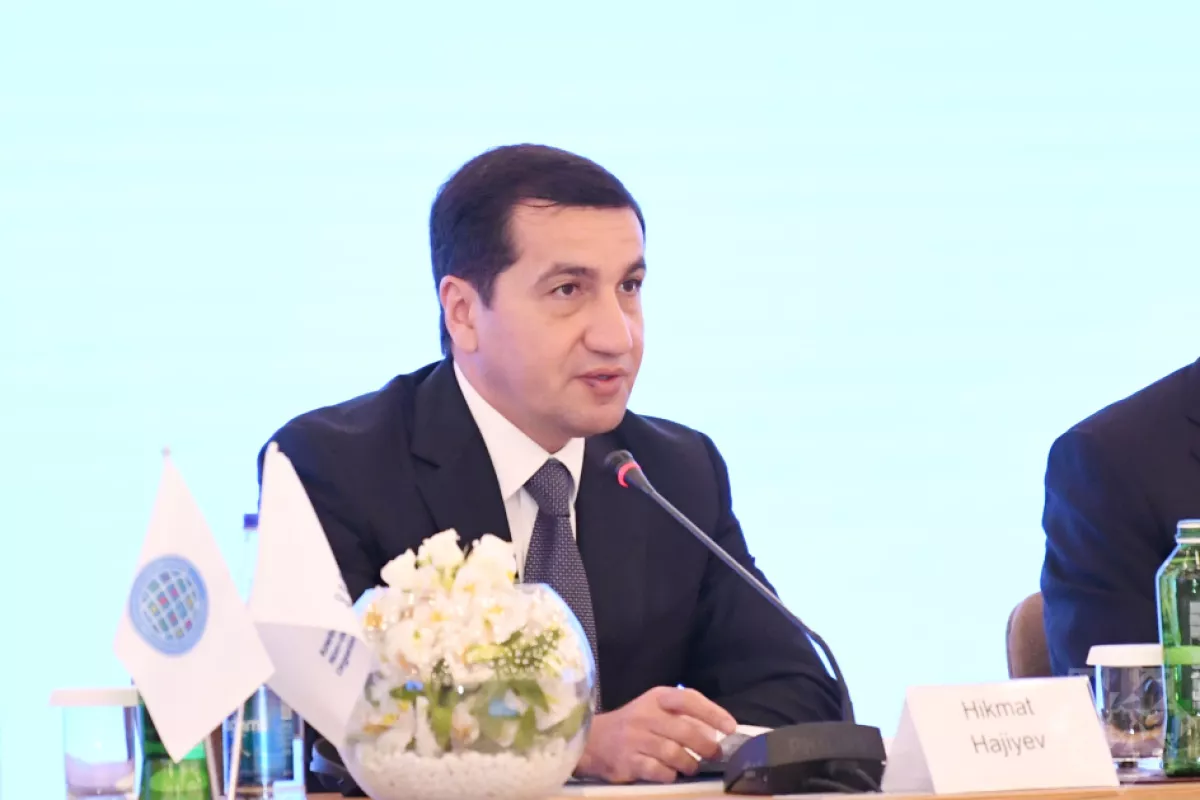
The presidential aide recalled that the fight against neocolonialism was one of Azerbaijan’s priorities during its chairmanship of the Non-Aligned Movement in 2019–2022. According to him, even the UN Special Committee on Decolonisation is currently unable to fully carry out its mandate due to hindrance by some states.
These statements fit into Baku’s broader political course, which in recent years has increasingly engaged with the neocolonial agenda, particularly in cooperation with representatives of France’s overseas territories — New Caledonia, French Polynesia, Martinique, Guadeloupe, as well as Corsica.
Azerbaijan has also been attentive to territories in the Caribbean and Africa that remain under the administration of the Netherlands and Belgium.

Separately, Hajiyev stressed that Azerbaijan sees itself as part of the Global South not only geographically, but also “historically, culturally, and even in terms of its destiny.” Indeed, the country has its own experience of confronting challenges faced by many Global South states — war, occupation, the restoration of territorial integrity, and post-conflict settlement.
“Just six years ago, about 20% of our country’s territory was under occupation,” Hajiyev stated, recalling the destruction of cities, the devastation of cultural heritage, and the issue of mine contamination, which still affects around 13% of Azerbaijan’s territory.
At the same time, he placed particular emphasis on the current stage of relations with Armenia. According to the presidential aide, the normalisation process demonstrates Baku’s commitment to peace and to the formation of new realities in the South Caucasus.
Indeed, Azerbaijan, having won the 44-day war and restored its sovereignty, was the first to put forward a peace agenda, demonstrating its role and mission as both the author and guarantor of peace in the South Caucasus — and thus as an architect of a new regional reality.
The Assembly also addressed the modern challenges faced by Global South countries, including digital inequality, climate change, and the crisis of international institutions. Hajiyev acknowledged that the system of multilateral cooperation is undergoing a serious paralysis, while the technological gap between the North and the South continues to widen. Accordingly, digital transformation is creating new barriers to the sustainable development of Global South states.
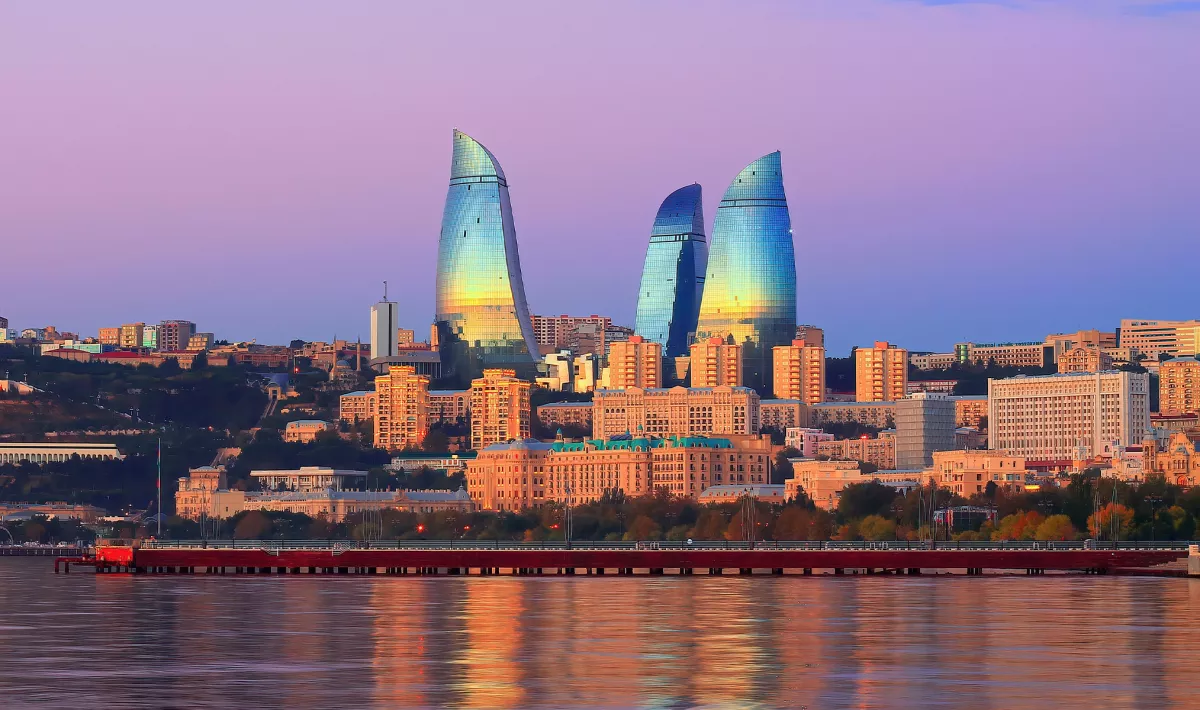
At the same time, Baku seeks not to directly oppose the Global South to the Global North. In Azerbaijan, officials emphasise that the country advocates cooperation with all regions of the world, but “on the principles of justice and equality.” This formulation is increasingly heard at international events hosted in Baku and has become part of the country’s foreign policy positioning.
A practical outcome of the Baku meeting was the final institutionalisation of the platform itself. A framework document was adopted at the General Assembly, defining the governance structure and operational mechanisms of the Global South NGO Platform. It was also announced that Azerbaijan will chair the platform’s secretariat for the next five years.
For Baku, this marks another step in strengthening its role as one of the key hubs for political and humanitarian dialogue among Global South countries.







 editor@caliber.az
 +994 55 444-88-98
 Азербайджан, Баку, ул. Низами, 203, Af Business House, 5-й этаж