










Made in Azerbaijan: Non-oil exports on the rise Review by Khazar Akhundov
The global economy, currently under pressure from trade and tariff wars, is increasingly moving towards clustering and consolidation within regional frameworks, while production and trade chains continue to face disruptions. The ongoing conflict in the Persian Gulf has further intensified the disintegration processes within the global economic system. Nevertheless, even under these challenging conditions, Azerbaijan has managed to maintain strong momentum in its foreign trade relations. According to preliminary data from the May “Export Review” published by the Center for Analysis of Economic Reforms and Communication (CAERC), Azerbaijan’s non-oil exports increased by 13% in January–April 2026 compared to the same period last year.
For several years now, Azerbaijan has been witnessing a decline in hydrocarbon production at the main Azeri–Chirag–Gunashli (ACG) block of oilfields, which has been under development since the late 1990s. Oil production has also decreased at a number of other offshore fields. Overall, the country’s oil and gas condensate production fell by 4.8% year-on-year in 2025, amounting to 27.679 million tonnes. According to forecasts, this trend will continue in the coming years: in 2026, oil production is expected to total just over 27.5 million tonnes, in 2027 it is projected to decline to 27.1 million tonnes, and by 2028 it may fall further to 26.6 million tonnes.
It is quite evident that this negative trend has also had a noticeable impact on Azerbaijan’s raw-material export indicators. According to statistics from the State Customs Committee of Azerbaijan for 2025, the country exported more than 23.381 million tonnes of oil, down 0.9% compared to the previous year. An even sharper decline in raw-material exports was recorded in January–March 2026: the volume of exported crude oil and petroleum products derived from bituminous minerals decreased by 15.5%, amounting to just under 5.78 million tonnes.

In the current challenging environment, the Azerbaijani government’s main efforts in recent years have been focused on transitioning from an energy export-based model towards expanding supplies of non-oil products. In particular, over the past eight years, the country has carried out a fundamental diversification of its export portfolio, concentrating all efforts on stimulating the development of non-resource production sectors. These include agro-processing and the food industry, non-oil manufacturing, green energy, the IT sector, the production of construction materials, and others.
At the same time, the policy of new industrialisation is being implemented through the development of specialised industrial zones and districts, agro-parks, as well as the formation of the production potential of the Alat Free Economic Zone. All of these agro-industrial clusters benefit from a highly preferential regime, including tax and customs incentives, and are geared towards the production of non-oil goods with high added value. Between one-quarter and one-third of their output is intended for export markets.
The effectiveness of these efforts is reflected in the statistics. While Azerbaijan’s total non-oil exports stood at around $1.7 billion in 2018, they had already risen to $2.7 billion by 2021, and in 2025 external shipments increased by 8.1%, reaching $3.6 billion. Moreover, despite the slowdown in the overall dynamics of the national economy at the beginning of 2026, production in the non-oil sector grew by 7.2% in January–April, exceeding 7.092 billion manats ($4.1 billion).
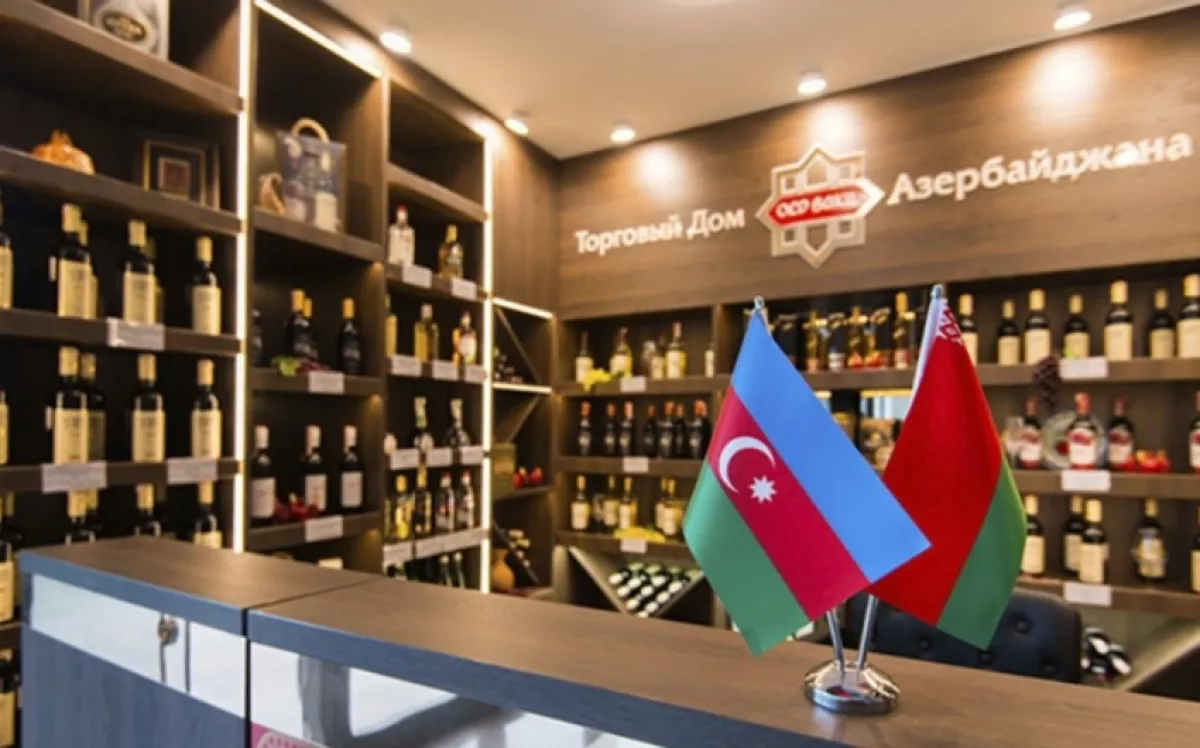
Another important objective was identified as the diversification of non-oil exports both structurally and geographically. Alongside Türkiye, Russia, Georgia, and the countries of Central Asia, Azerbaijani agro-industrial products are today being sold in the Middle East, Africa, and China, while also actively expanding into the markets of Eastern and Southern Europe. At the same time, a wide range of financial incentives for exporters is being utilised to boost supplies abroad, along with mechanisms such as more than a dozen Azerbaijani trade and wine houses promoting the “Made in Azerbaijan” brand in Russia, Ukraine, Belarus, China, Latvia, Poland, the UAE, and other countries.
However, given the decline in global trade observed last year, as well as the recession risks forecast by the International Monetary Fund and the World Bank for the current year, Azerbaijan needs to intensify efforts to expand exports of non-resource goods. This is no easy task, as the government has set the goal of increasing total non-oil exports to $5.3 billion by 2027. Within the framework of this strategic objective, the country aims to increase non-oil exports by 1.8 times, expand non-oil GDP by 1.3 times, and raise the private sector’s share in gross domestic product to 88%.
Notably, since the outbreak of the conflict in the Persian Gulf during March–May of this year, global prices for mineral hydrocarbons and their derivatives — including fuel, petrochemical products, polymers, fertilisers, sulphur, and construction materials — have risen significantly, while shortages of certain commodity groups have emerged on world markets. This situation could contribute to growing external demand for Azerbaijani non-oil products, while at the same time increasing the country’s export revenues.
Judging by recent developments, Azerbaijan is already beginning to experience the positive side of these difficult global processes. According to the May “Export Review” published by the Center for Analysis of Economic Reforms and Communication (CAERC), the country’s non-oil exports (excluding non-monetary gold) reached $1.1 billion in January–April 2026, exceeding the figure for the same period last year by 13%.
The main commodity groups driving strong export growth traditionally include gold, hazelnuts, fresh fruit and vegetables and processed food products, cotton, electricity, petrochemical semi-finished products, fuel, and polymers. In particular, in January–March of this year, Azerbaijan exported gold worth $95.3 million, which is 46.2% higher than in the first quarter of the previous year.
Non-ferrous metals also demonstrated strong export performance. According to State Customs Committee data, 951 tonnes of copper and copper products were exported in the first quarter, worth $8.793 million, representing a 22.2% increase in value terms. It should be noted that global copper prices rose by 41% last year, and favourable external market conditions helped Azerbaijan increase its copper concentrate exports 27-fold, to a total value of $56.8 million. A comparable increase was also recorded in exports of aluminium and aluminium products, with growth rates reaching 32.2% in January–April 2026.
The first third of the current year was also highly productive for exporters of agricultural and processed agro-industrial goods. Total exports increased by 29.1%, reaching $417.3 million. In particular, sugar exports increased fourfold, cotton yarn by 2.3 times, animal fats and oils by 71%, cotton fibre by 49.9%, fruits and vegetables by 22.1%, tea by 12.1%, and alcoholic and non-alcoholic beverages by 9.4%.
Thus, in 2026 a significant increase in the share of non-oil goods in the overall export structure is expected, including positive dynamics in agricultural exports. This is supported by recent negotiations between Azerbaijan and Russia on the possibility of further increasing supplies of domestic agricultural products and simplifying export procedures.
At the same time, Azerbaijan is expanding both the range of goods and the geography of its agricultural exports. The country ranks second in the world in persimmon exports, is among the top five hazelnut exporters, and holds eleventh place in tomato exports. In recent years, the poultry sector has emerged as a new export driver for Azerbaijan. For the second consecutive year, exports of chicken meat and eggs have been carried out to Russia and China. In May 2026, egg exports to the United States began, while since April supplies (3.6 million eggs) have been established to Gulf countries. Export channels are also being developed to Afghanistan and African states, including The Gambia and Sierra Leone.
Overall, the main priority of agricultural reforms in Azerbaijan today is the strengthening of the processing of agricultural raw materials, with a key focus on external markets. “The main objective of agrarian sector development is the deepening of the value chain, and the primary direction here is processing: expanding the processing of meat, milk, fruits, vegetables, and grapes, as well as forming production and processing clusters, can directly contribute to the growth of export revenues,” said Deputy Minister of Economy Azer Bayramov at the 5th Agribusiness Development Forum during the Caspian Agro Week.
“Important elements of this work include the expansion of cold storage facilities and grain elevators, as well as the development of milk collection infrastructure. At the same time, the placement of such infrastructure should be planned taking into account the geography of production, logistics routes, and prospective export directions.”







 editor@caliber.az
 +994 55 444-88-98
 Азербайджан, Баку, ул. Низами, 203, Af Business House, 5-й этаж