










Drones and resignations Latvia between crisis and elections
In recent days, the focus of European media has shifted to developments in Latvia’s domestic political arena — the collapse of the governing coalition following the resignations of two key figures in the Baltic country’s government: Prime Minister Evika Siliņa and Defence Minister Andris Sprūds.
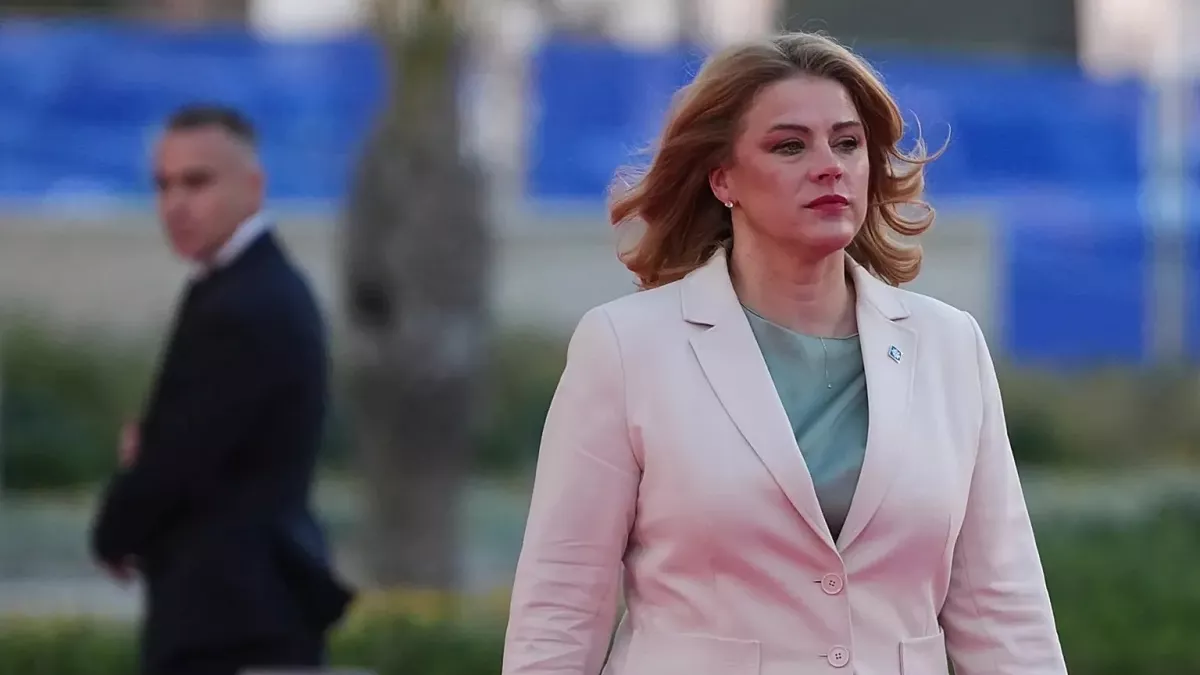
The reason behind the Latvian prime minister and head of the defence ministry stepping down was an incident involving drones. In particular, Siliņa concluded that the drone episode demonstrated the Ministry of Defence’s inability to fulfil its promise of ensuring secure airspace, and she demanded the minister’s resignation. Following this, she herself announced that she was leaving the prime minister’s office, describing the decision as difficult but fair.
“I am resigning, but I am not giving up and not leaving [politics],” she said, which was, in principle, predictable, since under Latvian law a minister, after resignation, automatically becomes a member of the Saeima from the party on whose list they were elected — in her case, “New Unity.”
Sprūds, in turn, stated that his decision was not related to a lack of trust in the defence establishment, but rather to a desire to protect the army and national security from political campaigning.
Thus, for a certain period, Latvia did not have a functioning government, and the country’s president, Edgars Rinkēvičs, acted as the main political moderator and arbiter, tasked with nominating a candidate for prime minister to form a new Cabinet. He also insisted that the new head of government should come from the opposition ranks.
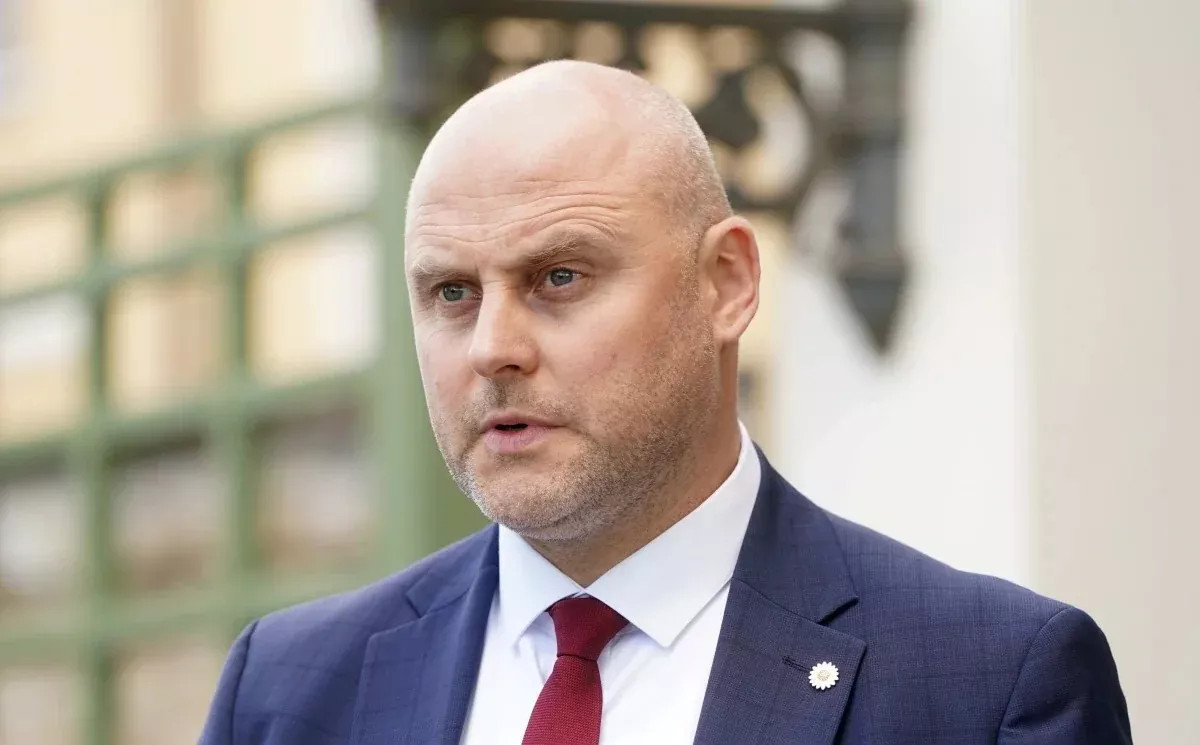
On 16 May, Rinkēvičs nominated conservative politician Andris Kulbergs for the post — a deputy of the 14th Saeima who had until recently been in opposition. At the same time, the nominee for prime minister is not a member of any political party, is highly active in parliament and on social media. His candidacy must be approved by the parliament.
Meanwhile, international experts do not rule out the possibility that, ahead of the parliamentary elections scheduled for October 3, the country may experience political instability, fuelled by the strengthening of populist parties, as well as the fact that a part of the Latvian electorate does not intend to participate in the vote or remains undecided due to distrust in the political elite.
This is reflected in a survey by the SKDS research centre, which confirmed the low rating of the “New Unity” party at 5.9%. At the same time, the “Progressives” recorded 6.9%, the “Union of Greens and Farmers” 4.7%, while the leading position with 8.9% is held by the right-wing populist opposition party “Latvia First”.
In other words, there is clear evidence of deep public dissatisfaction, driven by problems in the implementation of major infrastructure projects and a large-scale corruption scandal within the upper echelons of power: in May, the outgoing government faced a high-profile investigation related to abuse of office in the distribution of state subsidies, which further undermined public trust in the state apparatus.
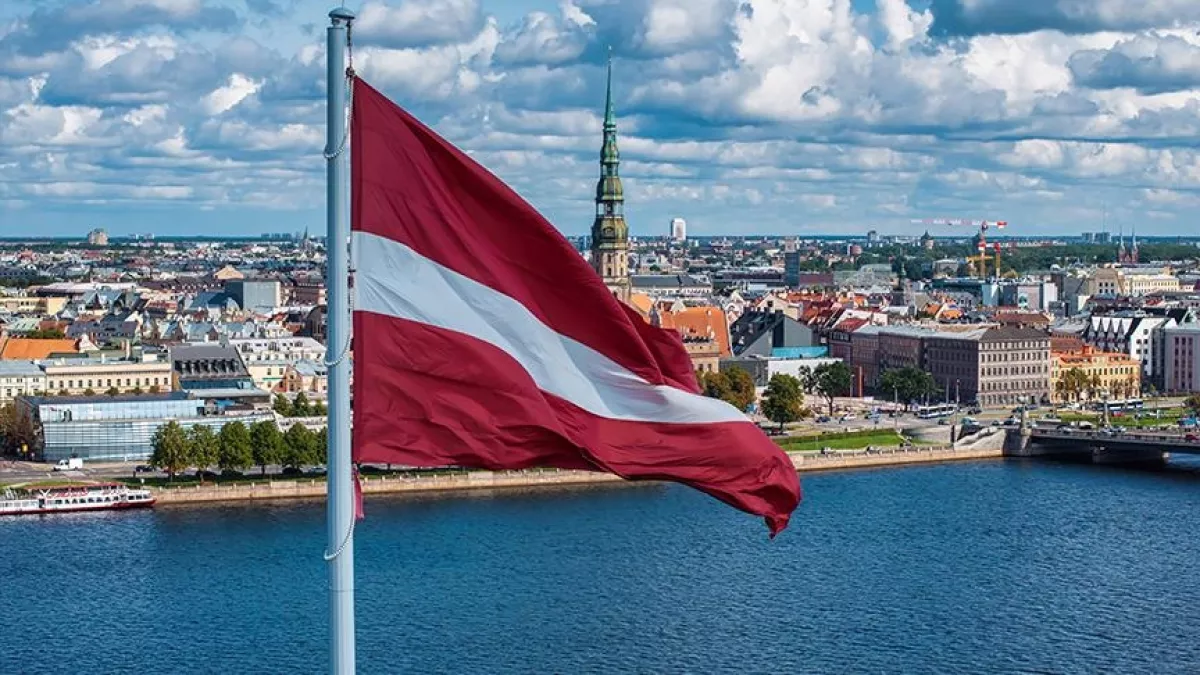
In addition, against the backdrop of steadily rising fuel prices in the European Union and bleak forecasts for food prices, economists do not rule out the possibility of additional economic difficulties in Latvia. Although the Latvian economy emerged from stagnation in 2023–2024, its growth remains extremely slow, and the country is lagging behind more dynamic EU states, including neighbouring Lithuania and Estonia.
On the other hand, the sharp reduction in trade with Russia has led to a reorientation towards Europe, the loss of certain markets, and increased dependence on supplies from the European Union. This has acted as a trigger for rising energy prices, which has also had a negative impact on Latvia’s economic situation.
Given these factors, analysts do not exclude that public discontent may lead to an increase in protest voting, a further fragmentation of parliament, difficult coalition negotiations, and even the victory of opposition parties in the upcoming elections — including those with pro-Russian orientations, although the chances of the latter entering a governing coalition remain very small in the current geopolitical context.
In sum, taking into account all the above-mentioned nuances, it can be concluded that public dissatisfaction in Latvia, driven by the economic situation, may lead to a strengthening of the opposition and the emergence of new players on the domestic political stage. However, regardless of the outcome of the parliamentary elections, Latvia’s foreign policy course is unlikely to change and will remain firmly oriented towards the European Union and NATO.







 editor@caliber.az
 +994 55 444-88-98
 Азербайджан, Баку, ул. Низами, 203, Af Business House, 5-й этаж