










Summits in Yerevan: Macron’s final song Analysis by Serhey Bohdan
On May 8, Armenian Prime Minister Pashinyan went on leave—to organise a resounding victory for his party in the June elections. He received a carte blanche for this from the Euro-liberal establishment, which staged a geopolitical show in Yerevan at the beginning of the week. Macron, “singing along” to Pashinyan’s tune, became a vivid symbol of the event, reflecting its essence. The EU and its allies intend to finally secure a new triumph after a series of setbacks, launching an expansion into a new region and opening a new front against Russia in the Caucasus. The Armenian foothold offers Europe questionable strategic advantages, yet the new ties may be used by revanchists to disrupt the peace process involving the United States and undermine efforts to advance EU connectivity eastward.
To appear, rather than to be
The week began with several controversial political events in the Armenian capital. Controversial, because despite loud statements and ambitious titles, there are reasons to question the validity of the declared ambitions of Euro-Atlantic leaders and the Armenian leadership.

First came the 8th summit of the European Political Community (EPC). This political format was created in 2022 by the French president as a platform for contacts, held roughly twice a year, between the EU and its partners. EPC summits are essentially one-day discussions with no major consequences for participants, although negotiations in smaller groups sometimes take place on the margins. This year, however, even this format appeared to be weakened.
For the first time, the German Chancellor declined to attend. This is not just a key figure in any European political context. The German Chancellor has chaired all EPC summits except two. However, at that time it was a different person—Olaf Scholz. The current Chancellor, Friedrich Merz, made no secret of his lack of interest in the Yerevan event. His spokesperson stated: “The Federal Chancellor is unable to travel due to other commitments... The Chancellor has participated in two EPC meetings and remains in active contact with many participants.”
Of course, Euro-liberal media glossed over the controversy and emphasised that the German Chancellor had delegated his vote to the French President. This, they claimed, demonstrated the strength of the “Franco-German tandem” within the EU. However, this is misleading—EPC summits never adopt political decisions, at least not formally.
Moreover, even German establishment media pointed out rather pointedly that there was no question of “being busy” in this case—the only item in Merz’s official schedule during the summit days was a party presidium meeting in Berlin.
And it is not only the vague format that matters. The summit also created a difficult dilemma for participants regarding relations with the leading country of the collective West—the United States. For the first time, a non-European participant attended the EPC: Canadian Prime Minister Mark Carney. Paris thus decided to raise the temperature of its tensions with the American president, as the Canadian leader is known for his disputes with Trump. The French establishment media stated directly: “By inviting Canada, this initiative, originally created on a geographical basis, has acquired an anti-Trump tone.”
In addition, in Yerevan Macron once again categorically refused to participate in US operations in the Persian Gulf: “We will not take part in any military operations, especially since their framework is not clear to me.”
Such a challenge to Washington looked rather piquant, combining a supposedly bold defiance with a simultaneous readiness to reconcile at any cost. Even the Euro-liberal press sighed that “the meeting [in Yerevan] is overshadowed by Trump’s latest statements on tariffs and the reduction of the US military presence in Europe.” NATO Secretary-General Mark Rutte announced in Yerevan that Europeans had “heeded” Trump’s message and stepped up preparations for a “new phase” of the war.
The EU challenges Trump in the South Caucasus
Following the EPC event in Yerevan, the first-ever EU–Armenia summit was held. Among its key topics were visa liberalisation rules and regional logistics routes, among others. However, the concrete aspects of the announced future projects raised questions.
As European Commission President Ursula von der Leyen stated after the meeting, Armenia, as one of the few countries, occupies a unique geographical position, linking key regions. “Your ‘Crossroads of Peace’ initiative has the potential to connect Europe with the South Caucasus and Central Asia, turning Armenia into a key transport hub. We are already ready to work on upgrading border crossing points once borders with neighboring countries are opened,” von der Leyen announced.
Armenia does indeed, unlike Azerbaijan and Georgia, occupy a unique geographical position. But this “uniqueness” consists in the fact that it can be easily bypassed and overflown on the way between all the aforementioned regions—a reality that has largely been the case since 1992 and will continue until Yerevan normalises its relations with its neighbours.
In the current international environment, any role Armenia might play in interregional communications depends entirely on its still largely theoretical cooperation with Azerbaijan, as well as with Georgia and Türkiye. However, the more interesting point is not this attempt to deny geographical reality. It points not so much to ignorance (which, of course, is not lacking among EU officials appointed through party patronage, such as Ursula), but rather to more intriguing intentions—namely, the use of the “Armenian card” for reshaping the region, as well as for broader global political manoeuvring.
The “Armenian battering ram” is once again in the hands of European politicians. For example, in the context of tensions between Europe and Washington, it is notable that von der Leyen is promoting Pashinyan’s “Crossroads of Peace” project, which remains purely on paper, and which appears to contradict the emerging Azerbaijan–US–Armenia framework on opening communications in the South Caucasus.
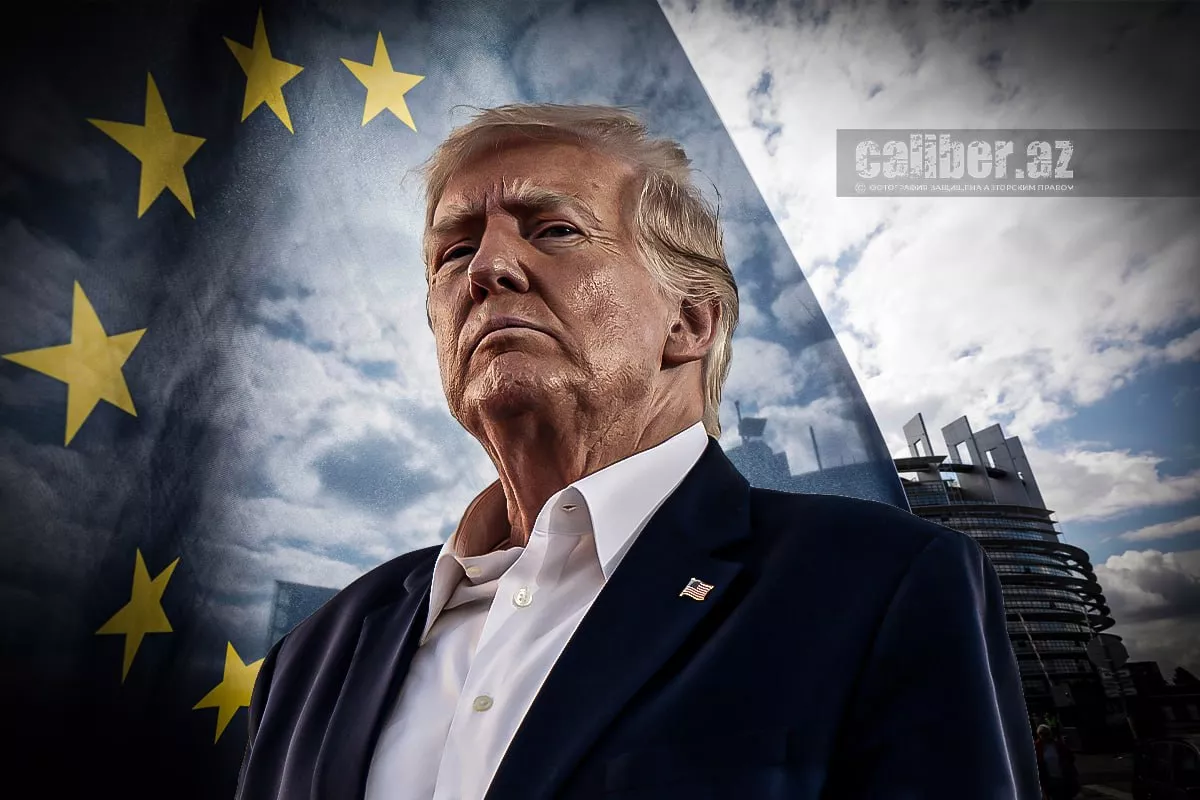
In effect, Ursula is signalling de facto sabotage of Trump’s policy. And this is being noticed across the Atlantic—Bloomberg wrote that “Armenia Summits Show Europe’s Caucasus Rivalry With Trump, Putin.”
Next, von der Leyen promised Pashinyan that the EU would support Armenia’s participation in the Trans-Caspian corridor. Here, the intentions hidden behind rhetoric about Armenia’s “unique geography” become even clearer: the Euro-bureaucracy appears to be seeking to tie the development of the Trans-Caspian International Transport Route (TITR), which has so far been built primarily through the efforts of Azerbaijan and Kazakhstan, to Armenia’s involvement in the project.
Such political manoeuvring, which in practice slows down the development of the Trans-Caspian corridor, reflects short-sightedness on the part of the EU leadership, which urgently needs to establish new routes into Asia bypassing Russia and Iran. The construction of such alternative routes has been an obvious necessity for the EU for at least a decade. Yet even now, due to the EU leadership’s inertia and its preference for ideologically driven criticism of Azerbaijan and Georgia rather than pragmatic cooperation, the development of the TITR remains at a minimal level.
Transport volumes on the route last year amounted to around 10 million tonnes—almost half of the volumes carried along the perpendicular North–South corridor, in which Russia and Iran are interested.
The next item in the head of the European Commission’s promises concerned energy. She praised the “development of solar energy” in Armenia and declared support for “projects to further boost your energy independence, specifically in view of the precious renewable resources.” This, however, sounded unconvincing against the backdrop of the European Union’s own policy shift, which is currently revising its approach to renewable energy development and returning to nuclear power.
She also recalled the €25 million allocated by the EU for the modernisation of Armenia’s electricity grids and energy storage systems in the South Caucasus. But how exactly this is supposed to help the Armenian leadership move away from Russian gas and nuclear power remains unclear.
In this regard, the US administration acted in a far more substantial manner: as part of the implementation of the “Trump Route” project, in February Vice President Vance announced the allocation of $9 billion to Armenia for nuclear energy development.
Of course, cooperation between Armenia and the EU in the fields of defence and security is also becoming increasingly visible. Von der Leyen did not provide new details, merely recalling that such cooperation already exists, while European Council President António Costa noted that the Armenian army is already receiving equipment from the European Peace Facility, which finances military procurement for the EU and its partners.
During the summit, an agreement on operational cooperation in border management was initialled. Given that the Armenian leadership once entrusted its borders to Russian control and is now seeking to involve EU actors in the same function, it raises the question of whether the Armenian government is fundamentally capable of performing its basic state responsibilities without external patrons.
Macron in a hurry
All this creates an illusion of substantial EU support for Armenia and the possibility for Yerevan to delay the peace process or reinterpret agreements reached with Azerbaijan under US mediation. But what has Armenia actually received in reality?
According to von der Leyen, the EU has been implementing a €270 million resilience and growth plan in Armenia for two years now (a budget comparable to that of a small German city), with a strategic partnership programme added in December. It is expected that by 2027 this will attract up to €2.5 billion in investment into Armenia.
This is not a particularly large sum, but what is more interesting is the context: Armenian data show a significant decline in investment volumes during the very period von der Leyen refers to. What the final outcome will be therefore remains entirely unclear.
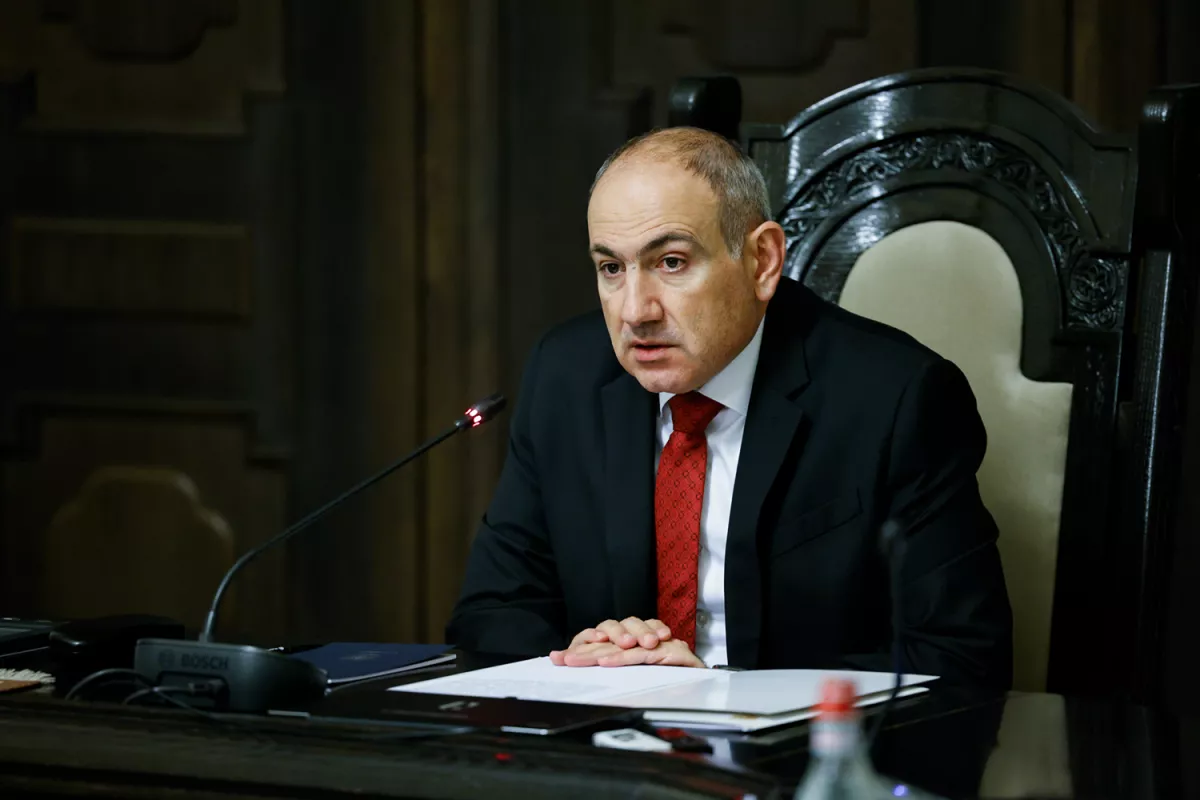
The main beneficiary of EU engagement, however, appears to be Pashinyan and his party. In full alignment with the European Commission, they are placing strong emphasis on the populist promise of visa-free travel to the EU for Armenians. Von der Leyen described this as a “ key vehicle to bring our people closer together” and stated that the first report on visa liberalisation is very positive.
In practice, however, visa-free travel, as experience shows, does not necessarily contribute to a country’s development or the well-being of its population; rather, it tends to accelerate the outflow of skilled labour.
But the issue is not limited to such populist promises. It is also noteworthy that Pashinyan requested technical assistance from the EU in monitoring “disinformation and hate speech on social media and sometimes in the press,” and received approval. Von der Leyen immediately stated that Armenia must “counter foreign information manipulation, hybrid threats and interference.”
It should be recalled that Pashinyan recently set a direct goal of preventing the opposition from entering parliament. In addition, the current Armenian leadership invited an EU mission to the country last year and is carrying out “institutional reforms” with its assistance, relying on an external partner to strengthen its own hold on power.
As can be seen, European support for the Armenian leadership appears contradictory. Many of these inconsistencies stem from the fact that relations with Armenia are not treated as an end in themselves by European politicians, but rather as instruments for other objectives or as ideological constructs.
Moreover, much of the recent contradictory developments becomes clearer if we recall that, on the European side, Armenia’s rapprochement with the EU is strongly associated with French President Macron. He does not conceal his antipathy toward the United States and Türkiye, as well as personally toward Trump and Erdoğan, and Armenia has increasingly become a platform for this broader geopolitical rivalry.
Macron also does not hide his ambitions to build a new security architecture on the ruins of NATO—a kind of “new Entente”—within which he has been actively developing ties in recent years, particularly with the United Kingdom and Poland.
It is precisely from this line of thinking that the declarations on strategic partnership signed by the United Kingdom and France with the Armenian leadership at the beginning of the week originate. The same political logic also underpins the large-scale The views expressed by guest columnists are their own and do not necessarily reflect the opinions of the editorial board. of the Armenian Defence Minister to Poland in the middle of the week, which served as yet another illustration of Polish ambitions—previously demonstrated in Warsaw’s attempts to play a leading role in the EU monitoring mission on the Armenian–Azerbaijani border in recent years.
However, the entire scheme of Euro-liberal support for Pashinyan is built on sand: time is working against such intrigues in the South Caucasus. To begin with, Macron is leaving the presidency next year. His approval rating fluctuates between 18 and 25 percent, which makes it reasonable to assume that France’s next president may hold very different views.
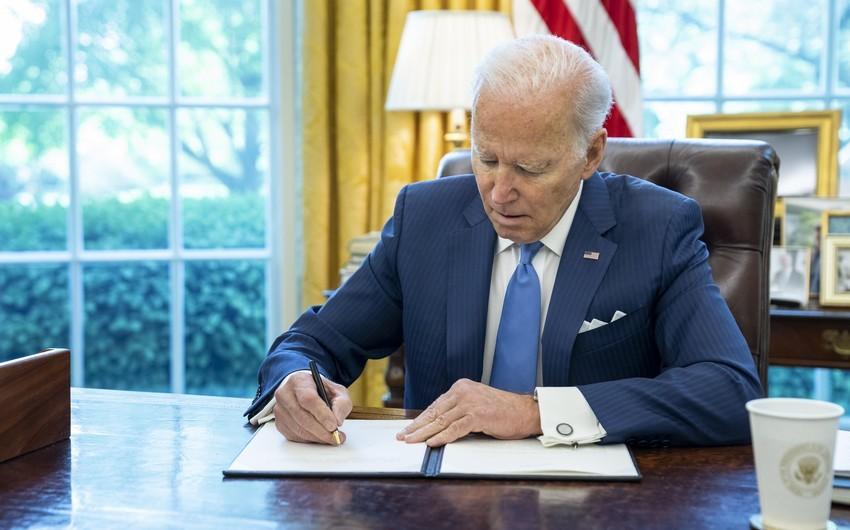
In this context, Armenia’s “strategic partnership” with France resembles the kind of agreement Pashinyan managed to sign with US President Biden shortly before the latter left office—an arrangement that, in practice, proved to be worth no more than the paper on which it was written.
Great-power illusions
The strategic partnership with the United Kingdom raises even more questions. This is an initiative of Prime Minister Starmer, acting at Macron’s instigation. Starmer’s Labour Party has just lost the local elections, recording its worst result in half a century and losing the vast majority of its seats to both left- and right-wing opposition forces. In the very near future, Starmer may be overthrown — his authority had already been undermined by a scandal involving his close associate Peter Mandelson in Jeffrey Epstein’s pedophile and cannibalistic orgies. What is the value of a foreign policy move made by such a government, especially one as radical as effectively joining the EU-driven challenge to the policy of the United States — Britain’s closest ally?
The third key player in this configuration, Poland, cannot continue its current line without the backing of Paris and London. Warsaw, of course, openly harbours ambitions of reviving its former imperial grandeur and often evokes the period when it was a major European power engaged in conflicts stretching from Moscow to the Ottoman frontier and the battles around Vienna.
At present, however, Poland’s military capabilities rely heavily on EU funding and loans (on Friday it received an additional €44 billion from Brussels for defence spending), as well as on efforts to maintain a close alliance with the United States. Yet EU financial resources are becoming increasingly strained, while current European initiatives in the South Caucasus are unlikely to be well received in Washington. As a result, Warsaw may soon face a difficult choice: align itself with the United States or with its European competitors. That said, as noted above, such a choice may become less relevant due to potential political changes in France and the United Kingdom.
As can be seen, instead of accelerating the peace process with Azerbaijan, Pashinyan has opted to continue political manoeuvring. Yet this game is largely confined to agreements with politicians of a departing political era. New political forces are emerging in Europe, likely to revise the commitments, ideological frameworks, and policy schemes of previous leaders.
In some cases, these new forces have already come to power, contributing to a more pragmatic approach in international relations. This is particularly evident in the case of Giorgia Meloni, who has distanced herself from Macron’s anti-American line and, following her visit to Armenia, also travelled to Baku.

This indicates that more pragmatic forces do exist within Europe and are gradually gaining influence. Accordingly, European policy in the South Caucasus may also evolve. The states of the region should make it clear to the European Union that this evolution must involve abandoning a separate track of EU integration for Armenia, which risks encouraging renewed revanchist tendencies in a liberal-nationalist guise.
Moreover, it should be based on a more comprehensive form of engagement between the EU and all countries of the region, grounded in the principles of non-interference in internal affairs and the rejection of ideological dogmatism. Otherwise, the South Caucasus may face the same destabilising consequences associated with “European integration” seen in other regions such as Eastern Europe—where externally supported nationalist dynamics have re-emerged, regional economic ties have been weakened, and the region has increasingly become an arena for competition among major global powers.
The South Caucasus, however, has the capacity to avoid such outcomes. Regional cooperation—illustrated by the interaction between Azerbaijan, Georgia, and Türkiye—provides a stabilising framework that helps counteract such disruptive trends.







 editor@caliber.az
 +994 55 444-88-98
 Азербайджан, Баку, ул. Низами, 203, Af Business House, 5-й этаж