










Karabakh rebuilt: a blueprint for 21st-century urbanism Overview by Khazar Akhundov
In recent years, Azerbaijan has significantly accelerated its digital transformation across urban planning, city development, and utilities management. Internet of Things (IoT) technologies are being integrated into residential and office buildings, while “green” energy modules are being piloted in settlements. At the same time, energy-efficiency systems and other innovative solutions are being introduced on a broader scale.
These technologies are being most actively implemented in the reconstructed settlements of Karabakh and East Zangezur, where advanced digital solutions are serving as testing grounds for emerging “smart” cities and villages. Azerbaijan’s experience in this field, alongside global urban development trends, was discussed during the sessions of the World Urban Forum (WUF13), held in Baku from 17 to 22 May, which brought together more than 40,000 participants from 182 countries.
According to UN projections, by 2050, 67% of the world’s population—over 6.3 billion people—will live in urban areas. Today, many of the world’s megacities are already overpopulated, while municipal systems built on analogue-era infrastructure are increasingly unable to ensure security, address environmental challenges, or efficiently manage transport and utilities.
To overcome these constraints, leading countries are adopting infrastructure management models based on digital technologies, artificial intelligence (AI), and Big Data—commonly referred to as the “Smart City” and “Smart Village” approach.

The main goal of this concept is to improve the quality of life and make transport, environmental conditions, safety, and urban services more efficient and convenient for people. To achieve these objectives, automated data collection systems are increasingly being used, along with various IT solutions for managing municipal services through sensors, telemetry systems, and video surveillance integrated in real time into a unified urban management network.
Digital systems control transport infrastructure, including traffic forecasting, adjusting the operation of “smart” traffic lights, and even monitoring bus drivers’ fatigue levels. Sensors and real-time video monitoring systems help regulate virtually all urban infrastructure—from street lighting systems and the operation of substations during peak hours to water supply, sewage, waste collection, emergency medical services, and hospitals, as well as monitoring air, water, and soil quality, and even controlling street crime.
In turn, within the Smart City concept, the number of “smart” homes and offices is rapidly growing, based on interconnected IoT (Internet of Things) devices that exchange data with one another. The concept of IoT includes all autonomous devices connected to the global network and remotely controlled via the internet, such as vehicles, kitchen and household appliances, “smart” sockets, lighting systems, surveillance cameras, and security systems.
According to Ericsson, a leading telecommunications equipment manufacturer, by 2028, there will be around 9.2 billion active devices connected to mobile networks worldwide, of which 55% will be 5G connections.
At the initiative of Azerbaijani President Ilham Aliyev, a decision was made in 2019 to deploy a full-scale Smart City system in Baku. In the following years, it was planned to implement individual elements of this system in Ganja, Sumgayit, Shamakhi, and other cities across the country.
Today, Azerbaijan is moving towards integrating artificial intelligence capabilities into urban and regional development frameworks in order to create smarter, safer, and more adaptive ecosystems, said Samir Mammadov, Deputy Minister of Digital Development and Transport of the Republic of Azerbaijan and a participant of WUF13. According to him, 100% coverage with fixed broadband internet, with an average speed of 95 megabits per second, “is a powerful factor” in the development of the country’s digital infrastructure.
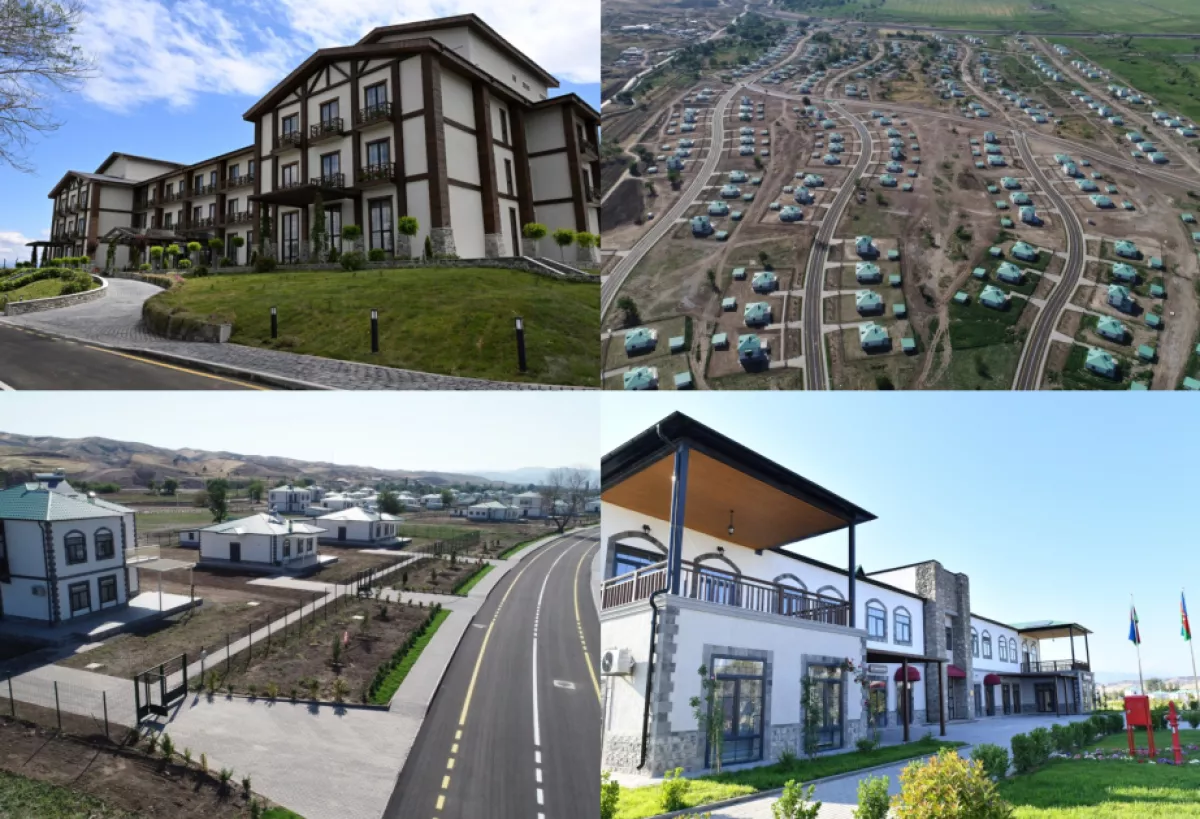
Plans for the digitalisation of the urban environment gained new momentum after Azerbaijan’s Victory in the Patriotic War, and since then, the focus of programmes in this field has been directed toward creating “smart” settlements in the territories of the country liberated from occupation. Large-scale reconstruction work in the Karabakh region is being carried out using the most advanced urban planning methods, with the basic principle defined as the development of energy-efficient cities and villages through the application of modern “green” and digital solutions in the management of utilities, public transport, and the housing sector.
Achievements in this area were also discussed during the ongoing WUF13 forum in Baku, on the sidelines of which Azerbaijani President Ilham Aliyev gave an interview to Euronews. “I think that we have so far elaborated a unique experience in how to build cities and villages from scratch. It was unfortunately due to the large-scale devastation of the occupied territories, so we had to do it. So the step-by-step approach, and in some cases a parallel track on development, led to the fact that in five years' time we already have 85,000 people returned,” the head of state told Euronews. “The city plans, 'smart cities', 'smart village' concept, plan for every village, all that is being done. So this really, for those countries which suffered similar problems like we did, could be a pattern for reconstruction.”
The territories of the country liberated from occupation are today viewed as experimental platforms where new approaches are being tested—digital planning and management of utilities, public transport and the housing sector, as well as energy-efficient construction and the introduction of renewable energy sources (RES) into settlements.
As an example of this work, the forum highlighted the development of “smart” settlements in the villages of Aghali and Mammadbeyli in the Zangilan district, Dovletyarli in the Fuzuli district, and the city of Khojaly, where the Smart City and Smart Village concepts are being most actively implemented.
Within the framework of “smart village” projects, solar panels are being widely introduced, other renewable energy infrastructure is being developed, and digital irrigation management systems and crop cultivation areas are being created. Drones are being used to monitor harvests and support land fertilisation processes.
These projects will also include the establishment of computerised farms and processing facilities, including for the development of aquaculture and poultry farming.
“The smart village projects are expanding along the Horadiz–Aghband highway: they have already been implemented in the villages of Aghali and Horovlu, and the construction of such villages is ongoing,” said Vahid Hajiyev, Special Representative of the President in the Jabrayil, Gubadli, and Zangilan districts.
“One of the systems we are currently introducing is a smart management system: a geographic information system (GIS) platform that integrates the master plans of the villages,” he noted.
The special representative emphasised that the system unites all newly created settlements into a single platform, enabling more efficient planning, construction, and territorial management. “Virtually all land plots, buildings, roads, utilities, as well as energy, gas, water, and communication lines are all mapped and visualised within this system,” he said.
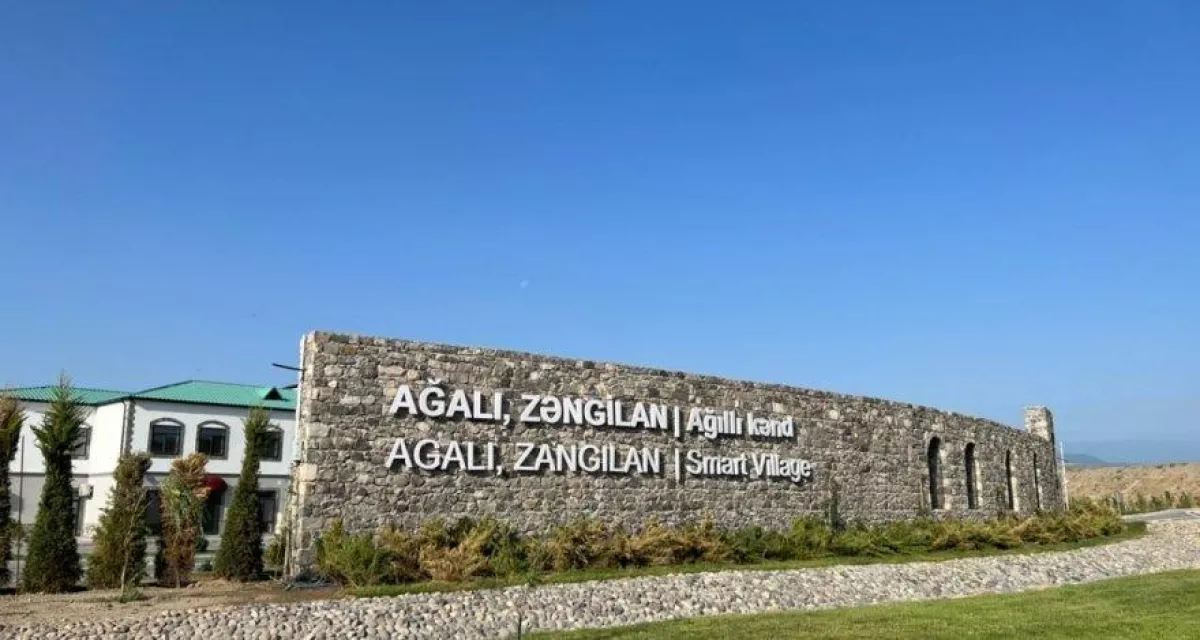
Overall, within urban development processes in Karabakh, elements of digitalisation in the utilities sector and waste management are being introduced on a large scale for the first time in the post-Soviet space, alongside the use of “green” energy generation.
Within the framework of the “15-minute city” model and the “green city” approach, Smart technologies are being actively implemented in the reconstructed cities of Karabakh—Shusha, Khankendi, Khojaly, Aghdam, and Lachin—in fire safety systems and disaster early-warning mechanisms. Integrated urban transport control centres are being created, featuring “smart” parking systems, bus stops, and related infrastructure.
In residential construction, environmentally friendly materials are widely used, and IoT technologies are being introduced on a large scale. Renewable energy sources (RES) are seen as a key component of powering settlements in Karabakh. Today, the most efficient electricity distribution system has been established in the city of Shusha, where LED lighting systems (3 and 5 kV) are used, solar panels are being widely installed on building rooftops, and bidirectional electricity meters are being deployed, among other innovations.
“Today, nine new ‘smart’ cities are being formed in Karabakh and East Zangezur: through green energy, digital innovations, and human-centred urban planning, we are rethinking how communities can live, work, learn, and develop,” said Indira Hajiyeva, Deputy Minister of Youth and Sports of Azerbaijan, at the WUF13 forum.
It is noteworthy that Azerbaijan is ready to share with the international community the experience accumulated over more than five years of implementing Smart City and Smart Village projects, offering an innovative urban development model being realised in Karabakh and East Zangezur.
“For the return of the population to the liberated territories, a new urbanisation model is being formed: the projects apply approaches based on renewable energy and zero-emission targets, digital governance, and human-centred urban planning,” said Samad Bashirli, Deputy Minister of Economy of Azerbaijan, during the forum. “Azerbaijan is ready to share the model of reconstruction of the Karabakh region with the countries of the United Nations Special Programme for the Economies of Central Asia (SPECA).”







 editor@caliber.az
 +994 55 444-88-98
 Азербайджан, Баку, ул. Низами, 203, Af Business House, 5-й этаж