










The line of trust: what defines Israel–Egypt relations? Analysis by Artem Kirpichenok
In recent months, Israeli media outlets have increasingly debated the future of Israeli–Egyptian relations. The discussions were triggered by Egyptian military exercises conducted in the northeastern Sinai Peninsula in April 2026. Although the manoeuvres had been coordinated in advance, their execution once again brought underlying disagreements between the two countries into focus.
The Egyptian dimension is too often overshadowed by the constant stream of developments elsewhere in the Middle East. Yet Egypt, with a population of 120 million, is the most populous country in both the Middle East and the wider Mediterranean region. It possesses a large standing army, as well as powerful air and naval forces. At the same time, the government of Abdel Fattah el-Sisi is regarded as an important partner in the fight against radical Islamism and a key ally of the United States.
Moreover, Egypt is Israel’s most important neighbour, and Israeli experts believe that policy towards Cairo should be built upon a carefully calibrated strategy focused on areas of convergence and shared interests. At the same time, Israel must take into account Egypt’s military capabilities on land, at sea, and in the air, while maintaining its own deterrence capacity. A particularly important role in this process is assigned to the intelligence community, which, even on the basis of open-source information, can develop a fairly accurate picture of Egypt’s economic conditions, prevailing political sentiments, and ideological trends within Egyptian society.
From a regional political perspective, Israel views President el-Sisi’s visit to the United Arab Emirates in May as a significant positive signal. The UAE’s position aligns with Israel’s approach on many key issues. Israeli analysts also note that Israel and Egypt may find common ground in efforts to counter Hamas.
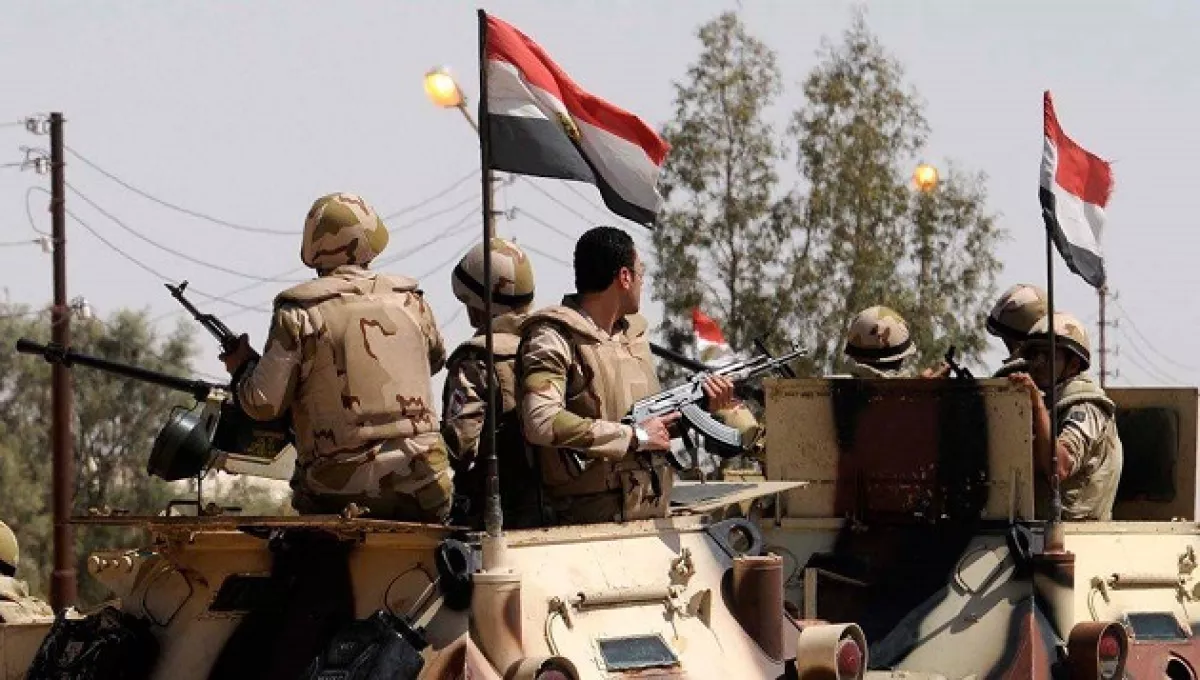
In the context of the recent military exercises, it is worth noting that Israel remains concerned that Egypt’s military presence in the Sinai Peninsula exceeds the limits established by the 1979 peace treaty. At the same time, the build-up of forces in Zone B has generally taken place with Israel’s knowledge and in coordination with Israeli authorities. In the past, Israel also provided direct assistance to Egyptian forces conducting counterterrorism operations. For its part, Cairo justifies the increased military presence by citing the need to combat terrorist organisations, primarily ISIS, whose Sinai-based affiliate, Wilayat Sinai, operates mainly in the northern part of the peninsula.
Another issue that raises concerns in Israel is the construction of infrastructure across the Sinai Peninsula that would enable the Egyptian Air Force to relocate to more distant bases in the event of an emergency. In addition, the region’s road network is being rapidly expanded. Israeli officials also argue that the organisation and deployment of Egyptian units stationed on the peninsula appear to be better suited for operations against conventional military forces than for counterterrorism missions.
Particular attention is being paid to Egypt’s large-scale military modernisation programme, under which Cairo has been actively procuring military equipment from a range of geopolitical players, including Germany, France, China, and Russia. The new weaponry is being used to equip the country’s 12 regular army divisions, whose core striking force consists of American-made Abrams tanks.
As for the issues that continue to generate political disagreements between the two countries, one of the most significant is Egypt’s increasingly limited role in many of the Middle East’s diplomatic processes in recent years. Egyptian authorities are particularly concerned that Cairo’s traditional position as a mediator between Israel and the Gaza Strip is being supplanted by other actors, with all the consequences that this entails. This is especially noteworthy given that during Operation Protective Edge in 2014, Israel insisted that Egypt serve as the sole and principal mediator.
On the other hand, one of the key areas of convergence between the two countries lies in their shared economic interests. In December 2025, Israel and Egypt approved a long-term gas agreement worth $35 billion, reinforcing their mutual interest in stability in the Eastern Mediterranean. It is particularly important to note that the deal was concluded in the midst of the war in the Gaza Strip and despite commercial reservations in Israel as well as negative public opinion in Egypt.
In addition, the Egyptian government continues to act as a political and ideological counterweight to Iranian influence in the region. This is indirectly evidenced by Egypt’s decision to deploy Rafale fighter jets to the United Arab Emirates to help protect its airspace at a time when Israeli air defence systems were also deployed there. In other words, Egyptian and Israeli armed forces found themselves “in the same trench”, effectively acting as partners against Iran.
Summarising the analysis of the current state of Israel–Egypt relations, experts at the Jerusalem Institute for Strategic Studies emphasise that Israeli media should tone down confrontational rhetoric toward Egypt and avoid exaggerating the likelihood of a deterioration in bilateral ties. Such narratives, they argue, could easily generate suspicion in Cairo and mutual tensions at precisely a moment when opportunities are emerging to find common ground on many issues on the Middle Eastern political agenda.







 editor@caliber.az
 +994 55 444-88-98
 Азербайджан, Баку, ул. Низами, 203, Af Business House, 5-й этаж