










Baku and Tashkent redraw Eurasia’s geopolitical map Analysis by Teymur Atayev
Statements by Azerbaijani President Ilham Aliyev are distinguished by their precision and carefully calibrated wording, each of which, as a rule, fits into a broader strategic picture. In this context, particular attention should be paid to his characterisation of Central Asia and Azerbaijan as a single geopolitical and geo-economic space, made during his visit to Uzbekistan. This approach brings to the fore the role of Baku and Tashkent, whose close cooperation could become one of the key factors in the region’s further integration and development.
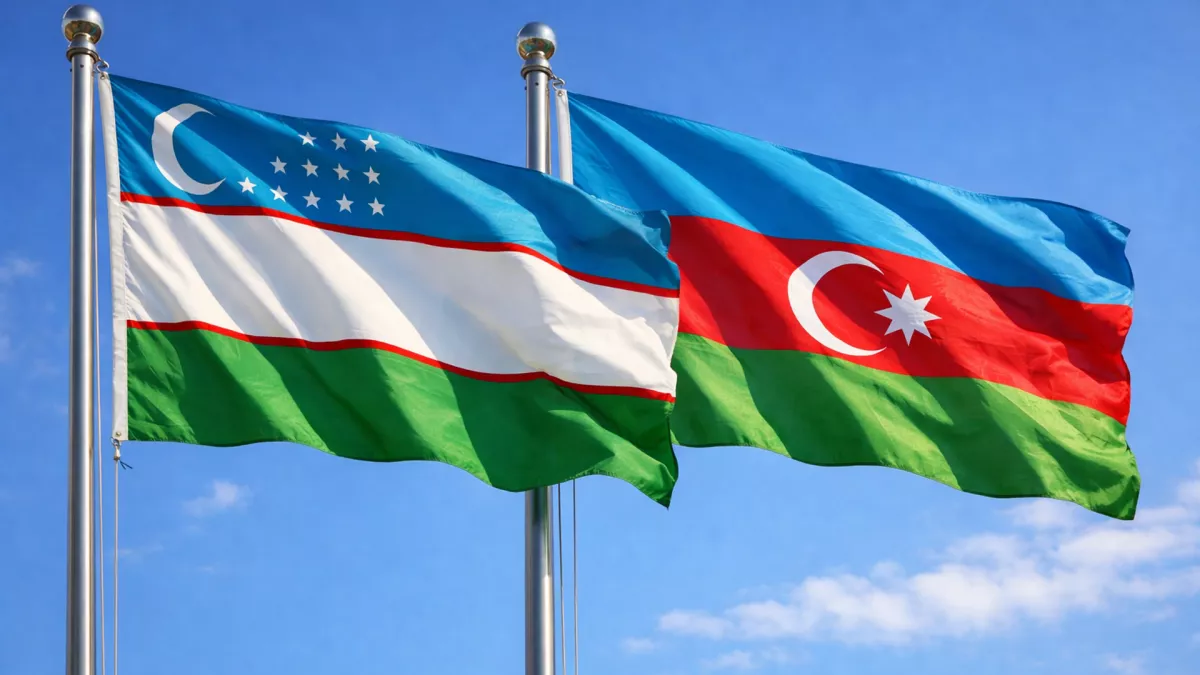
The position voiced by the head of state is well known to the international community. However, the very fact that it was articulated during the visit to Tashkent convincingly demonstrates a significant shift in the geopolitical configuration—not only in the context of our region but also across the Eurasian space as a whole. This, in turn, points to important contours of the new world order taking shape before our eyes.
This is precisely what President Ilham Aliyev said back in 2022 at an international forum in Cernobbio, Italy, noting that the world would never be the same again. At the same time, he said, the direction of global change would depend on the balance of power emerging in the world.
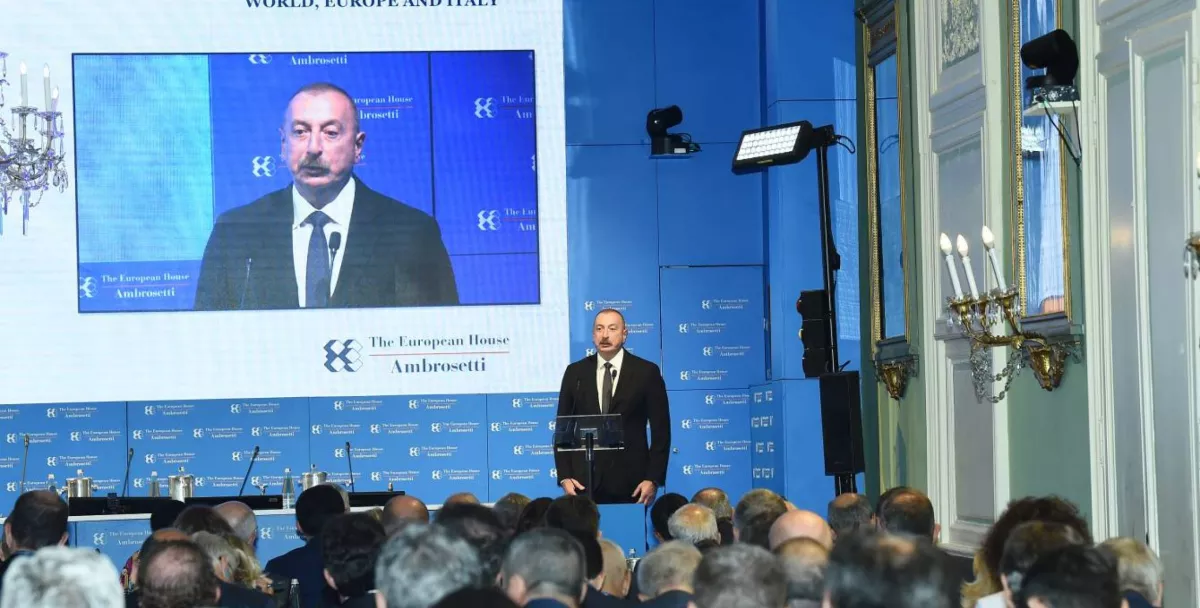
Taking into account the impact of the new global order on our region, the issue of protecting Azerbaijan from external factors is becoming particularly relevant. At the same time, President Ilham Aliyev stressed that Baku is confidently monitoring developments and will take the necessary steps in line with its strategy.
As the world has repeatedly seen, in Azerbaijan’s case, words are followed by action. Baku is consistently shaping its foreign policy in accordance with global development trends—across all areas.
Identifying the protection of the country’s national interests as the fundamental factor of Azerbaijan’s foreign policy, the head of state stressed that achieving this goal is impossible in isolation from the regional and global context. In other words, the situation must be viewed through the prism of your neighbour and interconnectedness.
This approach, in particular, is contributing to Azerbaijan’s emergence as an influential transit power. That is why, in recent years, Baku has consistently demonstrated that Azerbaijan is a reliable partner.
At the same time, the context of interconnectedness today extends far beyond the South Caucasus, Central Asia, and Europe. Baku is increasingly emerging as the point where these directions intersect, consistently making use of its geography for the benefit of the country.
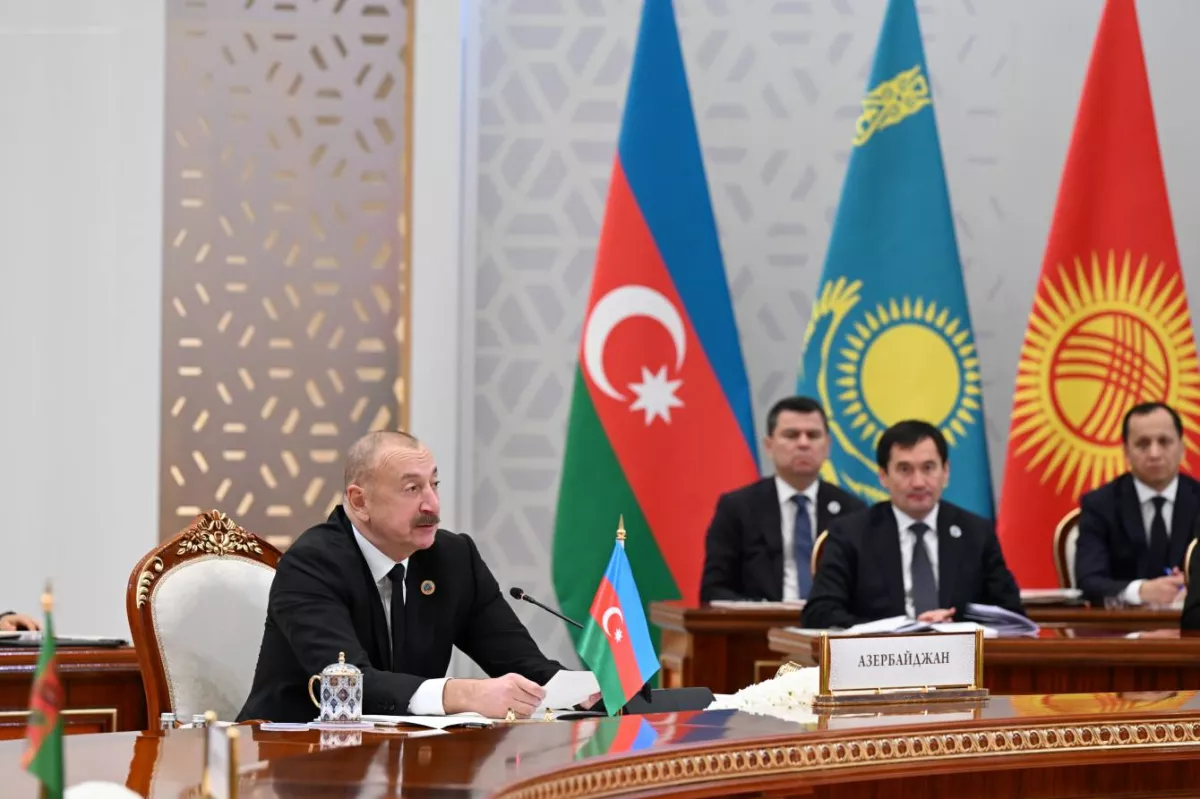
Last year, President Ilham Aliyev emphasised that although Baku is located in the South Caucasus, thanks to active engagement with the countries of Central Asia, Azerbaijan and Central Asia have effectively become a single geopolitical and geo-economic region, whose importance in the world is steadily growing.
Moreover, the countries comprising this area are developing common approaches to addressing global and regional issues.
In this context, particular importance is attached to the prospects of the Organisation of Turkic States (OTS) and the Consultative Meeting of the Heads of State of Central Asia, of which Azerbaijan is a full-fledged participant.
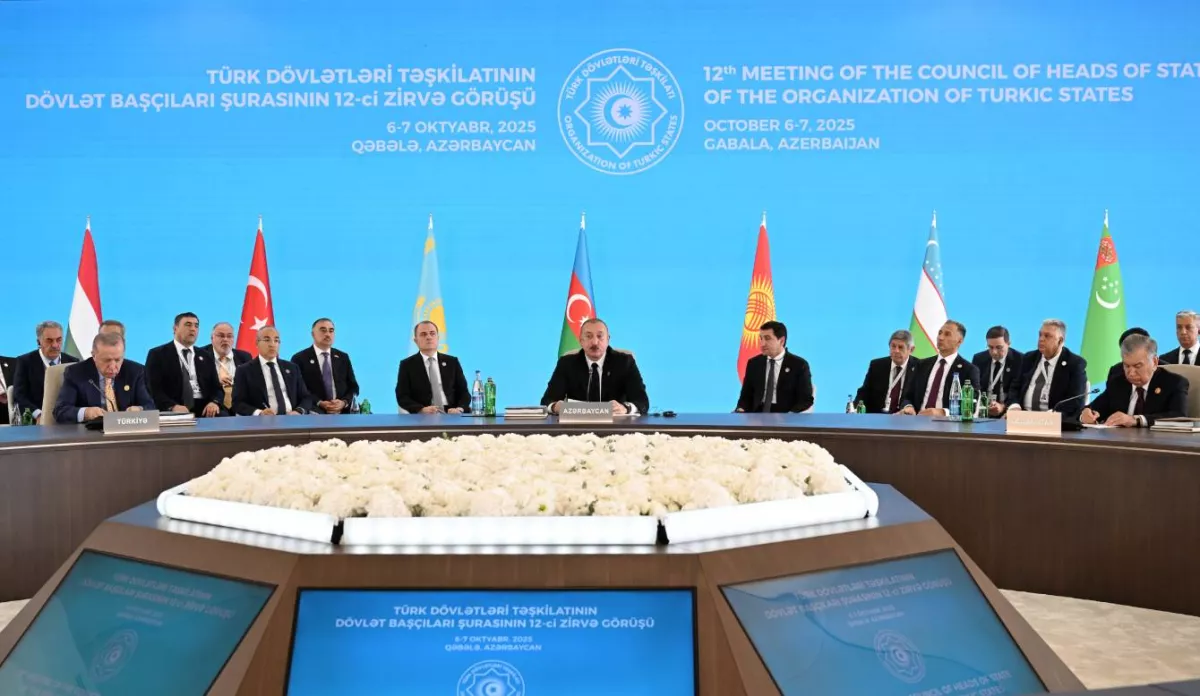
In this regard, the head of state emphasised that domestic political and economic stability, a strategically important geopolitical position, positive demographic trends and a young population, significant potential in the transport and logistics sector, natural resources, as well as growing capabilities in the military and military-technical fields, make the OTS an important actor on the global stage.
This summer, President Ilham Aliyev also noted that, as a proponent of a just world order and the creation of safe conditions for humanity, Azerbaijan is working to ensure that not only the region but Eurasia as a whole becomes a reliable space for cooperation.
The decisive steps being taken jointly with friendly and brotherly countries are particularly important from the perspective of international cooperation, contributing to the transformation of the OTS into one of the influential geopolitical centres of the 21st century.
Thus, the individual outcomes of President Ilham Aliyev’s state visit to Uzbekistan clearly demonstrate the growing importance of the unified Central Asia–Azerbaijan space amid a fragmenting world. The steps being taken within the framework of the OTS and the C6 format demonstrate the potential of regionalisation on the path toward a new world order, including in terms of ensuring peace, stability, and security across this space—not by relying on external support, but primarily through the unity of positions and aspirations among the countries participating in these associations.
As noted several days ago in an article published by Foreign Affairs, at a time when instability is becoming the norm of modern life, the old order is gradually giving way to a new way of the world functioning amid fragmentation and strangulation. On the path toward the formation of a new world order, the author argues, the most successful leaders will be those “who take their fate into their own hands instead of waiting for a new set of rules to rescue them.”
The steps being taken by Azerbaijan and its brotherly countries in this direction suggest that the unified Central Asia–Azerbaijan space is capable of playing a prominent role in the emerging geopolitical configuration.







 editor@caliber.az
 +994 55 444-88-98
 Азербайджан, Баку, ул. Низами, 203, Af Business House, 5-й этаж