










Le Pen and other voices at the political extremes France’s 2027 election takes shape
The presidential race in France is gradually taking shape in ways that seemed unlikely until recently. After Macron’s two terms in office, his centrist project is losing ground, while right- and left-wing populists are emerging as the main beneficiaries of the political divide.
The latest poll by Toluna Harris Interactive for RTL and M6 shows Marine Le Pen receiving 35–38% in the first round, while her closest rival, Jean-Luc Mélenchon, is polling at 16–17%. Mélenchon is ahead of the centrist candidates and former prime ministers from the current president’s camp — Édouard Philippe (14%) and Gabriel Attal (8%).
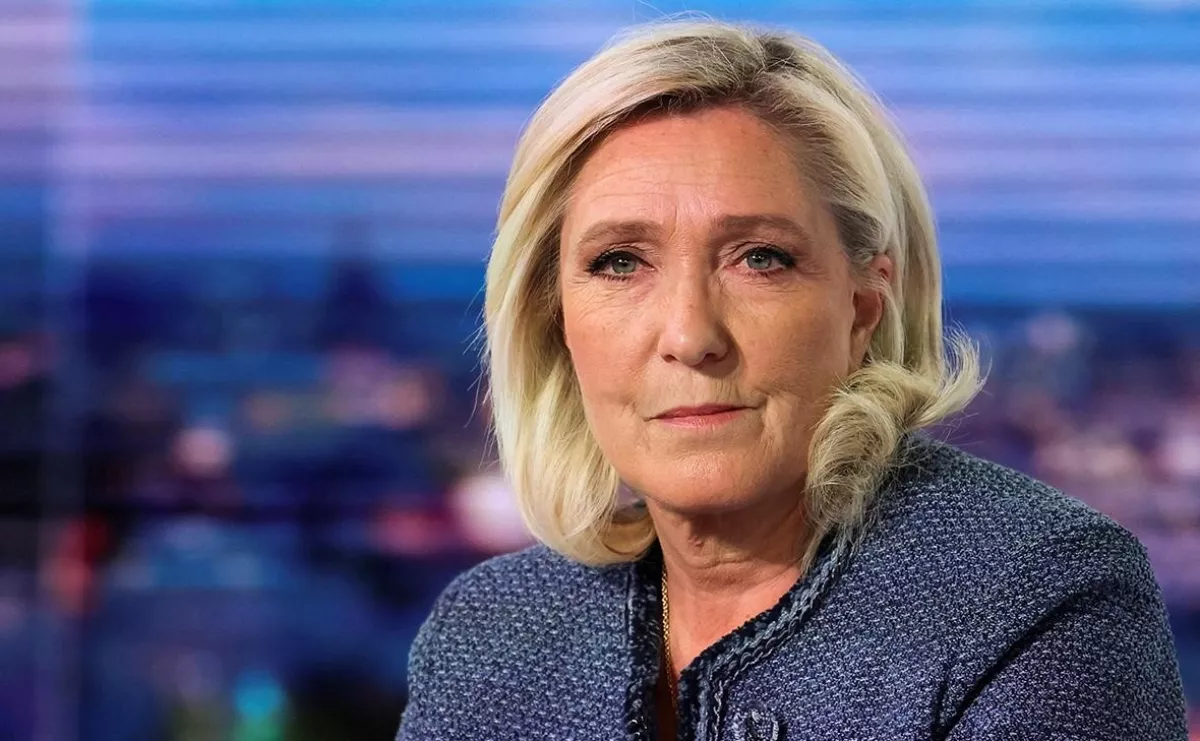
Le Pen, who can once again run in the election following an appeals court ruling, represents the National Rally, a nationalist right-wing force that has focused on restricting migration, strengthening national sovereignty, and reassessing France’s relations with the EU and NATO.
Her main potential rival has unexpectedly emerged from the opposite end of the political spectrum. Mélenchon, the leader of La France Insoumise (France Unbowed), advocates a radical left-wing socio-economic program, a stronger role for the state, and a more independent foreign policy. He has consistently criticised NATO and supports France’s withdrawal from the alliance.
That is why a potential Le Pen–Mélenchon showdown in the final round has become the defining symbol of France’s current polarisation: the French political centre risks failing to make it to the second round at all.
Against this backdrop, the task for the centrists is to find a candidate capable of stopping both. The strongest contender so far is Édouard Philippe, Macron’s former prime minister and leader of the centre-right Horizons party, who advocates a market economy, a tough immigration policy, and maintaining France’s pro-European course.
Another representative of the Macronist camp is former Prime Minister Gabriel Attal, leader of Renaissance. He represents a more traditional liberal centre and is trying both to preserve Macron’s legacy and distance himself from it. However, as noted above, his rating is significantly lower than Philippe’s, apparently precisely because of this ambiguity.
On the left, there is also an attempt to offer an alternative to Mélenchon. Raphaël Glucksmann, leader of Place Publique, represents a social-democratic and pro-European platform, supports Ukraine, and advocates a more active role for France within the EU. On August 23, he officially announced his candidacy. His main challenge is the fragmentation of the left: the Socialists and other political forces are not yet prepared to give up their own candidates in his favour.

If we turn to the right-wing camp, besides Le Pen’s party, the main force is the traditional Republicans. Its leader, Bruno Retailleau, represents the conservative wing and advocates tough immigration and law-and-order policies. However, the Republicans’ ratings remain too low to realistically expect them to reach the second round.
Further to the right of the National Rally is Reconquête, led by the outspoken Éric Zemmour, whose platform is built around an anti-immigration and nationalist agenda. Unlike Le Pen, Zemmour deliberately avoids any compromise-oriented rhetoric and enjoys the support of only a small, marginal segment of the electorate.
Thus, Le Pen’s chances of winning have indeed increased significantly in the absence of a comparable challenger. The centre is divided, moderate left-wing forces have failed to reach an agreement, while Mélenchon is too polarising for moderate left-wing and centrist voters to rally around him.
According to the same Toluna Harris Interactive poll, in a hypothetical Le Pen–Mélenchon runoff, the right-wing candidate would win by a huge margin, 67% to 33%. However, history has repeatedly shown that election results can defy polling forecasts.
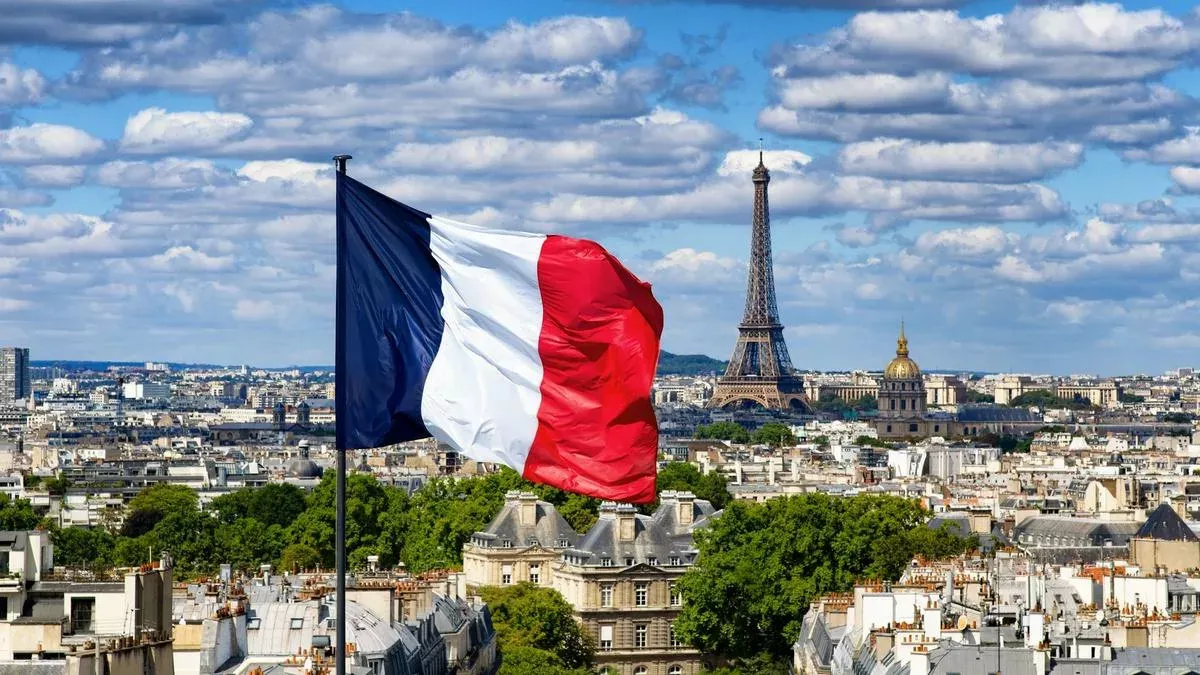
However, whatever the outcome, the consequences of France’s 2027 election will extend far beyond domestic politics. Both Le Pen and Mélenchon advocate a reassessment of the Fifth Republic’s role in NATO: Le Pen supports withdrawing from the alliance’s integrated military command, while Mélenchon favours full withdrawal from NATO.
This is particularly sensitive for the alliance at a time when the United States is reducing its military presence in Europe. France is the European Union’s only nuclear power and has an aircraft carrier, reconnaissance satellites, and large armed forces. As a result, the French election is becoming more than a contest for the Élysée Palace — it could become a potential turning point for Europe’s entire security architecture.







 editor@caliber.az
 +994 55 444-88-98
 Азербайджан, Баку, ул. Низами, 203, Af Business House, 5-й этаж