










Carpet and silk enter a new era: Azerbaijan reforms traditional industries Review by Khazar Akhundov
In recent years, Azerbaijan has been placing particular emphasis on reviving traditional industries with strong export potential, especially carpet weaving and silk production. A new step in this effort came with a decree signed by President Ilham Aliyev, titled “On Additional Measures to Develop Sericulture and Carpet Weaving, and Preserve and Promote Azerbaijan’s National Craft Heritage.”
Under the decree, the development of these sectors will be brought under unified management. As part of the reorganisation of Azərxalça OJSC, Azəripək OJSC will be incorporated into its structure.
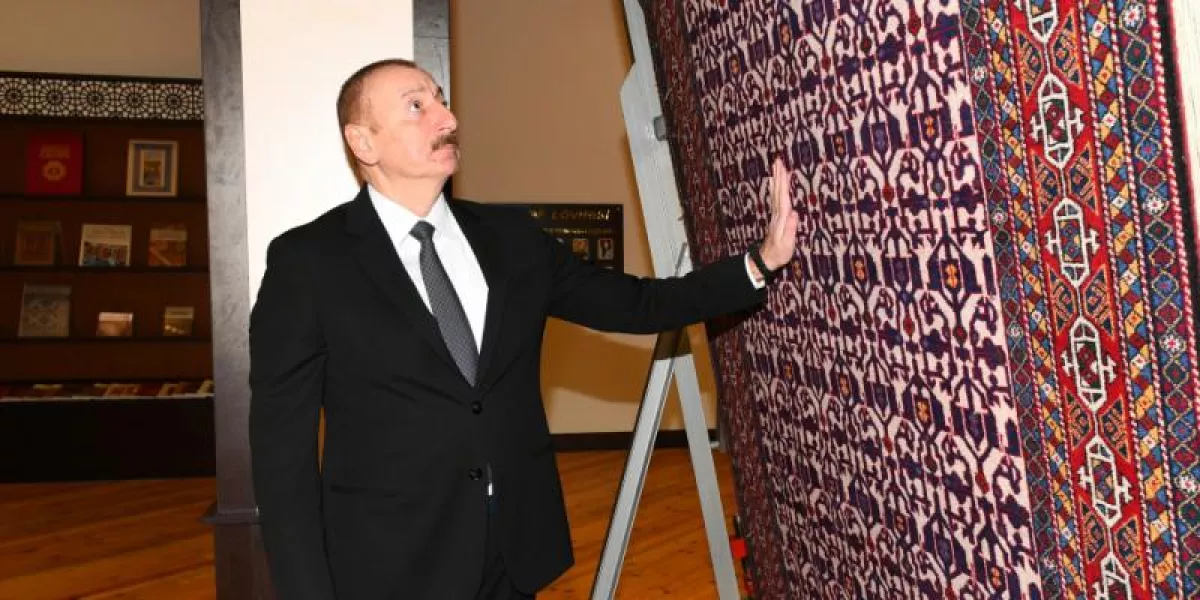
As noted in the preamble to the presidential decree, carpet weaving and sericulture are traditional crafts that hold an important place in the rich historical and cultural heritage of the Azerbaijani people. These sectors developed in close connection with agriculture and light industry.
The development of these industries makes a significant contribution to diversifying the non-oil and gas sector, increasing employment in the regions, expanding local production and export potential, and preserving and promoting the country’s national cultural heritage.
Ensuring the sustainable development of sericulture and carpet weaving requires improving management mechanisms, strengthening coordination at all stages of the production chain, and reinforcing the raw-material base.
At the same time, it is crucial to implement a comprehensive set of measures aimed at improving product quality, preserving and developing traditional crafts and weaving schools, expanding research and development activities, training professional specialists, and enhancing the competitiveness of locally produced goods in international markets.
To address these challenges, the decree provides for a number of measures. In particular, Azərxalça OJSC will be reorganised through the merger of Azəripək OJSC into it, while the Gakh District Silk Breeding Station, currently under the authority of the Ministry of Agriculture, will also be transferred to Azərxalça together with all of its assets.
In connection with these measures, the privatisation process for the state-owned shares of Azəripək will be suspended.
Under the decree, Azərxalça OJSC, as a commercial legal entity, will be responsible for ensuring the development, promotion and advancement of sericulture and carpet weaving in Azerbaijan; carrying out production, processing, sales and export activities in these sectors; developing the raw-material base; preserving the country’s national craft heritage; and coordinating activities in these areas through a unified management system.
To optimise and accelerate these processes, the Cabinet of Ministers and a number of ministries and government agencies have been given specific instructions.
Within three months, the new charter, organisational structure and authorised capital of the reorganised OJSC are to be approved. Within six months, work is expected to begin on expanding the domestic processing of raw silk cocoons produced in Azerbaijan, establishing a complete silk production chain, and increasing the output of high-value-added silk products.
The decree also outlines measures to promote the traditions of carpet weaving, silkworm breeding and sericulture both in Azerbaijan and abroad, develop product branding, and encourage exports.
Meanwhile, the Agricultural Subsidies Council has been instructed to review the amount of subsidies provided for raw silk cocoons produced in the country and delivered to procuring organisations, as well as the subsidies allocated for establishing mulberry plantations.
Deepening reforms in the carpet weaving and sericulture sectors is a timely and much-needed step. It is worth recalling that the industrialisation of traditional crafts began with the presidential decree of May 5, 2016, on the establishment of Azərxalça OJSC.
In February 2018, a four-year State Program for the Development and Protection of the Art of Carpet Weaving was adopted. As part of the program, a mechanism for providing tax incentives to handmade carpet producers was introduced, the procedure for obtaining certificates to export carpets from the country was simplified, and customs duties and other related fees were reduced.
Unfortunately, the industry’s stable development was hindered by a number of subjective factors. For example, in 2021, the Main Department for Combating Corruption under the Prosecutor General’s Office uncovered instances of inefficient management and numerous violations in the operations of the OJSC.
Over the following two to three years, extensive efforts were undertaken to rehabilitate and restructure the organisation. With the support of the Ministry of Economy, work also began to strengthen Azərxalça’s commercial potential in international markets, including the implementation of a new sector-specific roadmap.
Today, the OJSC’s strategy is focused on optimising production processes and increasing profitability by localising the raw-material base, particularly through domestic production of wool yarn and the establishment of local dyeing facilities.
In addition, negotiations are underway with various international designers to create contemporary designs based on the motifs and patterns of traditional Azerbaijani carpets.
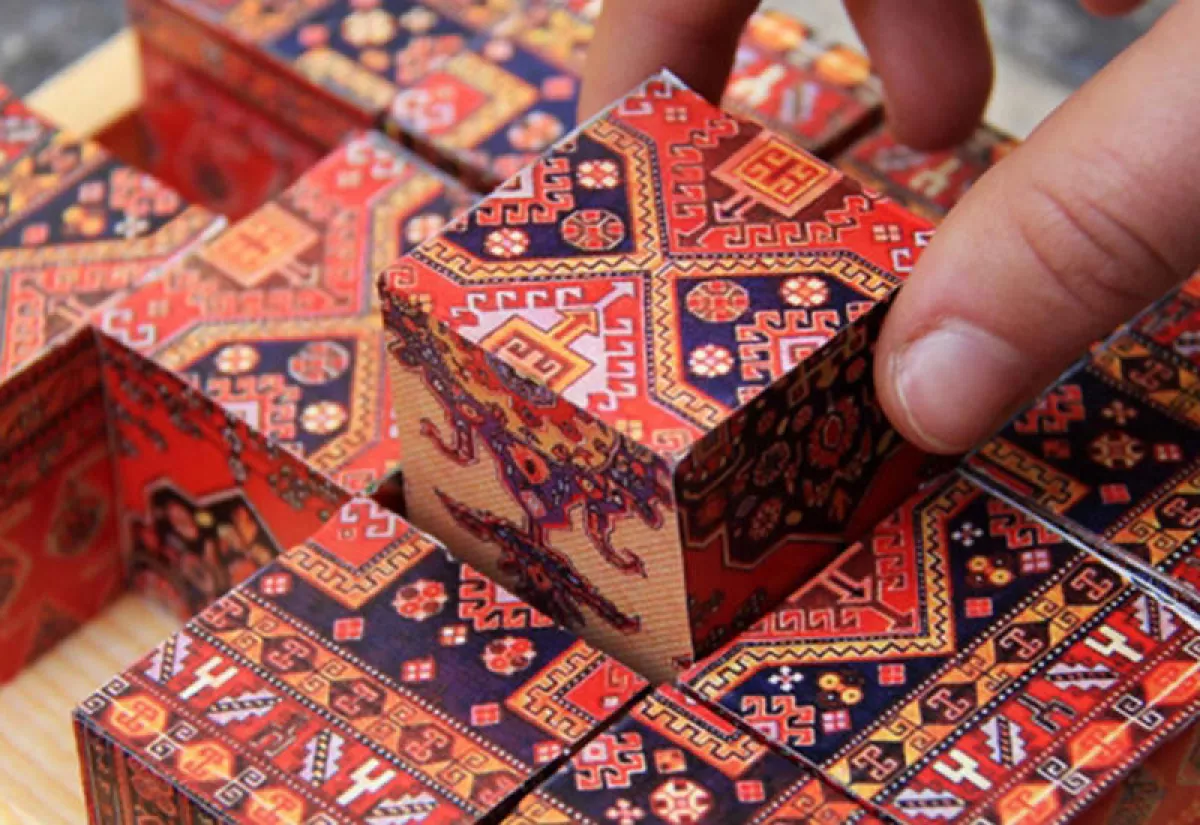
As part of its cooperation with Azəripək, Azərxalça OJSC has established the production of silk carpets. These carpets are woven using locally sourced raw materials at workshops in Ismayilli, Kurdamir, Nardaran, Gabala and Baku.
Overall, positive developments have been recorded at Azərxalça’s 11 production workshops, while there are also prospects for developing the carpet-weaving sector in Azerbaijan’s liberated territories.
The effectiveness of the reforms carried out in the carpet-weaving sector in recent years is reflected in the statistics for last year. In 2025, the company’s operating revenue from product sales amounted to 7.812 million manats ($4.6 million), marking a 46.1% increase, while its net loss fell to 394,000 manats ($231,764), a 5.4-fold decrease compared with the previous year.
Notably, at the initiative of Azərxalça and the Administration of the Icherisheher State Historical-Architectural Reserve, and with the active support of Azerbaijan’s Ministry of Economy and the Azerbaijan Export and Investment Promotion Agency (AZPROMO), the International Carpet Festival has been held in Baku since May 2024. The festival aims to promote and preserve Azerbaijan’s traditional carpet-weaving art, which has been inscribed on UNESCO’s Representative List of the Intangible Cultural Heritage of Humanity.
Today, thousands of silk farmers and agricultural producers in more than 40 districts across the country are engaged in silkworm breeding, while more than 400 people work at Azəripək. The enterprise exports raw silk, kelaghayi headscarves, silk scarves and other products to Iran, Türkiye and Russia.
In the near term, the company plans to gradually increase annual production from 400 to 800 tons of wet cocoons, upgrade its equipment, launch the production of cotton fabrics blended with synthetic yarn, and further expand the output of silk carpets that are in demand on international markets.
Thus, the new presidential decree is expected to give fresh impetus to the modernisation of Azerbaijan’s sericulture sector and promote its products on international markets under the Made in Azerbaijan brand.







 editor@caliber.az
 +994 55 444-88-98
 Азербайджан, Баку, ул. Низами, 203, Af Business House, 5-й этаж