










Deutsche Welle on an Armenian frequency A one-sided take on Karabakh
Some things never change. Some people, for instance, seem to have an enduring habit of lecturing everyone around them. But sometimes that tendency goes too far. Deutsche Welle (DW, or “German Wave”), for its part, appears to have decided to be more Armenian on the Armenian issue than the Armenians themselves.
One need only look at the title of the article: “Trial of the Catholicos: Why Is Armenia in Conflict with the Church?”
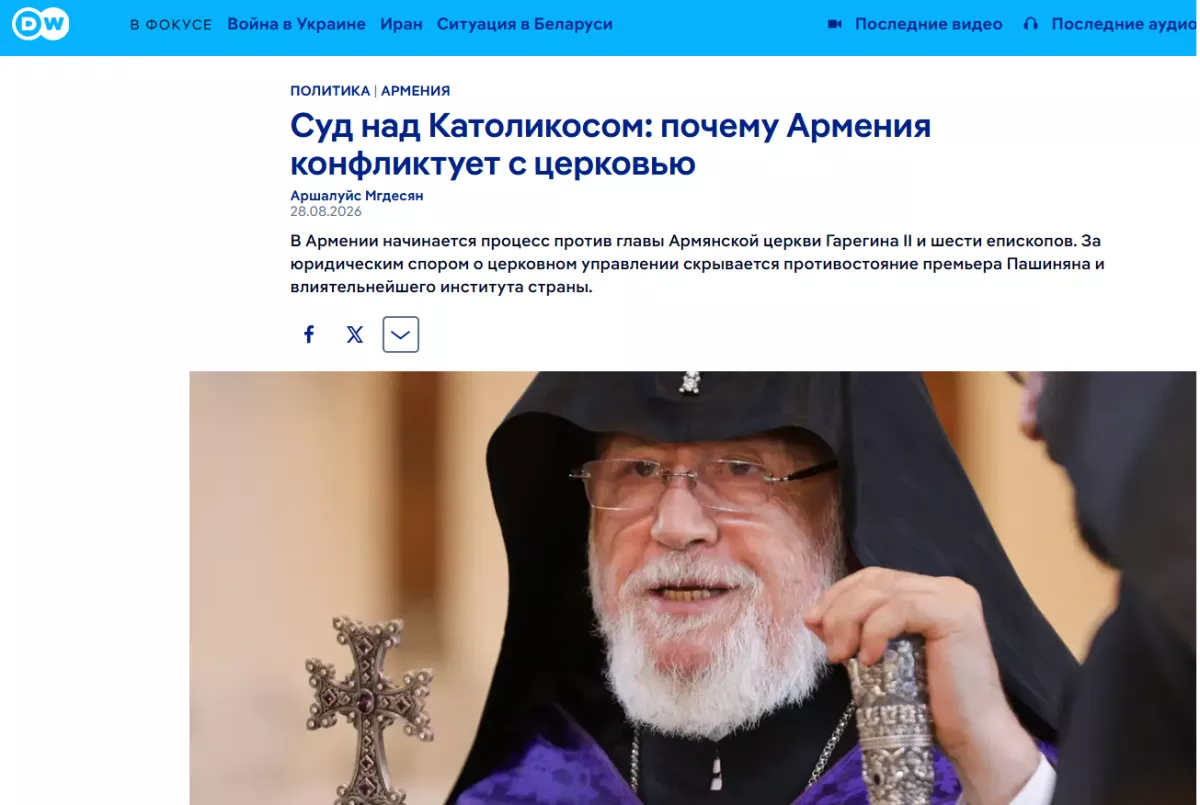
The title alone raises an obvious question: what exactly does “Armenia” mean here? What does “Armenia’s conflict with the Church” actually refer to? The Armenian state? Armenian society as a whole? Certain regions? Or, perhaps, the Armenian authorities?
Whatever the answer, it would be interesting to hear it from the supposedly “conflicted” Armenia itself — assuming, of course, that DW’s narrative leaves room for such questions.
What particularly caught our attention was the article’s claim that “the authorities accuse the church leadership of turning it into an institution of war propaganda, because priests continue to pray for Nagorno-Karabakh.” According to DW, this is said to run counter to Yerevan’s policy of signing a peace treaty with Baku and recognising the region — which, until recently, was inhabited and controlled by Armenians — as part of Azerbaijan.
That is quite something. In a single sentence, we find a mass of anti-Azerbaijani fabrications, and clearly deliberate ones at that. This raises the first question: are the German editors at DW really unaware that there is currently no geographical entity called “Nagorno-Karabakh” on the territory of Azerbaijan? Yes, the article was written by a certain Arshaluis Mghdesyan, but does Deutsche Welle not represent Germany? So where is the editorial oversight here?
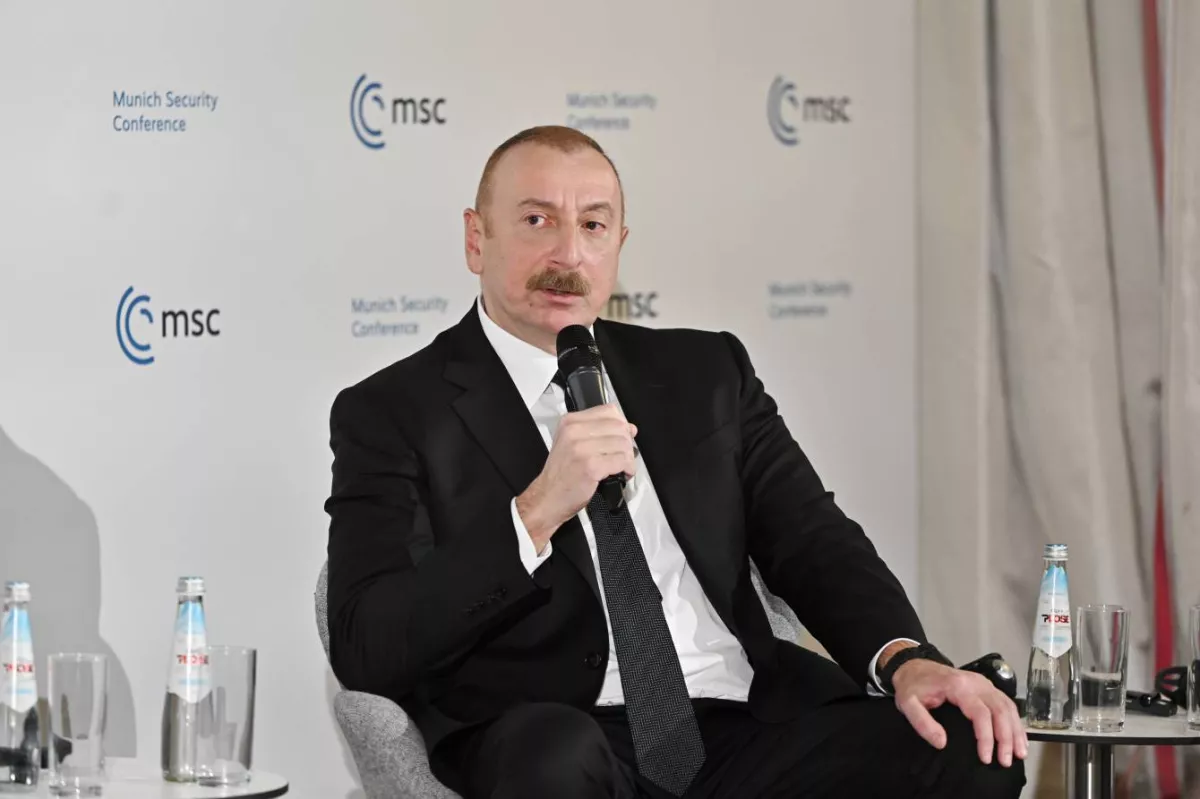
In 2023, President Ilham Aliyev, speaking specifically at the Munich Security Conference, emphasised that the term “Nagorno-Karabakh” was no longer applicable, since no such administrative entity exists in Azerbaijan. “I ask our partners to respect Azerbaijan's sovereignty and constitution,” he specified. “There is a Karabakh region of Azerbaijan with an Armenian population. So, this two-track solution separates our talks with Armenia from our internal issues like our communications with Armenians in Karabakh. And also, it was agreed with our international partners that there would be discussions on the rights and securities of the Armenian minority in Karabakh. And we are ready to do it. But with those representatives of the Armenian community who lived, were born, and lived in Karabakh throughout their life.”
We deliberately quoted the head of state’s 2023 Munich remarks at some length because, as noted above, we are addressing the provocative claims made by the Armenian author of the Deutsche Welle article regarding Yerevan’s alleged course toward signing a peace treaty with Baku by recognising as part of Azerbaijan a region “until recently inhabited and controlled by Armenians.”
Mghdesyan presents the situation as though Karabakh were not internationally recognised as Azerbaijani territory and, moreover, had legitimately been under Armenian control. At the same time, he makes no mention whatsoever of the illegal separatist entity established on Azerbaijani territory in flagrant violation of the norms and principles of international law.
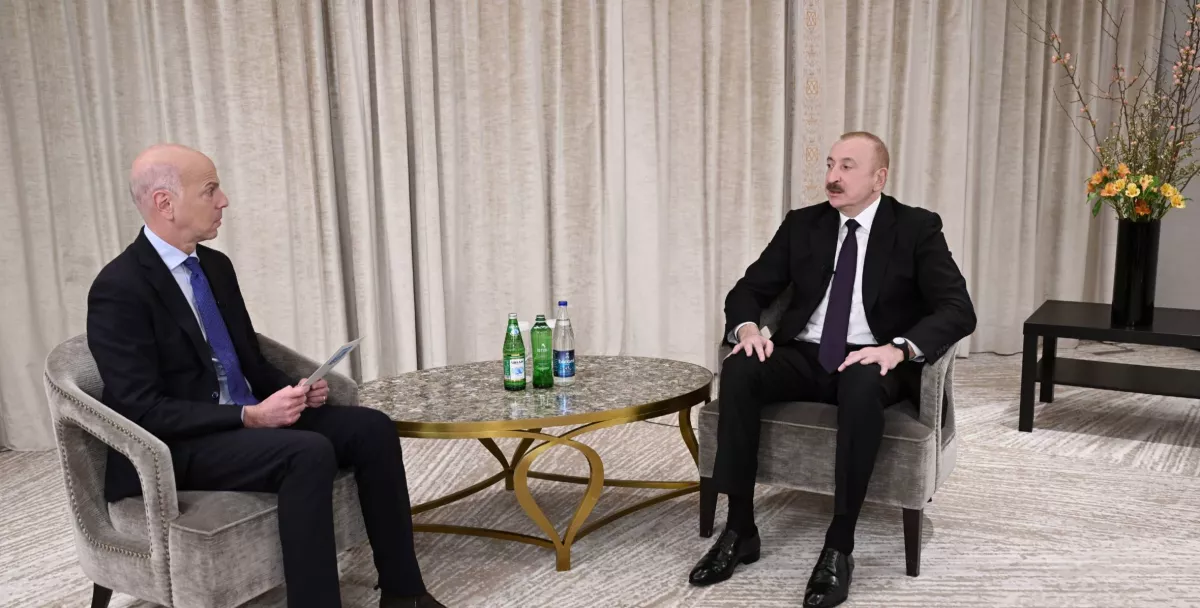
As for the Armenian population that once lived in the region, Mghdesyan and those who share his narrative would do well to look once again to Germany — fortunately, another Munich conference took place earlier this year. There, President Ilham Aliyev once again set the record straight on the issue in an interview with France 24.
As he explained: “We offered all Armenians who lived in Garabagh to apply for citizenship or to apply for a work permit. We had several rounds of interactions with the representatives of Garabagh Armenians, but they preferred to choose to leave for Armenia.”
Short, clear and unequivocal. Does Deutsche Welle still have any questions?
Moreover, it is worth recalling that in September 2023, Baku initiated the creation of a dedicated portal aimed at facilitating the reintegration of Armenian residents of Karabakh into Azerbaijani society.
However, as President Ilham Aliyev stated at the opening ceremony of the COP29 Leaders’ Summit in 2024: “Unfortunately, double standards, the habit of lecturing other countries, and political hypocrisy have become a kind of modus operandi for some politicians, state-controlled NGOs, and fake news media in some Western countries.”
Then, in May of this year, after noting that Azerbaijan had put an end to separatism in Karabakh in September 2023 by implementing four UN Security Council resolutions that had remained unimplemented for 30 years, the head of state emphasised: “Azerbaijan’s territorial integrity has the same value as that of any other country. And in this issue, double standards are unacceptable.”
We have addressed all these nuances in detail on numerous occasions. Yet once again, we find ourselves having to spell out the historical and legal reality for the benefit of those determined to distort it. Let us hope that Deutsche Welle, as a German media organisation, will draw the necessary conclusions and exercise greater editorial responsibility to prevent the dissemination of false or misleading information through its platform.
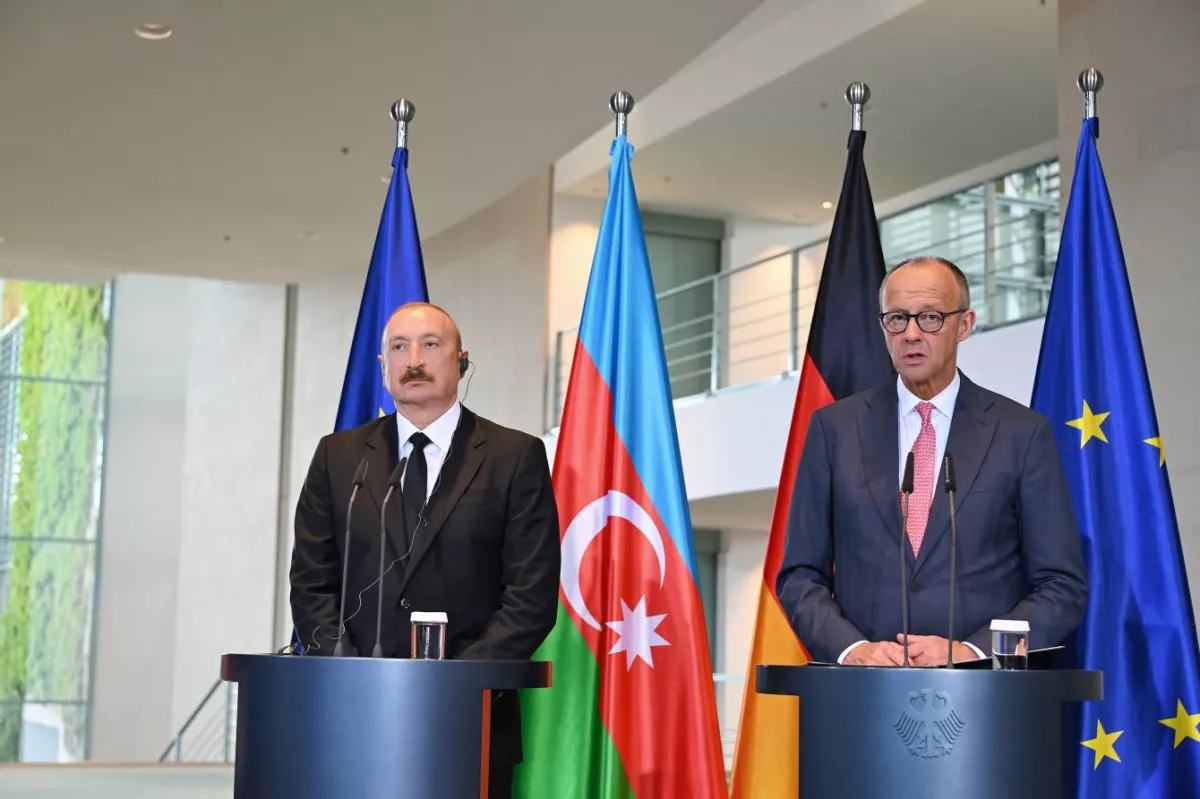
How closely does this outlet’s line correspond to the position of official Berlin? This is far from a rhetorical question. In July this year, following talks with Azerbaijani President Ilham Aliyev, German Chancellor Friedrich Merz stated that “peace, security, and stability in the South Caucasus are also essential for us,” as Germany and the European Union are “very interested in achieving lasting peace in that geopolitically vital region.”
As Merz noted, greater stability in the region creates new opportunities for broad economic cooperation between our countries. Moreover, "the importance of the South Caucasus as a bridge between Europe and Asia is also growing,” and Berlin is therefore interested in jointly utilising new transport and trade corridors that offer significant economic potential.
Surely, the German Chancellor’s remarks require no further comment. Therefore, we would instead draw Deutsche Welle’s attention to what President Ilham Aliyev said in the same interview with France 24:
“We have hundreds of thousands of Azerbaijanis who have been deported and ethnically cleansed from the territory of today's Armenia, but never did the Armenian government offer any kind of proposals for them to come back. I think we need to treat this issue from a reciprocal point of view. The right of return is a universal right, and, of course, Azerbaijan will definitely observe this right if we have such an application. But at the same time, taking into account that we were at war with Armenia for 30 years, and for 30 years they were occupying our territory, we expect the same attitude toward hundreds of thousands of Azerbaijanis, who we call Western Azerbaijanis, to be able to return to today's Armenia.”
Let us hope that DW will take note of these historical facts and present them to its readers.







 editor@caliber.az
 +994 55 444-88-98
 Азербайджан, Баку, ул. Низами, 203, Af Business House, 5-й этаж