










November countdown: Are the US and Iran heading toward war? Shereshevskiy’s analysis
So, nearly six months after the start of the latest confrontation between the US-Israeli bloc and Iran, Washington has launched an unprecedented campaign aimed at eliminating all remaining economic channels sustaining the Islamic Republic of Iran — an operation dubbed “Economic Outcast.”

As US Treasury Secretary Scott Bessent stated, “Our objective is to sever every economic lifeline that sustains this tyrannical regime until Tehran stands alone,” emphasising that the United States is “ending” the threat from Iran rather than “managing.” The US Treasury chief identified five “vital channels” in Iran that will initially be targeted by the operation: digital assets, technology, gold, aviation, and shipping. He also noted that the “grey zones” some countries use to circumvent sanctions against the Islamic Republic are no longer acceptable, and warned of secondary sanctions.
Against this backdrop, the United Arab Emirates has already suspended all trade and financial transactions with Iran. This is a highly significant indicator because, despite Iran’s periodic attacks on UAE territory, economic ties between the two countries had continued. UAE banks are reportedly believed to hold tens of billions of dollars belonging to Iran’s ruling elite, while the Emirates have served Tehran as a kind of international clearing hub for currency and other trade transactions and, in the past, supplied Iran with gasoline.
Tehran: “We know how to play this game”
Iran, for its part, did not remain idle, threatening both a possible military response and further cuts in oil exports from the Persian Gulf. In particular, Economy Minister Ali Madanizadeh said on state television that “we are fully prepared for US sanctions”: “We have our own tools as well, and we know how to play this game. Our defence is no longer merely defensive; the enemy should expect an attack.” Meanwhile, Brigadier General Hossein Mohebbi, spokesman for the Islamic Revolutionary Guard Corps (IRGC), went even further, promising to strike vital US interests and key energy chokepoints if Iran’s infrastructure comes under threat.
Tehran had previously emphasised that it had prepared an offensive strategy in response to US sanctions. In practical terms, this means that Iran is prepared to launch attacks against the US allies in the Persian Gulf.
The “perfect storm” scenario
At present, Iran’s economic situation is difficult to describe as merely a crisis; it is more akin to a “perfect storm.” Tens of millions of Iranians, out of a total population of 92 million, are living in extreme hardship. Inflation, which had previously reached 40–50 per cent annually, now stands at 80 per cent, while food inflation has exceeded 100 per cent. At the same time, GDP is expected to contract by more than 5 per cent this year.
As a result of the country’s ageing and deteriorating infrastructure, power outages occur periodically. These are compounded by long queues for fuel, caused by the shutdown of some oil refineries following US strikes on the country’s fuel and energy infrastructure. Added to this is the US blockade of Iranian ports, which is hitting the Islamic Republic’s export sector — its main source of foreign-currency revenues for the state budget.
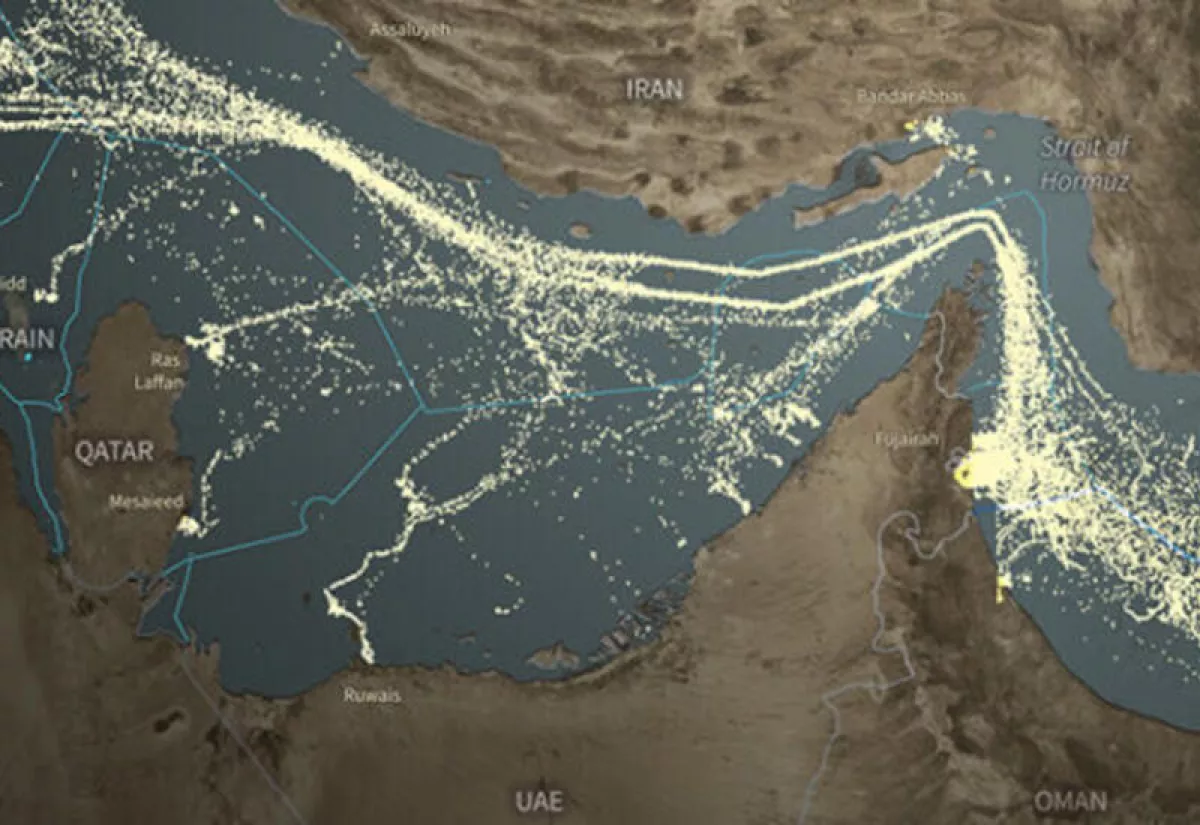
At the same time, if Iran’s actions around the Strait of Hormuz — through which 20–22 million barrels of oil and petroleum products per day passed before the war, accounting for 20–25 per cent of global trade — previously contributed, among other things, to rising gasoline prices in the United States, this has had a negative impact on Americans’ attitudes toward the Republican Party ahead of the congressional midterm elections in November, Tehran is now losing even these bargaining chips.
More and more tankers are passing through the Strait of Hormuz under US protection and with their transponders switched off. In addition, pipelines are operating that transport oil around the strait to the UAE port of Fujairah and the Saudi port of Yanbu.
Thus, the strategic importance of the Strait of Hormuz is being diminished, while oil prices are fluctuating between $80 and $90 per barrel. For the global economy, this is unpleasant, but hardly fatal: according to the World Bank, global economic growth is expected to slow from 2.9 per cent to 2.5 per cent annually.
Iran from within
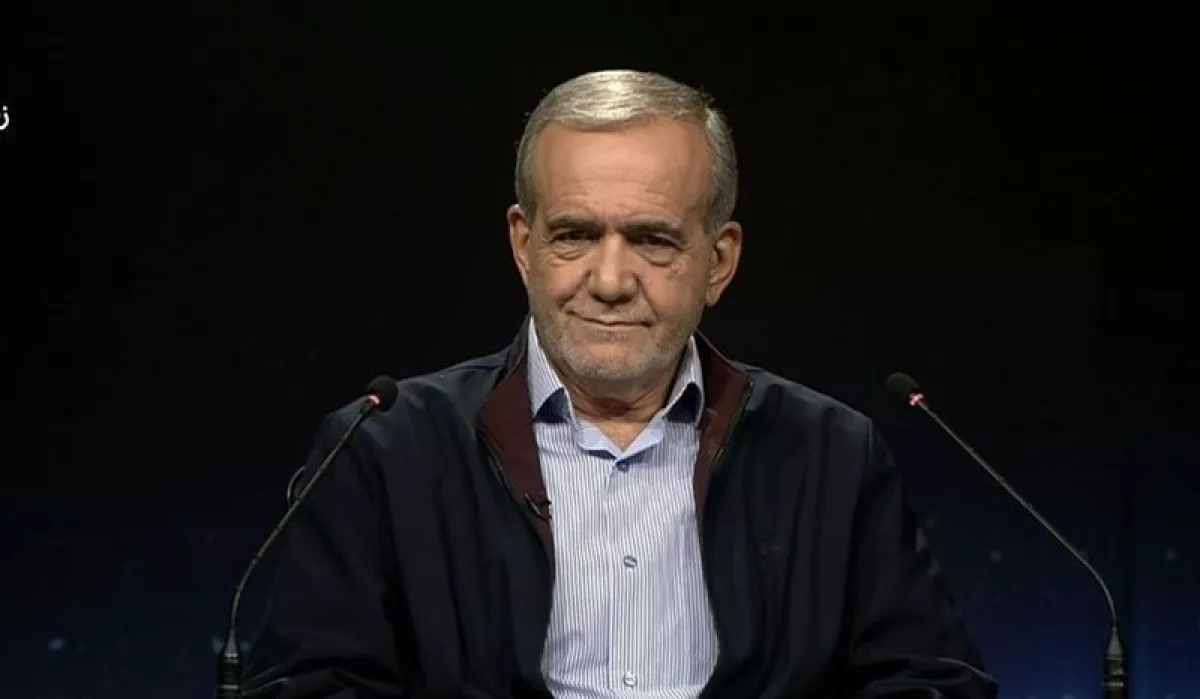
Amid mounting pressure on the economy, President Masoud Pezeshkian and Parliament Speaker Mohammad-Bagher Ghalibaf have called for resolving the conflict with the United States through negotiations, noting that the country will not be able to hold out for long without oil exports and the ability to import goods. Some Israeli analysts share a similar assessment, stressing that Iran has sufficient resources to last for approximately two months, after which the situation could deteriorate rapidly.
However, IRGC veterans play a key role in Iran’s leadership. The Corps not only controls what is arguably Iran’s second — if not first — military force, which recruits the country’s most religious citizens, but, according to some reports, has also managed to establish control over the leadership of the regular military, the Artesh. In addition, the Basij, the IRGC’s paramilitary militia, effectively controls public sentiment in the country, cracking down on “rebels.”
Moreover, the IRGC leadership, through a network of private and state-owned companies, controls half of Iran’s economy, while also maintaining influence over ministries and government agencies.
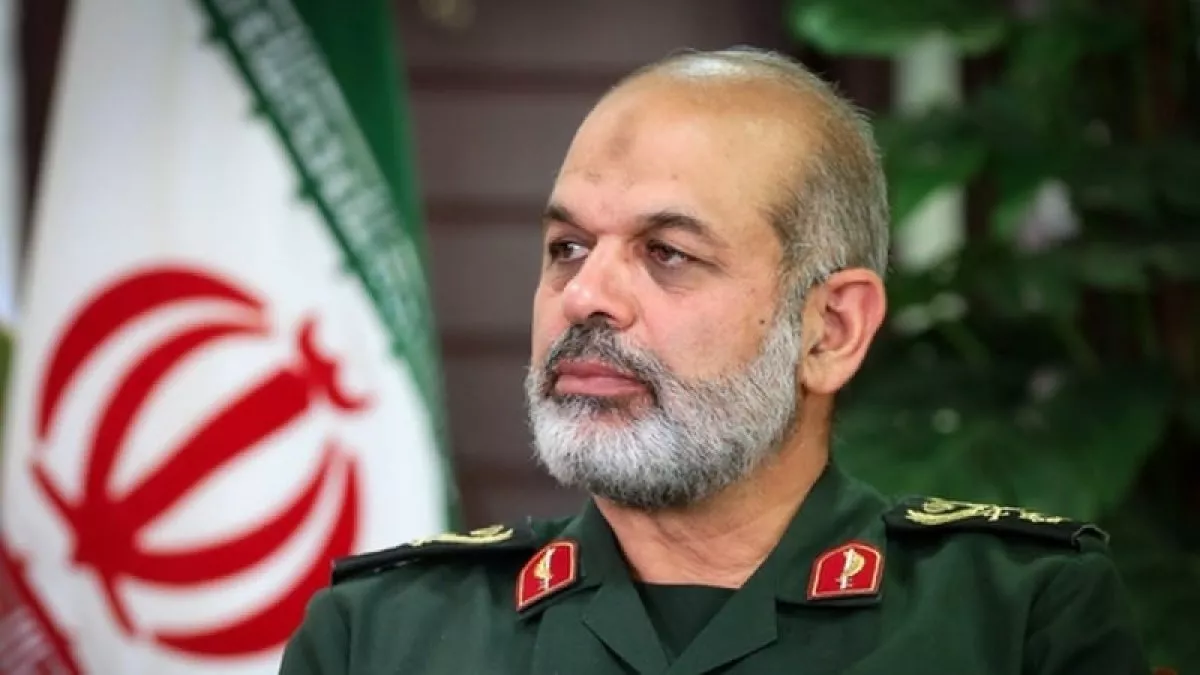
De facto power in the country is concentrated in the hands of the Supreme National Security Council (SNSC), which includes representatives of the IRGC, the president, the speaker of parliament, and officials from several key agencies. However, the decisive voice on all major issues belongs to IRGC veterans such as General Ahmad Vahidi, the head of the IRGC, and Major General Mohsen Rezaei, the secretary of the SNSC. Their positions on the United States and domestic protests are uncompromising: in the former case, they favour an offensive strategy; in the latter, a policy of harsh suppression.
November as a deadline?
A few days ago, Pakistan’s army chief, Field Marshal Asim Munir, arrived in Tehran, where he held talks with Mohsen Rezaei. According to Al Arabiya, citing senior sources, he brought a new US proposal: the United States offered to end the blockade of Iran and lift sanctions on the country in exchange for the reopening of the Strait of Hormuz.
But the crux of the problem is that the current IRGC leadership is convinced that the weakness of its predecessors was the reason for their downfall. In their repeatedly stated view, “Iran’s previous leadership was too soft, which led to its demise because the United States and Israel perceived it as weak.” Consequently, according to the Iranian military’s thinking, they must now initiate attacks against the United States themselves if Washington does not end its economic sanctions and blockade, while preserving their position on the Strait of Hormuz at all costs. This is absolutely unacceptable to the United States because, under such a scenario, Washington would lose its status as a superpower — since, as the saying goes, whoever controls the strategic routes rules the world.
For these reasons, reaching any kind of agreement between the two sides is virtually impossible at present. At the same time, Washington intends to avoid military operations until the midterm elections and has instead chosen the path of an economic blockade and its further intensification. However, after the elections, the US administration will have a freer hand, and if the sides fail to reach an agreement before then, the Middle East will most likely once again be engulfed in the flames of war in November.







 editor@caliber.az
 +994 55 444-88-98
 Азербайджан, Баку, ул. Низами, 203, Af Business House, 5-й этаж