










Warsaw’s double standards — from Kyiv to Baku The paradox of Polish foreign policy
Poland has pursued recognition of its views for so long and with such persistence that Warsaw now appears to have lost sight of the distinction between two very different rights: having its own voice and speaking on behalf of others. The desire to defend the former is perfectly understandable. But by assuming the latter, Poland’s leadership increasingly resembles a provincial power that imagines it has been given a mandate to decide who around it is behaving properly and who is not.
A new signal has now come to Warsaw from Baku. On August 28, Polish Ambassador to Azerbaijan Paweł Radomski was summoned to the Ministry of Foreign Affairs and presented with a note of protest over a programme that had aired two days earlier on the Polish public broadcaster TVP World.
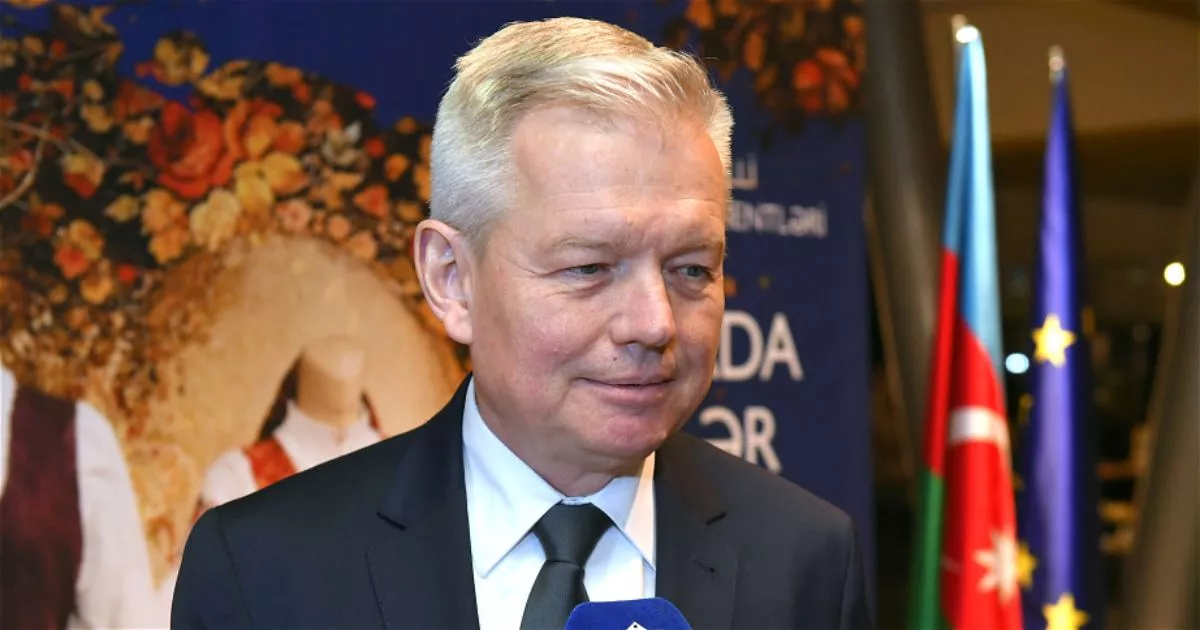
The verdict against Azerbaijan was delivered by the presenter in the opening introduction itself. What followed was a painfully familiar script: human rights, democracy, and Azerbaijan in the dock. Azerbaijan’s position, decades of occupation of its internationally recognised territories, and the fate of hundreds of thousands of Azerbaijanis driven from their homes were reduced to mere background on the programme. We will not repeat the lies aired on the programme or dissect every anti-Azerbaijani attack. Nor will we set out to prove the opposite. Those who have something to justify are the ones who need to offer explanations. We have nothing to justify. Polish public television presented crude anti-Azerbaijani propaganda as analysis.
Let us make one thing clear from the outset. Baku does not expect Polish journalists to shower it with compliments. But there is a difference between criticism and an indictment. Especially when that indictment is issued by a public broadcaster funded by Polish taxpayers.
The Azerbaijani Foreign Ministry described the statements aired as biased, subjective and completely unacceptable. It also singled out the presenter’s provocative conduct and described the appearance of such content on a Polish government-funded channel as an unfriendly step, contrary to the spirit of partnership and potentially capable of seriously damaging bilateral relations. The Polish side was urged to take immediate and effective measures.
Baku also drew particular attention to the timing of the programme. Azerbaijan and Armenia are currently engaged in processes aimed at normalisation and a peaceful settlement, while Azerbaijan is working to ensure lasting peace, stability and security in the region. And it was precisely at this moment that TVP World aired a report distorting the truth. The Azerbaijani Foreign Ministry said this raises questions for the Azerbaijani side.
Tusk reshaped TVP — now he must answer for it
Warsaw will find it difficult to hide behind the convenient explanation that television operates independently and that the government knows nothing about its editorial policy. After Donald Tusk returned to power, it was his government that set about restructuring the public media. On December 19, 2023, Culture Minister Bartłomiej Sienkiewicz dismissed the management of TVP, Polish Radio and the PAP news agency, while the news channel TVP Info went off the air. On December 27 — just hours after the resignation of director Filip Styczyński — TVP World was also taken off the air. That same day, Sienkiewicz announced the liquidation of the public media, citing restructuring as the reason. The English-language service returned to the air in March 2024, with a new team and an updated format.
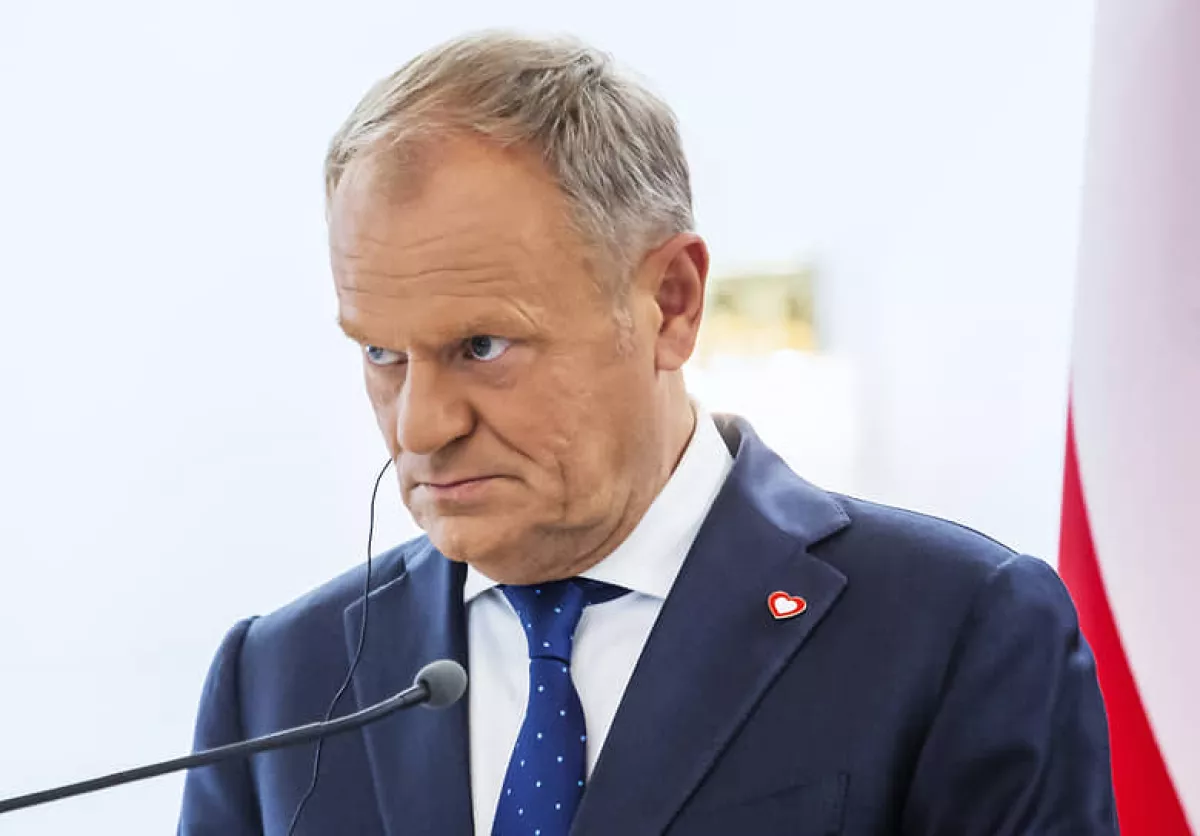
The current TVP World, therefore, can hardly be portrayed as simply carrying on the legacy of its predecessors — a legacy for which Donald Tusk bears no responsibility. The channel operates following the personnel and political overhaul carried out by the new government.
The question of who personally approved the programme’s script can be set aside. Responsibility for the international broadcasting of a public television channel ultimately rests with the government. If it changes TVP’s leadership in the name of “restoring impartiality,” it will have to explain why the result of that reform has been a one-sided campaign against a state that Poland officially describes as a partner.
Especially since, on June 25 in Gdańsk, on the sidelines of a conference on the reconstruction of Ukraine, Azerbaijani Foreign Minister Jeyhun Bayramov met with his Polish counterpart Radosław Sikorski. The two sides welcomed the positive momentum in bilateral relations and discussed regular political dialogue, economic cooperation, trade and investment. Bayramov also briefed the Polish foreign minister on the peace process with Armenia and the reconstruction of the liberated territories.
Two months have passed. Polish diplomacy had barely had time to clear the protocol smiles from the table when a state-funded television channel had already read Azerbaijan its political verdict.
Which of these two Polands is the real one? The Poland that speaks of partnership, or the Poland that uses a state broadcaster to tell Azerbaijan how it should live?
Poland’s “superpower” from a television studio
Polish Prime Minister Donald Tusk is the architect of Warsaw’s current course. Radosław Sikorski is his experienced and most outspoken foreign-policy voice, serving simultaneously as deputy prime minister and foreign minister. The objective of this pairing is clear: to bring Warsaw back to the table where Europe’s fate is decided. The ambition is understandable. Poland is a major EU member state and stands on NATO’s eastern flank. The problems begin when real political weight turns into a fixation with lecturing others on how international affairs should be conducted.
On June 9, Tusk publicly voiced his outrage that the leaders of the United Kingdom, France and Germany had discussed a settlement in Ukraine in London without Poland. On June 19, following the EU summit, he put it even more bluntly: no format has the right to speak on behalf of the entire European Union, and Poland will not recognise as legitimate any arrangements reached without Warsaw. Poland has every right to demand a seat at the table. But a place at the big table is earned through weight and consistency, through the ability to stand behind what one says. A great power differs from a country suffering from a great-power complex above all in one respect: its diplomacy, government and state institutions speak with one voice.
Warsaw spoke with Paris’s voice
And this is the central paradox of Warsaw’s policy. Donald Tusk headed the European Council for many years. His return to Warsaw was seen as Poland’s return to “the right Europe.” Sikorski has long been embedded in European and transatlantic circles. There is nothing inherently wrong with that, nor is it grounds for suspicion. But first-tier powers do not rewrite other people’s talking points — they produce their own. Warsaw demands to be heard, yet ends up saying what it has heard elsewhere.
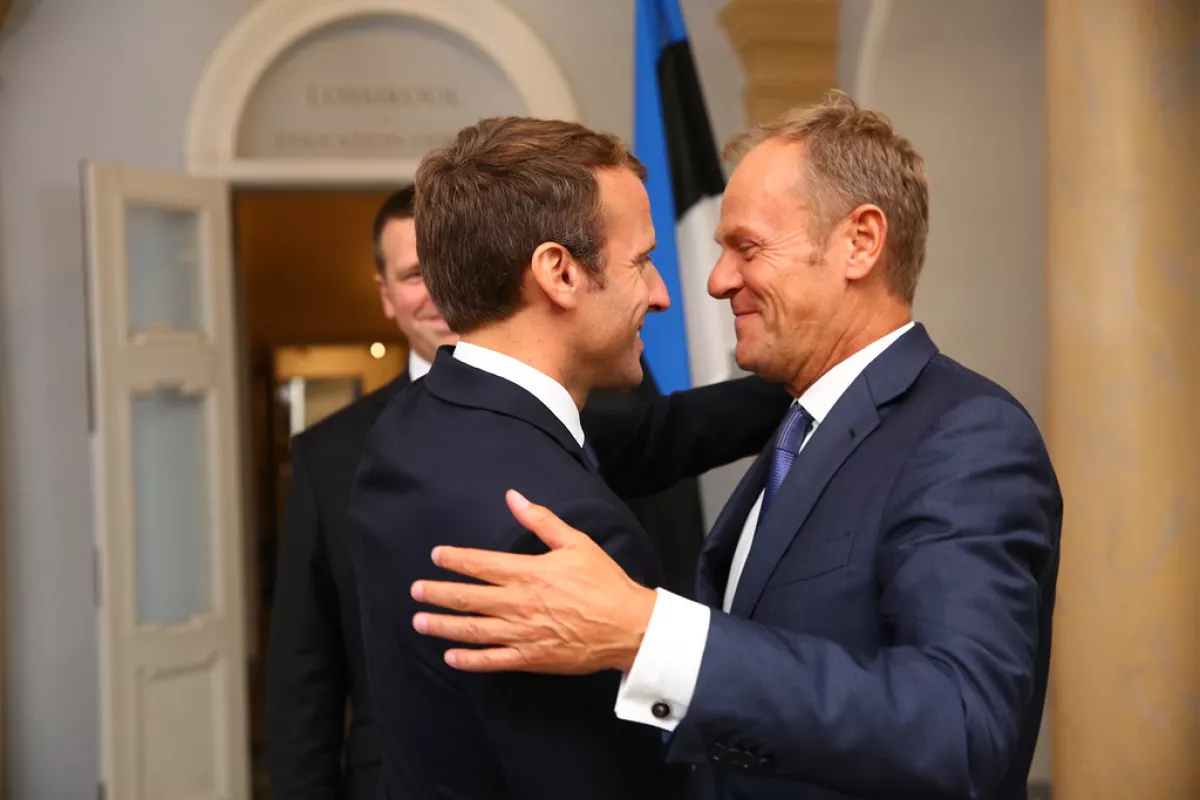
The rapprochement between Warsaw and Paris is particularly striking. In May 2025, Tusk and Emmanuel Macron signed a friendship and cooperation treaty in Nancy, providing for enhanced cooperation and mutual assistance in the event of a military threat. On April 20, 2026, back in Gdańsk, Tusk summed it up: cooperation with France — from the nuclear sphere to joint military exercises — “has no limits,” while France was described as Poland’s most reliable partner. Incidentally, it was that very quote that TVP World circulated around the world.
Poland has every right to deepen its ties with France. It is a sovereign choice. Azerbaijan has exactly the same right — to choose its own partners, build relations with Türkiye, Israel, the United States, the European Union and Central Asian states, while defending its own interests.
Ukraine: Solidarity until the first Polish farmer
The duality of Polish policy is particularly evident on the Ukrainian front. It would be unfair to deny Warsaw’s contribution to supporting Kyiv after the outbreak of the full-scale Russian-Ukrainian war. Poland supplied Ukraine with weapons, provided transport corridors, took in refugees and became one of the main logistical hubs for Western aid, with a significant share of military and humanitarian shipments passing through its territory.
But the assistance of the early years is no blank cheque for everything Warsaw did afterwards.
The moment Ukrainian grain began to hurt the interests of Polish farmers, solidarity with Kyiv ended at the gates of the Polish grain elevator. Warsaw maintained its unilateral ban on Ukrainian grain imports even after the EU’s common rules had changed. In June 2026, European Commissioner for Agriculture Christophe Hansen came to Warsaw with a blunt criticism: there were no economic grounds for the Polish embargo, and it ran counter to the European Union’s trade agreement with Ukraine. In mid-August, Polish Agriculture Minister Stefan Krajewski responded: “I have no intention of lifting the ban.” Ukrainian grain, he said, should be transported in transit to third-country markets rather than remain in Europe.
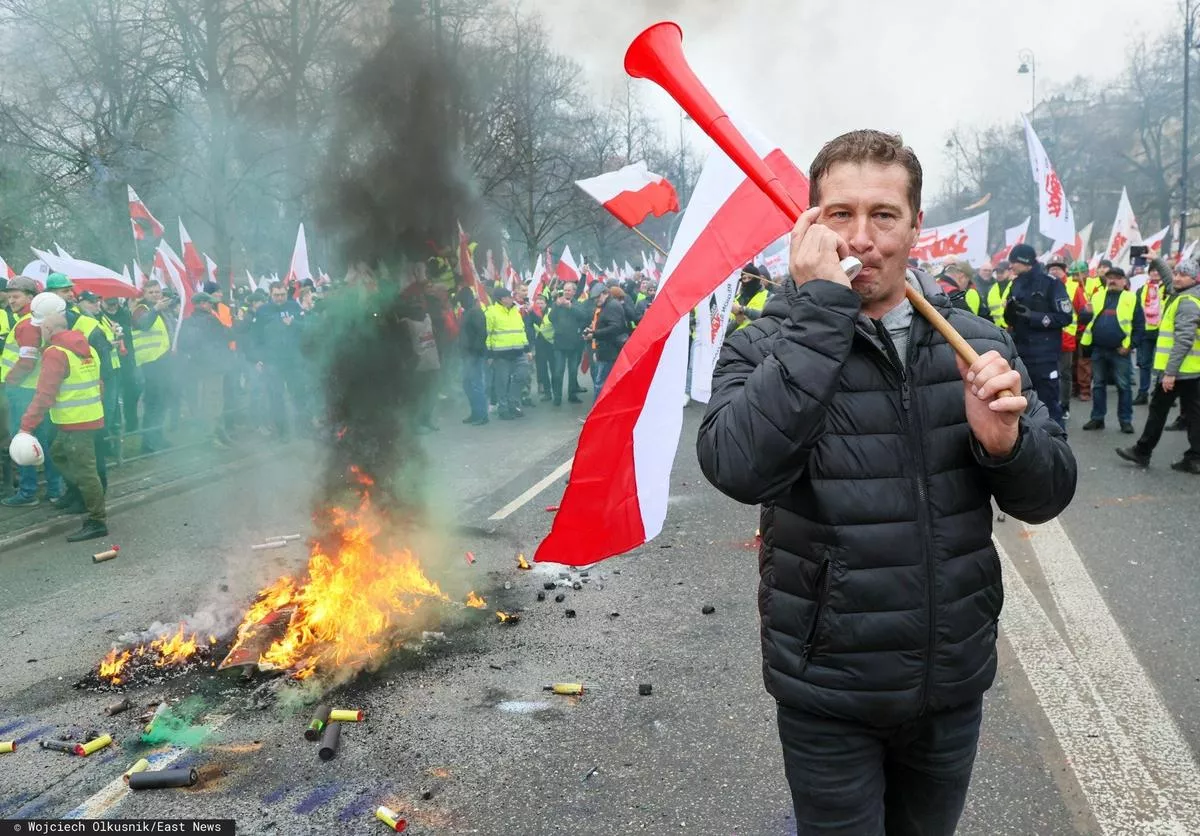
Polish farmers blocked the border, grain was dumped from railway wagons, and Tusk even floated the possibility of extending restrictions to new categories of products. Warsaw justified these measures as necessary to protect the domestic market. We do not dispute that: any government is obliged to take the interests of its own citizens into account. But then a simple fact must also be acknowledged: Poland is not the only country with national interests.
When Warsaw restricts Ukrainian imports, it is called protecting Polish farmers. When Azerbaijan defends its own security and political independence, Polish commentators are quick to discover a deficit of democracy. So where is the consistency?
The same applies to refugees. On March 5, 2026, Poland’s special 2022 law on assistance to Ukrainians ceased to apply. The bill was introduced by the government, passed by parliament and signed by President Karol Nawrocki. Unemployed adult Ukrainians were placed on the same footing as uninsured Poles when it came to healthcare coverage. State assistance with housing and food was retained only for particularly vulnerable groups, such as the elderly and people with disabilities. The right to start a business on the same terms as Polish citizens was abolished, while adaptation programmes for Ukrainian children in schools were phased out by the end of the academic year. When signing the law, Nawrocki said he had promised to put an end to the “era of unconditional privileges” — and he kept that promise. Around one million Ukrainian refugees remained in Poland at the time.
Even more revealing is Warsaw’s treatment of migrants attempting to enter Poland through Belarus. Donald Tusk, who for years positioned himself as a representative of liberal Europe, chose one of the toughest lines possible on the Belarusian border. In March 2025, Poland suspended the acceptance of applications for international protection — initially for 60 days. Human rights organisations described the move as a blatant violation of its international obligations. The temporary measure was extended again and again: by July 2026, it had been renewed for the eighth time, with the suspension in force continuously for more than a year.
Poland is acting like a state guided by its own perceived threats and national interests. Azerbaijan is doing exactly the same. With one difference: Baku does not lecture Warsaw on how it should run its affairs.
Where is the next Kaczyński?
The saddest part is watching this political transformation while remembering Poland’s former president Lech Kaczyński. He, too, wanted to see Poland become stronger. A principled politician, a committed Atlanticist and an uncompromising opponent of Russian influence. But he understood strength differently from today’s Warsaw: it is built through alliances, signed agreements and respect for those with whom those agreements are made.
Under his presidency, relations with Azerbaijan acquired genuinely strategic substance. In just over two years, Poland’s president visited Azerbaijan five times: twice in 2007, twice in 2008 and once in July 2009. Ilham Aliyev, for his part, visited Warsaw twice during the same period. They discussed oil and gas, security — matters both sides regarded as equally important.
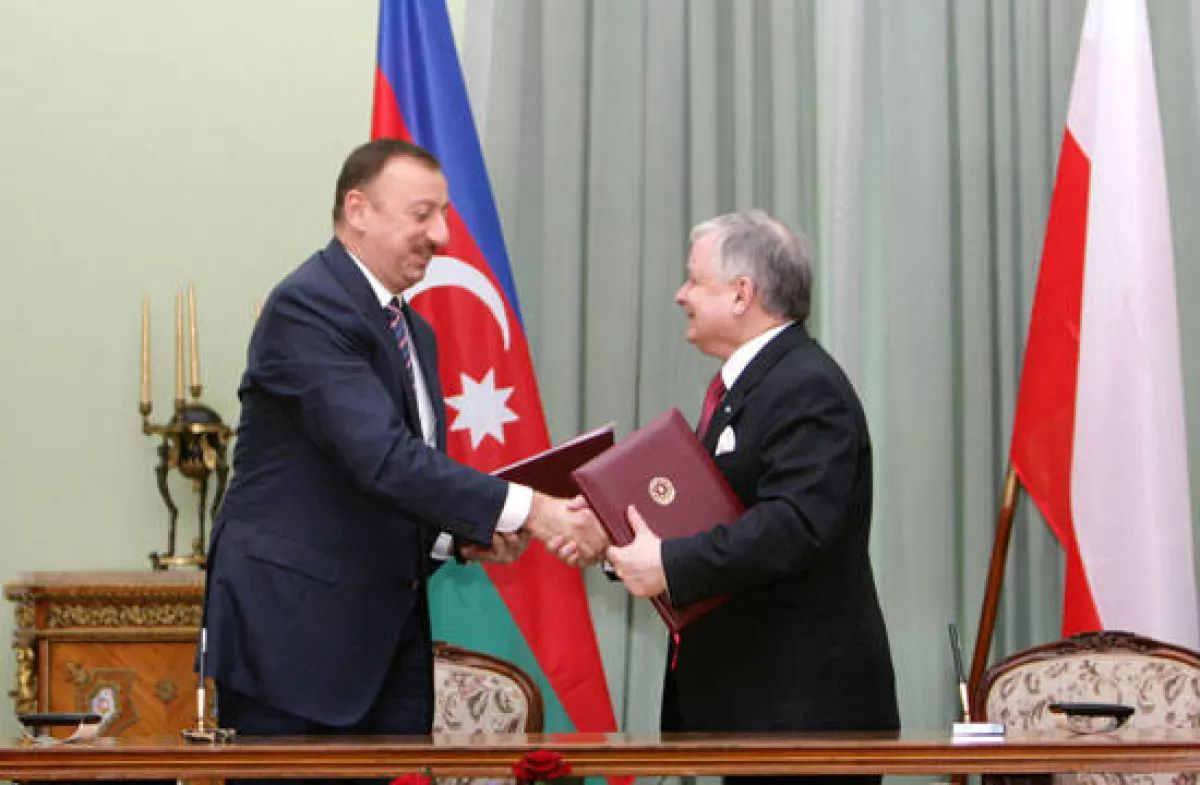
During his official visit to Baku on July 2–3, 2009, Kaczyński said that Azerbaijan could have a significant impact on Europe’s energy security and described relations between the two countries as a strategic partnership. Kaczyński’s position on Karabakh was equally clear. As early as February 2008, in a joint declaration with Ilham Aliyev, Poland supported a settlement of the conflict based on respect for sovereignty, territorial integrity and the inviolability of borders in accordance with the UN Charter. In recognition of his contribution to the development of bilateral relations, the Polish president was awarded Azerbaijan’s highest state decoration, the Order of Heydar Aliyev.
Seven years after Kaczyński’s death, standing alongside Andrzej Duda in Warsaw, Ilham Aliyev remembered Kaczyński as his friend and a friend of Azerbaijan, and described the new stage in Polish-Azerbaijani relations as a logical continuation of his era. Kaczyński did not look down on Azerbaijan. He treated it seriously. That is the difference. He saw before him an independent state capable of influencing Europe’s energy security and regional geopolitics. He did not see a pupil waiting for Warsaw to grade its behaviour.
There is no second Lech Kaczyński in Poland today. There is Donald Tusk, imagining Poland as a superpower. There is Radosław Sikorski, accustomed to addressing the world in the tone of a teacher dissatisfied with his students’ performance. And there is TVP World, which first delivers its verdict on Azerbaijan and then finds a commentator to justify it.
Class dismissed, professor
Azerbaijan expects elementary reciprocity. If Warsaw considers itself entitled to discuss Azerbaijan’s domestic politics, it should be prepared to hear questions about its own treatment of Ukrainian goods, its refugee policy, the suspension of the right to seek asylum, the political restructuring of public television, and the gap between diplomatic assurances and what is broadcast on state television.
You cannot speak to Baku about partnership in the morning and, in the evening, pay for a television studio from which Azerbaijan is lectured on how it should conduct its affairs. You cannot demand a place among the states shaping Europe’s future while turning your own foreign policy into a collection of borrowed ideological talking points. And above all, you should not speak to Azerbaijan as though it were a state obliged to report to Warsaw and account for its actions.
The summoning of the Polish ambassador to the Azerbaijani Foreign Ministry should prompt Warsaw to reflect: partnership sits uneasily with double standards, when one thing is said at the negotiating table and another from a state television screen. Lech Kaczyński understood this. It is time Donald Tusk and Radosław Sikorski learned the same lesson.







 editor@caliber.az
 +994 55 444-88-98
 Азербайджан, Баку, ул. Низами, 203, Af Business House, 5-й этаж