










President Aliyev in Tashkent and the CIA Chief in Moscow Caliber.Az weekly review
The Caliber.Az editorial team presents a new edition of the “Events” programme, hosted by Murad Abiyev, in an analytical review of the key developments of the week.
Azerbaijan
Azerbaijani President Ilham Aliyev paid a state visit to Uzbekistan. The main political outcome of the visit was the signing, together with Shavkat Mirziyoyev, of a Treaty of Eternal Friendship — a document intended to consolidate the current level of relations between the two countries. At the same time, the sides set a target of increasing bilateral trade to $1 billion by 2030 and agreed, among other things, to step up joint investment projects.
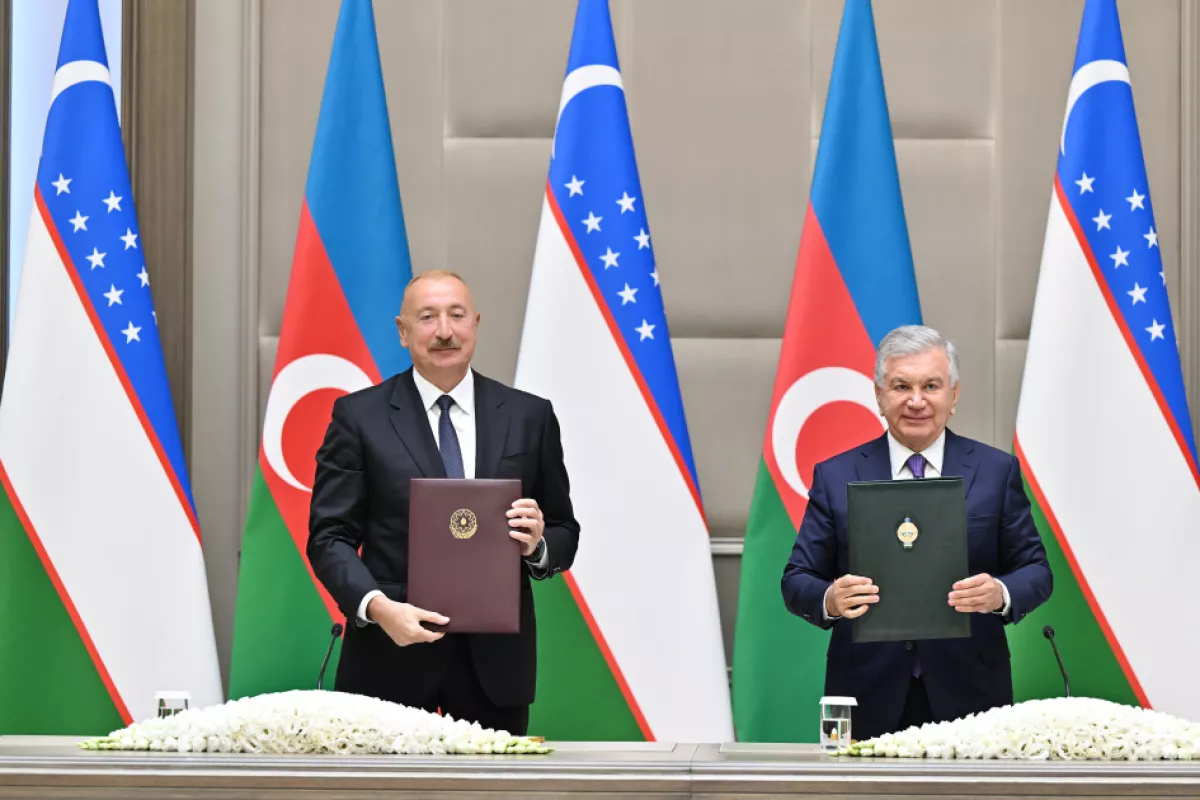
At the same time, one of the key strategic areas in the development of bilateral ties is the transport dimension. Statements by the two leaders showed that Baku and Tashkent increasingly view their relations as part of a broader regional project.
This primarily involves the development of the Trans-Caspian Corridor and the expansion of trade and transport links between the regions, as well as the creation of a Central Asia–Caspian–South Caucasus–Europe connectivity chain.
Tashkent is interested in gaining access to Western markets, while Baku seeks to strengthen its position in Central Asia. Therefore, Aliyev’s visit can be seen as another step towards shaping a new regional framework in which transport, investment and political proximity are gradually beginning to operate as a single system.
Armenia
This past week, former Armenian President Robert Kocharyan was detained, along with his eldest son, Sedrak, and several other individuals. Kocharyan has been charged with money laundering, bribery and abuse of office. On August 27, a court ordered Kocharyan to be remanded in custody for two months, while Sedrak was also placed under two months’ arrest. Similar charges were brought against Armenia’s third president, Serzh Sargsyan, but the court imposed a less restrictive measure, barring him from leaving the country. As a result, two former presidents of Armenia and members of their inner circles are now facing criminal prosecution simultaneously.
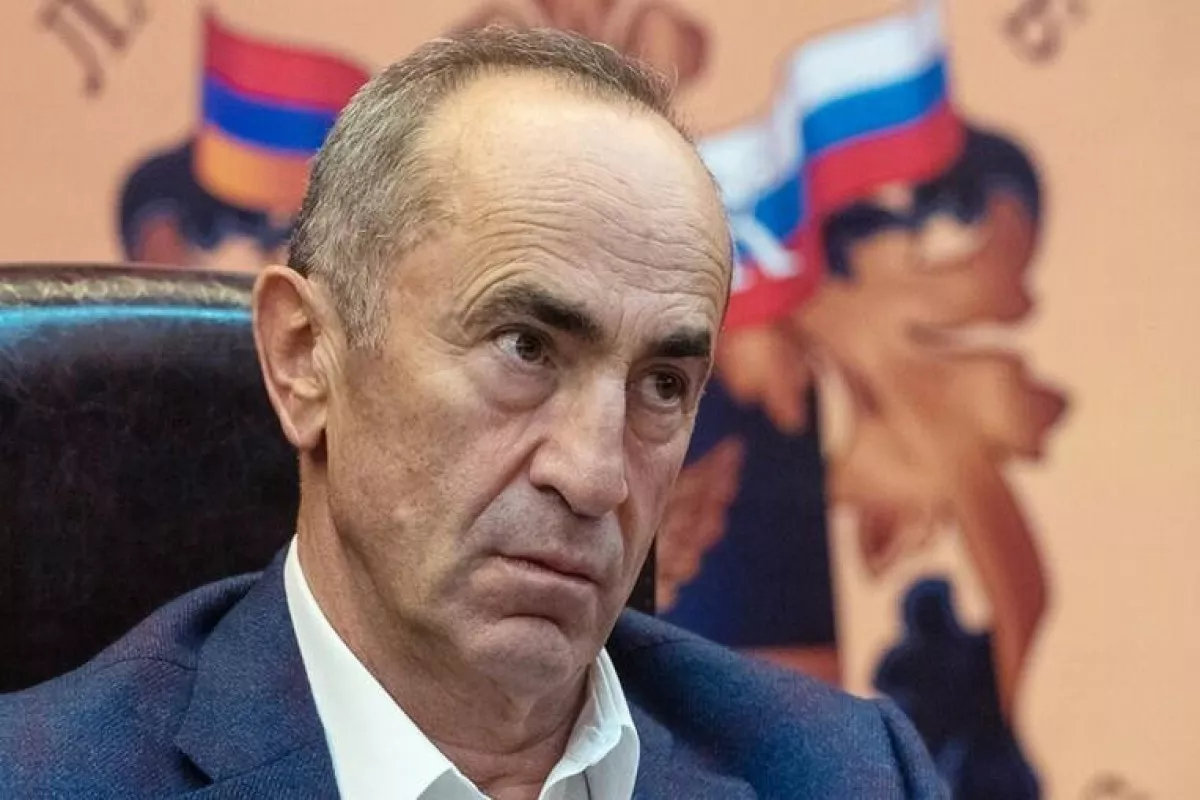
Formally, this is a corruption case, but the political context is no less important. Kocharyan and Sargsyan are key representatives of the so-called “Karabakh clan,” which dominated Armenian politics for nearly two decades. Moreover, following Armenia’s defeat in the 2020 war, Kocharyan returned to frontline politics and emerged as one of the leading opposition figures against Nikol Pashinyan.
The current developments can therefore be viewed from two perspectives: as an attempt by the authorities to complete the dismantling of the old political system, and as a major blow to forces opposing Yerevan’s current course. Or, perhaps more strikingly, one could put it this way: Pashinyan is no longer simply dealing with his political opponents — he is effectively bringing an entire era of Armenian politics to an end.
Russia–Ukraine
Against the backdrop of the Russia-Ukraine conflict, growing attention in recent days has been focused on scenarios involving a possible expansion of the confrontation to NATO’s eastern flank.
According to Western media reports, US intelligence believes that Moscow could seek to test the Alliance’s readiness for a direct confrontation — primarily through a limited military action in one of the Baltic states. Hybrid pressure scenarios are also being discussed, including sabotage, cyberattacks and disruptions to critical infrastructure. At the same time, these are intelligence assessments, not evidence of a confirmed Kremlin plan.
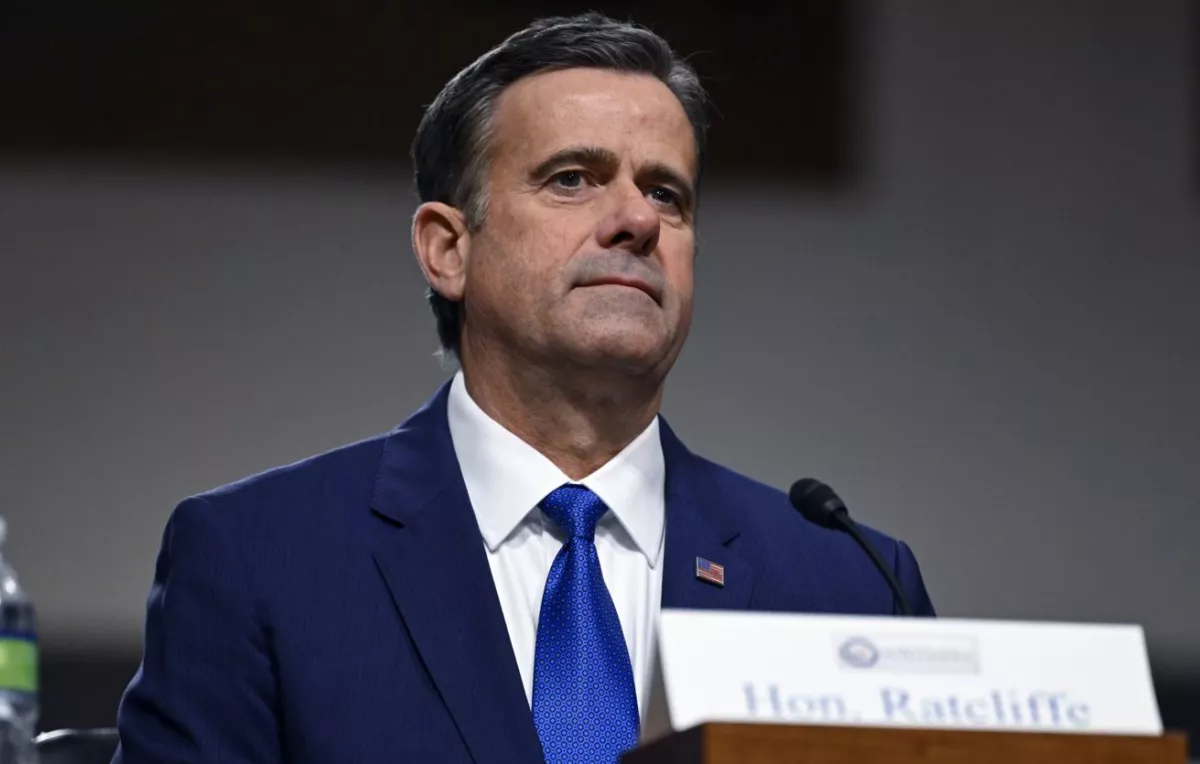
It is against this backdrop that the unexpected visit by CIA Director John Ratcliffe to Moscow on August 25 has taken on particular significance. According to Politico and other Western media outlets, Ratcliffe warned the Russian side against actions that could lead to an escalation involving the Baltic states. Trump, however, described the trip as “semi-routine” and said its main purpose was to help bring the war in Ukraine to an end.
Still, let us assume that where there is smoke, there may indeed be fire — and that US intelligence genuinely has reasons to fear an escalation on NATO’s eastern flank. This raises an intriguing question: what if, through a sophisticated campaign of manipulation, Moscow is deliberately increasing uncertainty around what we might loosely call a “war with NATO”, seeking to exploit Trump’s greatest political vulnerability — his reluctance to become embroiled in another major war in Europe, which could inevitably damage his approval ratings ahead of the US congressional midterm elections?
In return, the Russians could seek to persuade Washington to ease sanctions and put pressure on Kyiv to limit Ukrainian strikes against Russia. If this scenario is viewed in the broader context, it could point to a joint Russian-Iranian strategy aimed at exploiting the US electoral environment.







 editor@caliber.az
 +994 55 444-88-98
 Азербайджан, Баку, ул. Низами, 203, Af Business House, 5-й этаж