










Why Azerbaijan matters to the SCO Analysis by Teymur Atayev
Systematic, conceptual, transparent, predictable and consistent — these are the key principles underpinning Baku’s foreign policy. It is precisely the consistency of this course that has enabled Azerbaijan to secure an important place in the modern geopolitical architecture and establish strong positions while taking into account prospects for further development. Today, leading states and influential international organisations take Baku’s position into account, while the country’s foreign-policy achievements have already extended far beyond the region.
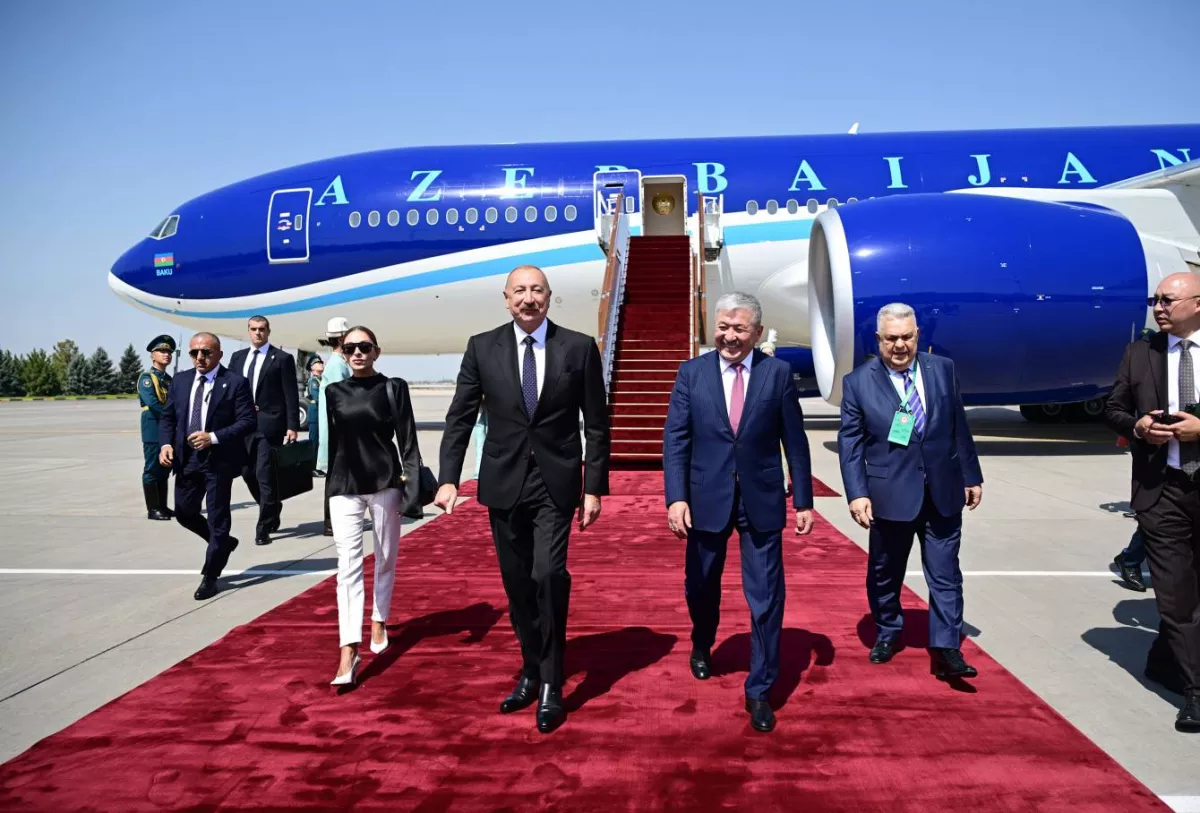
A telling confirmation of this was the invitation extended to Azerbaijani President Ilham Aliyev, in the year marking the 25th anniversary of the Shanghai Cooperation Organisation (SCO), to participate both in a meeting of the Council of Heads of State of SCO member states and in the high-level SCO Plus meeting. This clearly demonstrates Azerbaijan’s growing geopolitical significance in the political and economic architecture of Eurasia.
The meetings in Bishkek are expected to address the international and regional situation, security issues, trade, transport and logistics, digital technologies, as well as other key political and economic priorities. In effect, the summit’s agenda encompasses a broad range of issues that directly intersect with the key priorities of Azerbaijan’s foreign policy.
Back in 2000, national leader Heydar Aliyev, speaking about the rich history of the Eurasian space, noted that Azerbaijan, by participating in the restoration of the ancient Silk Road, sought to create “precisely a Eurasian dialogue, a Eurasian union” through the development of communications and trade ties that would help bring peoples, their cultures and scientific potential closer together. He also referred to the signing in Baku in 1998 of the Basic Multilateral Agreement on International Transport for the Development of the Europe-Caucasus-Asia Corridor, as well as the Baku Declaration, which underscored the importance of interconnected national and regional transport infrastructure in expanding cooperation between Europe, the Black and Caspian seas, the Caucasus and Asia. “The centre for implementing this agreement, this programme, is precisely Azerbaijan, Baku,” he stressed.
It is noteworthy that many of these ideas are echoed today in SCO documents as well. The organisation’s official portal emphasises that the Silk Road left the peoples of the region not only a material legacy, but also traditions of peace, good-neighbourliness and mutually beneficial cooperation that contribute to bringing countries and peoples together and advancing human progress. It also highlights the importance of economic and humanitarian interaction, including cooperation in tourism, culture and education.
This is where continuity once again becomes evident — alongside transparency and a systematic approach. In a 2025 statement on the establishment of an all-round strategic partnership between China and Azerbaijan, Baku expressed its readiness to deepen comprehensive cooperation with SCO member states. This approach stems from Azerbaijan’s longstanding position on this and the broader foreign-policy trajectory, which is clearly reflected in President Ilham Aliyev’s statements at the traditional Shusha Global Media Forums.
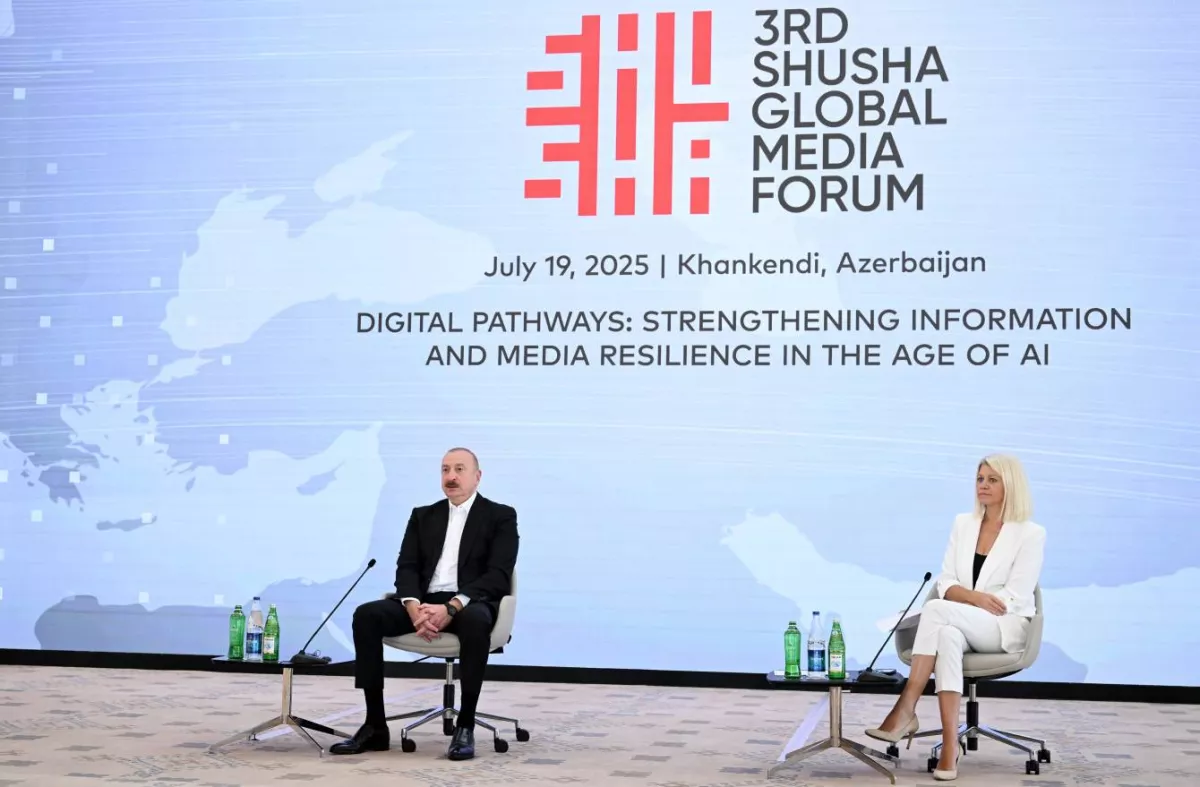
At the Third Forum, the head of state described Azerbaijan as a “meeting point” of connectivity that now extends beyond the Caucasus, Central Asia and Europe, stressing that geography cannot be changed, whether some like it or not. The key point, however, is to make effective use of that geography. Azerbaijan has succeeded in doing precisely this as a geographic hub on the route between Europe and Asia, drawing on its experience in implementing megaprojects and pursuing a diversified foreign policy. Moreover, Azerbaijan is one of the few countries that is a member of both European and Muslim organisations.
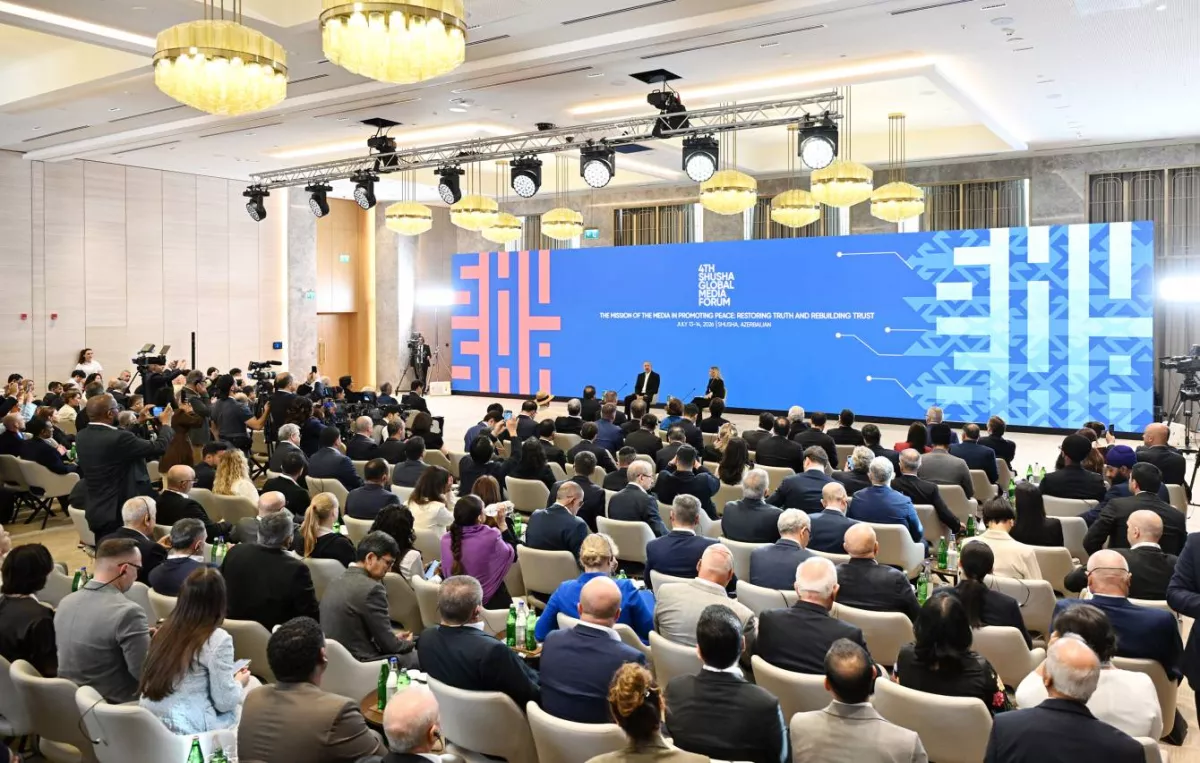
Speaking at the Fourth Shusha Global Media Forum about turning “the advantages of our geographical location into a real platform for multinational cooperation” by taking active steps toward transport connectivity, President Ilham Aliyev noted that physical infrastructure had been developed to the east and west, north and south of Azerbaijan, while cooperation with neighbouring countries had been established and broad international partnerships built across the Eurasian space.
Against this backdrop, Baku’s cooperation with the SCO takes on a particular significance. This was evident at the 2024 SCO Plus meeting in Astana, where President Ilham Aliyev identified cooperation on the East-West and North-South transport corridors as a key area of engagement between Azerbaijan and SCO member states. As the head of state emphasised, Azerbaijan’s geographical position and substantial investments in transport infrastructure have enabled the country to become one of Eurasia’s major transport and logistics hubs.
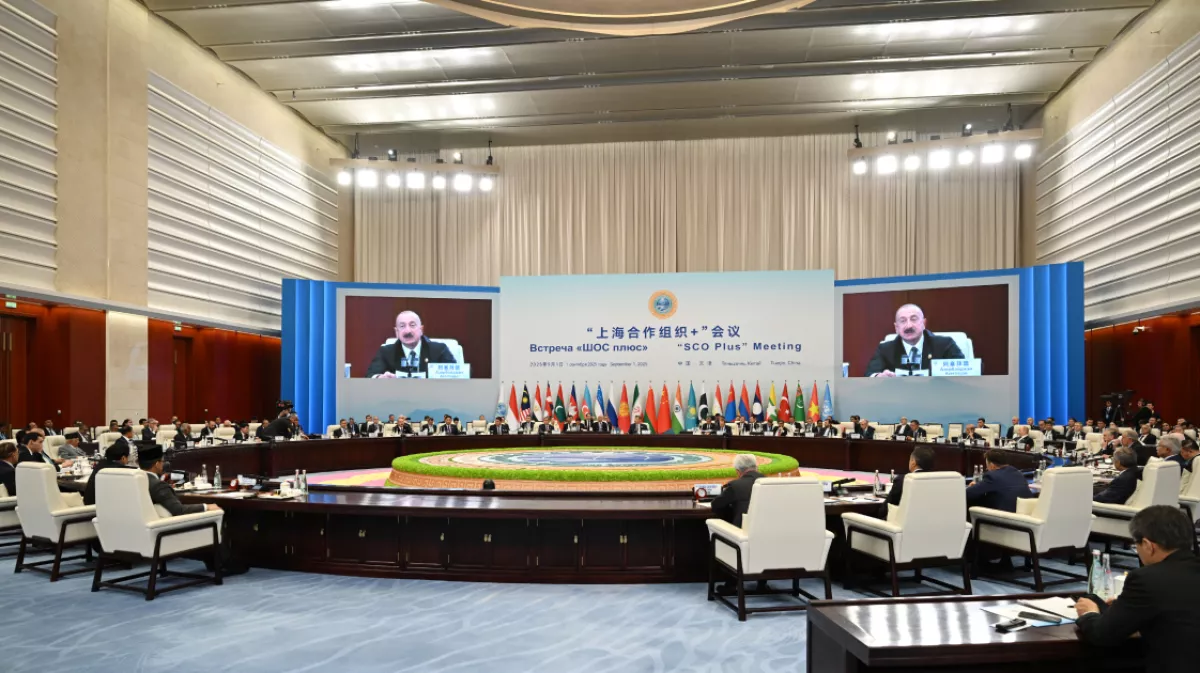
As a result, at the 2025 SCO Plus meeting in Tianjin, China, the country’s leader, describing Azerbaijan as a reliable partner of China in the region, highlighted Baku’s contribution to maintaining international and regional peace and security, as well as to the implementation of large-scale economic, transport and energy projects.
In an exclusive interview with China’s Xinhua News Agency, President Ilham Aliyev was asked about Baku’s plans regarding the SCO, particularly in light of Azerbaijan becoming a dialogue partner of the organisation in 2016. He emphasised the broad scope of Azerbaijan’s cooperation with the organisation, including efforts to combat terrorism, extremism and separatism, as well as to ensure regional security and stability.
At the same time, intercivilisational dialogue and multiculturalism occupy an important place. Sharing the SCO’s principles, Azerbaijan attaches particular importance to cooperation with the organisation. As a reliable partner and an important regional state, the country will continue to contribute to strengthening international and regional peace and security while developing large-scale trade and economic, transport, infrastructure, and energy projects that expand trade, commercial, and investment ties.
Thus, Azerbaijan has firmly established itself as one of the key links in Eurasia’s transport and logistics architecture. Of particular importance in this context is the geostrategic and geo-economic space of C6, where, amid the development of Trans-Caspian connectivity — most notably the Middle Corridor and its significant branch, the Zangezur route — Azerbaijan is emerging as an important element of the new Eurasian configuration.
For Baku, the SCO represents an important political and economic link not only with China and Central Asia, but also with Pakistan, Iran and other geopolitical centres. For their part, SCO countries are interested in Azerbaijan as a route providing access to the Caspian Sea, the South Caucasus, Türkiye, the Middle and Near East, and the Mediterranean. Amid geopolitical turbulence, this geographical advantage acquires particular strategic value.







 editor@caliber.az
 +994 55 444-88-98
 Азербайджан, Баку, ул. Низами, 203, Af Business House, 5-й этаж