










From confrontation to pragmatism: A new chapter in Georgia-Ukraine relations Article by Vladimir Tskhvediani
On August 24, 2026, Georgian Prime Minister Irakli Kobakhidze officially congratulated Ukraine and its people on Independence Day.
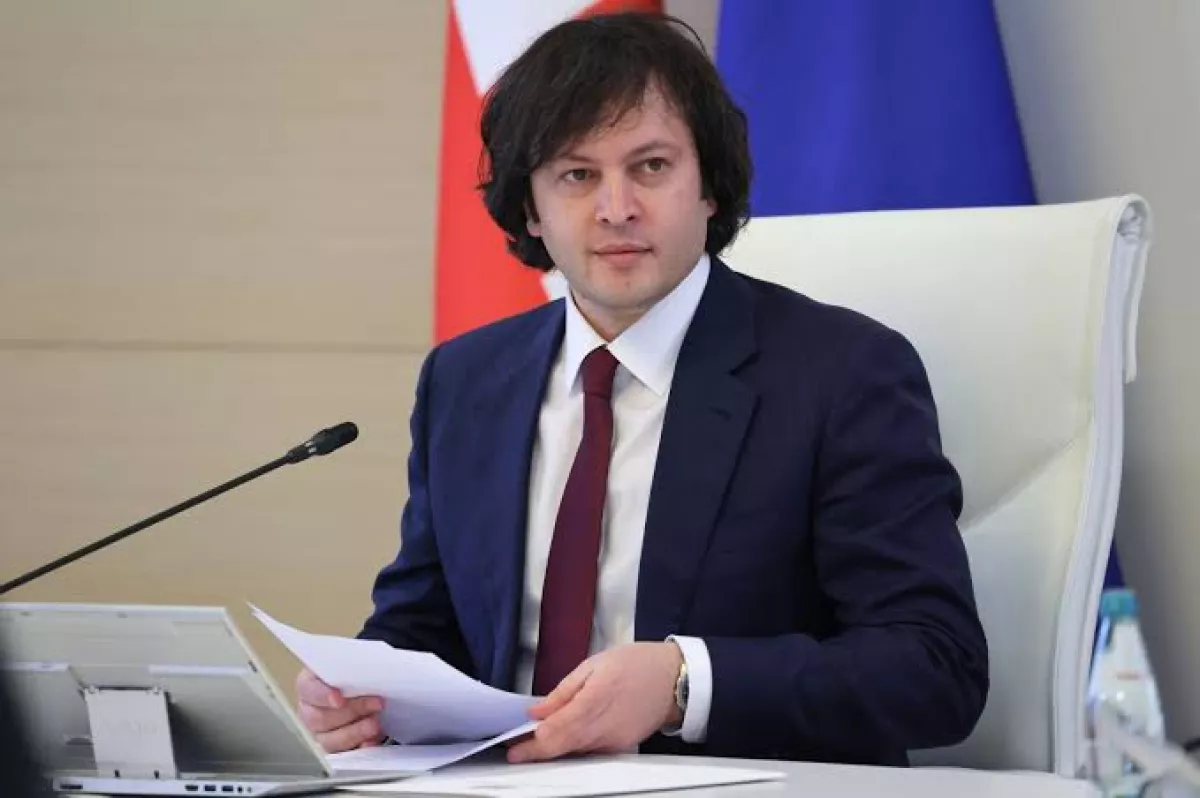
“Congratulations to Ukraine on Independence Day! The strong ties between our countries and peoples are based on historical friendship and shared values,” Georgian Prime Minister Irakli Kobakhidze said in a video address, wishing Ukraine and the Ukrainian people peace, resilience, and prosperity.
Until recently, Kyiv accused Tbilisi of helping Moscow circumvent sanctions, while the Georgian authorities, in turn, accused Ukraine and the West of attempting to drag Georgia into a war with Russia. After the Georgian Dream retained power, Kyiv abandoned its unequivocal support for the Georgian opposition. Today, it is possible to speak of a gradual normalisation of relations and their shift toward a more pragmatic footing, given Georgia’s importance as a transit route for Ukraine’s ties with Azerbaijan and Central Asia. The more important this cooperation becomes for Kyiv, the greater its interest in a stable Georgia.
Negative statements from Kyiv targeting the Georgian authorities have become virtually nonexistent in recent times. Tbilisi, for its part, has provided assistance to Ukraine and its citizens. This was noted by Ukraine’s Chargé d’Affaires in Georgia, Dmytro Berezhnyi, in an article published by the Embassy of Ukraine in Georgia on the occasion of Ukraine’s Independence Day.
According to him, more than 27,000 Ukrainians continue to reside temporarily in Georgia, while support for Ukraine has brought together the government, businesses, civil society, the Georgian Orthodox Church, and ordinary citizens.
The Ukrainian diplomat also argued that “today, not only the future of Ukraine is being decided in the Kharkiv, Zaporizhzhia, and Kherson regions—one of the main fronts in the struggle against Russian imperialism is being waged there, the outcome of which will also determine the future of Georgia's occupied regions.”
Much will depend on the resolution of the issue of Ukraine’s occupied territories for the future of Abkhazia and the Tskhinvali region as well. Kyiv is proposing that Moscow cease hostilities along the line of contact without recognising the annexation of Crimea and four other regions. In essence, this is close to the current “Georgian model,” with part of the country’s territory remaining under de facto occupation. Moscow, meanwhile, insists on its own territorial terms for a settlement.
And judging by the trends in the “drone war,” it may become increasingly difficult for Russia to maintain control over the occupied territories. The possible de-occupation of one of them — in Georgia or Ukraine — could trigger a broader process of restoring internationally recognised borders across the post-Soviet space. That is why Kyiv is closely watching developments in Abkhazia and the Tskhinvali region, while Tbilisi is monitoring the territories of Ukraine occupied by Russia.
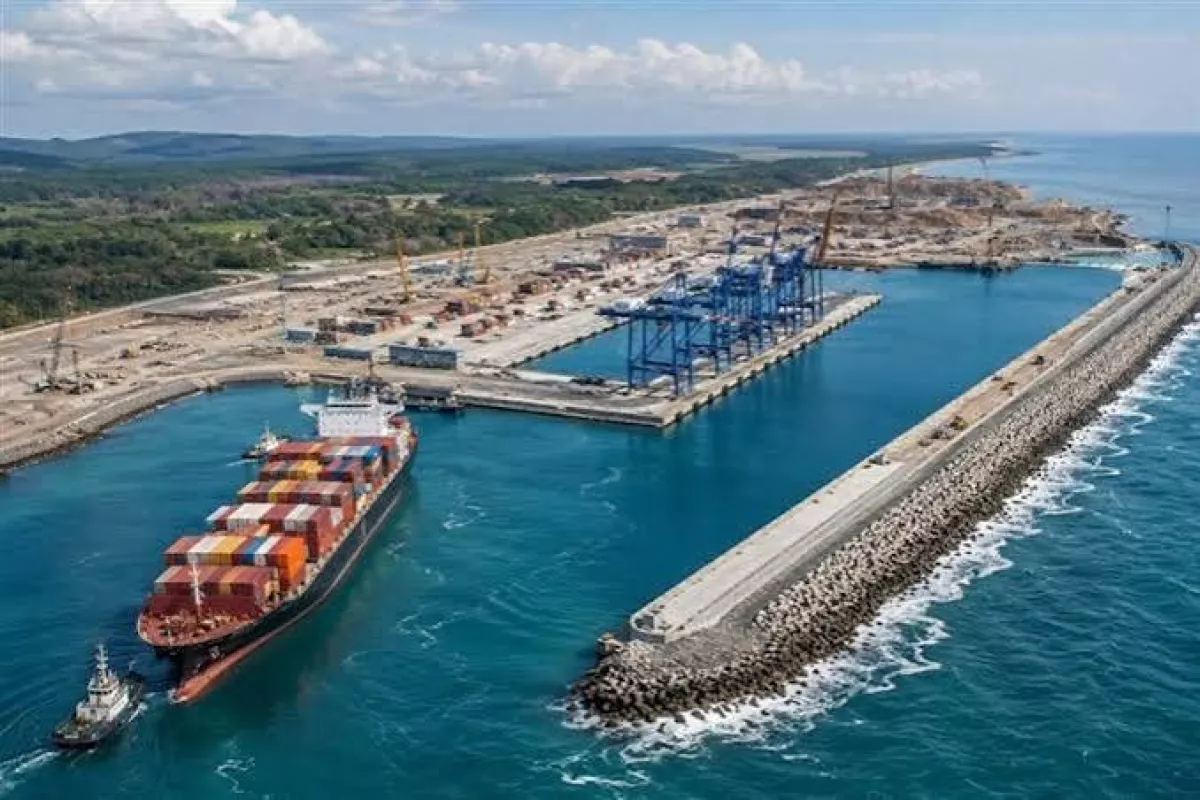
In the economic sphere, Ukraine regards Georgia as a key country along the Middle Corridor. There is significant potential for transit through Ukrainian ports, the Black Sea, and Georgian ports, including the deep-sea port of Anaklia, which is currently under construction. For now, however, the development of such transit is hindered by the ongoing war between Russia and Ukraine and security concerns affecting shipping in Ukrainian waters in the Black Sea.
However, Georgia’s experience shows that existing military conflicts cannot automatically be projected into the future or assumed to be endless. Georgia, which went through a war with Russia in 2008, now maintains trade relations with Moscow despite the absence of diplomatic ties and the unresolved conflicts surrounding Abkhazia and the Tskhinvali region.
In today’s world, there are sufficient signs of preparations for a large-scale confrontation between Russia and the West, including the active rearmament of a number of EU countries, such as Poland, Germany, the Baltic states, and the Scandinavian countries. However, it is not necessarily the case that Ukraine would take part in the “hot phase” of a possible future large-scale conflict in Europe, particularly if the Russia-Ukraine war can be frozen by that time.
It is also possible that, in the event of a “freeze” in hostilities, Ukraine could eventually follow the “Georgian path,” restoring trade and economic ties with Russia. As Georgia’s experience demonstrates, this is possible even without the restoration of diplomatic relations. Many countries have an interest in ending the Russia-Ukraine war, including Ukraine’s partners in Central Asia and the South Caucasus, which are already facing its economic consequences.
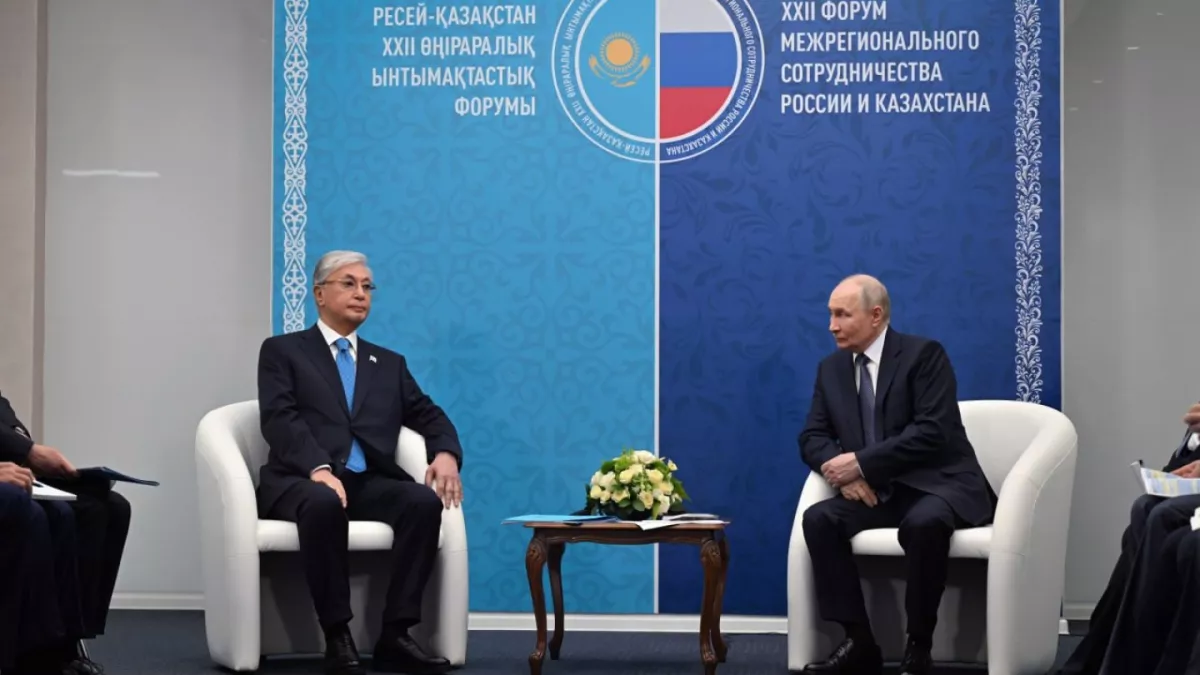
In particular, problems have emerged with the export of Kazakh oil through the Caspian Pipeline Consortium system and via the Black Sea port of Novorossiysk. On July 25, 2026, Kazakh President Kassym-Jomart Tokayev, at a meeting with Russian President Vladimir Putin, proposed “freezing” the conflict and returning to negotiations.
Although Kyiv is not yet discussing the prospects of restoring post-war trade relations with Russia, the experience of other conflicts, including the 2008 Russian-Georgian war, shows that such scenarios cannot be completely ruled out. This is especially true if other geopolitical players have an interest in a peaceful settlement.
Just as a peaceful and stable Georgia is essential to many countries today because of its transit importance for the functioning of the Middle Corridor, Ukraine could likewise become highly sought-after in the future. Moreover, it has more than just a strategically advantageous transit position: Ukraine’s agricultural potential plays a crucial role in ensuring global food security.
By Vladimir Tskhvediani, Georgia, exclusively for Caliber.Az







 editor@caliber.az
 +994 55 444-88-98
 Азербайджан, Баку, ул. Низами, 203, Af Business House, 5-й этаж