










How much is enough? EU rethinks enlargement rules
European Commissioner for Enlargement Marta Kos presented a concept for overhauling the European Union’s enlargement policy in Zagreb on August 25. The European Commission is expected to present its proposals for the enlargement process ahead of an EU leaders’ meeting tentatively scheduled for October 15–16. Kos described the developments as a new “Helsinki Moment,” drawing a parallel with the decisions on the EU’s major enlargement taken at the 1999 Helsinki summit.
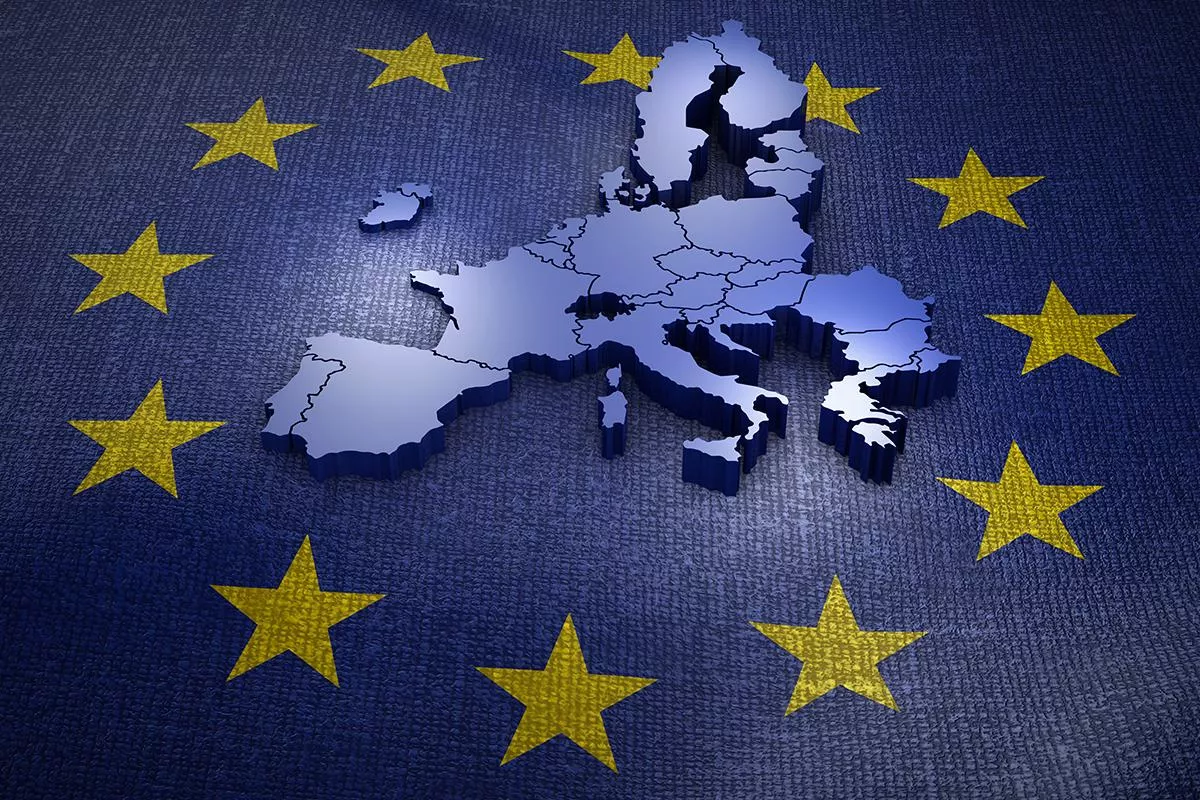
At the heart of the new concept are four areas. The first concerns the EU itself. With the bloc potentially expanding to more than 30 member states, the current decision-making system could become even less effective. Kos has proposed reducing the number of areas in which a single country can block the others, making the institutions more streamlined, and making greater use of enhanced cooperation. In her view, many of these changes could be implemented without revising the bloc’s founding treaties, thereby avoiding the complex process of ratification in every EU member state.
The second area concerns safeguards after accession. Brussels wants not only to assess candidates before admitting them but also to have more effective tools in case an existing member begins to backslide on the principles of the rule of law and democracy. It was in this context that Kos used her strong formulation about the need to keep “Trojan horses” out of the EU. However, such a system creates another problem: additional restrictions on new members could effectively entrench a two-tier model within the Union, where all states are formally equal but some remain subject to special oversight after joining.
The third area is gradual integration instead of an “all or nothing” approach. Candidates could be given access to concrete benefits even before full membership, such as participation in selected European mechanisms in the areas of payments, energy, and the economy. The rationale is not purely economic. If accession negotiations drag on for decades, a promise of future membership alone is not enough, particularly when candidate countries are facing external political pressure. Brussels therefore wants to make European integration tangible throughout the process of moving toward EU membership. Kos herself has previously noted that such an approach should allow citizens to see the benefits of closer ties with the European Union well before formal accession.
The fourth area concerns transitional measures and the EU budget. The bloc should determine in advance how admitting new states would affect existing members, the distribution of funds, and its ability to finance its own priorities. This is particularly important if several countries were to join at the same time: accession would no longer be simply a matter of a candidate meeting political and economic criteria, but would also become a question of the Union’s internal balance.
Overall, the European Commission is seeking to resolve a contradiction that has become increasingly apparent since the launch of the new phase of enlargement: the EU wants to expand faster, but it does not want to become weaker as a result of enlargement. Hence the new model — candidates would be integrated into European mechanisms earlier, while the point of full membership would be made more secure and manageable.
If Kos’s concept is adopted, the path to EU membership would no longer look like a single step from candidate status to full membership. Instead, there would be a whole ladder of intermediate stages of integration. This would allow Brussels to bind candidate countries more closely to the EU politically and economically without simultaneously taking on all the risks associated with their full accession.
Ukraine occupies a particularly important place in this framework. Along with Moldova, Albania, and Montenegro, it is among the candidates Kos has previously described as leaders of the current enlargement process. But it is precisely the Ukrainian track that gives the reform additional urgency: the EU is already facing the need to offer Kyiv closer integration while not being ready to automatically extend the full set of rights and obligations that come with full membership.
In recent years, and particularly in recent months, the issue of Armenia’s European integration has also gained considerable prominence. Yerevan has not yet submitted an official application for EU membership. However, in March 2025, the country’s parliament passed a law launching the process of seeking EU accession, while in May 2026, at the first EU–Armenia summit, Brussels officially reaffirmed its support for the country’s European aspirations. Yerevan has been steadily expanding cooperation with the European Union in the areas of the economy, energy, security, and institutional reforms.
At the same time, Armenia remains a member of the Eurasian Economic Union (EAEU), while its economy and energy sector remain closely linked to Russia. Therefore, the Armenian case could prove to be an equally challenging test for the EU’s new enlargement policy, if not more so, than the Ukrainian case: Ukraine will test Brussels’ ability to expand amid war, while Armenia will test its ability to integrate a country caught between two competing systems.







 editor@caliber.az
 +994 55 444-88-98
 Азербайджан, Баку, ул. Низами, 203, Af Business House, 5-й этаж