










Azerbaijan and Uzbekistan: From historical heritage to eternal friendship Teymur Atayev’s review
The Treaty of Eternal Friendship, signed during Azerbaijani President Ilham Aliyev’s state visit to Uzbekistan, elevates relations between the two brotherly countries to a new level, consolidating the commonality of their history, values, and worldview. Particular emphasis is placed on cultural and humanitarian cooperation, the preservation of their shared spiritual heritage, and the further rapprochement of the Azerbaijani and Uzbek peoples. It is no coincidence that Presidents Ilham Aliyev and Shavkat Mirziyoyev separately highlighted the cultural and humanitarian dimensions of bilateral relations in their statements to the press.
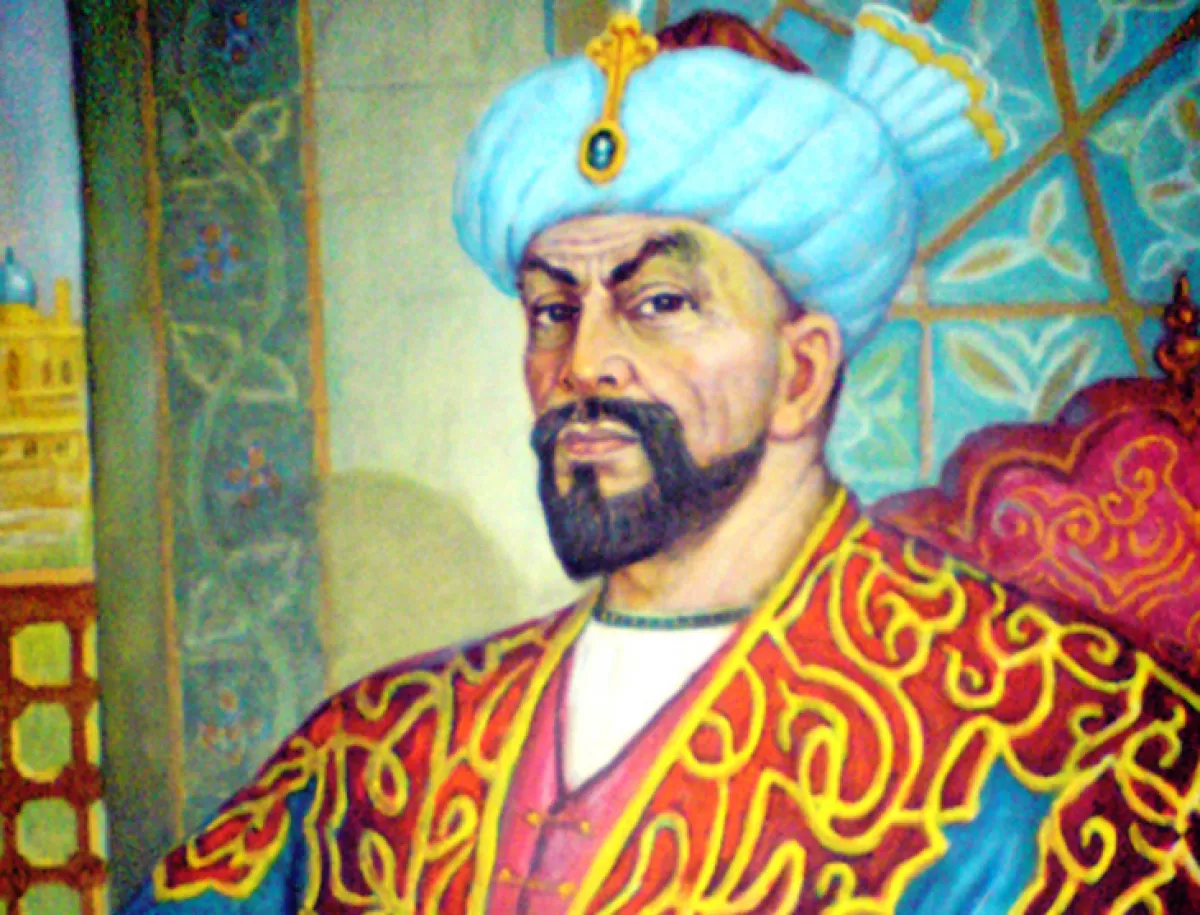
Let us turn to historical episodes that demonstrate the depth of mutual understanding and the historical foundations of Azerbaijani-Uzbek ties, beginning with the era of Emir Timur, who allowed Shirvan ruler Ibrahim I to retain control of the region, showing him particular favour. Sharaf al-Din Yazdi writes that Timur “treated Ibrahim I well,” while Nizam al-Din Shami notes that he bestowed upon him “royal robes, countless favours, gold and precious stones.”
At Timur’s command, the city of Baylakan, destroyed by the Mongols (today’s Beylagan district), was rebuilt. Meanwhile, Azerbaijani influences can be traced in the architecture of Timurid Samarkand, particularly in the Bibi-Khanym Mosque and the Ak-Saray Palace. The connection to Timur’s legacy was also reflected in the history of the Azerbaijan Democratic Republic (ADR): his architectural monuments in Samarkand were cited among the inspirations behind the creation of the ADR’s state symbols (State Archives of the Republic of Azerbaijan, Fund 2900, Inventory 1, File 1, pp. 128–130). In 1925, Azerbaijani playwright Huseyn Javid wrote the play Topal Teymur, for which he was later criticised at the First All-Union Congress of Soviet Writers for idealising the idea of uniting the Turkic peoples.
Another striking example is the Azerbaijani educator Sayid Riza Alizadeh, who played a prominent role in the cultural life of Samarkand. He opened schools and compiled textbooks and primers, while, at his request, Uzeyir Hajibeyli helped promote Azerbaijani music in Turkestan. Azerbaijani musicians travelled to Samarkand, where Alizadeh took part in staging Hajibeyli’s comedies in the Uzbek language. In 2022, Samarkand marked the 135th anniversary of his birth.
Even these few historical episodes are enough to demonstrate the closeness of our peoples and the unity of their cultures. Therefore, the current development of humanitarian ties is not a coincidence, but rather a natural continuation of this historical trajectory. This is particularly evident in the field of education.
In recent years, exhibitions featuring Uzbek universities have been held in Baku. In 2025, an event at the Azerbaijan National Academy of Sciences (ANAS) brought together more than 40 representatives from around 15 prestigious universities across the country. The participating institutions presented educational programs in medicine, engineering, information technology, and other fields in high demand.
As reported at this year’s exhibition of Uzbek universities, the number of Azerbaijani students studying at Uzbek higher education institutions increased tenfold in just one year, while the number of young people interested in pursuing education in Uzbekistan exceeded 5,000. In 2025, the First Rectors’ Forum, titled “Azerbaijan–Uzbekistan: Priority Areas for Developing Cooperation in Higher Education,” was also held in Andijan.
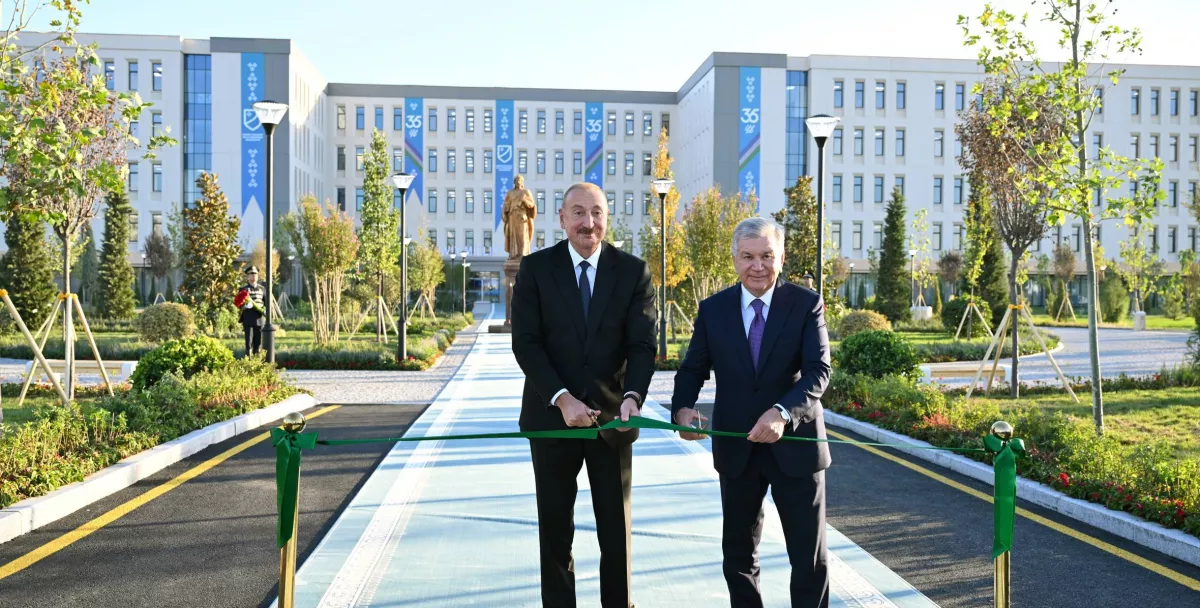
This trajectory continued during Azerbaijani President Ilham Aliyev’s state visit to Uzbekistan just days ago. The two countries’ leaders took part in the opening in Tashkent of the Nizami Ganjavi National Pedagogical University, which signed memorandums of understanding with leading Azerbaijani universities, including the Azerbaijan State Pedagogical University, Baku Slavic University, Baku State University, Azerbaijan University of Languages, and others.
The cooperation provides for joint research and international conferences, the exchange of educational and academic expertise, as well as the development of cultural and educational ties. In addition, the first five graduates of Mirza Ulugbek Secondary School No. 1 in Fuzuli were given the opportunity to study at the university on a scholarship basis. It is symbolic that educational ties are receiving such a concrete and meaningful continuation.
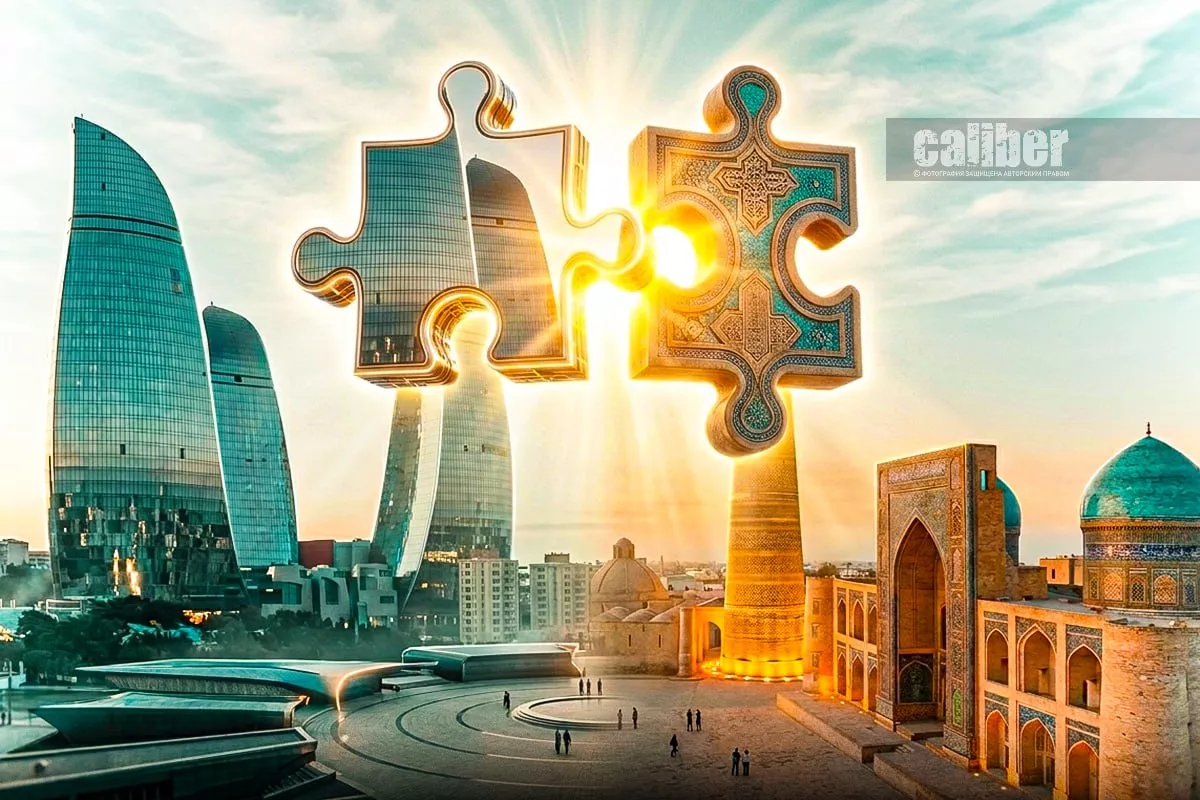
Uzbek President Shavkat Mirziyoyev, in his statement to the press, highlighted the momentum in humanitarian ties, including the upcoming Days of Azerbaijani Culture in Uzbekistan and the Second Forum of University Rectors in Azerbaijan. He also described the production of a joint feature film dedicated to the literary heritage of Nizami Ganjavi and Alisher Navoi as a landmark event. He further stressed that the two sides would support public and youth exchanges, creating spaces for communication, creativity, and the exchange of innovative ideas.
Thus, the current stage of Azerbaijani-Uzbek relations opens up broad prospects for further rapprochement. And, as President Ilham Aliyev noted, these ties rest on a solid foundation — both spiritual and material: “Such a synthesis is not often seen in world politics, but it exists here.”







 editor@caliber.az
 +994 55 444-88-98
 Азербайджан, Баку, ул. Низами, 203, Af Business House, 5-й этаж