










Alliance for the ages Baku and Tashkent seal a friendship for generations
The state visit of President Ilham Aliyev to Uzbekistan formalised something extremely rare in diplomatic practice—the transition of relations between two states into a status of eternal friendship. And this phrase is neither a rhetorical flourish nor a political courtesy; it is the name of a specific document signed in Tashkent and intended to endure for generations.
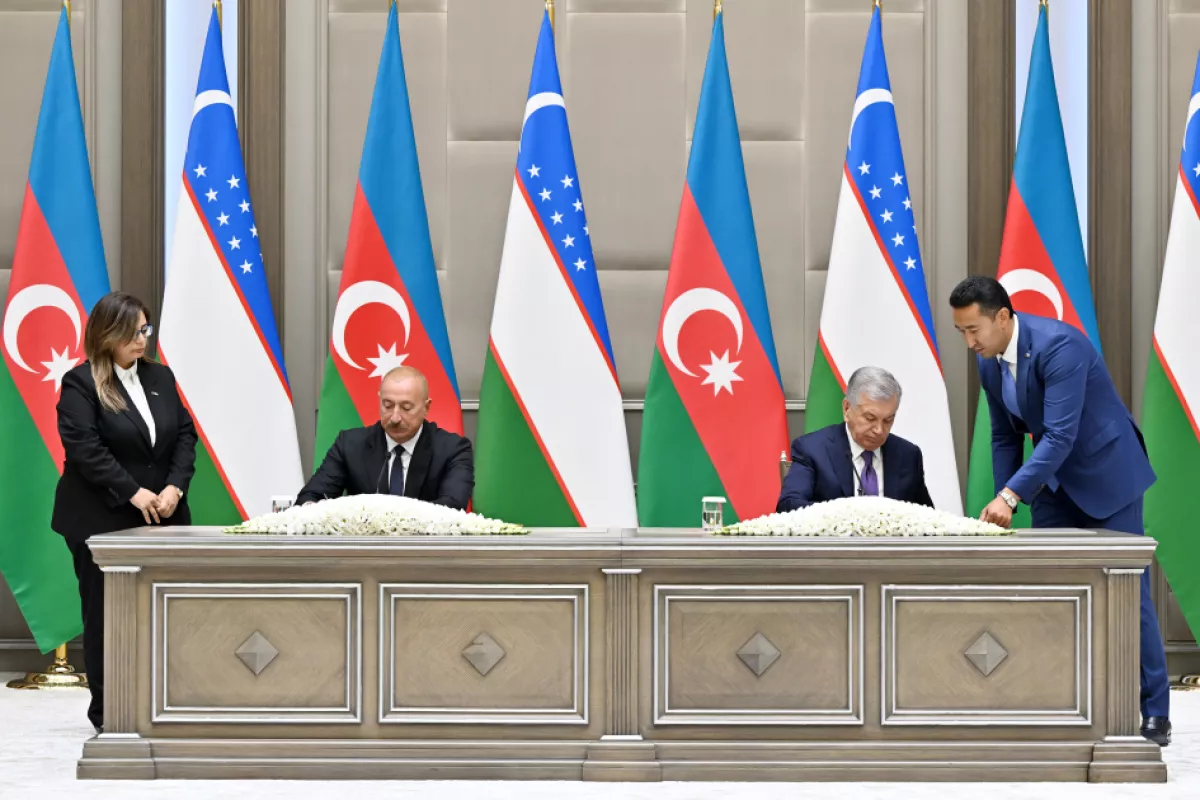
If we trace the development of Azerbaijani-Uzbek relations in recent years, a clear upward trajectory emerges: brotherhood rooted in shared history evolved into a strategic partnership; the partnership developed into an alliance, and that alliance has now been crowned by the Treaty of Eternal Friendship. Each step on this ladder was backed not by declarations, but by legal mechanisms, which is precisely why the milestone reached in Tashkent rests on such a solid foundation.
To appreciate the significance of the new document, it is worth recalling what preceded it. Relations between Azerbaijan and Uzbekistan have long supplemented their cultural affinity with an institutional framework—treaties, road maps, and joint structures. The Treaty on Allied Relations signed earlier elevated ties to a level of cooperation attainable by sovereign states, while the Supreme Interstate Council, established in 2023, became the key mechanism for their institutionalisation, defining long-term priorities and translating political intentions into concrete projects.
The Treaty of Eternal Friendship logically continues this trajectory: it formalises the highest strategic and political level of relations, incorporates issues of mutual security, and transforms the alliance between the two countries into an independent factor of stability—an even more significant one against the backdrop of intensifying rivalry among the world’s major powers. This mustn't be a symbolic gesture, but a legal and regulatory framework designed to remain in force for decades to come. The Treaty of Eternal Friendship is conceived as a document for the ages, and this is precisely what gives it its special value: the two states are defining their relationship with a historical perspective in mind. Such an approach is a sign of the maturity of both sides, which understand that a genuine strategic relationship is measured not in years, but in generations.
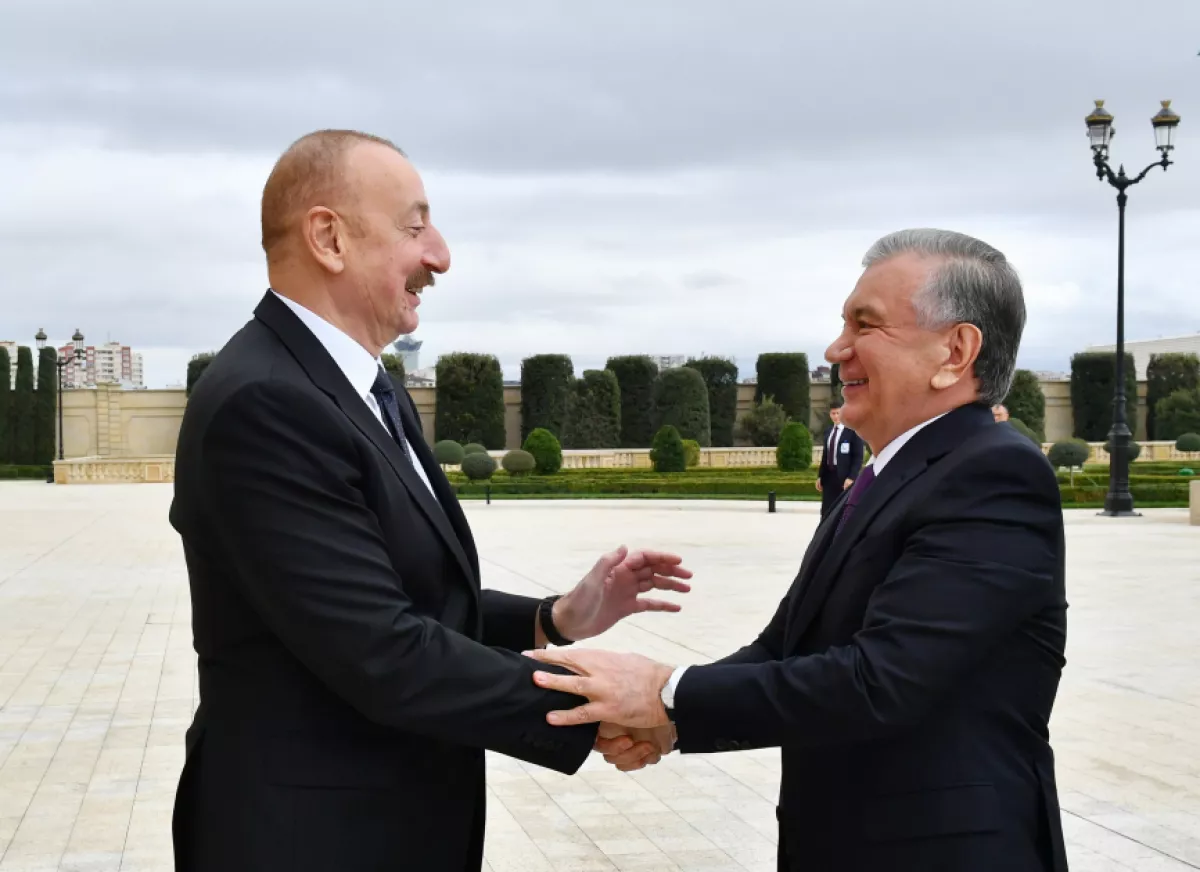
Behind this framework lies the political will of the two leaders, and its role cannot be overstated. The large-scale reforms carried out by Presidents Ilham Aliyev and Shavkat Mirziyoyev have strengthened the economic potential, international standing, and regional weight of both states, while the high level of personal trust between them has become the main driving force behind their rapprochement. But the key achievement is that this trust has not remained confined to personal relations; it has been transformed into a sustainable institutional model. This fundamentally distinguishes the Azerbaijani-Uzbek alliance from many declarations of friendship that ultimately remain on paper.
The economic substance of the alliance confirms the seriousness of the political formulations. In 2025, trade between the two countries more than tripled, reaching approximately $795 million, and increased by another third in January–May 2026. Against this backdrop, the leaders’ goal of raising bilateral trade to $1 billion by 2030 looks not like an ambitious slogan, but like an entirely achievable target.
A powerful instrument of rapprochement has been the Azerbaijan-Uzbekistan Investment Fund, with capital of $500 million. The mechanism makes it possible to finance joint projects directly, without intermediaries or lengthy approval procedures, transforming the partnership into concrete enterprises, jobs, and production chains linking the two economies.
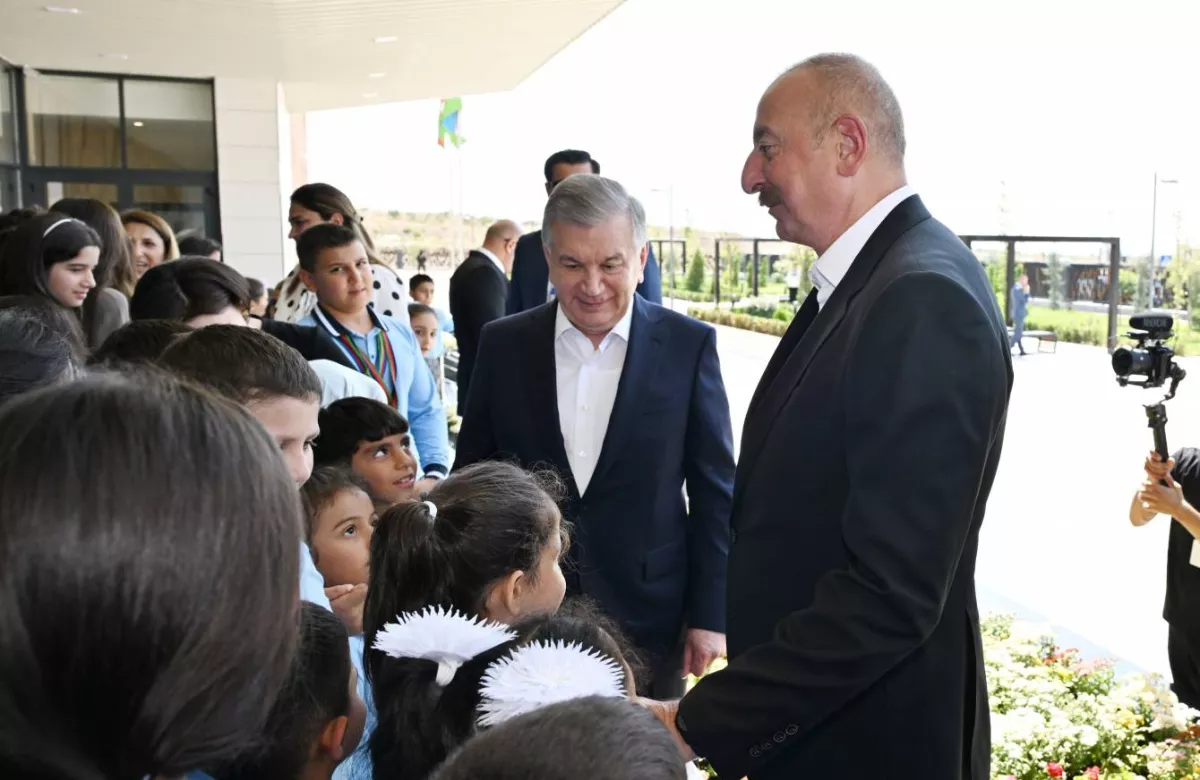
Uzbekistan’s involvement in the reconstruction of Karabakh holds a special place in this picture, giving the alliance an additional dimension. Tashkent was among the first countries to support the revival of Azerbaijan’s liberated territories through concrete action—from the construction of a school in Fuzuli to joint projects. A symbolic expression of this support has been the twinning agreements between cities of the two countries, particularly the ties linking Urgench with Khankendi and Nakhchivan, and Bukhara with Lachin. These initiatives have woven Uzbekistan’s presence into the very fabric of Karabakh’s revival.
The significance of President Aliyev’s current visit to Uzbekistan extends beyond bilateral relations and carries a distinct geopolitical dimension. The Azerbaijani-Uzbek alliance has become more than an example of fraternal friendship; it represents a strategic model shaping a new format of interaction between Central Asia and the South Caucasus.
The two states are emerging as key links in a developing axis that connects the two regions into a single geopolitical and geo-economic space. An additional impetus to this process is provided by the Organisation of Turkic States, which transforms bilateral ties into part of a broader process of Turkic integration. In a world where major powers are once again dividing spheres of influence, the ability of middle powers to build strong, institutionally established alliances with one another is becoming a key guarantee of their strategic agency. Azerbaijan and Uzbekistan are demonstrating precisely this capability.
Thus, the Azerbaijani leader’s state visit should be viewed as a milestone after which relations between the two countries acquire a qualitatively new level of durability. Having progressed from brotherhood through strategic partnership and alliance to eternal friendship, Baku and Tashkent have built a model in which the political will of the leaders, institutional mechanisms, economic projects, and human solidarity all work in the same direction.
The Treaty of Eternal Friendship between the Republic of Azerbaijan and the Republic of Uzbekistan is not a final destination. It is a foundation laid for the future—a framework within which relations will continue to develop for decades to come, regardless of generational change or shifts in the global environment. And the fact that two Turkic states have succeeded in giving their ties such a solid legal foundation reflects the maturity of a policy that looks beyond immediate gains and thinks in terms of historical perspective.







 editor@caliber.az
 +994 55 444-88-98
 Азербайджан, Баку, ул. Низами, 203, Af Business House, 5-й этаж