










A stained "birth certificate" Armenia debates its Declaration of Independence
A new wave of public debate has erupted in Armenia. The trigger is the 36th anniversary of the adoption of the Declaration of Independence, which, as we should not forget, refers to the “reunification of Armenia and Nagorno-Karabakh.” It is this declaration that Armenia’s Constitution cites in its preamble as a foundational act of statehood.
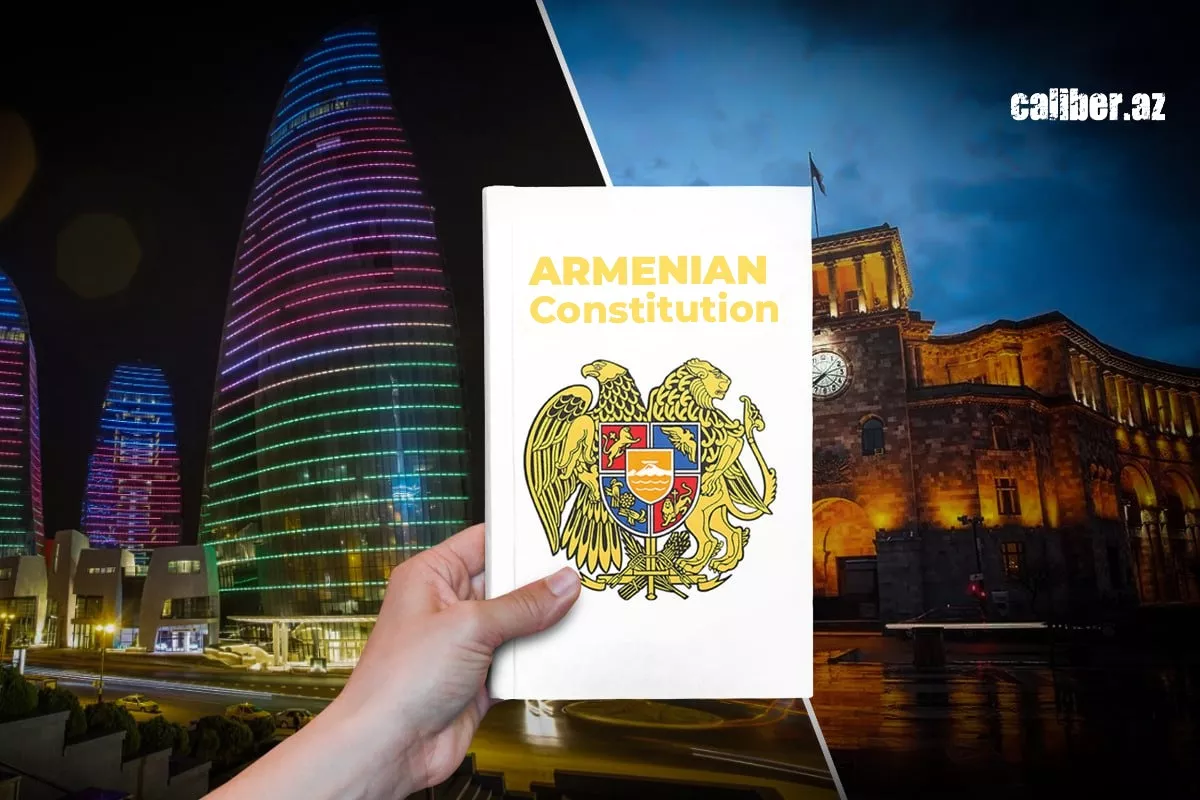
Meanwhile, removing this reference from the preamble is currently Azerbaijan’s sole demand for the signing of a peace agreement with Armenia. Even before the elections, Pashinyan’s government announced that it would seek to adopt a new constitution. Moreover, the need for this change was explained not by Baku’s demand, but by broader considerations. This course is also enshrined in the government’s recently adopted programme for 2026–2031, which formalises the transition to the “Fourth Republic.” It all makes sense: a new republic, a new basic law.
However, when speaking about the need for a new constitution, Pashinyan does not limit himself to general considerations and specifically addresses the fate of the preamble. “We will publish the draft of the new constitution in the coming months, and, as I have already said, the new constitution must contain no references to the 1990 Declaration of Independence. We have announced our decision not to continue the Karabakh movement and to put an end to it, and the people endorsed this decision,” Pashinyan said today in an address to the National Assembly.
It should be noted that he had already expressed this view before the elections, stressing that the new constitution should contain no such reference because the declaration “is built on the logic of conflict.” And here, an important point can be made: Pashinyan is not afraid of being accused of pandering to Azerbaijan. After all, he has already won the struggle for power by employing a peace-oriented discourse, of which his rejection of the current constitutional preamble has also become a part.

Against this backdrop, it is hardly surprising that, during yet another anniversary of the Declaration of Independence, the opposition has unleashed a barrage of criticism against the ruling party. However, unlike Pashinyan, it seems unable to find the right words. “The Declaration of Independence is one of the foundational documents of Armenian statehood and the basis of national unity. Therefore, defending it is tantamount to defending Armenian statehood,” the Armenian Revolutionary Federation (ARF) Dashnaktsutyun said in a rather lacklustre statement.
Hayk Babukhanyan, chairman of the Constitutional Rights Union party and one of the authors of the declaration, raised the temperature somewhat, saying that Armenia’s current authorities had put the country’s independence and sovereignty up for auction.
However, two other politicians distinguished themselves by being the “most eloquent” of all. Whether together or independently of one another — like Popov and Marconi — they came up with the same poetic metaphor to describe what is happening.
Aram Manukyan, vice chairman of the Armenian National Congress (he was the one who read the Declaration of Independence from the rostrum of the Supreme Council on August 23, 1990), said: “Whether it is Nikol or some Bolshevik, no one can tarnish or consign to oblivion our country’s birth certificate.” He was echoed almost word for word by Narek Karapetyan, head of the Strong Armenia parliamentary faction and nephew of the party’s chairman, Samvel Karapetyan: “The Constitution is our birth certificate. Are we going to live to 35 and burn it?” he asked.
There is a very simple and harsh answer to these appeals: the birth certificate turned out to be forged. And the sooner Armenia washes this murky stain from its national record, the better it will be for the country itself.







 editor@caliber.az
 +994 55 444-88-98
 Азербайджан, Баку, ул. Низами, 203, Af Business House, 5-й этаж