










SCO summit: Azerbaijan strengthens its position in Eurasia
Today and tomorrow, Bishkek, the capital of Kyrgyzstan, is becoming one of Eurasia’s key diplomatic hubs. The city is hosting the anniversary summit of the Shanghai Cooperation Organisation (SCO), marking 25 years since the organisation’s founding. Leaders from 17 countries, along with UN Secretary-General António Guterres, are taking part in meetings of the Council of Heads of State and the “SCO Plus” format. President of Azerbaijan Ilham Aliyev is also participating in the summit. The Bishkek Declaration, commemorating the SCO’s 25th anniversary, is expected to be the main outcome document of the meeting.
For Azerbaijan, participation in such a high-level forum carries significance far beyond diplomatic protocol. It is another indication that Baku has firmly established itself among the countries whose participation is increasingly essential to any comprehensive discussion of security, transport, energy and economic connectivity across the vast space linking East and West.
Azerbaijan participates in the SCO as a dialogue partner. Yet the substance of its engagement with the organisation has long been shaped less by its formal status than by the country’s growing practical importance. Official documents adopted by Azerbaijan and the SCO outline a broad range of areas for cooperation, including security and the fight against transnational threats, as well as trade, investment, energy, telecommunications and multimodal transport.
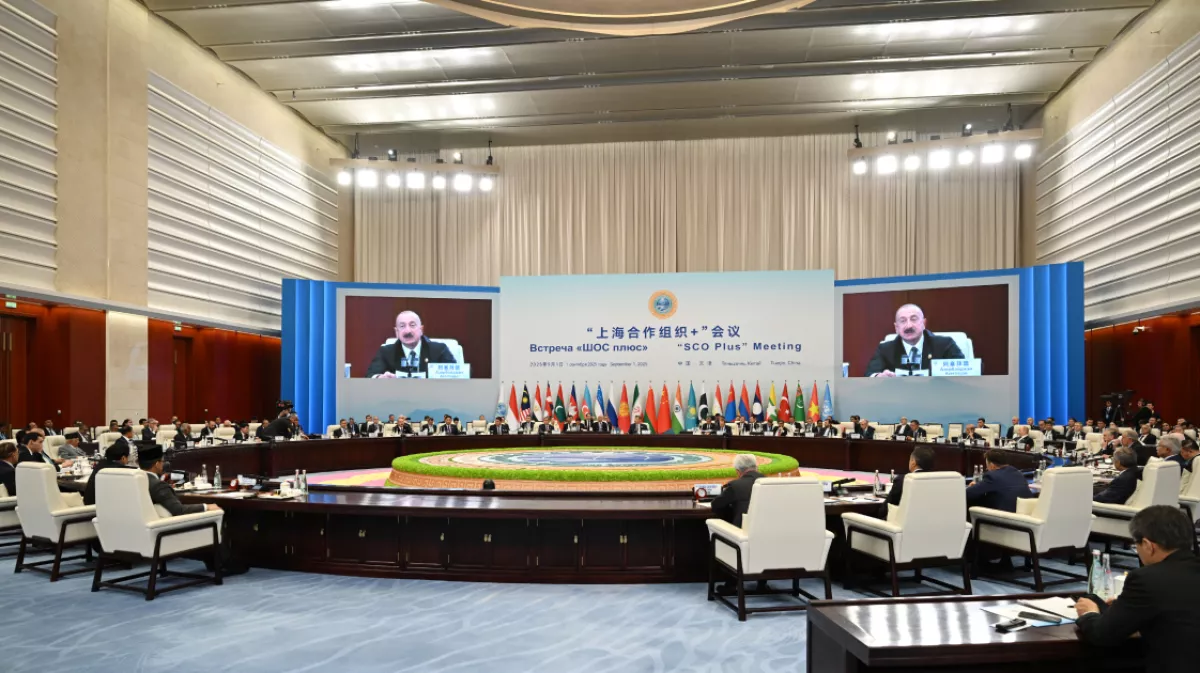
It is precisely in this context that Azerbaijan’s strategic value becomes particularly evident. The country’s geographical position has evolved from a simple advantage on the map into a genuine political and economic asset. Azerbaijan is a key link in the Middle Corridor, connecting China and Central Asia with the South Caucasus, Türkiye and European markets. For SCO member states seeking to diversify their trade and transport routes, this is of fundamental importance.
The energy dimension is equally significant. At the SCO Energy Ministers’ Meeting held in Bishkek in June, the Azerbaijani side highlighted the country’s role as a reliable energy partner and transit hub, as well as its plans to expand renewable energy generation and develop a Central Asia–Azerbaijan Green Energy Corridor. The project could eventually link the energy systems of Central Asia, the South Caucasus and Türkiye, and potentially extend to European markets.
Yet Azerbaijan’s current standing is the result of a long and difficult journey that cannot be fully understood without considering its historical context. Thirty-five years ago, after regaining its independence, the republic inherited the heavy legacy of the Soviet system and faced economic collapse, political instability, military aggression and the occupation of a significant part of its territory. In the early 1990s, the challenge was not the development of global transport corridors or international energy projects. It was the very survival of the state.
All the more significant, therefore, is the transformation that has taken place. Azerbaijan has evolved from a state facing a profound systemic crisis into one of the leading political and economic centres of the South Caucasus. The restoration of its territorial integrity marked a crucial milestone in this process. Yet its significance extends far beyond the military and political spheres. It has also opened the way for the restoration of a unified economic space within the country, the creation of new transport links and the reintegration of the liberated territories into Azerbaijan’s broader development strategy. Against this backdrop, the Zangezur Corridor is becoming more tangible and realistic than ever.
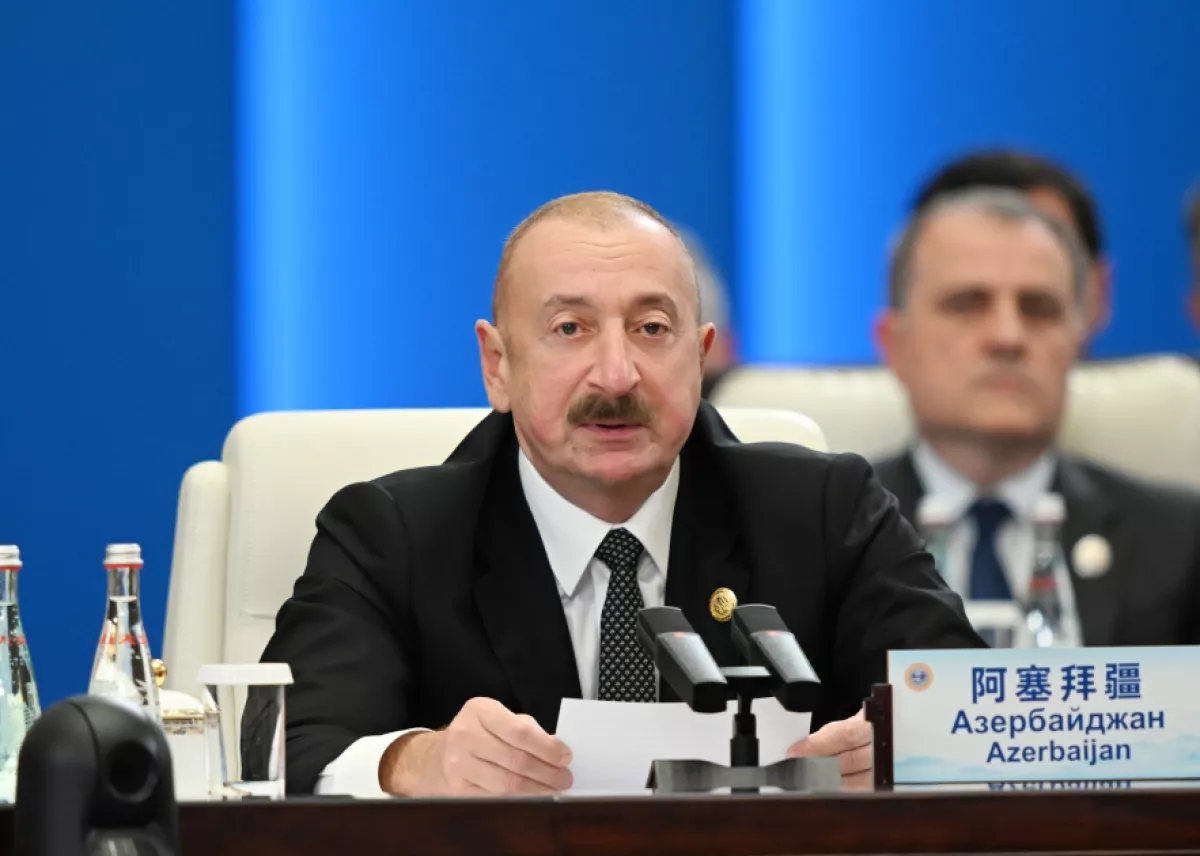
This transformation was no accident. It was the result of a policy that combined caution with consistency, diplomatic flexibility with the protection of national interests, and patience with determination when circumstances demanded action. This approach enabled Azerbaijan to preserve its strategic autonomy while simultaneously developing relations with the world’s major centres of power.
The agenda of the Bishkek Summit — politics, security, trade, logistics, digitalisation, environmental issues and humanitarian cooperation — closely corresponds to areas in which Azerbaijan already possesses concrete capabilities and substantial experience. The SCO itself is increasingly placing transport, economic and digital connectivity among the key drivers of its future development.
The Bishkek Summit is likely to provide yet another confirmation of an obvious truth: international standing is not built through declarations. It is earned over decades — through the ability to defend one’s independence, honour commitments, develop infrastructure and offer partners practical solutions.
Azerbaijan has followed precisely such a path: from the threat of losing its statehood to becoming a stable and sovereign country; from occupation to the restoration of territorial integrity; and from a peripheral position to emerging as one of Eurasia’s key crossroads. President Ilham Aliyev’s participation in the work of major international and regional platforms is a natural reflection of this new reality.
Today, Azerbaijan is no longer seeking to define its place on the world’s political map. It is confidently asserting that place. And the path the country has travelled over 35 years of independence provides ample grounds to conclude that Azerbaijan is continuing to move in a direction that is strengthening its sovereignty, regional influence and role in the wider Eurasian space.







 editor@caliber.az
 +994 55 444-88-98
 Азербайджан, Баку, ул. Низами, 203, Af Business House, 5-й этаж