










Investing in brotherhood: Baku and Tashkent forge a new model of cooperation Analysis by Khazar Akhundov
In recent years, Azerbaijan has consistently accelerated its business ties with Central Asian countries, with the most significant progress achieved in cooperation with Uzbekistan. Alongside traditional areas such as energy, logistics, and trade, increasing mutual investment and developing joint production have emerged as the backbone of the integration policies pursued by Baku and Tashkent. The priority attached to these areas was reaffirmed during President Ilham Aliyev’s state visit to Uzbekistan, which included the third meeting of the Supreme Interstate Council, discussions on expanding trade and economic ties with the goal of increasing bilateral trade to $1 billion and beyond, and the signing of important bilateral documents.
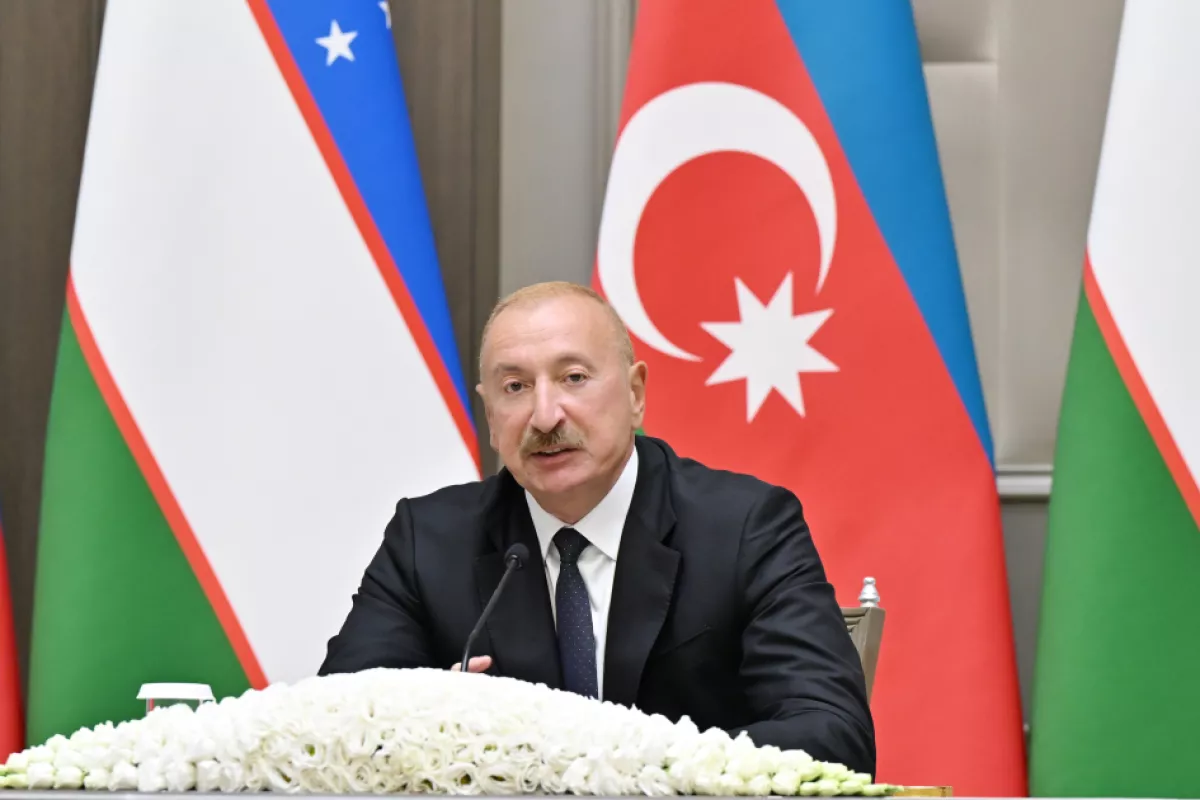
In his statement to the press, President Ilham Aliyev stressed that “Central Asia and Azerbaijan today constitute a single geopolitical and geo-economic region, which has enormous potential today, but even greater potential for further growth. The close interaction between our countries, Uzbekistan and Azerbaijan, will largely determine the overall positive development dynamics of this vast region, which I would even call a newly emerging and already sufficiently integrated region.”
The Azerbaijani President also noted that cooperation between the two states covers a wide range of areas, including energy, transport, investment projects, tourism, mining, the automotive industry, agriculture, and processing.
“Even today, at the end of the official bilateral events, when we laid the foundations for new projects or inaugurated new projects, simply listing these projects is enough to see how multifaceted our cooperation is. I also forgot to mention cooperation in the banking sector, with a leading Azerbaijani bank entering the Uzbek market, SOCAR entering Uzbekistan's retail market, while in projects related to the exploration of oil and gas resources, we are already essentially at the final stage and very much hope to begin drilling production wells next year, once, I hope, the exploration drilling and exploration activities yield positive results,” the Azerbaijani leader said.
Efforts to expand business ties and deepen them qualitatively were also at the heart of the third meeting of the Supreme Interstate Council of Azerbaijan and Uzbekistan.
“We have elevated our bilateral relations to a truly historic peak. As confirmation of this, one can point to the signing of the historic Treaty on Eternal Friendship following the summit. Most importantly, every provision of our strategic partnership and alliance is reflected in concrete, tangible results,” Uzbek President Shavkat Mirziyoyev said in his address to the meeting.
“Over the past five years, the volume of mutual trade has increased threefold, while the total portfolio of joint projects has exceeded $5 billion. And this is by no means the limit. In preparation for this visit, meetings of the Intergovernmental Commission, the Business Council, and the Forum of Regions were successfully held, yielding breakthrough initiatives for the implementation of joint projects and programs,” he added.
It is worth noting that the most effective efforts by Baku and Tashkent in recent years have been focused on expanding trade. By comparison, bilateral trade between Azerbaijan and Uzbekistan was a modest $31.2 million in 2017. Eight years later, however, trade in this segment had increased more than 25-fold.
In 2024, Azerbaijan-Uzbekistan trade turnover reached $252 million, up 41% year-on-year. The positive trend accelerated further in 2025. According to data from the State Customs Committee of the Republic of Azerbaijan, bilateral trade reached $795.159 million, more than three times the figure recorded two years earlier.
Moreover, in January-May 2026, bilateral trade increased by another 33% compared with the same period a year earlier. And this is far from the limit: Baku and Tashkent are now working to further expand trade volumes, as the economic potential of the two countries makes it possible to raise bilateral trade to $1 billion.
At the same time, over the past five years, cooperation projects have been actively implemented in the energy, chemical, mining, textile, agricultural, urban development, automotive, and other sectors.
In particular, in July 2024, Azerbaijani and Uzbek entrepreneurs signed a contract to grow cotton and produce cottonseed oil at the Imishli Agropark, while future yarn, textile, and garment manufacturing facilities will be located in the Mingachevir Industrial Park. Meanwhile, a large garment factory built by Uzbek investors is already operating in Khankendi, employing more than 200 people.
At the same time, since 2022, the Azerbaijan-Uzbekistan joint venture in the Hajigabul Industrial Park has assembled around 10,700 Chevrolet vehicles. In 2027, as part of the second phase of the project, the company plans to move to a full industrial production cycle, including the localization of body components and other vehicle parts. Overall, around 70 Uzbek trading, service, and manufacturing companies are currently operating in the Azerbaijani market.
Azerbaijani investors and contracting companies are likewise playing an active role in developing Uzbekistan’s economy. By the beginning of this year, 540 companies with Azerbaijani capital had been registered in the country. Among the most significant initiatives is SOCAR’s involvement in the exploration of Uzbekistan’s Ustyurt field.
Projects aimed at capitalising on Uzbekistan’s tourism sector are also substantial, including the construction of hotels and residential complexes in Tashkent, into which Azerbaijani investors plan to invest a total of $5 billion.
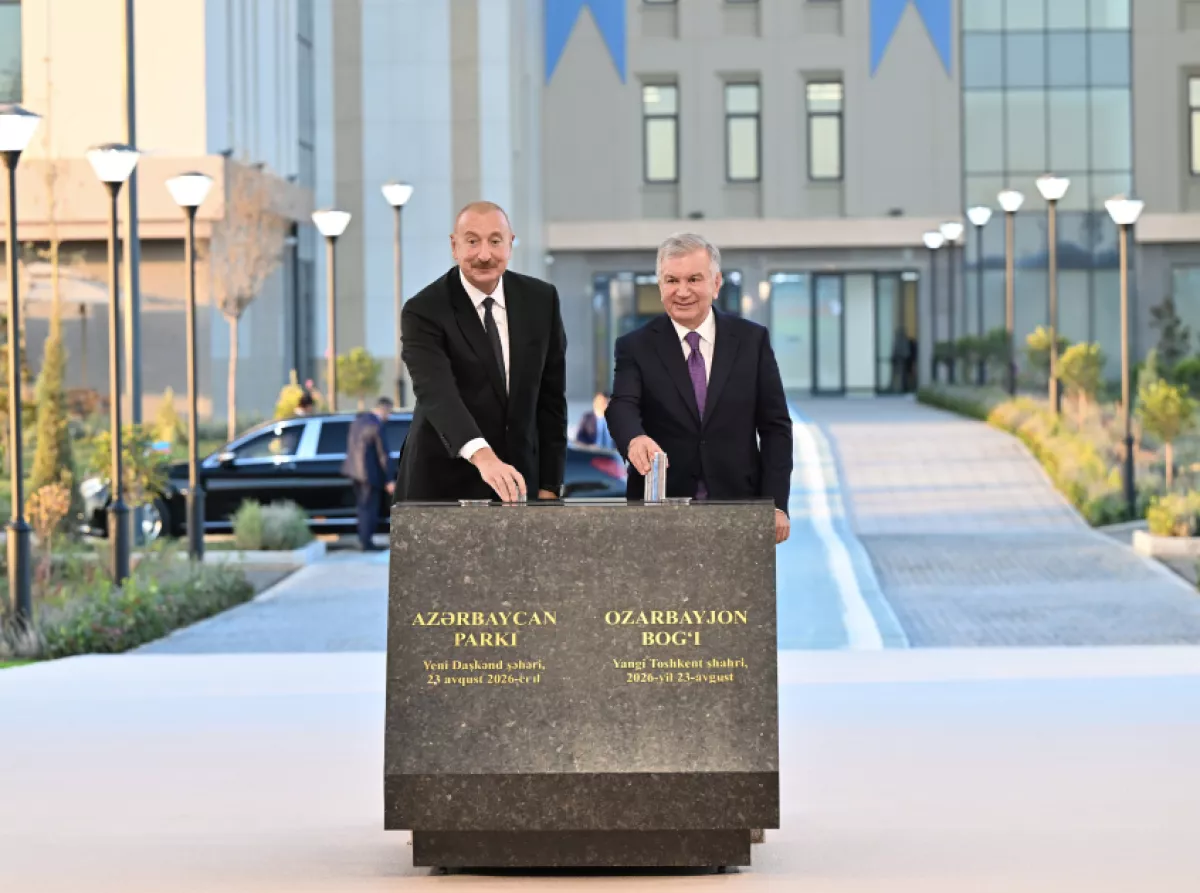
As part of Azerbaijani President Ilham Aliyev’s state visit, the leaders of the two brotherly countries took part online in ceremonies to inaugurate and lay the foundations for new Azerbaijani projects in Uzbekistan.
The event included the opening of Davr Bank (International Bank of Azerbaijan), a gypsum plant operated by Matanat-A, and the Landau STEAM School (Science, Technology, Engineering and Mathematics, in cooperation with the Landau Education Group). The foundations were also laid for five new SOCAR filling stations, the Sea Breeze Uzbekistan residential and resort complex (Agalarov Development), the Baku City residential complex (TuranAZ), a silver-bearing ore processing plant (Sur Gold and Silver Project), and fruit orchards (Gold Fresh Fruits).
The two leaders also laid the foundation stone for Azerbaijan Park in New Tashkent and attended the opening ceremony of the Nizami Ganjavi National Pedagogical University in the Uzbek capital. Such initiatives carry lasting significance for bringing the two brotherly peoples even closer together.
Particular attention should be paid to the Investment Fund. As Uzbek President Shavkat Mirziyoyev stressed in his address to the third meeting of the Supreme Interstate Council, “Ilham Heydarovich and I agreed that we should swiftly utilize the $500 million in capital and subsequently expand this fund, as we have accumulated valuable joint experience in directing its resources effectively. At today's meeting, we will hear from the co-chairs of the Intergovernmental Commission about detailed plans for expanding trade and deepening cooperation.”
In this regard, it is worth noting that the Fund’s Supervisory Board has already selected around 15 projects worth $160 million for implementation.

Among the priorities are also accelerating the launch of a joint fleet in the Caspian Sea as part of the development of the Middle Corridor and establishing a dedicated Uzbek-Azerbaijani route with a single operator in the Caspian.
Notably, Tashkent’s transport and logistics initiatives have received full support from the Azerbaijani side. Although Uzbekistan has no direct access to the Caspian Sea, it is a major freight carrier and partner of the countries participating in the Trans-Caspian International Transport Route (TITR), and is actively developing the transit of goods through Azerbaijan.
Uzbek companies have been provided with space to establish their own terminal at the Port of Alat, which will be used for the transit of sugar and other export-import operations with Azerbaijan. In turn, ADY Container, a subsidiary of Azerbaijan Railways, together with vessels operated by the Azerbaijan Caspian Shipping Company, transports goods manufactured in Uzbekistan by block trains to Black Sea ports.
“We already have tangible results in the transport and transit sector. I have been informed that the volume of cargo from Uzbekistan transiting through Azerbaijani territory is increasing. It is also necessary to accelerate the construction of a ferry for Uzbekistan. Shavkat Miromonovich and I have discussed this matter. The issue has been resolved; we simply need to include this project on the priority list. Currently, our shipyard is simultaneously constructing about ten vessels of various modifications — ferries, tankers, and dry cargo ships,” Azerbaijani President Ilham Aliyev said in his address to the third meeting of the Supreme Interstate Council.
The numerous initiatives put forward during the state visit and the documents signed will soon take concrete shape. This is underpinned by the strategic relations between the two countries, which have entered a qualitatively new stage with the signing of the “Treaty of Eternal Friendship between the Republic of Azerbaijan and the Republic of Uzbekistan.”







 editor@caliber.az
 +994 55 444-88-98
 Азербайджан, Баку, ул. Низами, 203, Af Business House, 5-й этаж